Translate this page:
Summary
Found in tropical lowland forests of central and east Africa, Uganda Ironwood or Muhimbi (Cynometra alexandri) is a legume that reaches up to 50 m in height. It is characterized by a wide, flat-topped crown and straight, cylindrical bole that can be branchless for up to 26 m. The bole is usually 20-150 cm in diameter with extensive thin buttresses near the base. It is highly valued for its timber. The heartwood is resistant to termite damage and is used in heavy-duty flooring, construction, marine work and railway sleepers. It is also used for fuel and charcoal-making.
Physical Characteristics
 Cynometra alexandri is an evergreen Tree growing to 30 m (98ft) by 30 m (98ft) at a medium rate.
See above for USDA hardiness. It is hardy to UK zone 10. The flowers are pollinated by Bees.
It can fix Nitrogen.
It is noted for attracting wildlife.
Suitable for: medium (loamy) and heavy (clay) soils and prefers well-drained soil. Suitable pH: mildly acid, neutral and basic (mildly alkaline) soils. It cannot grow in the shade. It prefers moist soil.
UK Hardiness Map
US Hardiness Map
Synonyms
Cynometra sankuruensis Vermoesen
Plant Habitats
Edible Uses
References More on Edible Uses
Medicinal Uses
Plants For A Future can not take any responsibility for any adverse effects from the use of plants. Always seek advice from a professional before using a plant medicinally.
None known
References More on Medicinal Uses
Other Uses
Soil conditioner Wood Fuel Charcoal
Agroforestry Uses: The tree is used for soil conservation[ 364 ]. Other Uses: The tree is harvested from the wild for its wood which is used locally and also traded. Known in the trade as 'Ugandan Ironwood', it is a heavy timber of some importance[610]. It is sometimes planted as an amenity tree to provide shade[364]. The heartwood is a dull reddish-brown with darker markings; it is clearly defined from the greyish sapwood, which turns pale yellow upon exposure. The texture is fine; the grain is usually interlocked; without lustre; sometimes figured. The wood is very heavy and hard, being very resistant to abrasion; the heartwood is rated as durable and highly resistant to termite attack. It dries slowly, with a tendency to surface and end checking, but with little warp. It is fairly difficult to work with hand and machine tools; has a rather severe blunting effect on cutters; turns very well; has moderate steam-bending properties. It is used for purposes such as industrial and heavy-duty flooring, heavy construction including marine work, railroad crossties, mining props, posts etc[ 316 , 364 , 610 ]. The wood is used for fuel and to make charcoal[ 364 ]. Due to its physical properties, such as bending strength, inter-node distance, and leaf surface area, the Muhimbi is favoured by chimpanzees for their daily construction of sleeping platforms or 'nests'.
Special Uses
Nitrogen Fixer Attracts Wildlife
References More on Other Uses
Cultivation details
They grow gregariously in drier forest types and as a constituent of swamp forests.
References Carbon Farming Information and Carbon Sequestration Information
Temperature Converter
Type a value in the Celsius field to convert the value to Fahrenheit:
Fahrenheit:
Plant Propagation
Seed
Other Names
If available other names are mentioned here
Uganda Ironwood or Muhimbi (Cynometra alexandri).
Native Range
Coming Soon
Weed Potential
Right plant wrong place. We are currently updating this section.
Please note that a plant may be invasive in one area but may not
in your area so it's worth checking.
None Known
Conservation Status
IUCN Red List of Threatened Plants Status : This taxon has not yet been assessed.
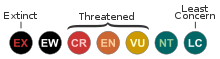
IUCN Red List
Growth: S = slow M = medium F = fast. Soil: L = light (sandy) M = medium H = heavy (clay). pH: A = acid N = neutral B = basic (alkaline). Shade: F = full shade S = semi-shade N = no shade. Moisture: D = dry M = Moist We = wet Wa = water.
Support Plants For A Future
Plants For A Future relies on regular donations to keep our free database and search facilities going, to pay for ongoing research, improvements and enhancements, and to develop and publish new books.
Read more
Choose Currency
Donate in £ GBP
Donate in $ USD
Donate in € EUR
Securely pay via PayPal or Credit/Debit Card without an account.
Expert comment
Author
C.H.Wright
Botanical References
Links / References
For a list of references used on this page please go here
A special thanks to Ken Fern for some of the information used on this page.
Readers comment
| Add a comment |
|
If you have important information about this plant that may help other users please add a comment or link below. Only comments or links that are felt to be directly relevant to a plant will be included. If you think a comment/link or information contained on this page is inaccurate or misleading we would welcome your feedback at [email protected]. If you have questions about a plant please use the Forum on this website as we do not have the resources to answer questions ourselves.
* Please note: the comments by website users are not necessarily those held by PFAF and may give misleading or inaccurate information.
|
Subject : Cynometra alexandri
|
|
|
|