 |
|
http://flickr.com/photos/brewbooks/ |
 |
| http://commons.wikimedia.org/wiki/User:Wsiegmund |
Translate this page:
Summary
Alpine springbeauty is a high-elevation Rocky Mountain species notable not for a potato-like tuber but for an edible caudex, a thickened crown atop a deep taproot. It can be a legitimate food in alpine settings, but it is difficult to harvest because it anchors into rocky crevices, and it occurs in environments where disturbance can be long-lasting. For most foragers, its practical value is limited; for careful alpine botanists and survival-focused gatherers, it is a niche starchy resource.
Physical Characteristics

 Claytonia megarhiza is an evergreen Perennial growing to 0.3 m (1ft) by 0.1 m (0ft 4in).
See above for USDA hardiness. It is hardy to UK zone 3. It is in leaf all year, in flower from April to July, and the seeds ripen in May. The species is hermaphrodite (has both male and female organs) and is pollinated by Insects.
Suitable for: light (sandy) and medium (loamy) soils and prefers well-drained soil. Suitable pH: mildly acid soils. It cannot grow in the shade. It prefers moist soil.
UK Hardiness Map
US Hardiness Map
Synonyms
Plant Habitats
Cultivated Beds;
Edible Uses
Edible Parts: Flowers Leaves Root
Edible Uses:
Edible leaves and an edible caudex, but harvest is difficult and often ecologically costly. Suitable mainly for rare, careful use where abundant and legally harvestable [2-3]. Edible Uses & Rating: Leaves are edible like other Claytonia species, but yield is modest and the alpine habitat often makes leaf harvest less important than the starchy base. The caudex is the key edible structure and can provide carbohydrate value, but the harvest difficulty is high. Overall food rating is moderate for edibility, low-to-moderate for practicality, and strongly dependent on location and abundance [2-3]. Taste, Processing & Kitchen Notes: Edible crown tissues in this group tend to be starchy rather than aromatic, but quality varies with plant age and site. Thorough cooking is the safest assumption for any tough alpine root-crown material, both for texture and for palatability. Because the caudex is integrated with the plant’s long-lived survival structure, harvest is inherently destructive and should be approached conservatively where allowed [2-3]. Seasonality (Phenology): Flowering is typically late spring through summer in alpine zones, often May through August depending on elevation and snowpack. Edible tissues can be present whenever plants are accessible, but alpine access and soil conditions often define the real season. In many areas, late summer offers the longest workable window. Safety & Cautions (Food Use): As with many underground wild foods, the safest practice is to confirm identity from flowers and leaf arrangement before considering any harvest. Because this species occurs among many small alpine plants, avoid collecting any underground structures unless the entire plant is clearly identified. Ethically, avoid harvest in protected alpine areas and treat small populations as non-harvestable [2-3]. Harvest & Processing Workflow: If harvested at all, select only robust patches outside sensitive or protected sites and work with minimal soil and rock disturbance. Excavation generally requires loosening rubble and working around crevices rather than pulling. Clean thoroughly to remove grit, then cook long enough to soften dense tissues and mellow any harshness. Cultivar/Selection Notes: No cultivars are known. Look-Alikes & Confusion Risks: The main confusion risk is not with other Claytonia flowers, which are distinctive, but with underground structures from unrelated alpine plants. Because alpine plant diversity can be high in small areas, identity should be confirmed above ground first. In practice, the more significant “risk” is misjudging site sensitivity and causing disproportionate ecological damage. Traditional / Indigenous Use Summary: Documentation for this specific alpine species is less prominent than for lower-elevation springbeauties and miner’s lettuce types, but edible springbeauty relatives were widely recognized by Native peoples where access and abundance made harvest worthwhile. Alpine settings tend to reduce harvest practicality, which likely contributes to lighter documentation and use. Root - raw or cooked[2, 62, 85, 161]. Peeled, then boiled or baked[183]. The root is long, fleshy and up to 2.5cm thick[183, 200]. Leaves and flowering tops - raw or cooked as a potherb[85, 172, 183]. Succulent, juicy and mild in flavour[183]. Flowers - raw.
References More on Edible Uses
Medicinal Uses
Plants For A Future can not take any responsibility for any adverse effects from the use of plants. Always seek advice from a professional before using a plant medicinally.
None known
References More on Medicinal Uses
The Bookshop: Edible Plant Books
Our Latest books on Perennial Plants For Food Forests and Permaculture Gardens in paperback or digital formats.
Edible Tropical Plants
Food Forest Plants for Hotter Conditions: 250+ Plants For Tropical Food Forests & Permaculture Gardens.
More
Edible Temperate Plants
Plants for Your Food Forest: 500 Plants for Temperate Food Forests & Permaculture Gardens.
More
More Books
PFAF have eight books available in paperback and digital formats. Browse the shop for more information.
Shop Now
Other Uses
It contributes nectar and pollen during the short alpine flowering season and supports the small pollinator community active at high elevations. Its deep rooting helps it persist where many annuals cannot. In fragile alpine systems, it is part of the long-lived vegetation matrix that stabilizes sparse soils.
Special Uses
Food Forest
References More on Other Uses
Cultivation details
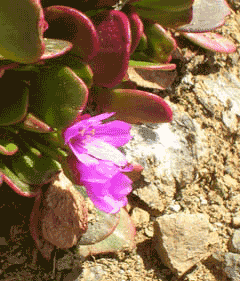
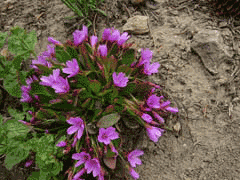
Alpine springbeauty is an edible but difficult high-elevation plant best viewed as a niche carbohydrate source rather than a dependable wild staple. Its ecology and harvest difficulty mean it is often better appreciated as a botanical ally of alpine landscapes than as a routine food plant. Growing Conditions: It is adapted to rocky slopes, talus, and alpine scree where soils are thin, cold, and well-drained. It survives intense sun, high winds, and long winters by relying on deep rooting and a persistent crown. Moisture from snowmelt is often the primary driver of growth. Habitat & Range: In the Southwest it barely enters northern New Mexico, but it is more characteristic of the Rocky Mountains northward. It typically occurs from montane to alpine elevations, often well above 2,500 m, where tree cover thins or disappears. Distribution is patchy and tied to suitable rocky substrates. Size & Landscape Performance: Plants are small above ground but structurally robust below ground. In alpine habitats, individuals can be long-lived, and regrowth is slow, which makes heavy harvesting ecologically risky. It performs as a classic alpine perennial: small, tough, and persistent. Cultivation (Horticulture): Cultivation is uncommon and challenging because the plant is adapted to alpine conditions and deep rooting in rocky substrates. It may survive in specialized rock gardens with cold winters, sharp drainage, and careful moisture timing. Cultivation for food is generally impractical. Pests & Problems: The biggest issues are access, rocky extraction difficulty, and habitat sensitivity. Even when edible structures exist, harvesting can require prying in rock fractures, which can cause substantial site disturbance. Weather and altitude risk often outweigh the food reward. Pollination: Likely pollinated by alpine bees and flies active during the short summer window. The showy petals and striping function as nectar guides in an environment where pollinator opportunities are limited but intense during favorable days. Identification & Habit: This perennial produces multiple stems from a persistent, scarred caudex that sits at the crown of a deep, often purplish-red taproot. Leaves include many basal blades and two opposite stem leaves, and the flowers resemble other springbeauties with five petals often striped. In alpine slopes and talus, its clustered stems and the tough, persistent crown structure help distinguish it from small annuals. FAMILY: Montia family (Montiaceae) – Claytonia genus. COMMON NAMES: Alpine springbeauty. USDA Hardiness Zones: Roughly Zones 2–6 (high-elevation, cold-adapted). Typical Size: 3–20 cm tall; perennial with thick caudex over a deep taproot. Prefers a damp peaty soil and a position in full sun[1, 164]. Requires a very well-drained lime-free soil[164, 200]. A very cold hardy plant, succeeding outdoors in all parts of Britain, but it is liable to rot if the soil is wet[60, 200]. A good plant for the rock garden[60]. Plants are prone to aphis infestation[188]. The plant is heat tolerant in zones 7 through 5. (Plant Hardiness Zones show how well plants withstand cold winter temperatures.
Plant Heat Zones show when plants would start suffering from the heat.
The Plant Heat Zone map is based on the number of "heat days" experienced in a given area where the temperature climbs to over 86 degrees F (30°C).
At this temperature, many plants begin to suffer physiological damage. Heat Zones range from 1 (no heat days) to 12 (210 or more heat days).
For example Heat Zone. 11-1 indicates that the plant is heat tolerant in zones 11 through 1.) For polyculture design as well as the above-ground architecture (form - tree, shrub etc. and size shown above) information on the habit and root pattern is also useful and given here if available. The plant growth habit is a clumper with limited spread [1-2]. The root pattern is a tap root similar to a carrot going directly down [1-2].
References Carbon Farming Information and Carbon Sequestration Information
Temperature Converter
Type a value in the Celsius field to convert the value to Fahrenheit:
Fahrenheit:
The PFAF Bookshop
Plants For A Future have a number of books available in paperback and digital form. Book titles include Edible Plants, Edible Perennials, Edible Trees,Edible Shrubs, Woodland Gardening, and Temperate Food Forest Plants. Our new book is Food Forest Plants For Hotter Conditions (Tropical and Sub-Tropical).
Shop Now
Plant Propagation
Propagation is by seed, but establishment is slow in harsh conditions. In cultivation, seed sowing into gritty, well-drained media with cold stratification is the most realistic approach. Vegetative division is generally not practical due to the deep taproot architecture.
Other Names
If available other names are mentioned here
Alpine Springbeauty (Claytonia megarhiza).
Native Range
NORTHERN AMERICA: Alberta, British Columbia, California, Colorado, Idaho, Montana, Nevada, New Mexico, Northwest Territories, Oregon, Utah, Washington, Wyoming,
Weed Potential
Right plant wrong place. We are currently updating this section.
Please note that a plant may be invasive in one area but may not in your area so it's worth checking.
None. It is a slow-growing alpine specialist.
Conservation Status
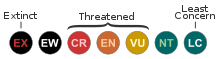
IUCN Red List of Threatened Plants Status : Not available.
| Related Plants
|
| Latin Name | Common Name | Habit | Height | Hardiness | Growth | Soil | Shade | Moisture | Edible | Medicinal | Other |
| Claytonia acutifolia | Bering Sea Spring Beauty | Perennial | 0.2 |
-
| | LM | N | M | 3 | 0 | |
| Claytonia caroliniana | Broad-Leaved Spring Beauty, Carolina springbeauty | Perennial | 0.1 |
5-9
| | LM | N | M | 3 | 0 | 1 |
| Claytonia exigua | Pale Spring Beauty, Serpentine springbeauty | Annual | 0.1 |
0-0
| | LMH | FSN | DM | 2 | 0 | |
| Claytonia lanceolata | Lanceleaf Spring Beauty, Idaho springbeauty, Pacific springbeauty, Peirson's springbeauty | Perennial | 0.2 |
3-8
| | LM | N | M | 3 | 0 | 1 |
| Claytonia parviflora ssp. parviflora | Indian Lettuce | Annual | 0.3 |
4-9
| F | LMH | S | M | 4 | 0 | 1 |
| Claytonia perfoliata | Miner's Lettuce | Annual | 0.2 |
6-10
| | LMH | FSN | DM | 4 | 1 | 2 |
| Claytonia perfoliata ssp. perfoliata | Miner’s lettuce | Annual | 0.3 |
4-9
| F | LMH | FS | M | 4 | 2 | 2 |
| Claytonia rosea | Rosy Springbeauty | Perennial | 0.2 |
3-8
| F | LMH | SN | M | 3 | 0 | 1 |
| Claytonia rubra | Redstem Springbeauty | Annual | 0.1 |
4-9
| F | LMH | N | DM | 3 | 0 | 1 |
| Claytonia scammaniana | Scamman's Claytonia, Scamman's springbeauty | Perennial | 0.2 |
0-0
| | LM | N | M | 2 | 0 | |
| Claytonia sibirica | Pink Purslane, Siberian springbeauty | Annual/Perennial | 0.2 |
3-7
| | LMH | FSN | DM | 4 | 1 | 3 |
| Claytonia tuberosa | Tuberous Spring Beauty | Perennial | 0.2 |
4-8
| | LM | N | M | 3 | 0 | |
| Claytonia umbellata | Great Basin Spring Beauty | Perennial | 0.2 |
3-8
| | LM | N | M | 2 | 0 | 1 |
| Claytonia virginica | Spring Beauty, Virginia springbeauty, Hammond's claytonia, Yellow Virginia springbeauty | Perennial | 0.2 |
5-7
| M | LM | S | M | 3 | 1 | |
| Osmunda claytoniana | Interrupted Fern | Fern | 0.5 |
3-7
| | LMH | SN | MWe | 2 | 1 | |
|
Growth: S = slow M = medium F = fast. Soil: L = light (sandy) M = medium H = heavy (clay). pH: A = acid N = neutral B = basic (alkaline). Shade: F = full shade S = semi-shade N = no shade. Moisture: D = dry M = Moist We = wet Wa = water.
Now available:
Food Forest Plants for Mediterranean Conditions
350+ Perennial Plants For Mediterranean and Drier Food Forests and Permaculture Gardens.
[Paperback and eBook]
This is the third in Plants For A Future's series of plant guides for food forests tailored to
specific climate zones. Following volumes on temperate and tropical ecosystems, this book focuses
on species suited to Mediterranean conditions—regions with hot, dry summers and cool, wet winters,
often facing the added challenge of climate change.
Read More
Expert comment
Author
(A.Gray) Parry ex S.Watson
Botanical References
60200270
Links / References
For a list of references used on this page please go here
Readers comment
| Add a comment |
|
If you have important information about this plant that may help other users please add a comment or link below. Only comments or links that are felt to be directly relevant to a plant will be included. If you think a comment/link or information contained on this page is inaccurate or misleading we would welcome your feedback at [email protected]. If you have questions about a plant please use the Forum on this website as we do not have the resources to answer questions ourselves.
* Please note: the comments by website users are not necessarily those held by PFAF and may give misleading or inaccurate information.
|
Subject : Claytonia megarhiza
|
|
|
|