Translate this page:
Summary
Taxonomic Note: This genus was formerly classified in the family Chenopodiaceae. Modern classifications include it within the Amaranthaceae.
Fremont’s goosefoot is one of the most important seed-producing wild edibles in the western United States and was a significant food plant for many Indigenous groups. Its widespread distribution, high seed yield, and quinoa-like flavour profile make it a premier grain analogue among the goosefoots. Although the leaves are technically edible, they are notoriously acrid and unpleasant; the true value of this species lies overwhelmingly in its seeds, which are nutritious, abundant, easy to harvest, and easy to process. As a dominant inhabitant of dry slopes, foothills, and disturbed soils, C. fremontii remains one of the most reliable wild seed crops across the Great Basin and Southwest. Its persistent late-season seedheads allow flexible harvesting, and its nutritional properties align closely with domesticated quinoa. For modern foragers and ecological growers, this species represents a high-potential wild grain with long cultural heritage and practical utility.
Physical Characteristics

 Chenopodium fremontii is a ANNUAL growing to 0.6 m (2ft) by 0.2 m (0ft 8in).
See above for USDA hardiness. It is hardy to UK zone 5. The seeds ripen from September to November. The species is hermaphrodite (has both male and female organs) and is pollinated by Wind.
Suitable for: light (sandy), medium (loamy) and heavy (clay) soils. Suitable pH: mildly acid, neutral and basic (mildly alkaline) soils and can grow in very alkaline and saline soils.
It cannot grow in the shade. It prefers moist soil.
UK Hardiness Map
US Hardiness Map
Synonyms
Homotypic Synonyms: Botrys fremontii (S.Watson) Lunell
Plant Habitats
Cultivated Beds;
Edible Uses
Edible Parts: Leaves Seed Shoots
Edible Uses:
Leaves are poor and highly acrid. Seeds are excellent—nutritious, easy to harvest, delicious, and historically significant. One of the most valuable wild edible seed plants in the western United States. Leaves and young shoots - cooked and used like spinach[105, 161]. The raw leaves should only be eaten in small quantities, see the notes above on toxicity. Seed - cooked[207]. Ground into a meal and used with water as a mush, or mixed with cereal flours in making bread etc[46, 60, 61, 95, 105, 161, 257]. The seed is small and fiddly, about 1mm in diameter[270], it should be soaked in water overnight and thoroughly rinsed before it is used in order to remove any saponins. Edible Uses & Rating: The leaves and seeds are technically edible, but the leaves are extremely low-quality and strongly acrid. The seeds, however, are excellent—among the finest produced by any wild North American plant. They were a major food resource for many Indigenous groups of the Southwest and remain one of the best wild grains available today. Fremont’s goosefoot ranks as a high-value edible, especially for seeds, placing it in the top tier of wild desert grains alongside pitseed goosefoot and slimleaf goosefoot [2-3]. Taste, Processing & Kitchen Notes: The fresh leaves are unpleasant, with a salty, acrid, burning flavour that cooking does little to improve. The seeds, by contrast, are superb. Freshly dried seeds taste very similar to quinoa—nutty, mild, and slightly earthy. They soften quickly when boiled and absorb flavours readily. Toasting enhances sweetness and nuttiness, while boiling yields a soft porridge or grain base. Seeds can also be ground into flour for breads, pancakes, or mush. Removing the calyx remnants is simple, as they detach easily when rubbed. These seeds rarely carry the musty or pond-like off-notes found in some other goosefoot species, making C. fremontii unusually palatable [2-3]. Seasonality (Phenology): Fremont’s goosefoot germinates in spring as temperatures rise. Leaves are present from late spring onward, though not generally harvested. Flowering occurs through summer, with seed maturation in late summer to autumn. Seedheads often persist for weeks or months into early winter, allowing harvesting well after plants have dried. Peak seed availability typically occurs from September to November, depending on moisture and elevation. Safety & Cautions (Food Use): Leaves contain notable levels of oxalates and saponins and cause strong acrid burning sensations in the mouth. They should be avoided or eaten only in very small, well-cooked quantities. Seeds, however, are safe and nutritious when cooked. As with all Chenopodium species, avoid consuming seeds raw in large quantities due to natural saponins; cooking neutralises these compounds effectively [2-3]. Harvest & Processing Workflow: Harvest begins when plants turn reddish-brown and brittle in late summer or autumn. Seedheads can be clipped into containers and rubbed to release seeds. A simple winnowing step removes chaff, as calyx remnants detach easily. Seeds may then be toasted, boiled, or milled. Because seedheads persist for weeks, harvesting can be staggered or delayed without significant loss. Look-Alikes & Confusion Risks: Fremont’s goosefoot resembles several other Chenopodium species, notably C. berlandieri, C. incanum, and C. pratericola. Leaves, however, are generally more acrid and less palatable than those of its close relatives. Seedheads are easily distinguished from those of Dysphania species, which possess aromatic, sticky, glandular leaves. Fortunately, most weak-scented Chenopodium species are edible, so confusion rarely carries significant risk. Traditional / Indigenous Use Summary: Indigenous peoples of the Great Basin and Southwest widely used Fremont’s goosefoot. Seeds were ground into flour for porridges, breads, and winter storage, forming an important carbohydrate-rich staple. Its role as a wild grain is well attested, and many cultures considered it a dependable late-season food that could be harvested in volume. The leaves were occasionally eaten but were generally considered inferior or unpleasant.
References More on Edible Uses
Medicinal Uses
Plants For A Future can not take any responsibility for any adverse effects from the use of plants. Always seek advice from a professional before using a plant medicinally.
None known
References More on Medicinal Uses
The Bookshop: Edible Plant Books
Our Latest books on Perennial Plants For Food Forests and Permaculture Gardens in paperback or digital formats.
Edible Tropical Plants
Food Forest Plants for Hotter Conditions: 250+ Plants For Tropical Food Forests & Permaculture Gardens.
More
Edible Temperate Plants
Plants for Your Food Forest: 500 Plants for Temperate Food Forests & Permaculture Gardens.
More
More Books
PFAF have eight books available in paperback and digital formats. Browse the shop for more information.
Shop Now
Other Uses
Dye
Gold/green dyes can be obtained from the whole plant[168]. Ecology & Wildlife: As a prolific seed producer, Fremont’s goosefoot provides food for granivorous birds, rodents, and insects. Its drought-tolerant growth helps stabilise disturbed soils and supports early successional plant communities. Seedheads provide overwintering food sources, and dense stands offer cover for small animals.
Special Uses
References More on Other Uses
Cultivation details
Fremont’s goosefoot stands among the finest seed-producing wild plants of the Southwest, offering quinoa-like grains in abundance with minimal processing required. While the leaves are unpalatable, the seeds provide exceptional food value, historical significance, and ecological resilience. For foragers and land stewards seeking dependable wild grains, this species is one of the top candidates across arid and semi-arid North America. Growing Conditions This species thrives in dry, open habitats, including foothill slopes, sagebrush flats, canyon bottoms, and areas of natural disturbance. It tolerates a wide range of soils—including sandy, gravelly, clayey, or alkaline substrates—and often flourishes in poor, depleted soils where few other annuals succeed. Full sun is preferred, and drought tolerance is high. Like many goosefoots, it responds vigorously to disturbance such as fire, soil turnover, or grazing gaps. Habitat & Range: Fremont’s goosefoot is native across western North America, especially the Great Basin, Colorado Plateau, and Southwest, extending into mountain foothills and semi-arid plains. It is common in Arizona, New Mexico, Utah, Nevada, Colorado, and adjacent states. Its broad ecological amplitude allows it to appear from low desert margins to upper sagebrush steppe and pinyon-juniper woodlands. Size & Landscape Performance: Typical plants stand 30–60 cm tall, occasionally taller in favourable soils. The plant forms a loosely pyramidal shape with thick seed clusters in the upper half. It is not typically used as an ornamental, but in ecological or rewilded garden spaces it may function as a hardy annual grain species. Its modest size and rough texture limit horticultural appeal, but its resilience and seed productivity make it of interest in experimental food-forest or dryland agronomy contexts. Cultivation (Horticulture): Fremont’s goosefoot can be cultivated in gardens much like quinoa, though it remains fully wild and variable. It requires full sun, minimal irrigation, and tolerates poor soils. Direct sowing in spring produces best results. Plants require little maintenance and generally do not suffer from pests. For gardeners exploring perennial-like grain systems or dryland annuals, it offers a hardy and low-input seed crop. Pests & Problems: This species is resilient and experiences few issues with pests or disease. Drought, extreme heat, or overcompetition from taller vegetation may reduce yield, but overall the plant is tough and dependable. Moisture stress near maturity may reduce seed size, though the plant typically still produces usable harvests. Cultivar / Selection Notes: No cultivars exist, and the species displays natural variability in height, seed colour, yield, and leaf morphology. This variability reflects local environmental selection rather than breeding. Pollination: Pollination occurs by wind, with the plant producing abundant pollen typical of the genus. Seed set is generally reliable even in sparse vegetation or challenging environments. Identification & Habit: Fremont’s goosefoot grows as an upright, often bushy annual reaching 20–70 cm in height. Stems are stout, green to reddish, and may branch extensively from the base. Leaves are simple, alternate, and variable in shape—generally triangular to rhombic with coarse or shallow teeth. Surfaces often possess the mealy or dusty coating typical of many Chenopodium species, though it may be subtle. Plants appear robust, with dense inflorescences forming at branch tips and along upper stems. The flowers are small, green, and inconspicuous, arranged in thick clusters that mature into heavy seed-bearing structures. As the plant ages, the stems and seedheads turn reddish-brown and brittle, signalling readiness for harvest.
References Carbon Farming Information and Carbon Sequestration Information
Temperature Converter
Type a value in the Celsius field to convert the value to Fahrenheit:
Fahrenheit:
The PFAF Bookshop
Plants For A Future have a number of books available in paperback and digital form. Book titles include Edible Plants, Edible Perennials, Edible Trees,Edible Shrubs, Woodland Gardening, and Temperate Food Forest Plants. Our new book is Food Forest Plants For Hotter Conditions (Tropical and Sub-Tropical).
Shop Now
Plant Propagation
Propagation is by seed only. Seeds germinate readily in warm soils without stratification. Natural recruitment occurs after disturbance, and seedbanks can persist in soil for years. To propagate intentionally, scatter seeds on loosened soil and cover lightly.
Other Names
If available other names are mentioned here
Pringle's goosefoot, Goosefoot,
Native Range
NORTHERN AMERICA: Canada (Alberta, British Columbia, Manitoba, Saskatchewan), United States (Kansas, Nebraska, North Dakota, South Dakota, Colorado, Idaho, Montana, Oregon, Washington, Wyoming, New Mexico, Texas (west), Arizona, California, Nevada, Utah), Mexico (Baja California (Norte), Coahuila de Zaragoza, Tamaulipas)
Weed Potential
Right plant wrong place. We are currently updating this section.
Please note that a plant may be invasive in one area but may not in your area so it's worth checking.
The species has moderate weed potential but is not highly invasive. It colonises disturbed soils easily and may become persistent in tilled or abandoned fields. In natural habitats, it coexists with native species without becoming overwhelmingly dominant. Its ecological role is primarily as a pioneer species.
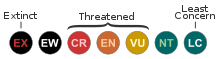
Conservation Status
IUCN Red List of Threatened Plants Status : Not available.
Growth: S = slow M = medium F = fast. Soil: L = light (sandy) M = medium H = heavy (clay). pH: A = acid N = neutral B = basic (alkaline). Shade: F = full shade S = semi-shade N = no shade. Moisture: D = dry M = Moist We = wet Wa = water.
Now available:
Food Forest Plants for Mediterranean Conditions
350+ Perennial Plants For Mediterranean and Drier Food Forests and Permaculture Gardens.
[Paperback and eBook]
This is the third in Plants For A Future's series of plant guides for food forests tailored to
specific climate zones. Following volumes on temperate and tropical ecosystems, this book focuses
on species suited to Mediterranean conditions—regions with hot, dry summers and cool, wet winters,
often facing the added challenge of climate change.
Read More
Expert comment
Author
Watson.
Botanical References
60270
Links / References
For a list of references used on this page please go here
Readers comment
| Add a comment |
|
If you have important information about this plant that may help other users please add a comment or link below. Only comments or links that are felt to be directly relevant to a plant will be included. If you think a comment/link or information contained on this page is inaccurate or misleading we would welcome your feedback at [email protected]. If you have questions about a plant please use the Forum on this website as we do not have the resources to answer questions ourselves.
* Please note: the comments by website users are not necessarily those held by PFAF and may give misleading or inaccurate information.
|
Subject : Chenopodium fremontii
|
|
|
|