Translate this page:
Summary
Physical Characteristics

 Caryocar villosum is an evergreen Tree growing to 30 m (98ft) by 35 m (114ft) at a slow rate.
See above for USDA hardiness. It is hardy to UK zone 10.
Suitable for: light (sandy), medium (loamy) and heavy (clay) soils and prefers well-drained soil. Suitable pH: mildly acid, neutral and basic (mildly alkaline) soils. It cannot grow in the shade. It prefers moist soil.
UK Hardiness Map
US Hardiness Map
Synonyms
Caryocar butyrosum (Aubl.) Willd. Pekea butyrosa Aubl. Pekea villosa (Aubl.) Poir. Rhizobolus butyrosus (Aubl.) J.F.Gmel. Saouari villosa Aubl.
Plant Habitats
Edible Uses
Edible Parts: Oil Seed
Edible Uses: Oil
Seed - raw or cooked[63 ]. Eaten as a dessert[317 ]. The large, soft, white kernels have a delicious, rich, almond-like flavour[63 ]. Rich in oil[46 ]. An edible oil is obtained from the tissue surrounding the seed[63 , 317 ]. Another edible oil is obtained from the seed[63 , 317 ]. Fruit - raw or cooked[301 ]. It has the faint smell of rancid butter[301 ]. The fruit is more commonly cooked[416 ]. The fleshy, aromatic, yellow pulp has a slightly sweet flavour[416 ]. The seed case beneath the pulp has rigid spines - care should be taken when eating the fresh fruit that one does not harm themselves on these spines[416 ].
References More on Edible Uses
Medicinal Uses
Plants For A Future can not take any responsibility for any adverse effects from the use of plants. Always seek advice from a professional before using a plant medicinally.
Diaphoretic
The leaves and bark are diaphoretic[739 ].
References More on Medicinal Uses
Other Uses
Fencing Oil Wood
The heartwood is yellow to light brownish grey; it is clearly demarcated from the 15mm wide band of dirty white sapwood. The wood is cross-grained, with little if any taste or odour. It is rather hard, heavy, very tough, durable and very resistant to wood-eating organisms. The wood works well; takes nails fairly well; planes moderaely easily but very badly; turns moderately easily but indifferently; polishes indifferently. It is suitable for house and ship building, cabinet making, wheel arches and hubs, fence posts, railway sleepers etc[317 , 419 , 492 ].
Special Uses
Carbon Farming Food Forest
References More on Other Uses
Cultivation details
Experimental Crop Management: Standard Staple Crop: Oil Wild Staple Crop
A slow-growing tree[419 ].
Carbon Farming
-
Experimental Crop
Plant breeders are testing these plants to see if they could be domesticated for cultivation, but they are still in an experimental phase. Examples include milkweed and leafy spurge.
-
Management: Standard
Plants grow to their standard height. Harvest fruit, seeds, or other products. Non-Destructive management systems.
-
Staple Crop: Oil
(0-15 percent protein, 16+ percent oil). Some of these are consumed whole while others are exclusively pressed for oil. Annuals include canola, poppyseed, maize, cottonseed, sunflower, peanut. Perennials include high-oil fruits, seeds, and nuts, such as olive, coconut, avocado, oil palm, shea, pecan, and macadamia. Some perennial oil crops are consumed whole as fruits and nuts, while others are exclusively pressed for oil (and some are used fresh and for oil).
-
Wild Staple Crop
Some wild plants have strong historical or contemporary use. Although they are not cultivated crops, they may be wild-managed.
References Carbon Farming Information and Carbon Sequestration Information
Temperature Converter
Type a value in the Celsius field to convert the value to Fahrenheit:
Fahrenheit:
Plant Propagation
Seed - takes 6 - 12 months to germinate[63 ]. Alternatively, immerse the seeds in warm water for 48 hours, changing the water every 12 hours[419 ]. Sow the seed in individual containers in a sunny or lightly shaded position. Pre-soaked seed can sprout within 30 - 50 days with a moderate germination rate[419 ]. Grow young plants on in a sheltered position with some shelter from the sun[63 ]. Seedlings can be planted out when 25 cm tall[324 ]. Good results can be obtained from grafting and marcottage[324 ].
Other Names
If available other names are mentioned here
Amendoa de aspinho, Arbre a beurre, Bats suari, Pekea, Pequia, Piquia, Almendro, Piqui, Petia
Native Range
SOUTHERN AMERICA: French Guiana, Brazil (Amapá, Amazonas, Maranhão (north), Pará, Rondônia, Roraima), Ecuador, Peru
Weed Potential
Right plant wrong place. We are currently updating this section.
Please note that a plant may be invasive in one area but may not
in your area so it's worth checking.
Conservation Status
IUCN Red List of Threatened Plants Status : This taxon has not yet been assessed
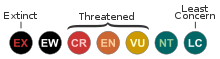
IUCN Red List
Growth: S = slow M = medium F = fast. Soil: L = light (sandy) M = medium H = heavy (clay). pH: A = acid N = neutral B = basic (alkaline). Shade: F = full shade S = semi-shade N = no shade. Moisture: D = dry M = Moist We = wet Wa = water.
Support Plants For A Future
Plants For A Future relies on regular donations to keep our free database and search facilities going, to pay for ongoing research, improvements and enhancements, and to develop and publish new books.
Read more
Choose Currency
Donate in £ GBP
Donate in $ USD
Donate in € EUR
Securely pay via PayPal or Credit/Debit Card without an account.
Expert comment
Author
(Aubl.) Pers.
Botanical References
Links / References
For a list of references used on this page please go here
A special thanks to Ken Fern for some of the information used on this page.
Readers comment
| Add a comment |
|
If you have important information about this plant that may help other users please add a comment or link below. Only comments or links that are felt to be directly relevant to a plant will be included. If you think a comment/link or information contained on this page is inaccurate or misleading we would welcome your feedback at [email protected]. If you have questions about a plant please use the Forum on this website as we do not have the resources to answer questions ourselves.
* Please note: the comments by website users are not necessarily those held by PFAF and may give misleading or inaccurate information.
|
Subject : Caryocar villosum
|
|
|
|