Translate this page:
Summary
Saguaro is the iconic, towering cactus of the Sonoran Desert, reaching small-tree proportions and forming cactus “forests” that define much of the Arizona desert landscape. Ecologically, it is a keystone species, providing nectar, pollen, fruits, and nesting sites to a broad array of animals. From a food perspective, its fruits and seeds are outstanding in quality and nutritional value, and historically were among the most important wild foods for Indigenous peoples of the region. However, in modern Arizona most wild saguaro use is tightly regulated: all parts of the plant are protected under state law and may not be collected without proper permits. For a forager or ethnobotanical writer, saguaro stands as a prime example of a plant that is ecologically and culturally central, culinarily excellent, but legally largely off-limits.
Physical Characteristics

 Carnegiea gigantea is an evergreen Tree growing to 10 m (32ft) by 4 m (13ft) at a slow rate.
See above for USDA hardiness. It is hardy to UK zone 9. The flowers are pollinated by Bats, Birds, Insects.
It is noted for attracting wildlife.
Suitable for: light (sandy) and medium (loamy) soils, prefers well-drained soil and can grow in nutritionally poor soil. Suitable pH: neutral and basic (mildly alkaline) soils. It cannot grow in the shade. It prefers dry or moist soil and can tolerate drought.
UK Hardiness Map
US Hardiness Map
Synonyms
Homotypic Synonyms: Cereus giganteus Engelm. Pilocereus giganteus (Engelm.) Lem. ex C.F.Först. & Rümpler. Heterotypic Synonyms: C. gigantea f. aberrans P.V.Heath. C. gigantea f. cristata. Cereus giganteus Engelm.
Plant Habitats
Edible Uses
Edible Uses & Rating: The main edible parts are the fruits and seeds, which together form a high-calorie, high-protein, high-fat food that can be eaten fresh, dried, fermented, or processed into syrup, “butter,” or cakes. The flesh and pulp are sweet and pleasantly flavoured; the seeds add a nutty richness. Because of their quality and reliability in an otherwise harsh environment, saguaro fruits historically functioned as a major seasonal staple for desert peoples. However, due to legal protection and cultural considerations, practical access for modern foragers is highly constrained. In a purely theoretical sense, the fruits deserve an edibility rating of 5 / 5; in practical modern terms for non-permit holders, 0 / 5, since they should not be harvested without proper authorization [2-3]. Taste, Processing & Kitchen Notes: Fully ripe fruits are red within, with a sticky, sweet pulp surrounding many small, black, delicate seeds. The flavour has been described as sweet, fruity, and somewhat reminiscent of a cross between watermelon and fig, with no bitter or resinous overtones. The seeds contribute a pleasantly nutty flavour and a subtle crunch. Traditional processing methods include eating raw pulp and seeds, boiling or simmering the fruits to obtain a thick, dark syrup, drying the pulp in the sun into leathery slabs or cakes, and grinding or pounding the seeds to produce a paste (“butter”) or meal for porridges and bread-like products. Fruits that have split open on the plant or ground can dry quickly in the sun, concentrating sugars but also attracting insects; prompt processing and good hygiene are important. Fermentation of juices or diluted syrup can yield mildly alcoholic beverages in culturally specific rituals. The culinary potential is broad—jams, jellies, desserts, sauces, and beverages—but in practice all such uses should rely on legally obtained or cultivated fruit rather than wild harvest [2-3]. Seasonality (Phenology): Saguaros flower in late spring to early summer, typically May–June, with peak bloom depending on elevation and local microclimate. Fruits develop rapidly and are generally ripe in late June through July. Mature fruits split open longitudinally at the apex, exposing the red interior and seeds, and may remain attached or fall to the ground. Most fruits are gone—either harvested by animals or desiccated—by the end of July. The vegetative body persists year-round; growth is slow and opportunistic, tied closely to rainfall. Safety & Cautions (Food Use): From a food safety standpoint, ripe saguaro fruit pulp and seeds are considered safe and nutritious, provided they are clean and not mouldy. However, legal and ethical considerations are paramount. In Arizona, saguaro is protected by state law; it is illegal to cut, damage, harvest, or remove any saguaro, including fruits and ribs, without appropriate permits or landowner permission under the relevant regulations. Additionally, many traditional harvest sites and practices are deeply embedded in Indigenous cultural and ceremonial contexts. Respect for local laws, land ownership, and Indigenous rights is essential. For most modern foragers, this means not harvesting wild saguaro fruits at all and instead purchasing legally produced products or working within formal cultural or research frameworks where permitted [2-3]. Harvest & Processing Workflow: Historically, harvesting involved long poles made from dried saguaro ribs, sometimes joined with cross-pieces, to knock ripe fruits from the crown. Fruits were collected before or just after splitting. Pulp and seeds were separated from the outer rind, eaten fresh, boiled down to syrup, sun-dried into cakes, or fermented. The seeds could be roasted, ground, or pounded into a paste. Today, because wild harvest is typically restricted to permitted traditional or research contexts, this workflow is mainly of ethnographic and historical interest rather than a practical guide. Look-Alikes & Confusion Risks: Large, columnar cacti in the Southwest might include organ pipe cactus (Stenocereus thurberi), senita (Lophocereus schottii), and introduced columnar species, but few, if any, overlap fully in range and stature with saguaro. Key saguaro traits include its exceptional height, stout single trunk with upward arms, lack of glochids, and distribution in classic Sonoran Desert habitats. For fruit use, confusion is unlikely for an experienced observer, but as always, positive identification is essential; misidentification is more of a botanical than a toxicological risk here, since most large Sonoran columnar cacti with fleshy fruits are edible, but this should never be assumed. Traditional / Indigenous Use Summary: For the Tohono O’odham and other Sonoran Desert peoples, saguaro fruit harvest was a pivotal seasonal event marking the beginning of the new year. The fruits provided immediate food, syrup, dried cakes, and sometimes ceremonial wine used in rainfall-invoking rituals. The harvest was both subsistence and ceremony, embedded in stories, songs, and rules of conduct governing respect for the cactus and the land. Saguaro ribs were used for construction and tools, including the long poles used in the harvest. In this context, saguaro is not merely a food source but a cultural relative and teacher, with harvest governed by traditional law as much as by practicality. Edibility Summary: Fruits and seeds are top-tier wild foods—sweet, versatile, and nutrient-rich—historically central to desert diets. In practice today, legal protection and cultural respect mean that saguaro is not a practical foraging target for most people, but rather a powerful example of how important and sacred a single plant can be in human–desert relationships.
References More on Edible Uses
Medicinal Uses
Plants For A Future can not take any responsibility for any adverse effects from the use of plants. Always seek advice from a professional before using a plant medicinally.
None Known
References More on Medicinal Uses
The Bookshop: Edible Plant Books
Our Latest books on Perennial Plants For Food Forests and Permaculture Gardens in paperback or digital formats.
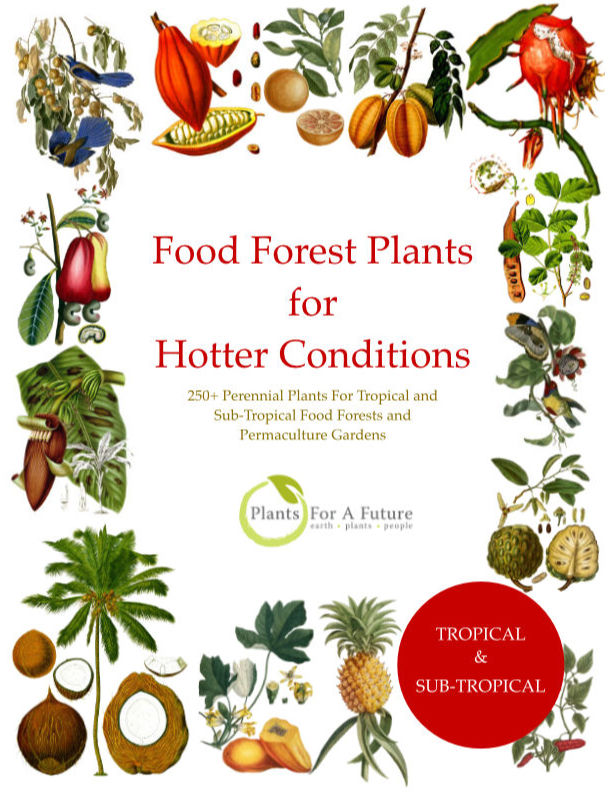
Edible Tropical Plants
Food Forest Plants for Hotter Conditions: 250+ Plants For Tropical Food Forests & Permaculture Gardens.
More
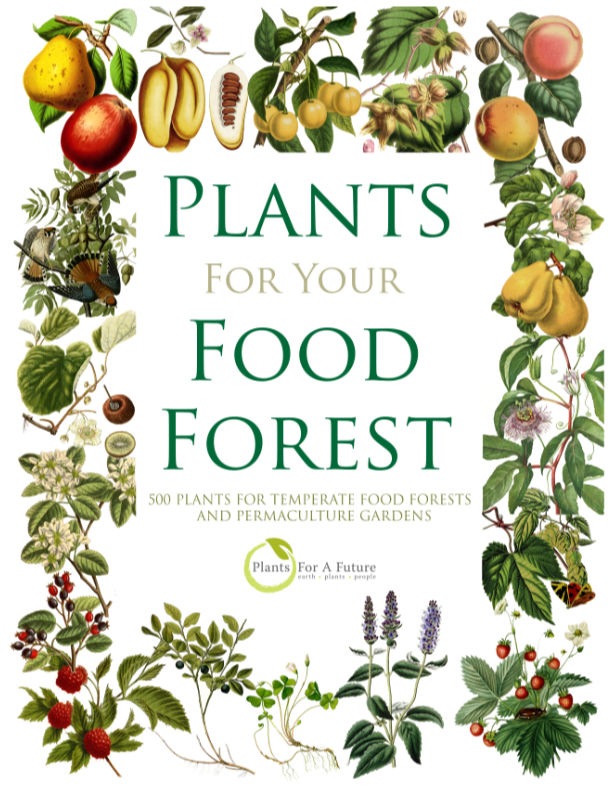
Edible Temperate Plants
Plants for Your Food Forest: 500 Plants for Temperate Food Forests & Permaculture Gardens.
More
More Books
PFAF have eight books available in paperback and digital formats. Browse the shop for more information.
Shop Now
Other Uses
Saguaro cactus is a towering symbol of the Sonoran Desert, combining extraordinary ecological importance, deep cultural significance, and high edible value in its fruits and seeds. For the Tohono O’odham and other Sonoran Desert peoples, the harvest was both subsistence and ceremony, embedded in stories, songs, and rules of conduct governing respect for the cactus and the land. Saguaro ribs were used for construction and tools, including the long poles used in the harvest. In this context, saguaro is not merely a food source but a cultural relative and teacher, with harvest governed by traditional law as much as by practicality. Ecology & Wildlife: Ecologically, saguaro is a keystone species. Cavities excavated by Gila woodpeckers and gilded flickers become nesting sites for many birds. The flowers provide abundant nectar and pollen, and the fruits feed a host of animals, including birds, bats, rodents, and larger mammals. Pollination is primarily by nocturnal nectar-feeding bats (notably the lesser long-nosed bat and Mexican long-tongued bat) visiting night-opening flowers, and by diurnal visitors such as white-winged doves, other birds, bees, and insects as blooms remain open into the morning. This mixed bat–bird–insect pollination system ensures high seed set. Fruits and seeds are dispersed by birds, mammals, and gravity, often falling near the parent but occasionally transported longer distances via animal droppings.
Special Uses
References More on Other Uses
Cultivation details
Growing Conditions: Saguaro is highly adapted to the Sonoran Desert, preferring hot, arid climates with low annual rainfall but episodic monsoon storms. It grows on rocky slopes, bajadas, and desert flats, often in coarse, well-drained, mineral-rich soils. Young saguaros often establish under nurse plants (such as paloverde or mesquite) that provide shade and protection but may later die as the cactus outlives its nurse. It is frost-sensitive at young stages but becomes more tolerant with age and size. In cultivation, saguaros require full sun (once beyond the seedling stage), very well-drained cactus soils, and minimal irrigation. They are hardy roughly to USDA Zone 9b–11, with serious damage at sustained temperatures much below –6 °C (20 °F), particularly in young plants. Habitat & Range: Saguaro is essentially restricted to the Sonoran Desert, with its main distribution in southern and central Arizona, parts of southeastern California, and adjacent Sonora and Baja California in Mexico. It occurs at elevations of roughly 200–1,100 m (about 500–3,500 ft), where winter temperatures are mild and summer heat is intense. Within this range it forms characteristic cactus woodlands, often mixed with paloverde, ironwood, mesquite, ocotillo, and various chollas and barrel cacti. Size & Landscape Performance: Mature saguaros typically reach 4–15 m tall, with some exceptional individuals surpassing that range. Spread is usually 2–4 m or more, depending on the number and orientation of arms. Growth is extremely slow: seedlings may be only a few centimetres tall after several years, and plants may not flower until 30–50 years old. In landscape settings in suitable climates, saguaro is visually dramatic and long-lived, but because of its protected status and slow growth, it is not a casual choice—it is essentially a multigenerational planting. Cultivation (Horticulture): Where legal, saguaros may be grown from seed or transplanted under permit or with nursery-grown stock. They require full sun (as adults), minimal but occasional deep watering in summer, and excellent drainage. Over-irrigation and heavy soils can lead to rot. Seedlings benefit from partial shade and protection from frost, rodents, and physical damage. Because of slow growth and legal protections on wild plants, most horticultural use relies on nursery propagation, especially in Arizona where moving or harming wild saguaros is tightly controlled. In climates outside the Sonoran Desert, saguaros are often impractical due to frost and humidity.Identification & Habit: Saguaro is a massive, columnar, perennial cactus that typically grows as a single, trunk-like stem which later branches to form a few to many upward-curving arms. Plants range from a few meters tall in youth to 10–15 m in old age, occasionally more. The stems are cylindrical, strongly ribbed, and studded with areoles bearing stout spines but no glochids. There are no leaves; all photosynthesis is performed by the green stem tissue. Tubercles are aligned vertically to form conspicuous ribs that expand and contract with water storage. Near the tops of the main trunk and arms, the plant produces large, white, funnel-shaped flowers with numerous stamens and a multi-lobed stigma. Fruits develop near the stem tips and split when ripe, exposing bright red pulp and numerous black seeds. Individual saguaros grow slowly but can live for well over a century, gradually assuming the classic “candelabra” silhouette. Pests & Problems: Common issues in wild and cultivated saguaros include fungal and bacterial rots, mechanical damage from storms, and insect feeding on flowers and fruits. In some areas, vandalism and human disturbance pose significant threats. In cultivation, over-watering and poor drainage are the primary causes of decline. Rodents and rabbits may chew seedlings. Overall, mature saguaros are resilient once established, but slow growth means damage can take decades to repair. Cultivar / Selection Notes: There are no named edible cultivars of saguaro analogous to fruit-tree varieties. Variation exists between individual plants in fruit yield and timing, but selection and breeding have not been a major focus. In horticulture, selection is more aesthetic (form, branching) than culinary.
References Carbon Farming Information and Carbon Sequestration Information
Temperature Converter
Type a value in the Celsius field to convert the value to Fahrenheit:
Fahrenheit:
The PFAF Bookshop
Plants For A Future have a number of books available in paperback and digital form. Book titles include Edible Plants, Edible Perennials, Edible Trees,Edible Shrubs, Woodland Gardening, and Temperate Food Forest Plants. Our new book is Food Forest Plants For Hotter Conditions (Tropical and Sub-Tropical).
Shop Now
Plant Propagation
Propagation is almost entirely by seed; saguaros rarely produce vegetative offsets. Seeds germinate best on moist but well-drained mineral or sandy soil, often under partial shade from rocks or nurse shrubs. Natural recruitment is sporadic and strongly influenced by rainfall patterns and nurse-plant availability. In nursery conditions, seeds can be sown in shallow trays with sterile cactus mix, kept warm, lightly moist, and partially shaded until seedlings are established.
Other Names
If available other names are mentioned here
Saguaro Cactus, Giant Saguaro
Native Range
US. USA. Arizona, California, Mexico Northeast, Mexico Northwest
Weed Potential
Right plant wrong place. We are currently updating this section.
Please note that a plant may be invasive in one area but may not in your area so it's worth checking.
Saguaro has essentially no weed potential outside its native desert. Its slow growth, strict climatic requirements, and protected status make it unlikely to become invasive. Even within its range, it is considered a valued native, not a weed. In Mexico, Carnegiea gigantea is primarily threatened by changes in land use for cattle ranching. In the Unites States, this species is primarily threatened by urbanization.
Conservation Status
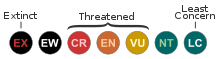
IUCN Red List of Threatened Plants Status : Least Concern
Growth: S = slow M = medium F = fast. Soil: L = light (sandy) M = medium H = heavy (clay). pH: A = acid N = neutral B = basic (alkaline). Shade: F = full shade S = semi-shade N = no shade. Moisture: D = dry M = Moist We = wet Wa = water.
Now available:
Food Forest Plants for Mediterranean Conditions
350+ Perennial Plants For Mediterranean and Drier Food Forests and Permaculture Gardens.
[Paperback and eBook]
This is the third in Plants For A Future's series of plant guides for food forests tailored to
specific climate zones. Following volumes on temperate and tropical ecosystems, this book focuses
on species suited to Mediterranean conditions—regions with hot, dry summers and cool, wet winters,
often facing the added challenge of climate change.
Read More
Expert comment
Author
(Engelm.) Britton & Rose
Botanical References
Links / References
For a list of references used on this page please go here
Readers comment
| Add a comment |
|
If you have important information about this plant that may help other users please add a comment or link below. Only comments or links that are felt to be directly relevant to a plant will be included. If you think a comment/link or information contained on this page is inaccurate or misleading we would welcome your feedback at [email protected]. If you have questions about a plant please use the Forum on this website as we do not have the resources to answer questions ourselves.
* Please note: the comments by website users are not necessarily those held by PFAF and may give misleading or inaccurate information.
|
Subject : Carnegiea gigantea
|
|
|
|