Translate this page:
Summary
Water sedge is a widespread, rhizomatous wetland sedge forming dense colonies across the northern and western United States, extending into subalpine and alpine wetlands. Its edible portion consists solely of the tender stem bases, which historically served as minor forage or emergency food in northern regions. In the Southwest, where wetlands are scarce and often degraded, water sedge is seldom encountered, making it of limited practical importance to foragers in arid regions. Botanically, Carex aquatilis is one of the most abundant and ecologically important Carex species in boreal and montane wetlands, stabilizing soils, providing wildlife cover, and thriving in saturated soils that few other plants can tolerate. Identifying this species—and all sedges—is notoriously difficult, but several key traits, especially the presence of perigynia, blackish scales, and distinct male and female spikelets, support recognition.
Physical Characteristics

 Carex aquatilis is an evergreen Perennial growing to 1 m (3ft 3in) by 1.5 m (5ft).
See above for USDA hardiness. It is hardy to UK zone 3. It is in leaf all year, in flower in July, and the seeds ripen from July to August. The species is monoecious (individual flowers are either male or female, but both sexes can be found on the same plant) and is pollinated by Wind.
Suitable for: light (sandy), medium (loamy) and heavy (clay) soils. Suitable pH: mildly acid, neutral and basic (mildly alkaline) soils. It can grow in semi-shade (light woodland) or no shade. It prefers moist or wet soil.
UK Hardiness Map
US Hardiness Map
Synonyms
Plant Habitats
Bog Garden;
Edible Uses
Stem bases - raw[257]. Edible Uses & Rating
Only the stem bases are edible, and even these offer little in terms of caloric value or flavour. Tender basal portions have a mild, watery taste similar to other sedges or cattail shoots but lack the sweetness or crunch that characterizes more desirable wetland foods. Water sedge is primarily a survival food rather than a purposeful foraging target [2-3]. Because the edible yield is low and harvesting in wetlands is physically difficult, it earns an edibility rating of 1.5 / 5—safe, abundant in the right ecosystem, but neither efficient nor especially enjoyable.
Taste, Processing & Kitchen Notes: The basal stem portions can be peeled to expose a pale inner core with a soft yet fibrous texture. The taste is bland, grassy, and slightly astringent. Because the edible portion is small and watery, it contributes bulk more than nutrition. Cooking (light boiling or steaming) softens fibres but does not markedly improve flavour. There are no meaningful seeds, roots, or other harvestable parts for culinary use. This sedge is best considered a supplementary or emergency plant, not a substantive food [2-3]. Seasonality (Phenology): Growth begins in late spring as soils thaw, with rapid expansion through early summer. Flowering typically occurs from June through August, depending on latitude and elevation. Stem bases are edible at any time during active growth, but are most palatable early in the season before the stems toughen. The species persists green throughout the growing season in cold wetlands. Safety & Cautions (Food Use): No known toxins in edible parts, though wetland plants can carry pathogens or parasites if gathered from contaminated water. The species is not harmful but offers minimal nutritional return. Foragers should avoid trampling fragile wetland soils and ensure gathering areas are not polluted. Harvest & Processing Workflow: Locate dense water sedge stands in clean, flowing or stagnant cold wetlands. Identify tender basal stem portions and peel away outer leaf sheaths to reveal the edible core. Rinse thoroughly to remove sediment or microbes. Use fresh, or briefly steam/boil. Because stands are ecologically sensitive, harvest only sparingly and avoid disturbing rhizomes. Look-Alikes & Confusion Risks: Confusion is most likely with Carex utriculata, Carex vesicaria, or other tall wetland sedges. However, all true Carex are edible at the stem base and all share perigynia—a reliable genus-level trait. Beginners often confuse sedges with grasses or rushes; the phrase “sedges have edges” (triangular stems) is useful but not universal. Precise species-level identification in Carex is notoriously difficult and may require specialist keys. Traditional / Indigenous Use Summary: In northern ecosystems, sedges—especially Carex aquatilis—served more as ecological resources than direct foods, providing forage for animals and occasionally offering tender shoots to Indigenous peoples as supplementary vegetation. There is limited documentation of deliberate harvesting for human consumption.
References More on Edible Uses
Medicinal Uses
Plants For A Future can not take any responsibility for any adverse effects from the use of plants. Always seek advice from a professional before using a plant medicinally.
None known
References More on Medicinal Uses
The Bookshop: Edible Plant Books
Our Latest books on Perennial Plants For Food Forests and Permaculture Gardens in paperback or digital formats.
Edible Tropical Plants
Food Forest Plants for Hotter Conditions: 250+ Plants For Tropical Food Forests & Permaculture Gardens.
More
Edible Temperate Plants
Plants for Your Food Forest: 500 Plants for Temperate Food Forests & Permaculture Gardens.
More
More Books
PFAF have eight books available in paperback and digital formats. Browse the shop for more information.
Shop Now
Other Uses
One of the most abundant and ecologically important Carex species in boreal and montane wetlands, stabilizing soils, providing wildlife cover, and thriving in saturated soils that few other plants can tolerate. Ecology & Wildlife: Water sedge is a major structural plant in boreal and alpine wetlands, providing nesting habitat for birds, forage for moose and waterfowl, and cover for amphibians and aquatic insects. Pollination is by wind, characteristic of sedges and most members of the Cyperaceae. Perigynia and seeds disperse via water, wind, and occasionally attachment to wildlife. Its rhizomes help maintain wetland integrity by reducing erosion.
Special Uses
References More on Other Uses
Cultivation details
Water sedge is an ecologically critical wetland species but a marginal wild food. While the stem bases are edible and safe, they offer little sustenance and are difficult to access in the Southwest due to scarcity of healthy wetlands. As a plant of high-altitude and high-latitude marshes, it is more relevant to northern foraging traditions. Botanically, it is distinctive and important; culinarily, it is a last-resort edible. Easily grown in a damp to wet soil in full sun or shade[162, 200]. Members of this genus are rarely if ever troubled by browsing deer[233]. Identification & Habit: Water sedge is a tall, graceful, grass-like perennial ranging from 30–120 cm in height. It spreads aggressively by long, creeping rhizomes to form dense, near-monocultural stands in marshes, fens, wet meadows, bog margins, and along cold streams. Its stems (culms) arise singly or in small clusters along the rhizomes, and the foliage consists of long, linear leaves that resemble typical sedge blades. The plant is monoecious, producing separate male and female flowers on the same individual: male spikelets at the top of the stem, female spikelets below, often partially nodding or subtended by long, leaf-like bracts. The perigynium—a defining feature of the genus Carex—encloses each developing achene and appears flat, obovate, hairless, and reddish-brownish-green with poorly developed beaks. This species can dominate large wetland areas, especially in cold climates and high elevations up to timberline. Few pests affect Carex aquatilis. It may be browsed by ungulates and occasionally damaged by vole activity, but generally it is robust and resilient. Sediment deposition or drying of wetlands poses the greatest threat. No cultivars exist. All plants encountered in the field are wild type.
References Carbon Farming Information and Carbon Sequestration Information
Temperature Converter
Type a value in the Celsius field to convert the value to Fahrenheit:
Fahrenheit:
The PFAF Bookshop
Plants For A Future have a number of books available in paperback and digital form. Book titles include Edible Plants, Edible Perennials, Edible Trees,Edible Shrubs, Woodland Gardening, and Temperate Food Forest Plants. Our new book is Food Forest Plants For Hotter Conditions (Tropical and Sub-Tropical).
Shop Now
Plant Propagation
Seed - sow in situ in the spring in a moist soil in light shade. If seed is in short supply it can be sown in a cold frame and be planted out in the summer. The seed usually germinates in 2 - 6 weeks at 15°c[138]. Division in spring[200]. Very easy, larger clumps can be replanted direct into their permanent positions, though it is best to pot up smaller clumps and grow them on in a cold frame until they are rooting well. Plant them out in the summer or following spring.
Other Names
If available other names are mentioned here
Aquatic sedge.
Native Range
TEMPERATE ASIA: Russian Federation-Western Siberia (Western Siberia (southeast)), Russian Federation-Eastern Siberia (Eastern Siberia), Russian Federation (Magadanskaja oblast, Cukotskij avtonomnyj okrug) NORTHERN AMERICA: Canada (Northwest Territories, Yukon, New Brunswick, Newfoundland and Labrador, Ontario, Prince Edward Island, Québec, Alberta, British Columbia, Manitoba, Nunavut, Saskatchewan), St. Pierre and Miquelon, Greenland, United States (Alaska, Connecticut, Indiana, Maine, Massachusetts, Michigan, New Hampshire, New Jersey, New York, Ohio, Pennsylvania, Vermont, Illinois, Iowa, Kansas, Minnesota, Nebraska, North Dakota, South Dakota, Wisconsin, Colorado, Idaho, Montana (west), Oregon, Washington, Wyoming, New Mexico, Arizona, California, Nevada, Utah) EUROPE: Finland, United Kingdom, Ireland, Norway, Sweden, Germany, Netherlands, Russian Federation-European part (European part (north & central)), Belarus (north), Estonia, Lithuania, Latvia
Weed Potential
Right plant wrong place. We are currently updating this section.
Please note that a plant may be invasive in one area but may not in your area so it's worth checking.
Low in most human contexts. Although vigorous in wetlands, it is not invasive in upland areas and poses no threat to agriculture or landscapes outside its hydric niche. In natural wetlands it can dominate, but this is ecologically normal and not considered invasive behaviour.
Conservation Status
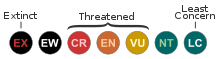
IUCN Red List of Threatened Plants Status : Least Concern.
Growth: S = slow M = medium F = fast. Soil: L = light (sandy) M = medium H = heavy (clay). pH: A = acid N = neutral B = basic (alkaline). Shade: F = full shade S = semi-shade N = no shade. Moisture: D = dry M = Moist We = wet Wa = water.
Now available:
Food Forest Plants for Mediterranean Conditions
350+ Perennial Plants For Mediterranean and Drier Food Forests and Permaculture Gardens.
[Paperback and eBook]
This is the third in Plants For A Future's series of plant guides for food forests tailored to
specific climate zones. Following volumes on temperate and tropical ecosystems, this book focuses
on species suited to Mediterranean conditions—regions with hot, dry summers and cool, wet winters,
often facing the added challenge of climate change.
Read More
Expert comment
Author
Wahlenb.
Botanical References
17
Links / References
For a list of references used on this page please go here
Readers comment
| Add a comment |
|
If you have important information about this plant that may help other users please add a comment or link below. Only comments or links that are felt to be directly relevant to a plant will be included. If you think a comment/link or information contained on this page is inaccurate or misleading we would welcome your feedback at [email protected]. If you have questions about a plant please use the Forum on this website as we do not have the resources to answer questions ourselves.
* Please note: the comments by website users are not necessarily those held by PFAF and may give misleading or inaccurate information.
|
Subject : Carex aquatilis
|
|
|
|