 |
|
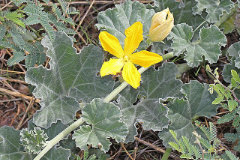
ALAN SCHMIERER Creative Commons Zero, Public Domain Dedication |
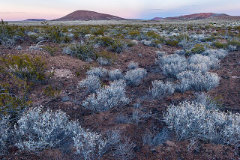 |
| Patrick Alexander from Las Cruces, NM Creative Commons Zero, Public Domain Dedication |
Translate this page:
Summary
Loco or coyote melon (Apodanthera undulata) is a low, sprawling perennial vine of the gourd family, native to the deserts and floodplains of the American Southwest and northern Mexico. It is recognized by its rough, wavy-lobed leaves, tendrils, bright yellow flowers, and distinctive hard-shelled, ridged fruits that mature in autumn. Although some Native American groups reportedly consumed the fruits and seeds during famines, most accounts describe the gourds as intensely bitter and potentially toxic, with seed oil considered inedible. For this reason, the plant is generally regarded as unsafe for human consumption. Ecologically, loco melon is well adapted to hot, dry environments, appearing after summer rains and persisting through drought, with insect-pollinated flowers and fruits that disperse seeds passively. While it does not have significant non-food uses, its fruits may serve ornamentally, and the plant contributes to desert biodiversity without becoming invasive. Overall, loco melon is best valued as a distinctive desert species rather than as a food resource.
Physical Characteristics

 Apodanthera undulata is a PERENNIAL CLIMBER growing to 2 m (6ft) by 0.2 m (0ft 8in) at a medium rate.
See above for USDA hardiness. It is hardy to UK zone 9 and is not frost tender. The flowers are pollinated by Bees, Insects.
It is noted for attracting wildlife.
Suitable for: light (sandy) and medium (loamy) soils, prefers well-drained soil and can grow in nutritionally poor soil. Suitable pH: mildly acid, neutral and basic (mildly alkaline) soils. It cannot grow in the shade. It prefers dry or moist soil and can tolerate drought.
UK Hardiness Map
US Hardiness Map
Synonyms
None
Plant Habitats
Edible Uses
Loco or coyote melon has a long but uncertain reputation as a famine food. Some ethnobotanical accounts record that Native Americans consumed the fruits and seeds during times of scarcity, yet other sources warn that the seeds’ oil is inedible and potentially toxic. The fruits are consistently described as intensely bitter, and both fruits and seeds may contain harmful compounds similar to those found in wild gourds (Cucurbita spp.). Based on these warnings, consumption of any part is not recommended unless a safe preparation method can be reliably verified. Unlike true gourds, loco melon fruits are ridged rather than smooth, and while they superficially resemble edible cucurbits, their toxicity risk is high. Foragers should treat this plant with caution and avoid eating its fruits or seeds [2-3].
References More on Edible Uses
Medicinal Uses
Plants For A Future can not take any responsibility for any adverse effects from the use of plants. Always seek advice from a professional before using a plant medicinally.
None Known
References More on Medicinal Uses
The Bookshop: Edible Plant Books
Our Latest books on Perennial Plants For Food Forests and Permaculture Gardens in paperback or digital formats.

Edible Tropical Plants
Food Forest Plants for Hotter Conditions: 250+ Plants For Tropical Food Forests & Permaculture Gardens.
More

Edible Temperate Plants
Plants for Your Food Forest: 500 Plants for Temperate Food Forests & Permaculture Gardens.
More

More Books
PFAF have eight books available in paperback and digital formats. Browse the shop for more information.
Shop Now
Other Uses
No significant traditional or modern non-food uses are recorded beyond possible experimental oil extraction from the seeds, though this was found unsuitable for human consumption. The hard-shelled fruits could potentially be used ornamentally or as small containers, but this was not a widespread practice. Loco melon plays an important role in desert ecosystems. Its sprawling vines help stabilize sandy or disturbed soils, while its tough gourds act as seed banks, protecting seeds from desiccation until rains arrive. Wildlife interactions are limited due to the fruit’s bitterness, but some small mammals may gnaw on the gourds to reach the seeds. The flowers, like many in the Cucurbitaceae family, attract native bees and other pollinators, providing nectar during summer bloom. Overall, while not a major food source, it contributes to desert biodiversity and resilience in arid habitats.
Special Uses
References More on Other Uses
Cultivation details
Habitat & Growing Conditions: Loco melon grows in deserts, floodplains, dry fields, and disturbed ground, preferring sandy or well-drained soils in hot, arid environments. It sprawls low to the ground, often climbing over other vegetation with the help of tendrils. It thrives in full sun and is well adapted to drought conditions of the American Southwest (Arizona to Texas) and northern Mexico. Growth & Ecology: A low, ill-scented perennial vine, it blooms in summer with bright yellow flowers and produces its distinctive hard-shelled gourds in autumn. It often grows in scattered populations but is locally common in suitable desert habitats. Its ridged fruits and free corolla lobes distinguish it from related gourds (Cucurbita). Pollination & Dispersal: Flowers are unisexual and insect-pollinated, most likely by bees and beetles that visit the large yellow blooms. Fruits develop into hard, ridged gourds, which may persist for months. Seed dispersal is largely gravity-based or aided by animals disturbing the dry fruits. Likely hardy to USDA zones 8–11, tolerating heat and drought but killed by frost.
References Carbon Farming Information and Carbon Sequestration Information
Temperature Converter
Type a value in the Celsius field to convert the value to Fahrenheit:
Fahrenheit:
The PFAF Bookshop
Plants For A Future have a number of books available in paperback and digital form. Book titles include Edible Plants, Edible Perennials, Edible Trees,Edible Shrubs, Woodland Gardening, and Temperate Food Forest Plants. Our new book is Food Forest Plants For Hotter Conditions (Tropical and Sub-Tropical).
Shop Now
Plant Propagation
Seed.
Other Names
If available other names are mentioned here
Loco or Coyote Melon
Native Range
Arizona, Mexico Northeast, Mexico Northwest, New Mexico, Texas
Weed Potential
Right plant wrong place. We are currently updating this section.
Please note that a plant may be invasive in one area but may not in your area so it's worth checking.
It is persistent in its native desert habitats but not strongly invasive outside them. In suitable disturbed soils, it can become weedy and locally dominant, but it rarely spreads beyond arid environments.
Conservation Status
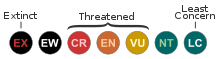
IUCN Red List of Threatened Plants Status : Not available
Growth: S = slow M = medium F = fast. Soil: L = light (sandy) M = medium H = heavy (clay). pH: A = acid N = neutral B = basic (alkaline). Shade: F = full shade S = semi-shade N = no shade. Moisture: D = dry M = Moist We = wet Wa = water.
Now available:
Food Forest Plants for Mediterranean Conditions
350+ Perennial Plants For Mediterranean and Drier Food Forests and Permaculture Gardens.
[Paperback and eBook]
This is the third in Plants For A Future's series of plant guides for food forests tailored to
specific climate zones. Following volumes on temperate and tropical ecosystems, this book focuses
on species suited to Mediterranean conditions—regions with hot, dry summers and cool, wet winters,
often facing the added challenge of climate change.
Read More
Expert comment
Author
A.Gray
Botanical References
Links / References
For a list of references used on this page please go here
Readers comment
| Add a comment |
|
If you have important information about this plant that may help other users please add a comment or link below. Only comments or links that are felt to be directly relevant to a plant will be included. If you think a comment/link or information contained on this page is inaccurate or misleading we would welcome your feedback at [email protected]. If you have questions about a plant please use the Forum on this website as we do not have the resources to answer questions ourselves.
* Please note: the comments by website users are not necessarily those held by PFAF and may give misleading or inaccurate information.
|
Subject : Apodanthera undulata
|
|
|
|