Translate this page:
Summary
A herbaceous biennial or short-lived perennial plant in the family Apiaceae and related to parsley, carrot, hemlock and hogweed. that can be confused with giant cow parsley (Heracleum mantegazzianum) or French cow parsley (Orlaya grandiflora). Some medicinal, edible and other uses although it does have an unpleasant flavour. Common names include cow parsley, wild chervil, wild beaked parsley, keck,or Queen Anne's lace.
Physical Characteristics

 Anthriscus sylvestris is a BIENNIAL growing to 1.2 m (4ft) by 0.6 m (2ft in).
See above for USDA hardiness. It is hardy to UK zone 7 and is not frost tender. It is in flower from April to June, and the seeds ripen from June to July. The species is hermaphrodite (has both male and female organs) and is pollinated by Bees. The plant is self-fertile.
Suitable for: light (sandy), medium (loamy) and heavy (clay) soils. Suitable pH: mildly acid, neutral and basic (mildly alkaline) soils. It can grow in full shade (deep woodland) semi-shade (light woodland) or no shade. It prefers dry or moist soil.
UK Hardiness Map
US Hardiness Map
Synonyms
Chaerophyllum sylvestre L.
Plant Habitats
Woodland Garden Dappled Shade; Shady Edge; Hedgerow;
Edible Uses
Edible Parts: Leaves Root
Edible Uses:
The leaves are eaten raw, cooked as a potherb or used as a flavouring[5, 12, 53, 183]. They taste somewhat less than wonderful[K]. Root - cooked[183].
References More on Edible Uses
Medicinal Uses
Plants For A Future can not take any responsibility for any adverse effects from the use of plants. Always seek advice from a professional before using a plant medicinally.
Tonic
The root is soaked for several days in rice washings and then cooked with other foods as a tonic for general weakness[218].
References More on Medicinal Uses
Other Uses
Dye
A beautiful green dye is obtained from the leaves and stem but it is not very permanent[115].
Special Uses
References More on Other Uses
Cultivation details
Succeeds in most soils. Shade tolerant[31]. The root has been recommended for improvement by selection and breeding as an edible crop[183]. This plant looks quite similar to some poisonous species, make sure that you identify it correctly.
References Carbon Farming Information and Carbon Sequestration Information
Temperature Converter
Type a value in the Celsius field to convert the value to Fahrenheit:
Fahrenheit:
Plant Propagation
Seed - sow as soon as ripe (June/July) in situ. The seed can also be sown April/May in situ. It usually germinates in 1 - 3 months at 20°c.
Other Names
If available other names are mentioned here
Native Range
TEMPERATE ASIA: Yemen, Iran, Iraq, Lebanon, Syria, Turkey (northeast), Armenia, Azerbaijan, Georgia, Russian Federation-Western Siberia (Western Siberia), Russian Federation-Eastern Siberia (Eastern Siberia), Kazakhstan (southeast), Kyrgyzstan, Turkmenistan, Mongolia, Russian Federation-Far East (Far East), China (Anhui Sheng, Hebei Sheng, Hunan Sheng, Hubei Sheng, Gansu Sheng, Jiangxi Sheng, Jiangsu Sheng, Jilin Sheng, Liaoning Sheng, Shanxi Sheng, Shaanxi Sheng, Sichuan Sheng, Yunnan Sheng, Nei Mongol Zizhiqu, Xinjiang Uygur Zizhiqu, Xizang Zizhiqu), Japan, Korea, South, Korea, North TROPICAL ASIA: India (Himachal Pradesh, Jammu and Kashmir), Nepal EUROPE: Denmark, Finland, United Kingdom, Ireland, Norway, Sweden, Austria, Belgium, Switzerland, Czech Republic, Germany, Hungary, Netherlands, Poland, Slovakia, Russian Federation (European part), Belarus, Estonia, Lithuania, Latvia, Moldova, Ukraine (incl. Krym), Albania, Bulgaria, Bosnia and Herzegovina, Greece, Croatia, Italy, North Macedonia, Montenegro, Romania, Serbia, Slovenia, Spain, France, Portugal AFRICA: Algeria (north), Morocco, Tunisia, Ethiopia, Kenya, Tanzania, Uganda, Democratic Republic of the Congo (east)
Weed Potential
Right plant wrong place. We are currently updating this section.
Please note that a plant may be invasive in one area but may not
in your area so it's worth checking.
Noxious Weed: Massachusetts, US (wild chervil) Prohibited. Washington, US -Class B noxious weed. This plant can be weedy or invasive in other areas.
Conservation Status
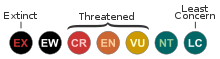
IUCN Red List of Threatened Plants Status : This taxon has not yet been assessed.
IUCN Red List
Growth: S = slow M = medium F = fast. Soil: L = light (sandy) M = medium H = heavy (clay). pH: A = acid N = neutral B = basic (alkaline). Shade: F = full shade S = semi-shade N = no shade. Moisture: D = dry M = Moist We = wet Wa = water.
Support Plants For A Future
Plants For A Future relies on regular donations to keep our free database and search facilities going, to pay for ongoing research, improvements and enhancements, and to develop and publish new books.
Read more
Choose Currency
Donate in £ GBP
Donate in $ USD
Donate in € EUR
Securely pay via PayPal or Credit/Debit Card without an account.
Expert comment
Author
(L.)Hoffm.
Botanical References
17200
Links / References
For a list of references used on this page please go here
Readers comment