Translate this page:
Summary
Nevada bulrush (Amphiscirpus nevadensis) is a perennial, grass-like sedge of wetlands and lake margins across western North and South America, distinct from the larger bulrushes (Schoenoplectus, Bolboschoenus) by its fringed ligules, lack of air cavities in the stems, and beakless achenes, and is the sole member of its genus. Although not as robust as tule or softstem bulrush, it plays an important ecological role in wetland systems. Like other bulrushes, all parts are edible, but Nevada bulrush is smaller and less rewarding; its thin rhizomes and fibrous stems offer little nourishment, while the small achenes are the most useful part, able to be collected, toasted, or ground into flour for gruels, broths, or baked goods, making it more of a secondary food resource in times of need. Beyond food, it has been used traditionally for light weaving—stems can be dried and worked into mats, baskets, or cordage, though they lack the strength of larger bulrushes—and it also provides valuable cover for birds, seeds for waterfowl, and root systems that stabilize wetland soils, filter water, and support aquatic invertebrates; although no direct medicinal records exist, related sedges have been used in poultices and teas, suggesting occasional experimentation. It grows best in saturated soils or shallow water under full sun, tolerating fresh to slightly brackish conditions at low to mid elevations, where it forms modest stands by slow rhizome spread, rarely becoming expansive like other bulrushes but still contributing significantly to wetland biodiversity and soil stability. Likely hardy to USDA zones 4–8, it can withstand cold winters if rhizomes remain submerged. It has little weed potential since it is confined to wet habitats and does not spread aggressively beyond them, though it can form persistent patches in suitable conditions. As food, it ranks low at about 2/5, with edible seeds offering some value, but rhizomes and stems too small to be worth major effort compared to its more substantial relatives.
Physical Characteristics

 Amphiscirpus nevadensis is a PERENNIAL growing to 0.5 m (1ft 8in) by 0.5 m (1ft 8in) at a fast rate.
See above for USDA hardiness. It is hardy to UK zone 6 and is not frost tender. The flowers are pollinated by Wind.
It is noted for attracting wildlife.
Suitable for: light (sandy), medium (loamy) and heavy (clay) soils and can grow in nutritionally poor soil. Suitable pH: mildly acid, neutral and basic (mildly alkaline) soils and can grow in very alkaline and saline soils.
It cannot grow in the shade. It prefers moist or wet soil and can grow in water and can tolerate drought.
UK Hardiness Map
US Hardiness Map
Synonyms
Homotypic Synonyms: Schoenoplectus nevadensis (S.Watson) Soják. Scirpus nevadensis S.Watson
Plant Habitats
Edible Uses
Nevada bulrush is the only species in the Amphiscirpus genus, native to western North and South America. Like other bulrushes, parts of the plant are edible, though this species is smaller and less productive than Schoenoplectus or Bolboschoenus [2-3]. The main food use is its seeds (achenes). These are beakless and can be collected in fair quantities, though less abundantly than in larger bulrushes. The seeds can be toasted, ground into flour, or boiled into a starchy broth, similar to other species of bulrush. Processing generally involves grinding and winnowing to remove shell fragments [2-3]. Other parts of the Nevada bulrush are edible, but they are limited in size and value. The stems and rhizomes are thin and lack the spongy aerenchyma tissue found in other bulrushes. They contain little starch and are not worth harvesting in large quantities. Young shoots may be technically edible but are insubstantial compared to better species [2-3]. Overall, Nevada bulrush is a lesser bulrush food plant, likely best considered a supplementary seed source rather than a staple [2-3]. Edibility Rating: 2/5 – Seeds are usable, but the plant is too small to be an important food source compared to other bulrushes [2-3]. Taste, Processing & Kitchen Notes: When lightly pan-toasted and rubbed to shed residual chaff, the seeds give a pleasantly nutty, cereal-like aroma without marshy undertones. Grinding to a fine meal improves digestibility and mouthfeel. The meal can be simmered to a thin gruel, folded into bannock-style flatbreads, or added to soups as a thickener. Because seed coats are relatively smooth, a brief winnow is usually enough, but multiple passes improve texture. Seasonality (Phenology): Vegetative growth begins in spring as soils warm and water tables rise. Flowering occurs from late spring through mid-summer, with seed maturity typically mid- to late summer depending on elevation and hydrology. A dry spell following seed fill often favors easier harvest as heads crisp and detach. Safety & Cautions (Food Use): As with all wetland grains, avoid polluted sites where salts may concentrate heavy metals or agrochemicals. Thoroughly dry and store seeds to prevent mold. Harvest & Processing Workflow: Clip seedheads into breathable sacks during the straw-colored stage. Dry fully, then gently rub and winnow. Toast briefly to enhance flavor and grind to meal. For gruel, simmer with 5–7 parts water until thickened. Look-Alikes & Confusion Risks: Often mistaken for fine Juncus or narrow Schoenoplectus. The fringed ligule, beakless achene, and lack of conspicuous aerenchyma are key. Microscopic inspection of ligule margins helps when in doubt. Traditional/Indigenous Use Summary: Documented food use is limited compared to larger bulrushes, but seeds of small wetland sedges were historically toasted and ground as supplemental grains. The species’ greater value likely lay in soil binding and habitat function near saline meadows used seasonally.
References More on Edible Uses
Medicinal Uses
Plants For A Future can not take any responsibility for any adverse effects from the use of plants. Always seek advice from a professional before using a plant medicinally.
Little recorded specifically for Nevada bulrush. Unlike Schoenoplectus or Bolboschoenus, which sometimes appear in ethnobotanical records, Amphiscirpus has not been noted as a primary medicinal species. However, related bulrushes have been used for poultices, wound dressings, and urinary/diuretic teas so that Nevada bulrush may have seen occasional local experimentation.
References More on Medicinal Uses
The Bookshop: Edible Plant Books
Our Latest books on Perennial Plants For Food Forests and Permaculture Gardens in paperback or digital formats.

Edible Tropical Plants
Food Forest Plants for Hotter Conditions: 250+ Plants For Tropical Food Forests & Permaculture Gardens.
More

Edible Temperate Plants
Plants for Your Food Forest: 500 Plants for Temperate Food Forests & Permaculture Gardens.
More

More Books
PFAF have eight books available in paperback and digital formats. Browse the shop for more information.
Shop Now
Other Uses
Weaving and Cordage: Like other bulrushes, its stems could be dried and woven into mats, ropes, or small baskets, though its stems are thinner and less robust than tule or softstem. This makes them less ideal for large mats or canoe-making, but they are suitable for lighter craftwork. Wildlife Habitat: Provides cover and nesting material for birds, and food for waterfowl and wetland mammals. Ducks and other birds eat the seeds. Erosion Control: Root systems help stabilize wetland soils and prevent erosion along lake margins and streams. Ecological Role: Contributes to water filtration and wetland health by trapping sediments, cycling nutrients, and providing habitat for aquatic invertebrates.
Special Uses
References More on Other Uses
Cultivation details
Amphiscirpus nevadensis (Nevada bulrush) is a delicate perennial sedge forming small tufts or patches, generally around 10–30 cm tall, occasionally to about 40 cm, with slow rhizomatous spread that can make loose mats wider than the height. Like most sedges and bulrushes, it is wind-pollinated: the reduced, non-showy flowers release and receive pollen on the breeze rather than relying on animal visitors. Identification & Habit: This is a perennial sedge that looks deceptively grassy at a distance. Stems are slender, green to gray-green, and notably lack the conspicuous air spaces (aerenchyma) that characterize many aquatic sedges. Leaf blades, if present, are narrow and reduced; the sheaths show a distinctive fringed ligule at the junction with the blade—an important character that helps separate Amphiscirpus from Schoenoplectus. The small, brownish spikelets are grouped near the upper stem in a simple to slightly compound arrangement. Fruits (achenes) are smooth and beakless, another useful trait for diagnosis. Growing Conditions: Best in alkaline to sub-alkaline, seasonally saturated soils with full sun. It tolerates fluctuating water levels and brief inundation but is generally found in moist margins rather than deep standing water. It endures summer dryness once established by retreating to its root crown. Habitat & Range: Common in the Great Basin, Intermountain West, and western Great Plains in saline meadows, alkali flats, playa edges, and irrigation seepage zones. It also occurs in parts of western Canada and sporadically in the southern Cone of South America. Size & Landscape Performance: Low to mid-height and tuft-forming, it creates a fine textured, uniform sward useful for soil binding in saline restoration projects. In designed landscapes it can edge bioswales and salt-affected basins where few natives thrive, though it lacks the vertical drama of tall bulrushes. Cultivation (Horticulture):Establish in moist, alkaline loams or silty clays with spring saturation. Provide full sun. In constructed cells, maintain a seasonally wet shoulder rather than continuously deep water. Once rooted, it needs little care beyond hydrologic management. Pests & Problems: Generally problem-free. Extreme, prolonged flooding can reduce vigor; long drought without a perched water table will cause dieback. Grazing pressure is usually light due to low palatability. Cultivar/Selection Notes: No named selections are in circulation. Regional ecotypes vary in stature and phenology; choose local stock for restoration.
References Carbon Farming Information and Carbon Sequestration Information
Temperature Converter
Type a value in the Celsius field to convert the value to Fahrenheit:
Fahrenheit:
The PFAF Bookshop
Plants For A Future have a number of books available in paperback and digital form. Book titles include Edible Plants, Edible Perennials, Edible Trees,Edible Shrubs, Woodland Gardening, and Temperate Food Forest Plants. Our new book is Food Forest Plants For Hotter Conditions (Tropical and Sub-Tropical).
Shop Now
Plant Propagation
Amphiscirpus nevadensis (Nevada bulrush) can be propagated both by seed and by division of rhizomes. In the wild, seeds mature in late summer to autumn, disperse by water or birds, and germinate best on saturated or shallowly flooded soils. They require light for germination, so they should be sown on the soil surface rather than buried, and a period of cold stratification improves success. However, seed germination can be slow and inconsistent, so division of rhizomes is usually more reliable. Clumps are best divided in spring or early summer, with sections replanted directly into wet soil or shallow water where they establish readily. Because Nevada bulrush is adapted to wet habitats, constant soil moisture is essential, and it thrives in full sun though it can tolerate partial shade. For restoration or garden use, rhizome division provides the fastest and most dependable way to establish new plants, while seeds remain important for natural dispersal and long-term habitat regeneration.
Other Names
If available other names are mentioned here
Amphiscirpus nevadensis (Nevada Bulrush)
Native Range
Alberta, Argentina Northwest, Argentina South, Bolivia, British Columbia, California, Chile South, Colorado, Mexico Central, Montana, Nebraska, Nevada, North Dakota, Oregon, Saskatchewan, Utah, Washington, Wyoming
Weed Potential
Right plant wrong place. We are currently updating this section.
Please note that a plant may be invasive in one area but may not in your area so it's worth checking.
Low weed potential. Nevada bulrush is not aggressive and is tied to wetland habitats. It does not typically spread into farmland or disturbed drylands like some related sedges.
Conservation Status
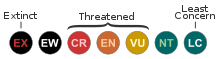
IUCN Red List of Threatened Plants Status : Least Concern
Growth: S = slow M = medium F = fast. Soil: L = light (sandy) M = medium H = heavy (clay). pH: A = acid N = neutral B = basic (alkaline). Shade: F = full shade S = semi-shade N = no shade. Moisture: D = dry M = Moist We = wet Wa = water.
Now available:
Food Forest Plants for Mediterranean Conditions
350+ Perennial Plants For Mediterranean and Drier Food Forests and Permaculture Gardens.
[Paperback and eBook]
This is the third in Plants For A Future's series of plant guides for food forests tailored to
specific climate zones. Following volumes on temperate and tropical ecosystems, this book focuses
on species suited to Mediterranean conditions—regions with hot, dry summers and cool, wet winters,
often facing the added challenge of climate change.
Read More
Expert comment
Author
(S.Watson) Oteng-Yeb.
Botanical References
Links / References
For a list of references used on this page please go here
Readers comment
| Add a comment |
|
If you have important information about this plant that may help other users please add a comment or link below. Only comments or links that are felt to be directly relevant to a plant will be included. If you think a comment/link or information contained on this page is inaccurate or misleading we would welcome your feedback at [email protected]. If you have questions about a plant please use the Forum on this website as we do not have the resources to answer questions ourselves.
* Please note: the comments by website users are not necessarily those held by PFAF and may give misleading or inaccurate information.
|
Subject : Amphiscirpus nevadensis
|
|
|
|