Translate this page:
Summary
Alisma gramineum is an aquatic or semi-aquatic herb with narrow grass-like leaves and delicate panicles emerging from shallow water. Like other water-plantains, its starchy underground parts and seeds can be edible when thoroughly cooked, but raw tissues contain acrid and irritant compounds. It is a niche famine or survival food of marsh edges, not a primary staple. Approximate USDA Zones 4–8, height 15–60 cm.
Physical Characteristics

 Alisma gramineum is a PERENNIAL growing to 0.5 m (1ft 8in) by 0.3 m (1ft) at a medium rate.
See above for USDA hardiness. It is hardy to UK zone 5 and is not frost tender. The flowers are pollinated by Bees, Insects.
It is noted for attracting wildlife.
Suitable for: light (sandy), medium (loamy) and heavy (clay) soils. Suitable pH: mildly acid, neutral and basic (mildly alkaline) soils. It cannot grow in the shade. It prefers moist or wet soil and can grow in water.
UK Hardiness Map
US Hardiness Map
Synonyms
Homotypic Synonyms: Alisma plantago-aquatica var. gramineum (Lej.) Dumort.
Plant Habitats
Edible Uses
The rhizomes (thickened stem bases) are edible when cooked. Like other water plantains, the rhizomes are short, thick, and starchy, though they may carry an acrid undertone if eaten raw. Cooking removes much of the bitterness and makes them mild and palatable. They can be roasted, dried, or ground into flour [2-3]. Other parts (leaves, stalks, roots) are not documented as edible, and given their fibrous, spongy texture, they are unlikely to provide food value [2-3]. Edible Uses & Rating: As with allied species, the rhizomes/tuberous bases and seeds are the potential edibles, always well-cooked. Because of limited bulk, difficulty of harvest, and safety precautions, this species rates 2/5 for edibility. Taste, Processing & Kitchen Notes: Properly leached and boiled rhizomes can yield a mild, starchy, somewhat nutty or bland food; inadequately cooked material can be peppery or acrid and irritate the mouth and gut. Seeds, if collected in quantity, can be parched and ground, but are tiny. Seasonality (Phenology): Growth begins in spring with warming water; flowering usually occurs in summer; seeds are produced in late summer to early autumn. Underground parts are technically available year-round, but easiest to access at low water. Safety & Cautions (Food Use): Raw tissues contain acrid, potentially irritant compounds; must be thoroughly cooked, often with a change of water. Harvest only from clean wetlands free of contamination. Harvest & Processing Workflow: Dig rhizomes in late season; peel if needed; slice and boil in ample water, discarding the first water if peppery. Seeds can be stripped from mature heads, dried, and ground, but yield is low. Look-Alikes & Confusion Risks: Can be confused with young grasses or sedges from a distance; confirmed by Alisma’s three-petaled flowers and characteristic fruiting heads. Traditional/Indigenous Use Summary: Related water-plantains were widely used as cooked starch sources in Eurasia and North America. A. gramineum likely shared similar occasional use where abundant.
References More on Edible Uses
Medicinal Uses
Plants For A Future can not take any responsibility for any adverse effects from the use of plants. Always seek advice from a professional before using a plant medicinally.
None Known
References More on Medicinal Uses
The Bookshop: Edible Plant Books
Our Latest books on Perennial Plants For Food Forests and Permaculture Gardens in paperback or digital formats.

Edible Tropical Plants
Food Forest Plants for Hotter Conditions: 250+ Plants For Tropical Food Forests & Permaculture Gardens.
More

Edible Temperate Plants
Plants for Your Food Forest: 500 Plants for Temperate Food Forests & Permaculture Gardens.
More

More Books
PFAF have eight books available in paperback and digital formats. Browse the shop for more information.
Shop Now
Other Uses
A minor wetland starch plant: ecologically more important than culinarily, yet historically relevant as emergency food. It can be grown in containers or pond margins. Ecology & Wildlife: Provides cover and structure in shallow-water zones; seeds and periphyton support invertebrates and some waterfowl. Flowers are visited by small flies and bees, but some pollination may be autogamous.
Special Uses
References More on Other Uses
Cultivation details
Identification & Habit: This species forms rosettes of narrow, linear to lanceolate submerged or emergent leaves. From these bases arise slender stalks bearing an open, branched inflorescence of small three-petaled flowers (white to pale pink) with yellowish centers. Fruits are small, many-seeded achenes in whorls. Plants grow rooted in soft substrates of shallow water or muddy margins. Growing Conditions: Requires shallow, still or slow-moving water with muddy or silty substrate. Full sun is preferred; tolerates some fluctuation in water level. Habitat & Range Occurs in scattered wetland habitats of Eurasia and North America, including cool-temperate marshes, ponds, ditches, and lake margins. Size & Landscape Performance: A delicate emergent, suitable for naturalized pond margins. Not particularly showy, but adds fine texture. Cultivation (Horticulture): Can be grown in containers or pond margins by planting seed or small divisions into shallow mud. Needs clean, unpolluted water. Pests & Problems: Vulnerable to water pollution, eutrophication, and habitat destruction more than to classic pests. Cultivar/Selection Notes: No cultivars.
References Carbon Farming Information and Carbon Sequestration Information
Temperature Converter
Type a value in the Celsius field to convert the value to Fahrenheit:
Fahrenheit:
The PFAF Bookshop
Plants For A Future have a number of books available in paperback and digital form. Book titles include Edible Plants, Edible Perennials, Edible Trees,Edible Shrubs, Woodland Gardening, and Temperate Food Forest Plants. Our new book is Food Forest Plants For Hotter Conditions (Tropical and Sub-Tropical).
Shop Now
Plant Propagation
By seed sown in submerged mud or by division of clumps. Seeds may benefit from cold, wet stratification.
Other Names
If available other names are mentioned here
Alisma gramineum (Grassleaf, Narrowleaf, or Ribbonleaf Water Plantain)
Native Range
Afghanistan, Albania, Alberta, Altay, Arizona, Austria, Baltic States, Belarus, Belgium, British Columbia, Bulgaria, Buryatiya, California, Central European Russia, China North-Central, Chita, Colorado, Czechia-Slovakia, Denmark, East European Russia, Egypt, France, Germany, Great Britain, Greece, Hungary, Idaho, Inner Mongolia, Iran, Irkutsk, Italy, Kazakhstan, Krasnoyarsk, Krym, Lebanon-Syria, Libya, Manchuria, Manitoba, Minnesota, Mongolia, Montana, Morocco, Nebraska, Netherlands, Nevada, New Mexico, New York, North Caucasus, North Dakota, North European Russia, Northwest European Russia, NW. Balkan Pen., Ontario, Oregon, Pakistan, Poland, Primorye, Qinghai, Québec, Romania, Saskatchewan, South Dakota, Switzerland, Tadzhikistan, Transcaucasus, Tunisia, Tuva, Türkey, Türkey-in-Europe, Ukraine, Utah, Uzbekistan, Vermont, Washington, West Himalaya, West Siberia, Wisconsin, Wyoming, Xinjiang, Yakutiya
Weed Potential
Right plant wrong place. We are currently updating this section.
Please note that a plant may be invasive in one area but may not in your area so it's worth checking.
Generally low; rarely problematic compared to robust invasives.
Conservation Status
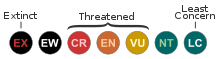
IUCN Red List of Threatened Plants Status : Predicted extinction risk: not threatened. Confidence: confident
| Related Plants
|
| Latin Name | Common Name | Habit | Height | Hardiness | Growth | Soil | Shade | Moisture | Edible | Medicinal | Other |
| Alisma canaliculatum | | Perennial | 0.8 |
5-9
| | LMH | N | WeWa | 1 | 0 | |
| Alisma plantago-aquatica | Great Water Plantain, ZE-XIE, European water plantain, American water plantain, Northern water plan | Perennial | 0.9 |
5-9
| | LMH | N | WeWa | 1 | 3 | |
| Alisma triviale | Mud or Northern Water Plantain | Perennial | 0.6 |
3-8
| M | LMH | N | MWeWa | 3 | 0 | 2 |
| Damasonium alisma | Thrumwort | Annual/Perennial | 0.3 |
6-9
| | LMH | SN | WeWa | 1 | 0 | |
| Limnocharis flava | Sawah Lettuce, Sawah Flowering Rush | Perennial | 0.6 |
10-12
| F | LMH | N | MWeWa | 4 | 0 | 3 |
| Sagittaria aginashi | | Perennial | 0.0 |
-
| | LMH | N | WeWa | 1 | 0 | |
| Sagittaria brevirosta | Short-Beaked Arrow Leaf | Perennial | 1.2 |
-
| | LMH | N | WeWa | 2 | 0 | |
| Sagittaria chapmanii | Chapman's arrowhead | Perennial | 0.5 |
-
| | LMH | N | WeWa | 0 | 0 | |
| Sagittaria cuneata | Wapato, arumleaf arrowhead | Perennial | 0.8 |
5-9
| | LMH | N | WeWa | 4 | 1 | |
| Sagittaria graminea | Chinese Arrowhead, Grassy Arrowhead, Weatherby's arrowhead | Annual/Perennial | 0.5 |
5-9
| | LMH | SN | WeWa | 1 | 0 | 0 |
| Sagittaria latifolia | Duck Potato, Broadleaf Arrowhead | Perennial | 1.2 |
6-9
| | LMH | N | WeWa | 5 | 1 | 0 |
| Sagittaria rigida | Sessile-Fruited Arrowhead | Perennial | 0.8 |
6-9
| | LMH | N | WeWa | 3 | 0 | |
| Sagittaria sagittifolia | Arrow Head, Hawaii arrowhead | Perennial | 1.0 |
6-9
| | LMH | N | WeWa | 5 | 1 | 0 |
| Sagittaria sagittifolia leucopetala | | Perennial | 1.0 |
-
| | LMH | SN | WeWa | 3 | 1 | |
| Sagittaria trifolia | Chinese Arrowroot, Threeleaf arrowhead | Perennial | 1.0 |
10-12
| | LMH | SN | WeWa | 4 | 2 | 0 |
|
Growth: S = slow M = medium F = fast. Soil: L = light (sandy) M = medium H = heavy (clay). pH: A = acid N = neutral B = basic (alkaline). Shade: F = full shade S = semi-shade N = no shade. Moisture: D = dry M = Moist We = wet Wa = water.
Now available:
Food Forest Plants for Mediterranean Conditions
350+ Perennial Plants For Mediterranean and Drier Food Forests and Permaculture Gardens.
[Paperback and eBook]
This is the third in Plants For A Future's series of plant guides for food forests tailored to
specific climate zones. Following volumes on temperate and tropical ecosystems, this book focuses
on species suited to Mediterranean conditions—regions with hot, dry summers and cool, wet winters,
often facing the added challenge of climate change.
Read More
Expert comment
Author
Lej.
Botanical References
Links / References
For a list of references used on this page please go here
Readers comment
| Add a comment |
|
If you have important information about this plant that may help other users please add a comment or link below. Only comments or links that are felt to be directly relevant to a plant will be included. If you think a comment/link or information contained on this page is inaccurate or misleading we would welcome your feedback at [email protected]. If you have questions about a plant please use the Forum on this website as we do not have the resources to answer questions ourselves.
* Please note: the comments by website users are not necessarily those held by PFAF and may give misleading or inaccurate information.
|
Subject : Alisma gramineum
|
|
|
|