Translate this page:
Summary
Physical Characteristics

 Vicia sativa is a ANNUAL CLIMBER growing to 1.2 m (4ft) at a fast rate.
See above for USDA hardiness. It is hardy to UK zone 5 and is not frost tender. It is in flower from May to September, and the seeds ripen from July to September. The species is hermaphrodite (has both male and female organs) and is pollinated by Bees, Lepidoptera (Moths & Butterflies). The plant is self-fertile.
It can fix Nitrogen.
Suitable for: light (sandy), medium (loamy) and heavy (clay) soils and prefers well-drained soil. Suitable pH: mildly acid, neutral and basic (mildly alkaline) soils. It can grow in semi-shade (light woodland) or no shade. It prefers moist soil.
UK Hardiness Map
US Hardiness Map
Synonyms
Vicia bacla. Vicia communis. Vicia glabra. Vicia nemoralis
Plant Habitats
Hedgerow; Cultivated Beds;
Edible Uses
Edible Parts: Leaves Seed Shoots
Edible Uses: Tea
Seed - cooked[22, 74]. Not very palatable nor very digestible but it is very nutritious[2, 115]. The seed can be dried, ground into a powder and mixed with cereal flour to make bread, biscuits, cakes etc[183]. The beans compliment the protein in the cereal making it more complete[K]. Some caution is advised, see the notes above on toxicity. Leaves, young shoots and young pods - cooked[105, 177, 183]. The leaves are a tea substitute[183].
References More on Edible Uses
Medicinal Uses
Plants For A Future can not take any responsibility for any adverse effects from the use of plants. Always seek advice from a professional before using a plant medicinally.
None known
References More on Medicinal Uses
Other Uses
Green manure
A very valuable green manure crop, it can be sown in spring or as late as October. A deep rooted and fast growing plant, it is winter hardy, an effective weed suppresser, produces a good bulk and fixes a large amount of nitrogen[87]. Dynamic accumulator.
Special Uses
Dynamic accumulator Food Forest Nitrogen Fixer
References More on Other Uses
Cultivation details
Succeeds in any well-drained soil in a sunny position if the soil is reliably moist throughout the growing season, otherwise it is best grown in semi-shade[200]. The sub-species V. sativa leucosperma. Ser. is the form usually grown for food[74]. This species has a symbiotic relationship with certain soil bacteria, these bacteria form nodules on the roots and fix atmospheric nitrogen. Some of this nitrogen is utilized by the growing plant but some can also be used by other plants growing nearby[200].
References Carbon Farming Information and Carbon Sequestration Information
Temperature Converter
Type a value in the Celsius field to convert the value to Fahrenheit:
Fahrenheit:
Plant Propagation
Pre-soak the seed for 24 hours in warm water and sow in situ from late winter to early summer and again in the autumn.
Other Names
If available other names are mentioned here
Native Range
TEMPERATE ASIA: Oman, Saudi Arabia, Yemen (north), Afghanistan, Cyprus, Egypt (Sinai), Iran, Iraq, Israel, Jordan, Lebanon, Syria, Turkey, Armenia, Azerbaijan, Russian Federation (Checheno-Ingushetia, Dagestan, Kabardino-Balkaria, Karacaevo-Cerkesskaja Respublika, Krasnodar, North Ossetia, Stavropol), Russian Federation-Western Siberia (Western Siberia (south)), Russian Federation (Irkutsk, Krasnoyarsk, Kurganskaja oblast, Novosibirsk, Sverdlovsk, Tomsk), Kazakhstan, Kyrgyzstan, Tajikistan, Turkmenistan, Uzbekistan, China, Korea, Japan, Taiwan TROPICAL ASIA: Bhutan, India, Nepal, Pakistan EUROPE: Denmark, Finland, United Kingdom, Ireland, Norway, Sweden, Czechoslovakia, Austria, Belgium, Switzerland, Germany, Hungary, Netherlands, Poland, Belarus, Estonia, Lithuania, Latvia, Moldova, Russian Federation (Cuvašskaja Respublika, Karelia, Komi, Marij Èl, Respublika, Mordovija, Respublika, Tatarstan, Udmurtia, Arkhangelsk, Belgorod, Bryansk, Ivanovo, Kaliningrad, Kalužskaja oblast, Kirov, Kostroma, Kursk, Leningradskaja oblast, Lipeckaja oblast, Moscow, Murmansk, Novgorod, Orel, Penza, Perm, Pskovskaja oblast, Rostov, Ryazan, Saratov, Smolensk, Tambov, Tula, Ulyanovsk, Vladimir, Volgogradskaja oblast, Vologda, Voronezh, Yaroslavl), Ukraine (incl. Krym), Former Yugoslavia, Albania, Bulgaria, Greece (incl. Crete), Italy (incl. Sardinia, Sicily), Malta, Romania, Spain (incl. Baleares), France (incl. Corsica), Portugal AFRICA: Spain (Canarias), Portugal (Madeira Islands), Algeria, Egypt, Libya, Morocco, Tunisia, Kenya
Weed Potential
Right plant wrong place. We are currently updating this section.
Please note that a plant may be invasive in one area but may not
in your area so it's worth checking.
Conservation Status
IUCN Red List of Threatened Plants Status :
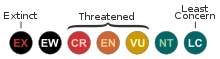
IUCN Red List
| Related Plants
|
| Latin Name | Common Name | Habit | Height | Hardiness | Growth | Soil | Shade | Moisture | Edible | Medicinal | Other |
| Artemisia ludoviciana | White Sage, Louisiana Sage, Prairie Sage, Western Mugwort | Perennial | 1.0 |
3-9
| M | LM | SN | DM | 2 | 2 | 2 |
| Artemisia ludoviciana gnaphalodes | White Sage | Perennial | 1.0 |
4-8
| M | LM | SN | DM | 0 | 2 | 1 |
| Avena ludoviciana | Oats | Annual | 0.0 |
-
| | LMH | N | DM | 2 | 0 | 2 |
| Lactuca ludoviciana | Louisiana Lettuce | Biennial | 1.5 |
3-9
| F | LM | SN | M | 3 | 2 | 2 |
| Orobanche ludoviciana | Broomrape, Louisiana broomrape | Perennial | 1.5 |
0-0
| | LMH | FSN | M | 1 | 1 | 0 |
| Vicia americana | American Vetch, Mat vetch | Perennial | 1.0 |
4-7
| | LMH | SN | M | 2 | 1 | 4 |
| Vicia amoena | | Perennial | 1.0 |
-
| | LMH | SN | M | 1 | 0 | |
| Vicia amurensis | | Perennial | 1.5 |
-
| | LMH | SN | M | 1 | 0 | |
| Vicia articulata | One-Flower Vetch | Annual | 0.6 |
-
| | LMH | SN | M | 1 | 0 | 3 |
| Vicia benghalensis | Purple Vetch | Annual/Perennial | 0.6 |
-
| F | LMH | SN | M | 0 | 0 | 3 |
| Vicia caroliniana | Carolina vetch, Carolina wood vetch | Perennial | 0.6 |
3-9
| M | LMH | FSN | M | 0 | 2 | 4 |
| Vicia cracca | Tufted Vetch, Bird vetch, Cow vetch | Perennial Climber | 1.8 |
4-8
| | LMH | SN | M | 1 | 1 | 3 |
| Vicia ervilia | Bitter Vetch | Annual | 0.6 |
-
| | LMH | SN | M | 1 | 0 | |
| Vicia faba equina | Horsebean | Annual | 1.0 |
4-8
| F | LMH | SN | M | 3 | 0 | 3 |
| Vicia faba major | Broad Bean, Fava Bean | Annual | 1.0 |
4-10
| F | LMH | SN | M | 4 | 1 | 3 |
| Vicia faba minuta | Tick Bean | Annual | 1.0 |
4-8
| F | LMH | SN | M | 3 | 0 | 3 |
| Vicia gigantea | Giant Vetch | Perennial | 1.0 |
4-8
| | LMH | SN | M | 2 | 1 | 3 |
| Vicia grandiflora kitaibeliana | large yellow vetch | Annual | 0.0 |
-
| | LMH | SN | M | 2 | 0 | |
| Vicia heptajuga | | Perennial | 0.0 |
-
| | LMH | SN | M | 1 | 0 | |
| Vicia hirsuta | Hairy Tare, Tiny vetch | Annual | 0.5 |
4-9
| | LMH | SN | M | 2 | 0 | 3 |
| Vicia hirticalycina | | Perennial | 0.0 |
-
| | LMH | SN | M | 1 | 0 | |
| Vicia japonica | | Perennial | 1.5 |
-
| | LMH | SN | M | 1 | 0 | |
| Vicia monantha | Hard Vetch, Barn vetch | Annual | 0.0 |
0-0
| | LMH | SN | M | 2 | 0 | 3 |
| Vicia narbonensis | French Vetch, Purple broad vetch | Annual | 1.0 |
0-0
| | LMH | SN | M | 2 | 0 | |
| Vicia nipponica | | Perennial | 0.8 |
-
| | LMH | SN | M | 1 | 0 | |
| Vicia noeana | | Annual | 0.6 |
-
| | LMH | SN | M | 1 | 0 | |
| Vicia pisiformis | Pea Vetch, Pale-flower vetch | Perennial | 1.8 |
0-0
| | LMH | SN | M | 1 | 0 | |
| Vicia pseudo-orobus | | Perennial | 1.5 |
-
| | LMH | SN | DM | 1 | 0 | |
| Vicia sativa leucosperma | Winter Tares | Annual Climber | 1.2 |
4-8
| F | LMH | SN | M | 3 | 0 | 3 |
|
|
Growth: S = slow M = medium F = fast. Soil: L = light (sandy) M = medium H = heavy (clay). pH: A = acid N = neutral B = basic (alkaline). Shade: F = full shade S = semi-shade N = no shade. Moisture: D = dry M = Moist We = wet Wa = water.
Support Plants For A Future
Plants For A Future relies on regular donations to keep our free database and search facilities going, to pay for ongoing research, improvements and enhancements, and to develop and publish new books.
Read more
Choose Currency
Donate in £ GBP
Donate in $ USD
Donate in € EUR
Securely pay via PayPal or Credit/Debit Card without an account.
Expert comment
Author
L.
Botanical References
17200
Links / References
For a list of references used on this page please go here
Readers comment