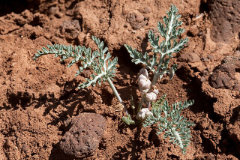
 |
|
Patrick Alexander. Creative Commons Zero, Public Domain Dedication |
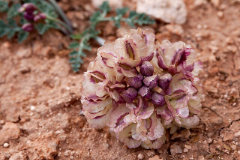 |
| Patrick Alexander. Creative Commons Zero, Public Domain Dedication |
Translate this page:
Summary
Purplenerve wavywing is one of the more practically important “roots-only” spring-parsleys in your notes: roots can be abundant, accessible, and genuinely palatable when many other foods are scarce, while the leaves can be so irritant that they are best excluded from use.
Physical Characteristics

 Vesper multinervatus is a PERENNIAL growing to 0.3 m (1ft) by 0.3 m (1ft in) at a medium rate.
See above for USDA hardiness. It is hardy to UK zone 6. The flowers are pollinated by Bees, Insects.
It is noted for attracting wildlife.
Suitable for: light (sandy) and medium (loamy) soils, prefers well-drained soil and can grow in nutritionally poor soil. Suitable pH: neutral and basic (mildly alkaline) soils and can grow in very alkaline soils.
It cannot grow in the shade. It prefers dry or moist soil and can tolerate drought.
UK Hardiness Map
US Hardiness Map
Synonyms
Cymopterus multinervatus (J.M.Coult. & Rose) Tidestr. is a synonym of Vesper multinervatus
Plant Habitats
Edible Uses
Roots are the edible target; leaves are not recommended for food use in this project context [2-3]. Edible Uses & Rating. Roots rate excellent as a wild root when properly cleaned and cooked; leaves rate “do not use” based on the strong burning sensation you documented, including persistence after cooking [2-3]. Taste, Processing & Kitchen Notes. Roots improve dramatically when peeled and boiled. When prepared well, they can read as a parsnip–potato–squash blend with only a manageable resinous edge, and they can produce a good soup-root effect. Texture can be airy and spongy with some stringiness; sweetness varies with site and season [2-3]. Seasonality (Phenology). Early spring emergence in open woodlands and arid slopes; usable roots coincide with the spring moisture window, often before summer heat hardens soils and plant tissues. Safety & Cautions (Food Use). Beyond the genus-level phototoxin caution, we note the foliage as irritant in a way that cooking does not fix. Treat this as a “roots only” plant unless future evidence strongly contradicts it [2-3]. Harvest & Processing Workflow. Target moderately soft soils where roots sit nearer the surface. Dig, wash, peel to reduce resinous/mineral tones, slice, and boil. If you want maximum caution, blanch and discard first water, then finish cook. Do not add leaves to the pot. Cultivar/Selection Notes. No cultivars; select for thicker, cleaner roots from healthier colonies in spring-wet sites. Look-Alikes & Confusion Risks. Apiaceae confusion risk; confirm by fruit when possible. Also avoid confusing irritant foliage with “normal parsley-family bite”—this species’ leaf burning is a distinct red flag. Traditional/Indigenous Use Summary. Widespread Indigenous use of spring-parsleys; this species’ root abundance in early season fits that historic role, even if its leaves are problematic [2-3].
References More on Edible Uses
Medicinal Uses
Plants For A Future can not take any responsibility for any adverse effects from the use of plants. Always seek advice from a professional before using a plant medicinally.
Vesper multinervatus (Purple-nerve Spring-Parsley, formerly Cymopterus multinervatus) is traditionally known for its edible uses rather than specific, documented modern medicinal applications. Edible Uses: It is one of several species traditionally gathered for its edible leaves and roots, often referred to as "Chimaja". Traditional Knowledge: It is a native herb found in the Southwest, often in desert scrub and grasslands, with a long taproot. Related Species: While Vesper multinervatus itself is noted primarily as an edible plant, other plants in the Lomatium genus (within the same Apiaceae family) are noted for having antimicrobial and antiviral properties, though this does not directly confirm the same for V. multinervatus. No specific medicinal applications, such as treatments for ailments, are mentioned in the search results for this specific species.
References More on Medicinal Uses
The Bookshop: Edible Plant Books
Our Latest books on Perennial Plants For Food Forests and Permaculture Gardens in paperback or digital formats.
Edible Tropical Plants
Food Forest Plants for Hotter Conditions: 250+ Plants For Tropical Food Forests & Permaculture Gardens.
More
Edible Temperate Plants
Plants for Your Food Forest: 500 Plants for Temperate Food Forests & Permaculture Gardens.
More
More Books
PFAF have eight books available in paperback and digital formats. Browse the shop for more information.
Shop Now
Other Uses
Early insect forage and a resilient component of arid spring communities; roots likely browsed by some wildlife where accessible. Umbels visited by small bees and flies; typical Apiaceae generalist insect pollination.
Special Uses
References More on Other Uses
Cultivation details
A high-value early root in the right habitats, but the foliage is a practical and safety liability; treat purplenerve wavywing as a root harvest with conservative water-based preparation. Growing Conditions. Dry, arid settings and open woodlands, often with alkaline/mineral soils, exploiting melting-snow moisture. Habitat & Range. Spans arid parts from New Mexico to California and into southern Nevada/Utah. Size & Landscape Performance. Small, tough, early; reliable presence in harsh soils where many edible greens are scarce. Cultivation (Horticulture). Not common; would require sharp drainage and a natural cold–spring moisture cycle. Pests & Problems. Leaf irritancy; root quality variability with soil chemistry; grit contamination. Identification & Habit. Small perennial spring-parsley with dissected basal leaves; confirm by winged fruit typical of Cymopterus. Pollinators. Umbels visited by small bees and flies; typical Apiaceae generalist insect pollination. Purplenerve Wavywing (Cymopterus multinervatus). Family: Apiaceae. Genus: Cymopterus. Common names: Purplenerve wavywing. USDA Hardiness Zones: approximately Zones 5–9 (warm-to-cold desert/intermountain perennial across arid states; exact horticultural zone data is limited). Approximate size: often 10–30 cm tall in flower, 10–30 cm spread.
References Carbon Farming Information and Carbon Sequestration Information
Temperature Converter
Type a value in the Celsius field to convert the value to Fahrenheit:
Fahrenheit:
The PFAF Bookshop
Plants For A Future have a number of books available in paperback and digital form. Book titles include Edible Plants, Edible Perennials, Edible Trees,Edible Shrubs, Woodland Gardening, and Temperate Food Forest Plants. Our new book is Food Forest Plants For Hotter Conditions (Tropical and Sub-Tropical).
Shop Now
Plant Propagation
Seed with cold stratification; establishment likely slow and dependent on spring moisture.
Other Names
If available other names are mentioned here
Cymopterus multinervatus (J.M.Coult. & Rose) Tidestr. is a synonym of Vesper multinervatus. Purplenerve wavywing.
Native Range
US.USA. Arizona, California, Mexico Northwest, Nevada, New Mexico, Utah.
Weed Potential
Right plant wrong place. We are currently updating this section.
Please note that a plant may be invasive in one area but may not in your area so it's worth checking.
Very low.
Conservation Status
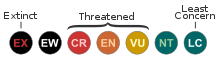
IUCN Red List of Threatened Plants Status : Not listed.
Growth: S = slow M = medium F = fast. Soil: L = light (sandy) M = medium H = heavy (clay). pH: A = acid N = neutral B = basic (alkaline). Shade: F = full shade S = semi-shade N = no shade. Moisture: D = dry M = Moist We = wet Wa = water.
Now available:
Food Forest Plants for Mediterranean Conditions
350+ Perennial Plants For Mediterranean and Drier Food Forests and Permaculture Gardens.
[Paperback and eBook]
This is the third in Plants For A Future's series of plant guides for food forests tailored to
specific climate zones. Following volumes on temperate and tropical ecosystems, this book focuses
on species suited to Mediterranean conditions—regions with hot, dry summers and cool, wet winters,
often facing the added challenge of climate change.
Read More
Expert comment
Author
(J.M.Coult. & Rose) R.L.Hartm. & G.L.Nesom
Botanical References
Links / References
For a list of references used on this page please go here
Readers comment
| Add a comment |
|
If you have important information about this plant that may help other users please add a comment or link below. Only comments or links that are felt to be directly relevant to a plant will be included. If you think a comment/link or information contained on this page is inaccurate or misleading we would welcome your feedback at [email protected]. If you have questions about a plant please use the Forum on this website as we do not have the resources to answer questions ourselves.
* Please note: the comments by website users are not necessarily those held by PFAF and may give misleading or inaccurate information.
|
Subject : Vesper multinervatus
|
|
|
|