Translate this page:
Summary
Vachellia constricta is a thorny tree that can grow up to 6 metres tall[1050 ]. The plant is harvested from the wild for local use as food. Seeds occasionally eaten after thorough cooking, but of little food value; more often used medicinally. Classification of the genus Acacia (in the wider sense) has been subject to considerable debate. It is generally agreed that there are valid reasons for breaking it up into several distinct genera, but there has been disagreement over the way this should be done. As of 2017, it is widely (but not completely) accepted that the section that includes the majority of the Australian species should retain the name Acacia, whilst other sections of the genus should be transferred to other genera. This species is transferred to Vachellia[K ].
Physical Characteristics

 Vachellia constricta is a TREE growing to 5 m (16ft) by 5 m (16ft) at a slow rate.
See above for USDA hardiness. It is hardy to UK zone 8 and is not frost tender. The flowers are pollinated by Bees, Insects. The plant is self-fertile.
It can fix Nitrogen.
It is noted for attracting wildlife.
Suitable for: light (sandy) and medium (loamy) soils, prefers well-drained soil and can grow in nutritionally poor soil. Suitable pH: neutral and basic (mildly alkaline) soils and can grow in very alkaline soils.
It cannot grow in the shade. It prefers dry or moist soil and can tolerate drought.
UK Hardiness Map
US Hardiness Map
Synonyms
Acacia constricta Benth.
Plant Habitats
Edible Uses
Native Americans of Arizona and New Mexico used whitethorn acacia fruits to make pinole[1050 ]. The seeds average about 3mm wide, 5 - 6mm long, and weigh an average of 19.1g[1050 ]. Whitethorn acacia (Acacia constricta = Vachellia constricta) is a thorny shrub native to the deserts and arid regions of the southwestern United States and northern Mexico. Of its parts, only the seeds are reported to be edible, and even then they were of limited importance as a food source. Seeds are produced from July to November and require thorough cooking to neutralize the high levels of tannins, alkaloids, and cyanide-based compounds typical of the genus. Historical accounts suggest that the seeds were consumed rarely and were more often used medicinally, for treating stomach upsets, diarrhea, and skin problems, rather than as a staple food. The single available sample described in your notes was too small to evaluate properly, but overall, the seeds appear to lack promise as a useful wild food [2-3].
References More on Edible Uses
Medicinal Uses
Plants For A Future can not take any responsibility for any adverse effects from the use of plants. Always seek advice from a professional before using a plant medicinally.
Seri Native Americans of Sonora, Mexico, used the seeds and leaves of whitethorn acacia, pulverized and heated in water, to treat stomach aches and diarrhoea. When ground into a powder, the leaves and pods can stop bleeding, relieve diaper rashes and chafed skin, and may be used as an antimicrobial wash. A similar powder has been used by Native Americans to soothe aching back muscles of people and flank muscles of horses[1050 ]. A tea from the flowers and leaves has sedative properties and eases hangovers[1050 ]. The root, when made into a tea, treats sore throats, coughing, and mouth inflammations[1050 ].
References More on Medicinal Uses
The Bookshop: Edible Plant Books
Our Latest books on Perennial Plants For Food Forests and Permaculture Gardens in paperback or digital formats.
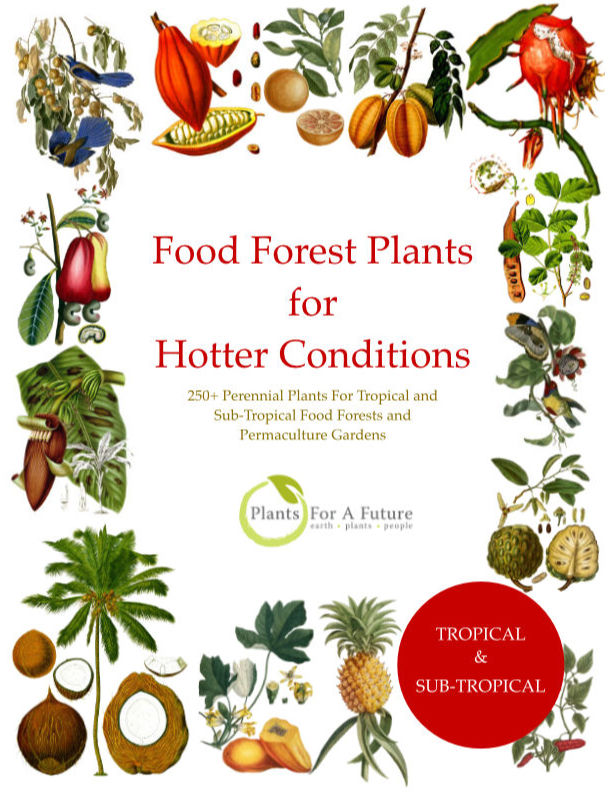
Edible Tropical Plants
Food Forest Plants for Hotter Conditions: 250+ Plants For Tropical Food Forests & Permaculture Gardens.
More
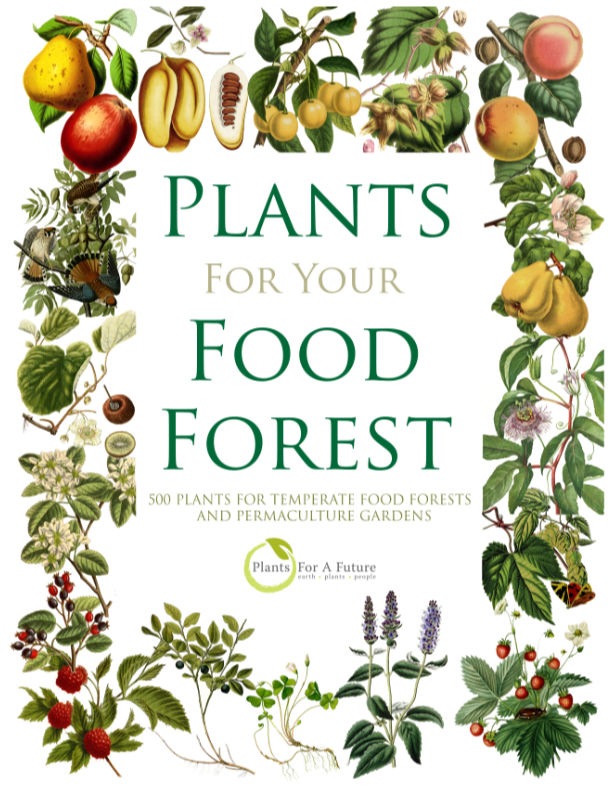
Edible Temperate Plants
Plants for Your Food Forest: 500 Plants for Temperate Food Forests & Permaculture Gardens.
More
More Books
PFAF have eight books available in paperback and digital formats. Browse the shop for more information.
Shop Now
Other Uses
Whitethorn acacia protects newly revegetated areas from grazing. It also provides erosion control and tolerates saline soils. Revegetation of a pipeline corridor in Arizona in 1986, using whitethorn acacia among several other native species, successfully resembled undisturbed sites after 10 years. Whitethorn acacia's success in revegetation of mine reclamation sites depended on the protection of the revegetated sites. Whitethorn acacia seedlings suffered 100% mortality on the revegetated exposed east slopes of copper mine waste areas of Tucson, Arizona. On the more protected north slopes, some seedlings survived for at least 7 years following the initial seeding. However, actual survival rates were unclear[1050 ].
Special Uses
References More on Other Uses
Cultivation details
Vachellia constricta is a plant of arid and semi-arid regions of southwestern N. America at elevations up to 2,000 metres. It can experience summer temperatures as high as 43°c with winter lows falling to -12°c. Annual precipitation can range from 90 - 500mm, most of it falling in intense (summer) or more moderate (winter) storms[1050 ]. Requires a sunny position in a well-drained soil. Sandy to loamy soils are most often described in association with whitethorn acacia. An impervious caliche or lime layer is also commonly associated with most of these soils. Whitethorn acacia was found on soils with 6.3% to 10.9% moisture content during the period of most intense drought conditions, and dominated where the moisture content was 6.3%. Soil moisture, nitrate, ammonium, and phosphorus concentrations are higher when shrubs have ant nests beneath their canopies[1050 ]. Following top-kill, this species sprouts from the root crown[1050 ]. A fairly long-lived tree that can live more than 70 years[1050 ]. Flowers are short-lived, and bees only pollinate flowers on the day flower buds open[1050 ]. This species has a symbiotic relationship with certain soil bacteria; these bacteria form nodules on the roots and fix atmospheric nitrogen. Some of this nitrogen is utilized by the growing plant, but some can also be used by other plants growing nearby[1050 ]. This species is adapted to hot, dry environments, thriving in desert scrub and thorny thickets, and is best suited to USDA Hardiness Zones 7–10, where it can withstand heat and drought but not severe frost. It is not considered invasive or aggressively weedy. While it can form dense, spiny stands in its native range, these are natural growth habits rather than signs of unwanted spread.
References Carbon Farming Information and Carbon Sequestration Information
Temperature Converter
Type a value in the Celsius field to convert the value to Fahrenheit:
Fahrenheit:
The PFAF Bookshop
Plants For A Future have a number of books available in paperback and digital form. Book titles include Edible Plants, Edible Perennials, Edible Trees,Edible Shrubs, Woodland Gardening, and Temperate Food Forest Plants. Our new book is Food Forest Plants For Hotter Conditions (Tropical and Sub-Tropical).
Shop Now
Plant Propagation
Seed - best sown as soon as it is ripe in a sunny position in a warm greenhouse[1 ]. Stored seed should be scarified, pre-soaked for 12 hours in warm water and then sown in a warm greenhouse in early spring. The seed germinates in 3 - 4 weeks at 25°c[133 ]. As soon as the seedlings are large enough to handle, prick them out into individual pots and grow them in a sunny position in the greenhouse for their first winter. Plant them out in late spring or early summer, after the last expected frosts, and consider giving them some protection from the cold for their first winter outdoors. Cuttings of half-ripe wood with a heel, mid-summer in individual pots in a frame[78 ]. Overwinter in a greenhouse for the first winter and plant out in their permanent positions in late spring or early summer. Fair percentage[78 ].
Other Names
If available other names are mentioned here
Whitethorn acacia, Whitethorn, Mescat Acacia, Acacia constricta, Vachellia constricta
Native Range
Native to: Arizona, Mexico Central, Mexico Northeast, Mexico Northwest, Mexico Southwest, New Mexico, Texas. Introduced into: Maryland.
Weed Potential
Right plant wrong place. We are currently updating this section.
Please note that a plant may be invasive in one area but may not in your area so it's worth checking.
It is not considered invasive or aggressively weedy. While it can form dense, spiny stands in its native range, these are natural growth habits rather than signs of unwanted spread.
Conservation Status
IUCN Red List of Threatened Plants Status : Not available
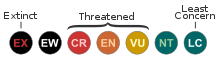
Growth: S = slow M = medium F = fast. Soil: L = light (sandy) M = medium H = heavy (clay). pH: A = acid N = neutral B = basic (alkaline). Shade: F = full shade S = semi-shade N = no shade. Moisture: D = dry M = Moist We = wet Wa = water.
Now available:
Food Forest Plants for Mediterranean Conditions
350+ Perennial Plants For Mediterranean and Drier Food Forests and Permaculture Gardens.
[Paperback and eBook]
This is the third in Plants For A Future's series of plant guides for food forests tailored to
specific climate zones. Following volumes on temperate and tropical ecosystems, this book focuses
on species suited to Mediterranean conditions—regions with hot, dry summers and cool, wet winters,
often facing the added challenge of climate change.
Read More
Expert comment
Author
(Benth.) Seigler & Ebinger
Botanical References
Links / References
For a list of references used on this page please go here
A special thanks to Ken Fern for some of the information used on this page.
Readers comment
| Add a comment |
|
If you have important information about this plant that may help other users please add a comment or link below. Only comments or links that are felt to be directly relevant to a plant will be included. If you think a comment/link or information contained on this page is inaccurate or misleading we would welcome your feedback at [email protected]. If you have questions about a plant please use the Forum on this website as we do not have the resources to answer questions ourselves.
* Please note: the comments by website users are not necessarily those held by PFAF and may give misleading or inaccurate information.
|
Subject : Vachellia constricta
|
|
|
|