 |
|
www.flickr.com/photos/40325561@N04 |
 |
| www.flickr.com/photos/foliosus |
Translate this page:
Summary
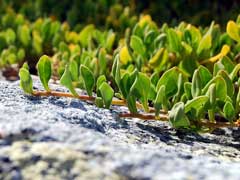
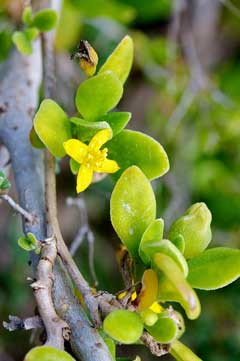
Bower spinach is a useful Australian coastal edible green and groundcover. It is closely related in use to warrigal greens, Tetragonia tetragonioides, but is more trailing, woody, and coastal in habit. It is valued for its succulent leaves, tolerance of salt, wind, drought, and sandy soils, and ability to stabilise coastal banks. In edible landscapes, it is one of the better perennial leafy greens for harsh coastal conditions. Bower spinach, Tetragonia implexicoma, belongs to the ice plant family (Aizoaceae) and the genus Tetragonia. Common names include bower spinach, native spinach, barilla spinach, sea spinach, and New Zealand spinach in some horticultural contexts. It is a trailing, scrambling, or weakly climbing coastal perennial, generally suited to USDA Zones 9–11, though it may tolerate brief light frost in sheltered sites. Plants commonly grow 20–50 cm high but may spread 1.5–2 m or more as a groundcover or scrambling shrub-layer plant. It is accepted by Plants of the World Online, which lists its native range as western and southern Australia.
Physical Characteristics

 Tetragonia implexicoma is an evergreen Perennial growing to 0.5 m (1ft 8in) by 2 m (6ft) at a medium rate.
See above for USDA hardiness. It is hardy to UK zone 9. The species is hermaphrodite (has both male and female organs) and is pollinated by Bees, insects.
It is noted for attracting wildlife.
Suitable for: light (sandy), medium (loamy) and heavy (clay) soils, prefers well-drained soil and can grow in nutritionally poor soil. Suitable pH: mildly acid, neutral and basic (mildly alkaline) soils and can grow in saline soils.
It can grow in semi-shade (light woodland) or no shade. It prefers moist soil and can tolerate drought. The plant can tolerate maritime exposure.
UK Hardiness Map
US Hardiness Map
Synonyms
Plant Habitats
Cultivated Beds;
Edible Uses
The leaves are edible and used like spinach. The ripe fleshy berries are also reported edible and were valued as a sweet snack or addition to meals in Tasmania. The plant is best cooked or blanched before eating because Tetragonia greens can contain oxalates, especially in older leaves. Edible Uses & Rating: Bower spinach ranks as a good edible coastal green. It is not as widely cultivated as warrigal greens, but it is valuable where salt spray, wind, sand, and drought make ordinary leafy vegetables difficult. As a cooked green, it deserves a strong rating. As a raw salad plant, it should be used sparingly or avoided. Taste, Processing & Kitchen Notes: The leaves have a spinach-like flavour, often slightly salty and succulent. They can be used in stir-fries, pies, soups, omelettes, pasta fillings, and cooked greens. Blanching before use is recommended to reduce oxalates and soften the texture. Young leaves are the best eating stage. Older leaves can become tougher and more strongly flavoured. The berries darken when ripe and may be eaten as a small sweet snack, though they are more of a bushfood curiosity than a major fruit. Seasonality (Phenology): In mild coastal climates, leafy growth may be available for much of the year, especially after rain or irrigation. Small yellow flowers appear from spring to summer, followed by red to dark berries. Some coastal plant guides describe it as flowering in spring to summer and producing edible red berries afterward. Safety & Cautions (Food Use): Like other Tetragonia greens, bower spinach should generally be blanched or cooked before eating in quantity because of oxalic acid. People prone to kidney stones or advised to limit oxalates should be cautious. Avoid overharvesting wild coastal plants, especially where they stabilise dunes or protect fragile foreshore vegetation. Harvest & Processing Workflow: Harvest young leafy tips and tender leaves from clean, unsprayed plants. Rinse well to remove sand and salt. Blanch briefly, discard the water, then use as a cooked green. For berries, harvest only fully ripe, soft fruit and use sparingly. Avoid woody seed pods or hard old fruiting parts. Cultivar/Selection Notes: No major food cultivars are widely recognised. Selection for edible gardens would favour vigorous, tender-leaved plants with good regrowth and low bitterness. In restoration, local provenance should be preferred. Look-Alikes & Confusion Risks: Bower spinach may be confused with warrigal greens, Tetragonia tetragonioides, and other coastal Tetragonia species. This is usually not dangerous, as several species are edible greens, but species differ in texture, habit, fruit, and local conservation value. Correct identification matters when harvesting wild plants from sensitive coastal habitats. Traditional/Indigenous Use Summary: Bower spinach was a significant food source for Tasmanian Aboriginal people. The leaves were eaten as a vegetable, and the berries, which darken when ripe, were used as a sweet snack and reportedly valued as a red dye source. Settlers also cooked the succulent leaves like spinach.
References More on Edible Uses
Medicinal Uses
Plants For A Future can not take any responsibility for any adverse effects from the use of plants. Always seek advice from a professional before using a plant medicinally.
None known
References More on Medicinal Uses
The Bookshop: Edible Plant Books
Our Latest books on Perennial Plants For Food Forests and Permaculture Gardens in paperback or digital formats.
Edible Tropical Plants
Food Forest Plants for Hotter Conditions: 250+ Plants For Tropical Food Forests & Permaculture Gardens.
More
Edible Temperate Plants
Plants for Your Food Forest: 500 Plants for Temperate Food Forests & Permaculture Gardens.
More
More Books
PFAF have eight books available in paperback and digital formats. Browse the shop for more information.
Shop Now
Other Uses
Ecology & Wildlife: Bower spinach helps stabilise sandy soils and coastal banks, provides cover in foreshore habitats, and produces flowers and fruit used by insects and possibly birds or small animals. Its drought, salt, and wind tolerance make it especially valuable in coastal restoration. It performs as a dense trailing groundcover, scrambling plant, or low coastal stabiliser. Some plant guides describe it as spreading to around 2 m with thick bright green succulent leaves, useful for soil stabilisation in dry sandy areas.
Special Uses
References More on Other Uses
Cultivation details
Bower spinach is a strong edible and ecological plant for coastal regions. It provides useful spinach-like leaves, tolerates difficult seaside conditions, stabilises sandy soils, and supports native coastal vegetation structure. It is best treated as a cooked perennial green rather than a raw salad plant. Growing Conditions: It prefers full sun to partial shade and well-drained sandy soil. It is extremely tolerant of salt, wind, and drought, making it well suited to coastal and dry gardens. Habitat & Range: Bower spinach is mostly coastal and is found around southern and western Australia. Australian bushfood sources describe it as common along coastlines, cliffs, sand dunes, and foreshore scrub, sometimes extending inland along tidal or brackish waterways. Size & Landscape Performance: It performs as a dense trailing groundcover, scrambling plant, or low coastal stabiliser. Some plant guides describe it as spreading to around 2 m with thick bright green succulent leaves, useful for soil stabilisation in dry sandy areas. Cultivation (Horticulture): Grow it in sandy, freely draining soil with sun or part shade. Water regularly while establishing, then reduce irrigation. It is useful in coastal revegetation, edible native gardens, dry banks, and erosion-control plantings. It may become dense enough to suppress weeds. Pests & Problems: Few serious pest problems are likely in suitable coastal conditions. The main issues are excessive wet soil, poor drainage, and possible overgrowth in small gardens. In humid or poorly drained sites, succulent growth may be prone to rot. Identification & Habit: Bower spinach is a trailing or scrambling perennial with succulent green leaves, small yellow flowers, and red to dark berries. Its stems can weave through shrubs or form a mat over sandy ground. Pollinators: The small yellow flowers are likely visited by small native bees, flies, and other generalist insects, though it is not primarily grown as a major showy pollinator plant.
References Carbon Farming Information and Carbon Sequestration Information
Temperature Converter
Type a value in the Celsius field to convert the value to Fahrenheit:
Fahrenheit:
The PFAF Bookshop
Plants For A Future have a number of books available in paperback and digital form. Book titles include Edible Plants, Edible Perennials, Edible Trees,Edible Shrubs, Woodland Gardening, and Temperate Food Forest Plants. Our new book is Food Forest Plants For Hotter Conditions (Tropical and Sub-Tropical).
Shop Now
Plant Propagation
Propagation is by seed or cuttings. Cuttings are likely the easiest method for gardeners, while seed is useful for restoration and broader planting.
Other Names
If available other names are mentioned here
Native Range
New South Wales, Norfolk Is., South Australia, Tasmania, Victoria, Western Australia
Weed Potential
Right plant wrong place. We are currently updating this section.
Please note that a plant may be invasive in one area but may not in your area so it's worth checking.
Low to moderate. In coastal gardens it can spread well and form a dense mat, but it is generally valued as a native groundcover or stabilising plant rather than treated as a serious weed. In small gardens, it may need trimming.
Conservation Status
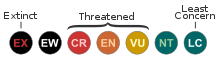
IUCN Red List of Threatened Plants Status :
Growth: S = slow M = medium F = fast. Soil: L = light (sandy) M = medium H = heavy (clay). pH: A = acid N = neutral B = basic (alkaline). Shade: F = full shade S = semi-shade N = no shade. Moisture: D = dry M = Moist We = wet Wa = water.
Now available:
Food Forest Plants for Mediterranean Conditions
350+ Perennial Plants For Mediterranean and Drier Food Forests and Permaculture Gardens.
[Paperback and eBook]
This is the third in Plants For A Future's series of plant guides for food forests tailored to
specific climate zones. Following volumes on temperate and tropical ecosystems, this book focuses
on species suited to Mediterranean conditions—regions with hot, dry summers and cool, wet winters,
often facing the added challenge of climate change.
Read More
Expert comment
Author
(Miq.) Hook.f.
Botanical References
285
Links / References
For a list of references used on this page please go here
Readers comment
| Add a comment |
|
If you have important information about this plant that may help other users please add a comment or link below. Only comments or links that are felt to be directly relevant to a plant will be included. If you think a comment/link or information contained on this page is inaccurate or misleading we would welcome your feedback at [email protected]. If you have questions about a plant please use the Forum on this website as we do not have the resources to answer questions ourselves.
* Please note: the comments by website users are not necessarily those held by PFAF and may give misleading or inaccurate information.
|
Subject : Tetragonia implexicoma
|
|
|
|