Translate this page:
Summary
Smilacina racemosa (L.) Desf. is a synonym of Maianthemum racemosum (L.) Link. False King Solomon's seal is a woodland perennial valued for its edible shoots, rhizomes, and berries, although all should be consumed with caution and only in small quantities. It was used by several Native American groups, particularly in the Pacific Northwest, where the western subspecies was most commonly harvested. Despite its reputation as a poisonous plant, careful preparation greatly improves both flavour and safety. Among the two southwestern Maianthemum species, M. racemosum is considered by far the superior food plant.
Physical Characteristics

 Smilacina racemosa is a PERENNIAL growing to 0.9 m (3ft) by 0.6 m (2ft in) at a medium rate.
See above for USDA hardiness. It is hardy to UK zone 4. It is in flower from May to July, and the seeds ripen from August to October. The species is hermaphrodite (has both male and female organs) and is pollinated by Insects. The plant is self-fertile.
Suitable for: light (sandy), medium (loamy) and heavy (clay) soils and prefers well-drained soil. Suitable pH: mildly acid and neutral soils. It can grow in full shade (deep woodland) or semi-shade (light woodland). It prefers moist soil.
UK Hardiness Map
US Hardiness Map
Synonyms
Maianthemum racemosum (L.) Link (correct). Homotypic Synonyms: Convallaria racemosa L. Polygonastrum racemosum (L.) Moench. Smilacina racemosa (L.) Desf. Smilacina racemosa var. typica Fernald. Tovaria racemosa (L.) Neck. ex Baker. Unifolium racemosum (L.) Britton. Vagnera racemosa (L.) Morong. Heterotypic Synonyms: Convallaria ciliata (Desf.) Poir. Maianthemum racemosum subsp. racemosum. Sigillaria ciliata (Desf.) Raf. Sigillaria multiflora Raf. Smilacina ciliata Desf. Smilacina flexicaulis Wender. Smilacina latifolia Nutt. ex Baker. Smilacina racemosa var. cylindrata Fernald. Smilacina racemosa f. foliosa Vict. Smilacina racemosa var. lanceolata B.Boivin. Vagnera australis Small. Vagnera retusa Raf.
Plant Habitats
Edible Uses
Edible Parts: Shoots
Edible Uses:
False King Solomon's seal is one of the more rewarding woodland food plants when handled carefully. Its young shoots resemble mild asparagus, the rhizomes provide a useful starchy food after prolonged boiling, and the ripe berries are unexpectedly sweet. Although caution is necessary because of its purgative properties and the possibility of confusion with poisonous woodland plants, Maianthemum racemosum stands out as the best edible species in the genus and a worthwhile seasonal resource for experienced foragers [2-3]. The young shoots, rhizomes, and berries are edible, but it's best to cook them and eat them sparingly. Raw plant parts may have a purgative effect, while cooking reduces bitterness and decreases this action. Shoots and berries are generally regarded as safer than rhizomes [2-3]. Edibility Rating: 3 out of 5 – A worthwhile woodland food when properly prepared, but caution and moderation are essential [2-3]. Taste and Preparation: The thick rhizomes are white inside with dark skins and contain considerable starch. After about an hour of boiling, they become soft and mildly starchy with very little bitterness or soapiness remaining. Some unpleasant flavors may persist, so discard the cooking water. Growing tips of the rhizomes and newly emerging shoots are noticeably more acrid and are best avoided. Rhizomes are easiest to harvest from autumn through spring, when starch reserves are highest. Young shoots under 10–20 cm long are tender and resemble asparagus in flavor, although they possess a mild acrid overtone and a hint of sweetness. The lower white portions are considerably better tasting than the greener upper sections. Cooking changes the texture very little but produces a pleasantly thick broth because of the plant's natural mucilage. Since flavour varies between colonies and several poisonous woodland plants produce similar shoots, positive identification is essential before harvesting. The ripe berries are sweet, juicy, and somewhat reminiscent of cherries or rose hips. Most unpleasant flavors are concentrated in the seeds, making it preferable to chew around them and discard the seeds afterward. Boiling whole berries draws bitterness from the seeds into the flesh and significantly reduces their quality. Although the berries taste surprisingly good, eating large quantities may cause digestive upset, so eat in moderation [2-3]. Seasonality: Shoots emerge in spring, flowers appear from May to July, berries ripen during summer, and rhizomes are best harvested from autumn through early spring when starch reserves are greatest. Traditional Uses: Several Native American peoples cooked the shoots, rhizomes, and berries in small quantities. The Ojibwe traditionally soaked rhizomes in lye water before parboiling and cooking them, primarily to reduce bitterness. Pacific Northwest peoples also used the western subspecies (ssp. amplexicaule), suggesting that both western and eastern forms have similar food value. Safety: Although edible, cook all parts and eat them in moderation. Raw consumption can be purgative, and large quantities may cause digestive upset. Closely related species contain cardiac glycosides, so caution is warranted. Because young shoots resemble those of several poisonous woodland plants, positive identification is essential before harvesting [2-3]. Fruit - raw, cooked or made into jellies and molasses[2, 46, 55, 85, 102, 183]. The fruit is smaller than a pea but is produced in quite large terminal clusters on the plant and so is easy to harvest. It has a delicious bitter-sweet flavour, suggesting bitter molasses[85, 183]. The fruit is said to store well[207], it certainly hangs well on the plants and we have picked very delicious fruits in late October[K]. Rich in vitamins[177], the fruit has been used to prevent scurvy[213]. Some caution is advised since the raw fruit is said to be laxative in large quantities, though this is only if you are not used to eating this fruit[85, 102, 159, 183]. Thorough cooking removes much of this laxative element[183]. Young leaves - raw or cooked[102]. The young shoots, as they emerge in spring, can be cooked and used as an asparagus substitute[55, 85, 102, 159, 183]. Root - cooked[85]. It should be soaked in alkaline water first to get rid of a disagreeable taste[85, 102, 159, 183]. It can be eaten like potatoes or pickled[183].
References More on Edible Uses
Medicinal Uses
Plants For A Future can not take any responsibility for any adverse effects from the use of plants. Always seek advice from a professional before using a plant medicinally.
False spikenard was widely employed by several native North American Indian tribes who used it to treat a variety of complaints[257]. It is little, if at all, used in modern herbalism. The plant is contraceptive and haemostatic[213, 257]. A decoction is used in the treatment of coughs and the spitting up of blood[257]. Half a cup of leaf tea drunk daily for a week by a woman is said to prevent conception[213, 257]. a poultice of the crushed fresh leaves is applied to bleeding cuts[257]. A tea made from the roots is drunk to regulate menstrual disorders[213]. The root is analgesic, antirheumatic, appetizer, blood purifier, cathartic and tonic[257]. A decoction is said to be a very strong medicine, it is used for treating rheumatism and kidney problems and, when taken several times a day it has been used successfully in treating cancer and heart complaints[257]. The fumes from a burning root have been inhaled to treat headaches and general body pain[257]. The fumes have also been used to restore an unconscious patient and to bring an insane person back to normal[257]. The dried powdered root has been used in treating wounds[213]. A poultice of the root has been applied to the severed umbilical cord of a child in order to speed the healing process and is also used to treat cuts, swellings etc[257]. A cold infusion of the root is used as a wash for sore eyes[257].
References More on Medicinal Uses
Other Uses
False King Solomon's seal is an attractive woodland perennial suitable for shaded native gardens. Plants can be grown as a ground cover when planted about 45cm apart each way[208]. The flowers provide nectar for woodland pollinators, while the berries are consumed by birds and other wildlife, helping disperse the seeds.
Special Uses
Food Forest
References More on Other Uses
Cultivation details
False King Solomon's seal thrives in cool, shaded woodlands with moist, well-drained, organic-rich soils. It grows best in partial to full shade. Habitat: It occurs in woodlands, shaded canyons, and forest margins throughout much of North America, including mountainous regions of the Southwest. USDA Hardiness Zones: USDA Zones 3–8. Growth Rate: Moderate. Plants spread gradually by rhizomes, forming loose colonies. Mature Size: Plants typically grow 30–90 cm (12–36 inches) tall. Cultivation: False King Solomon's seal is an attractive woodland perennial suitable for shaded native gardens. It prefers humus-rich soils that remain consistently moist but not waterlogged. Identification: False King Solomon's seal is an upright to arching perennial arising from rhizomes. It bears alternate lance-shaped leaves with prominent parallel veins and produces large terminal panicles of small white flowers. The berries mature to red with purple spots or mottling and usually contain one to three seeds. In the western subspecies, the leaves clasp the stem and have acute tips, while eastern plants typically have short leaf stalks and long tapering leaf tips. Similar Species: The closest relative is starry false King Solomon's seal (Maianthemum stellatum), which bears flowers in simple racemes rather than branched panicles and produces berries that are far less palatable. M. racemosum is markedly superior in the quality of its shoots, rhizomes, and especially its berries. An easy plant to grow[233], it requires a deep fertile humus rich moisture retentive soil, neutral to slightly acid, that does not dry out in the growing season, and a shady position[200]. Requires a lime-free soil[233]. It does well in a woodland garden[200]. Hardy to about -20°c[200]. Plants take a few years to become established[208]. This species can be separated into two sub-species, S. racemosa racemosa being found in the east of the range whilst S. racemosa amplexicaule is found in the west[270]. One report says that the plant is apomictic (producing seeds without sexual fusion), though this needs to be investigated further[270]. The flowers have a gentle sweet perfume[245]. For polyculture design as well as the above-ground architecture (form - tree, shrub etc. and size shown above) information on the habit and root pattern is also useful and given here if available. The plant growth habit is a runner spreading indefinitely by rhizomes or stolons [1-2]. The root pattern is rhizomatous with underground stems sending roots and shoots along their length [1-2].
References Carbon Farming Information and Carbon Sequestration Information
Temperature Converter
Type a value in the Celsius field to convert the value to Fahrenheit:
Fahrenheit:
The PFAF Bookshop
Plants For A Future have a number of books available in paperback and digital form. Book titles include Edible Plants, Edible Perennials, Edible Trees,Edible Shrubs, Woodland Gardening, and Temperate Food Forest Plants. Our new book is Food Forest Plants For Hotter Conditions (Tropical and Sub-Tropical).
Shop Now
Plant Propagation
Seed - best sown as soon as it is ripe in a cold frame. The seed can be very slow to germinate, often taking 18 months. Stored seed should be sown in a cold frame as soon as possible, it may take 2 years or longer to germinate. Grow the seedlings on in a shady part of a greenhouse for their first year without pricking them out, giving them liquid or foliar feeds as required to ensure that they do not become nutrient deficient. Divide the young plants up into individual pots in the autumn when they are dormant, and grow them on for at least another year in a shady part of the greenhouse. When the plants have reached a sufficient size, plant them out in the autumn whilst they are dormant. Division in spring or early autumn. Very easy, larger divisions can be planted out direct into their permanent positions. We have found it best to pot up the smaller divisions and grow them on in a lightly shaded position in a cold frame, planting them out once they are well established in the summer.
Other Names
If available other names are mentioned here
False Spikenard, Treacleberry, Feathery false lily of the valley, False Solomon's seal, Solomon's plume, false spikenard. False King Solomon's seal, Branched false King Solomon's seal, False lily of the valley.
Native Range
NORTHERN AMERICA: Canada, Northwest Territories (southwest), Nova Scotia, Ontario, Prince Edward Island, New Brunswick, Newfoundland and Labrador, Saskatchewan (southwest), Alberta, Manitoba (southeast), British Columbia, United States, Alaska (southeast), Connecticut, Indiana, Maine, Massachusetts, Michigan, New Hampshire, New Jersey, New York, Ohio, Pennsylvania, Rhode Island, Vermont, West Virginia, Illinois, Iowa, Kansas, Minnesota, Missouri, Nebraska, North Dakota, Oklahoma, South Dakota, Wisconsin, Colorado, Idaho, Oregon, Washington, Alabama, Arkansas, Delaware, Florida, Georgia, Kentucky, Louisiana, Maryland, Mississippi, North Carolina, South Carolina, Tennessee, Virginia, District of Columbia, New Mexico, Texas, Arizona, California, Nevada, Mexico, Chihuahua,
Weed Potential
Right plant wrong place. We are currently updating this section.
Please note that a plant may be invasive in one area but may not
in your area so it's worth checking.
Low. This native woodland perennial spreads slowly and is not considered invasive.
Conservation Status
IUCN Red List of Threatened Plants Status : Not listed.
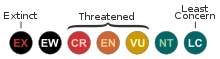
IUCN Red List
Growth: S = slow M = medium F = fast. Soil: L = light (sandy) M = medium H = heavy (clay). pH: A = acid N = neutral B = basic (alkaline). Shade: F = full shade S = semi-shade N = no shade. Moisture: D = dry M = Moist We = wet Wa = water.
Now available:
Food Forest Plants for Mediterranean Conditions
350+ Perennial Plants For Mediterranean and Drier Food Forests and Permaculture Gardens.
[Paperback and eBook]
This is the third in Plants For A Future's series of plant guides for food forests tailored to
specific climate zones. Following volumes on temperate and tropical ecosystems, this book focuses
on species suited to Mediterranean conditions—regions with hot, dry summers and cool, wet winters,
often facing the added challenge of climate change.
Read More
Expert comment
Author
(L.)Desf.
Botanical References
43200270
Links / References
For a list of references used on this page please go here
Readers comment
| Add a comment |
|
If you have important information about this plant that may help other users please add a comment or link below. Only comments or links that are felt to be directly relevant to a plant will be included. If you think a comment/link or information contained on this page is inaccurate or misleading we would welcome your feedback at [email protected]. If you have questions about a plant please use the Forum on this website as we do not have the resources to answer questions ourselves.
* Please note: the comments by website users are not necessarily those held by PFAF and may give misleading or inaccurate information.
|
Subject : Smilacina racemosa
|
|
|
|