Translate this page:
Summary
Himalayan Blackberry (R. armeniacus) is native to Transcaucasus to NW. Iran is highly adaptable to semi-arid conditions and can tolerate drought once established. It produces large, sweet blackberries and is widely grown for its fruit. Fruits are edible and used in jams, desserts, and beverages. Its dense growth makes it useful for erosion control, but it is highly invasive in many areas. Himalayan blackberry produces abundant, delicious, sweet-tart fruits that rival cultivated blackberries in quality and are excellent for eating fresh, juicing, or making wine. However, its invasive nature and vigorous thicket-forming growth mean it is as much a nuisance weed as it is a food source in the Southwest.
Physical Characteristics

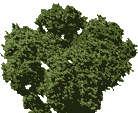 Rubus armeniacus is an evergreen Shrub growing to 3 m (9ft) by 4 m (13ft) at a fast rate.
See above for USDA hardiness. It is hardy to UK zone 6 and is not frost tender. The flowers are pollinated by Insects. The plant is self-fertile.
It is noted for attracting wildlife.
Suitable for: light (sandy), medium (loamy) and heavy (clay) soils, prefers well-drained soil and can grow in nutritionally poor soil. Suitable pH: mildly acid, neutral and basic (mildly alkaline) soils. It can grow in semi-shade (light woodland) or no shade. It prefers dry or moist soil and can tolerate drought.
UK Hardiness Map
US Hardiness Map
Synonyms
R. hedycarpus subsp. armeniacus (Focke) Focke. R. macrostemon f. armeniacus (Focke) Sprib. There has been considerable confusion over the cultivated blackberry ’Himalaya Giant’ identity. In the past, it has been assigned to both R. procerus and P.J.Müll. ex Boulay, and to R. discolor Weihe & Nees. Most, though not all, modern treatments now assign ‘Himalaya Giant’ to R. armeniacus Focke, with R. discolor and R. procerus both having been used erroneously to apply to ‘Himalaya Giant’. The true R. procerus P.J.Müll. ex Boulay has been reduced to synonymy of R. praecox Bertol., whilst R. discolor Weihe & Nees has been reduced to synonymy of R. ulmifolius Schott[K ].
Plant Habitats
Edible Uses
Fruit—raw or cooked[1093 ]. Fruits are edible and used in jams, desserts, and beverages. Large, sweet, and tasty[317 ]. The black, globose fruit can be 20mm in diameter[1093 ]. Depending on the species and local climate, berries are typically harvested in summer, from late spring to early autumn. Rubus species generally flower in late spring to early summer, depending on the specific species and environmental conditions. Edible Uses & Caution: All members of the Rubus genus produce edible fruits, commonly known as blackberries or raspberries. The fruits are aggregates of drupelets, not true berries, but have long been a staple wild food across much of the world. They are safe to eat raw or cooked [2-3]. Food Potential: The fruits of Himalayan blackberry are large, juicy, and hairless, with a sweet, slightly tart flavor. They turn from green to red before ripening fully into deep purplish-black. Only the fully ripe, dark fruits are sweet; overripe berries become soft and wine-like. The seeds are small but noticeable, and the receptacle remains attached at maturity, though it is soft and not bothersome when eaten. The fruits are excellent fresh, and their juice makes refreshing drinks, cider, or wine. Because the berries are extremely juicy, they are more suited to fresh eating and processing than drying [2-3]. Cultural & Historical Notes:
Though not native to North America—it originates from Europe and western Asia—Himalayan blackberry quickly naturalized after its introduction and has become a dominant plant across much of the western U.S., including the Southwest. Native American use of this specific species is not recorded, as it arrived relatively recently, but its close relatives in the genus Rubus were widely gathered for food across North America. The plant is notorious for forming dense, impenetrable thickets, which made it both a reliable source of abundant fruit and a troublesome invasive weed. Cutting and pruning encourage regrowth and higher yields, but the thorns require care when harvesting [2-3].
References More on Edible Uses
Medicinal Uses
Plants For A Future can not take any responsibility for any adverse effects from the use of plants. Always seek advice from a professional before using a plant medicinally.
The following uses are for Rubus plicatus and can also apply here[K ]. The root bark and the leaves are strongly astringent, depurative, diuretic, tonic and vulnerary[4, 7, 9, 165, 254 ]. They make an excellent remedy for dysentery, diarrhoea, haemorrhoids, cystitis, etc; the root is the more astringent[4, 238 ]. Externally, they are used as a gargle to treat sore throats, mouth ulcers and gum inflammations[238, 254 ]. A decoction of the leaves is useful as a gargle in treating thrush and also makes a good general mouthwash[7 ].
References More on Medicinal Uses
The Bookshop: Edible Plant Books
Our Latest books on Perennial Plants For Food Forests and Permaculture Gardens in paperback or digital formats.
Edible Tropical Plants
Food Forest Plants for Hotter Conditions: 250+ Plants For Tropical Food Forests & Permaculture Gardens.
More
Edible Temperate Plants
Plants for Your Food Forest: 500 Plants for Temperate Food Forests & Permaculture Gardens.
More
More Books
PFAF have eight books available in paperback and digital formats. Browse the shop for more information.
Shop Now
Other Uses
Agroforestry uses: Rubus species can serve as ground cover, helping to prevent soil erosion. They provide habitat and food for various wildlife species, including birds and beneficial insects. Their thorns can also act as a natural barrier. Ideal for xeriscaping, rock gardens, and native plant gardens. Its aromatic foliage is often used in traditional medicine and for smudging. Agroforestry Uses: The plant can be grown along fences and trellises to create impenetrable barriers[1093 ]. Most, if not all, thicket-forming species of Rubus have good erosion control value. They usually grow satisfactorily on barren and infertile soils and invade and occupy eroded areas. They also quickly establish burns, old fields, and logged areas. They can provide excellent cover for wildlife and nesting sites for small birds by forming extensive and nearly impenetrable thickets. They are often natural pioneer species, paving the way for woodlands to develop. Still, they should only really be used within their native range to avoid any risks of them invading other habitats[1050, K ]. Other Uses: A purple to dull blue dye is obtained from the fruit[168 ]. Nectary - Flowers rich in nectar and pollen: Rubus species (including blackberries, raspberries, etc.) produce flowers rich in nectar and pollen, attracting bees, butterflies, and other pollinators. Wildlife - Food (Fruit, Seeds, Leaf litter, Shelter, Nesting, Roosting): Rubus species produce abundant berries, a significant food source for birds, mammals, and insects. Their dense thickets also provide shelter and nesting sites for small animals and birds. Invertebrate Shelter (Overwintering sites, Leaf litter, Groundcover): Rubus species' dense, sprawling growth habit provides excellent cover and shelter for invertebrates, with leaf litter creating a ground habitat. They also offer overwintering sites in their stems and leaf litter. Pest Confuser (Smell): Rubus species are not typically known for emitting scents that confuse pests.
Special Uses
References More on Other Uses
Cultivation details
Soil Texture: Thrives in light (sandy), medium, and heavy (clay) soils. Adaptable to a wide range of soil types, including fertile and disturbed soils. Soil Moisture: Prefers moderately moist soils but can tolerate dry conditions once established. It thrives in areas with consistent moisture availability. Drainage: Grows best in well-drained soils, but it can also tolerate poorly drained soils in wetter regions. Soil pH: Tolerates a wide range of pH levels, from slightly acidic to neutral. Saline Tolerance: Low tolerance for saline soils. It grows better in non-saline environments. Tolerance of Poor Soil: It can thrive in poor soils, including disturbed or nutrient-deficient areas. Light Requirements: Prefers full sun for optimal growth and fruit production but can tolerate partial shade. Height: Can grow up to 3 meters (10 feet) tall with a sprawling or climbing growth habit. The canes can spread extensively, forming dense thickets. Pollination: bees, flies, and other insects are attracted to its small, white to pale pink flowers. Temperature: Hardy in USDA zones 5–10. It is tolerant of frost and thrives in temperate climates with mild winters and wet summers. Drought Tolerance: Moderately drought-tolerant once established but grows more vigorously with regular moisture. Flowering and Fruiting: Produces small, fragrant white or pale pink flowers in spring to early summer, followed by large, sweet blackberries in mid-to-late summer. Wildlife: Provides food and habitat for wildlife. Birds, mammals, and insects consume the berries, while their thorny growth offers shelter for small animals. Pests and Diseases: Can be affected by rusts, aphids, and powdery mildew in some conditions. Dense thickets can harbour pests or diseases if not managed. Pruning: Prune regularly to control its spread and remove dead canes. Regular pruning improves fruit production and reduces overcrowding. Rubus armeniacus is a plant of temperate environments, from coastal estuaries to inland upland sites as high as 1,800 metres above sea level. It occurs mainly in areas with an average annual rainfall greater than 760mm, at altitudes from near sea level up to 1,800 metres[1093 ]. It is restricted to temperate and continental climates[1093 ]. The plant can tolerate short-lived temperatures falling as low as -18°c and summer temperatures occasionally rising as high as 37°c[1093 ]. It prefers a position in full sunlight but also grows well under light canopies, though it does not grow well under dense canopies[1093 ]. The plant tolerates a wide range of soil types, growing in fine, medium and coarse-textured soils that are acid to alkaline. It tolerates occasional flooding with both fresh and brackish water. A field study of the species' adaptive capacity to drought demonstrated that it is capable of both rapid water use when water is widely available and effective at water acquisition when it is in short supply[1093 ]. Rubus armeniacus was once the most commonly cultivated blackberry in Europe and was also widely grown in N. America. It is less grown at present, being largely replaced by Rubus laciniatus, which, although having a smaller and less sweet fruit, has the advantage of being easier to harvest (since it is free of spines) and having a firmer fruit that is easier to get to market in good condition[317 ]. The native range of this species is Transcaucasus to NW. Iran. It is a scrambling shrub and grows primarily in the temperate biome. It has been introduced into: Alabama, Austria, Belgium, California, Cape Provinces, Central European Russia, Colorado, Czechoslovakia, Denmark, France, Germany, Great Britain, Illinois, Ireland, Italy, Japan, Mexico Northwest, Netherlands, Northern Provinces, Norway, Poland, Swaziland, Sweden, Switzerland, and Yugoslavia [2-5]. Berries are typically harvested in summer, from late spring to early autumn, depending on the species and local climate. Rubus species generally flower in late spring to early summer, usually from May to June (Northern Hemisphere), depending on the specific species and environmental conditions. Rubus species are known for their vigorous growth and can establish quickly, often spreading through both seeds and vegetative propagation. They can reach maturity in 1 to 2 years, with some species growing rapidly within a single growing season. Many Rubus species are self-fertile, meaning that a single plant can produce fruit on its own. However, some varieties may benefit from cross-pollination to increase yield. USDA Hardiness Zone: 5–9.
Weed Potential: High – Himalayan blackberry is a highly invasive species in the western United States, often forming dense thickets that crowd out native plants and alter habitats. While its fruits are excellent for food, its aggressive growth makes it more a weed problem than a wild food resource in the Southwest.
References Carbon Farming Information and Carbon Sequestration Information
Temperature Converter
Type a value in the Celsius field to convert the value to Fahrenheit:
Fahrenheit:
The PFAF Bookshop
Plants For A Future have a number of books available in paperback and digital form. Book titles include Edible Plants, Edible Perennials, Edible Trees,Edible Shrubs, Woodland Gardening, and Temperate Food Forest Plants. Our new book is Food Forest Plants For Hotter Conditions (Tropical and Sub-Tropical).
Shop Now
Plant Propagation
Seed - requires stratification and is best sown in early autumn in a cold frame. Stored seed requires one month of stratification at about 3°c and is best sown as early as possible in the year. Prick out the seedlings when they are large enough to handle and grow in a cold frame. Plant them into their permanent positions in late spring of the following year. Cuttings of half-ripe wood in mid-summer in a frame[200 ]. Tip layering in July. Plant out in autumn. Division in early spring or just before leaves fall in the autumn[200 ].
Other Names
If available other names are mentioned here
Himalayan blackberry. Himalaya Giant. Armenian blackberry. Himalaya berry. Himalayan giant blackberry. French: ronce d'arménie. Czech Republic: ostružník sladkoplodý. Denmark: armensk brombær. Finland: armenian karhunvatukka. Germany: armenische Brombeere. armenische Brombeere. Garten brombeere. himalaya Brombeere. Italy: rovo a peli rossi. Netherlands: dijkviltbraam. Poland: jezyna kaukaska. Sweden: armeniskt björnbär.
Native Range
Native to: Iran, Transcaucasus.
Weed Potential
Right plant wrong place. We are currently updating this section.
Please note that a plant may be invasive in one area but may not
in your area so it's worth checking.
Himalayan blackberry is a highly invasive species in many regions, including the Pacific Northwest, Australia, and New Zealand. It forms dense thickets that outcompete native vegetation, reduce biodiversity, and are difficult to remove. This highly invasive species can form impenetrable thickets, which harm native flora and fauna. A PIER risk assessment gave this species a high-risk score 24 (PIER, 2015). In addition to this, it has been reported as highly invasive in Central Europe. It has been identified as one of the ten most problematic invasive plants or bryophytes in Sweden (Torbjorn et al., 2015) and noted as a threat to vegetation in Pannonian sandy habitats in Hungary. R. armeniacus can reproduced both vegetatively and by the production of seed, which can be transported to new locations after ingestion by birds. [1-8]. Control Measures: Control methods include regular mowing, herbicide application, and manual removal of roots. Grazing by livestock can also help manage growth.
Conservation Status
IUCN Red List of Threatened Plants Status : Not Available
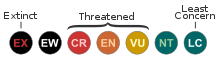
IUCN Red List
Growth: S = slow M = medium F = fast. Soil: L = light (sandy) M = medium H = heavy (clay). pH: A = acid N = neutral B = basic (alkaline). Shade: F = full shade S = semi-shade N = no shade. Moisture: D = dry M = Moist We = wet Wa = water.
Now available:
Food Forest Plants for Mediterranean Conditions
350+ Perennial Plants For Mediterranean and Drier Food Forests and Permaculture Gardens.
[Paperback and eBook]
This is the third in Plants For A Future's series of plant guides for food forests tailored to
specific climate zones. Following volumes on temperate and tropical ecosystems, this book focuses
on species suited to Mediterranean conditions—regions with hot, dry summers and cool, wet winters,
often facing the added challenge of climate change.
Read More
Expert comment
Author
Focke
Botanical References
Links / References
For a list of references used on this page please go here
A special thanks to Ken Fern for some of the information used on this page.
Readers comment
| Add a comment |
|
If you have important information about this plant that may help other users please add a comment or link below. Only comments or links that are felt to be directly relevant to a plant will be included. If you think a comment/link or information contained on this page is inaccurate or misleading we would welcome your feedback at [email protected]. If you have questions about a plant please use the Forum on this website as we do not have the resources to answer questions ourselves.
* Please note: the comments by website users are not necessarily those held by PFAF and may give misleading or inaccurate information.
|
Subject : Rubus armeniacus
|
|
|
|