 |
|
USDA-NRCS PLANTS Database / Britton, N.L., and A. Brown. 1913. An illustrated flora of the northern United States, Canada and the British Possessions. 3 vols. Charles Scribner's Sons, New York. Vol. 1 |
 |
| Robert H. Mohlenbrock @ USDA-NRCS PLANTS Database / USDA NRCS. 1992. Western wetland flora: Field office guide to plant species. West Region, Sacramento. |
Translate this page:
Summary
Physical Characteristics

 Poa scabrella is a PERENNIAL growing to 1 m (3ft 3in). The species is hermaphrodite (has both male and female organs) and is pollinated by Wind.
Suitable for: light (sandy), medium (loamy) and heavy (clay) soils and prefers well-drained soil. Suitable pH: mildly acid, neutral and basic (mildly alkaline) soils. It cannot grow in the shade. It prefers moist soil.
UK Hardiness Map
US Hardiness Map
Synonyms
Plant Habitats
Cultivated Beds;
Edible Uses
Edible Parts: Seed
Edible Uses:
Seed[105, 161, 177]. No more details are given, but the seed is very small and fiddly to utilize[K].
References More on Edible Uses
Medicinal Uses
Plants For A Future can not take any responsibility for any adverse effects from the use of plants. Always seek advice from a professional before using a plant medicinally.
None known
References More on Medicinal Uses
Other Uses
References More on Other Uses
Cultivation details
We have very little information on this species and do not know if it will be hardy in Britain, though judging by its native range it should succeed outdoors in most parts of the country. The following notes are based on the general needs of the genus. Succeeds in any well-drained moderately fertile soil in a sunny position[200].
References Carbon Farming Information and Carbon Sequestration Information
Temperature Converter
Type a value in the Celsius field to convert the value to Fahrenheit:
Fahrenheit:
Plant Propagation
Seed - surface sow in the spring in a cold frame. Do not allow the compost to dry out. When they are large enough to handle, prick the seedlings out into individual pots and grow them on in the greenhouse for their first winter. Plant them out into their permanent positions in late spring or early summer, after the last expected frosts. Division in the spring. Very easy, larger divisions can be planted out direct into their permanent positions. We have found that it is better to pot up the smaller divisions and grow them on in light shade in a cold frame until they are well established before planting them out in late spring or early summer.
Other Names
If available other names are mentioned here
Native Range
NORTHERN AMERICA: Canada (Yukon (south), Québec (east), Ontario (rare), Saskatchewan (south), Alberta, British Columbia), United States (Alaska (southeast), Michigan (Isle Royale), Nebraska (northwest), North Dakota, South Dakota (west), Colorado, Idaho, Montana, Oregon, Washington, Wyoming, New Mexico, Arizona, California, Nevada, Utah), Mexico (Baja California (Norte)) SOUTHERN AMERICA: Argentina (Chubut, Neuquén, Santa Cruz), Chile (c.)
Weed Potential
Right plant wrong place. We are currently updating this section.
Please note that a plant may be invasive in one area but may not
in your area so it's worth checking.
Conservation Status
IUCN Red List of Threatened Plants Status :
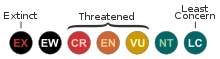
IUCN Red List
| Related Plants
|
| Latin Name | Common Name | Habit | Height | Hardiness | Growth | Soil | Shade | Moisture | Edible | Medicinal | Other |
| Achnatherum hymenoides | Indian Millet, Indian ricegrass | Perennial | 0.6 |
7-10
| | LMH | N | M | 4 | 0 | 3 |
| Aegilops speltoides | Goatgrass | Annual | 0.6 |
0-0
| | LMH | SN | DM | 1 | 0 | |
| Aegilops triuncialis | Barbed goatgrass, Barb goatgrass | Annual | 0.3 |
8-10
| | LMH | N | DM | 1 | 0 | 0 |
| Agropyron elongatum | Tall Wheatgrass | Perennial | 1.8 |
5-9
| | LMH | N | DM | 0 | 0 | 3 |
| Agrostis capillaris | Browntop Bent Grass | Perennial | 0.4 |
3-10
| F | LM | SN | WeM | 0 | 0 | 4 |
| Agrostis perennans | Upland Bent, Upland bentgrass | Perennial | 0.9 |
0-0
| | LMH | SN | DM | 1 | 0 | 2 |
| Alopecurus aequalis | Shortawn Foxtail, Sonoma shortawn foxtail | Annual/Perennial | 0.3 |
0-0
| | LMH | SN | MWe | 2 | 1 | 0 |
| Ammophila arenaria | Marram Grass, European beachgrass | Perennial | 1.2 |
4-8
| | LM | N | DM | 1 | 0 | 4 |
| Ammophila breviligulata | Beach Grass, American beachgrass | Perennial | 1.3 |
4-8
| | LM | N | DM | 0 | 0 | |
| Ampelodesmos mauritanicus | Mauritanian grass | Perennial | 3.0 |
7-10
| | LM | N | DM | 0 | 0 | |
| Andropogon gerardii | Big Bluestem | Perennial | 2.0 |
4-8
| | L | N | DM | 0 | 1 | 2 |
| Andropogon virginicus | Broomsedge Bluestem | Perennial | 1.2 |
5-9
| | L | N | DM | 0 | 1 | 1 |
| Anthoxanthum odoratum | Sweet Vernal Grass | Perennial | 0.5 |
0-0
| | LMH | N | DM | 2 | 2 | 2 |
| Arundinaria gigantea | Canebrake bamboo, Cane Reed, Giant cane | Bamboo | 9.0 |
5-9
| | LMH | SN | M | 3 | 1 | 4 |
| Arundinaria spp | Running Bamboo | Bamboo | 10.0 |
4-10
| F | LMH | FSN | M | 3 | 1 | 4 |
| Arundinella hookeri | | Perennial | 6.0 |
6-9
| | LMH | N | M | 0 | 0 | 1 |
| Arundinella nepalensis | | Perennial | 2.0 |
6-9
| | LMH | N | M | 0 | 0 | 3 |
| Arundo donax | Giant Reed, Giant Reed Grass | Perennial | 6.0 |
6-10
| F | LMH | N | MWe | 3 | 2 | 4 |
| Astrebla pectinata | Barley Mitchell Grass | Perennial | 1.0 |
-
| | LMH | SN | M | 1 | 0 | |
| Astrebla squarrosa | Bull Mitchell grass | Perennial | 1.5 |
4-12
| F | LMH | N | DM | 4 | 0 | 1 |
| Avena abyssinica | Abyssinian Oat | Annual | 0.0 |
-
| | LMH | N | DM | 2 | 0 | 2 |
| Avena barbata | Slender Oat | Annual | 0.0 |
4-8
| F | LM | N | DM | 2 | 0 | 2 |
| Avena brevis | | Annual | 0.0 |
-
| | LMH | N | DM | 2 | 0 | 2 |
| Avena byzantina | Red Oat | Annual | 0.0 |
-
| | LMH | N | DM | 2 | 0 | 2 |
| Avena fatua | Wild Oats | Annual | 1.2 |
3-10
| | LMH | N | DM | 3 | 1 | 3 |
| Avena ludoviciana | Oats | Annual | 0.0 |
-
| | LMH | N | DM | 2 | 0 | 2 |
| Avena nuda | Naked Oat | Annual | 0.9 |
-
| | LMH | N | DM | 4 | 0 | 2 |
| Avena nudibrevis | | Annual | 0.0 |
-
| | LMH | N | DM | 2 | 0 | 2 |
| Avena orientalis | Hungarian Oat | Annual | 0.0 |
-
| | LMH | N | DM | 3 | 1 | 2 |
| Avena sativa | Oats, Common oat | Annual | 0.9 |
3-10
| | LMH | N | DM | 3 | 3 | 4 |
|
|
Growth: S = slow M = medium F = fast. Soil: L = light (sandy) M = medium H = heavy (clay). pH: A = acid N = neutral B = basic (alkaline). Shade: F = full shade S = semi-shade N = no shade. Moisture: D = dry M = Moist We = wet Wa = water.
Support Plants For A Future
Plants For A Future relies on regular donations to keep our free database and search facilities going, to pay for ongoing research, improvements and enhancements, and to develop and publish new books.
Read more
Choose Currency
Donate in £ GBP
Donate in $ USD
Donate in € EUR
Securely pay via PayPal or Credit/Debit Card without an account.
Expert comment
Author
(Thunb.)Benth.
Botanical References
60236
Links / References
For a list of references used on this page please go here
Readers comment
| Add a comment |
|
If you have important information about this plant that may help other users please add a comment or link below. Only comments or links that are felt to be directly relevant to a plant will be included. If you think a comment/link or information contained on this page is inaccurate or misleading we would welcome your feedback at [email protected]. If you have questions about a plant please use the Forum on this website as we do not have the resources to answer questions ourselves.
* Please note: the comments by website users are not necessarily those held by PFAF and may give misleading or inaccurate information.
|
|