Translate this page:
Summary
Physical Characteristics

 Plukenetia volubilis is an evergreen Climber growing to 2 m (6ft) by 0.2 m (0ft 8in) at a fast rate.
See above for USDA hardiness. It is hardy to UK zone 10.
Suitable for: light (sandy), medium (loamy) and heavy (clay) soils and prefers well-drained soil. Suitable pH: mildly acid and neutral soils and can grow in very acid soils.
It can grow in semi-shade (light woodland) or no shade. It prefers moist soil.
UK Hardiness Map
US Hardiness Map
Synonyms
Fragariopsis paxii Pittier Plukenetia macrostyla Ule Plukenetia peruviana Müll.Arg. Sajorium volubile (L.) Baill.
Plant Habitats
Edible Uses
Edible Parts: Leaves Seed Oil
Edible Uses: Oil
Leaves - cooked and eaten as a vegetable[301 ]. Seeds - roasted[301 , 674 ]. An excellent flavour[301 ]. Rich in oil (35 - 60%) and protein (27%). An oil is extracted from the seed. It is used in the preparation of various meals. Staple crop: Protein-oil.
References More on Edible Uses
Medicinal Uses
Plants For A Future can not take any responsibility for any adverse effects from the use of plants. Always seek advice from a professional before using a plant medicinally.
None known
References More on Medicinal Uses
Other Uses
References More on Other Uses
Cultivation details
Management: Standard Fodder: Bank New Crop Staple Crop: Protein-oil
Humid tropics. Grows in warm climates up to altitudes of 1,700 meters (5,500 feet) as long as there is continued availability of water and good drainage. It grows better in acidic soils and alluvial flats near rivers. Cultivated plants frequently have larger, 5 - 6 carpelled fruits and more prominently serrate leaf margins[674 ]. The seeds of inchi have high protein (27%) and oil (35 - 60%) content, and the oil is rich in the essential fatty acids omega-3 linolenic acid (˜45-53% of total fat content) and omega-6 linoleic acid (˜34-39% of fat content), as well as non-essential omega-9 (˜6-10% of fat content).[
Carbon Farming
-
Management: Standard
Plants grow to their standard height. Harvest fruit, seeds, or other products. Non-Destructive management systems.
-
Fodder: Bank
Fodder banks are plantings of high-quality fodder species. Their goal is to maintain healthy productive animals. They can be utilized all year, but are designed to bridge the forage scarcity of annual dry seasons. Fodder bank plants are usually trees or shrubs, and often legumes. The relatively deep roots of these woody perennials allow them to reach soil nutrients and moisture not available to grasses and herbaceous plants.
-
New Crop
Most new crops were important wild plants until recently, although some are the result of hybridization. They have been developed in the last few, decades. What they have in common is that they are currently cultivated by farmers. Examples include baobab, argan, and buffalo gourd.
-
Staple Crop: Protein-oil
(16+ percent protein, 16+ percent oil). Annuals include soybeans, peanuts, sunflower seeds. Perennials include seeds, beans, nuts, and fruits such as almond, Brazil nut, pistachio, walnut, hazel, and safou.
References Carbon Farming Information and Carbon Sequestration Information
Temperature Converter
Type a value in the Celsius field to convert the value to Fahrenheit:
Fahrenheit:
Plant Propagation
Seed
Other Names
If available other names are mentioned here
Amendoim-de-Inka, Amuio, Mountain peanut, Ticazo, Wild peanut, Supua, Sacha inchi
Native Range
SOUTHERN AMERICA: Dominica, St. Lucia, Venezuela, Amazonas, Miranda, Distrito Capital, Brazil, Pará, Colombia, Chocó, Ecuador, Carchi, Los Ríos, Napo, Sucumbíos, Peru, Amazonas, Cusco, Junín, Loreto, Madre de Dios, Pasco, San Martín,
Weed Potential
Right plant wrong place. We are currently updating this section.
Please note that a plant may be invasive in one area but may not
in your area so it's worth checking.
None Known
Conservation Status
IUCN Red List of Threatened Plants Status : This taxon has not yet been assessed
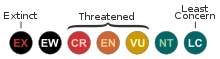
IUCN Red List
Growth: S = slow M = medium F = fast. Soil: L = light (sandy) M = medium H = heavy (clay). pH: A = acid N = neutral B = basic (alkaline). Shade: F = full shade S = semi-shade N = no shade. Moisture: D = dry M = Moist We = wet Wa = water.
Support Plants For A Future
Plants For A Future relies on regular donations to keep our free database and search facilities going, to pay for ongoing research, improvements and enhancements, and to develop and publish new books.
Read more
Choose Currency
Donate in £ GBP
Donate in $ USD
Donate in € EUR
Securely pay via PayPal or Credit/Debit Card without an account.
Expert comment
Author
L.
Botanical References
Links / References
For a list of references used on this page please go here
A special thanks to Ken Fern for some of the information used on this page.
Readers comment
| Add a comment |
|
If you have important information about this plant that may help other users please add a comment or link below. Only comments or links that are felt to be directly relevant to a plant will be included. If you think a comment/link or information contained on this page is inaccurate or misleading we would welcome your feedback at [email protected]. If you have questions about a plant please use the Forum on this website as we do not have the resources to answer questions ourselves.
* Please note: the comments by website users are not necessarily those held by PFAF and may give misleading or inaccurate information.
|
Subject : Plukenetia volubilis
|
|
|
|