Translate this page:
Summary
Taxonomic Note: This genus was formerly classified in the family Chenopodiaceae. Modern classifications include it within the Amaranthaceae.
Buttered goosefoot is a low-growing, weak-scented Chenopodium species native to western North America, typically inhabiting moist soils near lakes, riparian zones, and periodically flooded flats. Unlike strong-scented Dysphania species, C. chenopodioides lacks the harsh resinous aroma and neurotoxic essential oils that make some relatives unsuitable for consumption. Historical accounts indicate that Indigenous groups such as the Goshiute used its seeds as a food resource, reflecting the plant’s reliability and abundance in suitable habitats. Although not as high-yielding or well-known as pitseed goosefoot or lambsquarter, it offers edible leaves and seeds with a mild character. The plant is easy to recognise by its small stature, soft green leaves, and modest, inconspicuous flower clusters. Overall, buttered goosefoot is a modest but useful wild edible, particularly valued for its seed production in nutrient-poor or saline soils where few leafy greens thrive. Chenopodium chenopodioides (L.) Aellen First published in Ostenia: 98 (1933) is a synonym of Oxybasis chenopodioides.
Physical Characteristics

 Oxybasis chenopodioides is a ANNUAL growing to 0.3 m (1ft) by 0.2 m (0ft 8in) at a fast rate.
See above for USDA hardiness. It is hardy to UK zone 5. The flowers are pollinated by Wind.
It is noted for attracting wildlife.
Suitable for: light (sandy), medium (loamy) and heavy (clay) soils and can grow in nutritionally poor soil. Suitable pH: mildly acid, neutral and basic (mildly alkaline) soils and can grow in very alkaline and saline soils.
It can grow in semi-shade (light woodland) or no shade. It prefers moist or wet soil and can grow in water.
UK Hardiness Map
US Hardiness Map
Synonyms
Homotypic Synonyms: Blitum chenopodioides L. Blitum virgatum var. chenopodioides (L.) Vahl. Chenopodium chenopodioides (L.) Aellen. Oreobliton chenopodioides (L.) Coss. & Durieu.
Plant Habitats
Edible Uses
A mild, weak-scented goosefoot offering edible leaves and nutritious seeds. Best used as a seed crop, with leaves as a secondary resource. Safe, modest, and useful where found in abundance [2-3]. Edible Uses & Rating: Both leaves and seeds are edible, though the seeds represent the stronger food resource. Leaves are mild and suitable for cooked greens, though typically too small and sparse to gather in bulk. Seeds were traditionally harvested by Indigenous peoples, indicating their usefulness as a reliable grain-like resource. They can be processed similarly to other goosefoot seeds—boiled, toasted, or ground into flour. Buttered goosefoot ranks as a moderate-quality edible, valued for seeds more than leaves, and most useful when encountered in dense stands where collection becomes efficient [2-3]. Taste, Processing & Kitchen Notes: While specific flavour descriptions are scarce due to limited ethnobotanical documentation, buttered goosefoot generally aligns with the mildest members of the genus. Leaves tend to be soft, slightly earthy, and spinach-like when cooked, lacking the sharp acridity or resinous notes found in strong-scented species. Seeds are small, dark, and enclosed in fragile calyx tissues that separate easily. Cooked seeds develop a nutty, quinoa-like flavour common to many Chenopodium species. Toasting enhances aroma and reduces any musty undertones, while boiling yields a soft porridge-like consistency. Because leaf yield is low, culinary use focuses primarily on seeds, which adapt well to simple preparations [2-3]. Seasonality (Phenology): Plants germinate in spring as temperatures warm and soils remain moist. Leaves are best collected early in the season before flowering. Blooming typically occurs in summer, followed by seed maturation in late summer to autumn. Seeds often persist into early winter in dry climates, allowing flexible harvest times. Seasonal abundance depends heavily on soil moisture, with the densest stands appearing in wet years or along receding lake margins. Safety & Cautions (Food Use): As with all Chenopodium species, leaves contain oxalates and saponins, making boiling the safest preparation method for frequent consumption. Seeds are generally safe, though heavy intake should be moderated in individuals sensitive to oxalates. There are no specific toxicity warnings outside the normal genus-wide cautions. Harvesting should avoid contaminated soils or agricultural runoff zones [2-3]. Harvest & Processing Workflow: Leaves should be harvested early in the season while still tender. Wash thoroughly to remove soil or surface dust. For seeds, wait until late summer or autumn when the inflorescences dry and calyx tissues loosen. Rub the seed heads gently to release seeds, then winnow or sieve to remove debris. Seeds may be toasted, boiled, or ground depending on culinary needs. The small plant size means harvesting is most practical where plants form dense patches. Look-Alikes & Confusion Risks: Buttered goosefoot resembles other low-growing Chenopodium species, especially C. pratericola, C. rubrum, and C. fremontii. Identification depends on leaf shape, scent, glandularity, and habitat. Fortunately, all weak-scented Chenopodium species are edible, reducing the risk of dangerous confusion. Strong-scented, resinous Dysphania species should not be mistaken for it, as their sticky, aromatic leaves are immediately distinctive. Traditional / Indigenous Use Summary: Indigenous groups of the Great Basin, particularly the Goshiute, used buttered goosefoot seeds as a food resource, often grinding them into flour or adding them to porridges. Some groups may also have eaten the leaves as a vegetable. While not as prominent as pitseed goosefoot or slimleaf goosefoot, the species formed part of a broader suite of nutrient-rich wild grains that sustained people in arid and saline landscapes.
References More on Edible Uses
Medicinal Uses
Plants For A Future can not take any responsibility for any adverse effects from the use of plants. Always seek advice from a professional before using a plant medicinally.
None Known
References More on Medicinal Uses
The Bookshop: Edible Plant Books
Our Latest books on Perennial Plants For Food Forests and Permaculture Gardens in paperback or digital formats.
Edible Tropical Plants
Food Forest Plants for Hotter Conditions: 250+ Plants For Tropical Food Forests & Permaculture Gardens.
More
Edible Temperate Plants
Plants for Your Food Forest: 500 Plants for Temperate Food Forests & Permaculture Gardens.
More
More Books
PFAF have eight books available in paperback and digital formats. Browse the shop for more information.
Shop Now
Other Uses
Ecology & Wildlife: As a pioneer species, buttered goosefoot contributes to early successional plant communities, stabilising soils and providing forage for insects and small herbivores. Seeds offer food for granivorous birds and small mammals. The plant’s tolerance of saline and disturbed soils helps maintain ecological diversity in areas where few broadleaf plants can persist.
Special Uses
References More on Other Uses
Cultivation details
Buttered goosefoot is a modest but dependable wild edible native to western North America. Its mild leaves and grain-like seeds provide a useful—though not exceptional—food resource, especially in moist or saline environments where it thrives naturally. Its historical role as a seed plant for Indigenous peoples underscores its value, and modern foragers may appreciate it as a low-key but nutritious addition to seasonal harvests. Growing Conditions: Buttered goosefoot thrives in moist, sometimes saline or alkaline soils, especially around lakeshores, marsh edges, irrigated fields, and ephemeral wet flats. It favours full sunlight but tolerates light shade. The species is adapted to fluctuating water regimes and can withstand periods of drying after emergence. Soil types may include sandy, silty, or clay-rich substrates with moderate to high salinity. These conditions allow it to outcompete many other forbs, making it a dependable species in challenging edaphic environments. Habitat & Range: This species is native to western North America, with occurrences strongest around the Great Basin, Intermountain West, and parts of the Southwest. It is typically found in moist disturbed soils, lakeside margins, agricultural edges, drainage channels, and alkaline meadow systems. In the Southwest, it appears most often at mid- to high elevations where seasonal moisture persists. Its distribution reflects adaptability to saline soils and hydrologic variability. Size & Landscape Performance: Buttered goosefoot remains small—usually 10–40 cm tall—and forms loose, low-profile stands. In garden landscapes, it would function primarily as a wild annual rather than an ornamental or intentional groundcover. It may self-seed in moist, open soils but does not tend to persist aggressively. Its modest size limits horticultural value, though its ecological tolerance may make it useful for restoration in salty or disturbed soils. Cultivation (Horticulture): Although rarely cultivated intentionally, buttered goosefoot can be grown in conditions similar to other goosefoots: full sun, moist fertile soil, and adequate drainage. It tolerates salinity and nutrient-poor conditions, making it resilient in marginal areas. Direct sowing is simplest, as seeds germinate readily. In food forests or wild gardens, it may serve as a minor annual green and seed crop where moisture is available early in the season. Pests & Problems: This species is relatively free of pests and diseases. Its greatest vulnerability is drought, which quickly reduces biomass and seed production. Excessive shading or competition from taller vegetation may also suppress growth. Otherwise, buttered goosefoot is resilient and dependable where moisture is adequate. Cultivar / Selection Notes: No cultivars exist. Wild populations exhibit minor variation in plant size, leaf shape, and seed colour, but these differences are environmental rather than the result of domestication. Pollination: Pollination is primarily by wind, a common trait in the Chenopodium genus. The small, greenish flowers produce abundant pollen, allowing efficient fertilisation even in sparsely vegetated habitats. Identification & Habit: Buttered goosefoot is a small annual with slender, lightly branched stems that range from prostrate to gently ascending. The leaves are simple, alternate, and typically hairless, giving them a smooth texture distinct from the mealy appearance of some related species. Leaf shapes vary from lanceolate to rhombic, usually with smooth or slightly toothed margins. Plants often form low, spreading mats or loose clumps in open, moist terrain. Flowers are minute, green, and aggregated in small axillary or terminal clusters typical of the Chenopodium genus. As fruits mature, the calyx encloses the developing seeds loosely. The overall habit is delicate and neat, lacking the coarse or sticky textures characteristic of Dysphania species.
References Carbon Farming Information and Carbon Sequestration Information
Temperature Converter
Type a value in the Celsius field to convert the value to Fahrenheit:
Fahrenheit:
The PFAF Bookshop
Plants For A Future have a number of books available in paperback and digital form. Book titles include Edible Plants, Edible Perennials, Edible Trees,Edible Shrubs, Woodland Gardening, and Temperate Food Forest Plants. Our new book is Food Forest Plants For Hotter Conditions (Tropical and Sub-Tropical).
Shop Now
Plant Propagation
Propagation occurs exclusively by seed. Seeds germinate without any special treatment, responding well to spring moisture or irrigation. Natural recruitment often follows disturbance events such as receding waterlines or soil turnover. Seed dispersal is passive, typically falling around the parent plant.
Other Names
If available other names are mentioned here
Red Goosefoot. Chenopodium chenopodioides (L.) Aellen First published in Ostenia: 98 (1933) is a synonym of Oxybasis chenopodioides. Buttered goose foot, low goosefoot, red goose foot
Native Range
Afghanistan, Algeria, Altay, Austria, Belgium, Bulgaria, Buryatiya, Central European Russia, Chita, Corse, Czechia-Slovakia, Denmark, East European Russia, France, Germany, Great Britain, Greece, Hungary, Iran, Iraq, Irkutsk, Italy, Kazakhstan, Kriti, Morocco, North Caucasus, NW. Balkan Pen., Palestine, Poland, Portugal, Romania, Sardegna, South European Russia, Spain, Transcaucasus, Tuva, Türkiye, Ukraine, Uzbekistan, West Siberia, Xinjiang, Yakutiya
Weed Potential
Right plant wrong place. We are currently updating this section.
Please note that a plant may be invasive in one area but may not in your area so it's worth checking.
The species has low to moderate weed potential. It can colonise disturbed, moist habitats but generally does not invade established native plant communities with force. In agricultural settings, it may appear opportunistically but is easily controlled. Its reliance on moisture prevents widespread establishment in arid zones.
Conservation Status
IUCN Red List of Threatened Plants Status : Not available
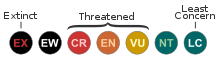
Growth: S = slow M = medium F = fast. Soil: L = light (sandy) M = medium H = heavy (clay). pH: A = acid N = neutral B = basic (alkaline). Shade: F = full shade S = semi-shade N = no shade. Moisture: D = dry M = Moist We = wet Wa = water.
Now available:
Food Forest Plants for Mediterranean Conditions
350+ Perennial Plants For Mediterranean and Drier Food Forests and Permaculture Gardens.
[Paperback and eBook]
This is the third in Plants For A Future's series of plant guides for food forests tailored to
specific climate zones. Following volumes on temperate and tropical ecosystems, this book focuses
on species suited to Mediterranean conditions—regions with hot, dry summers and cool, wet winters,
often facing the added challenge of climate change.
Read More
Expert comment
Author
(L.) S.Fuentes, Uotila & Borsch
Botanical References
Links / References
For a list of references used on this page please go here
Readers comment
| Add a comment |
|
If you have important information about this plant that may help other users please add a comment or link below. Only comments or links that are felt to be directly relevant to a plant will be included. If you think a comment/link or information contained on this page is inaccurate or misleading we would welcome your feedback at [email protected]. If you have questions about a plant please use the Forum on this website as we do not have the resources to answer questions ourselves.
* Please note: the comments by website users are not necessarily those held by PFAF and may give misleading or inaccurate information.
|
Subject : Oxybasis chenopodioides
|
|
|
|