Translate this page:
Summary
Lavender Sundrops is a small, wiry, drought-adapted perennial of the southwestern and central United States, known for its bright yellow flowers that open late in the day and fade toward orange, reddish, or purplish hues. Although visually striking and ecologically important, it provides only marginal edible value. Apache children occasionally cooked young seedpods for a minor emergency food, but their bitterness, toughness, and low yield make them unsuitable as staple wild vegetables. The plant remains significant for its beauty, pollinator value, and resilience in harsh habitats. Its taxonomy has shifted repeatedly, moving between Calylophus, Oenothera, and Galpinsia, reflecting the fluid classification of the evening-primrose family.
Physical Characteristics

 Oenothera lavandulifolia is a PERENNIAL growing to 0.2 m (0ft 8in) by 0.2 m (0ft 8in) at a slow rate.
See above for USDA hardiness. It is hardy to UK zone 6. The flowers are pollinated by Bees, Insects.
It is noted for attracting wildlife.
Suitable for: light (sandy) and medium (loamy) soils, prefers well-drained soil and can grow in nutritionally poor soil. Suitable pH: neutral and basic (mildly alkaline) soils. It cannot grow in the shade. It prefers dry or moist soil and can tolerate drought.
UK Hardiness Map
US Hardiness Map
Synonyms
Calylophus hartwegii subsp. lavanulifolia (Torr. & A.Gray) Towner & Raven. Calylophus hartwegii var. lavanulifolia (Torr. & A.Gray) Shinners. Calylophus lavandulifolia (Torr. & A.Gray) P.H.Raven. Galpinsia lavandulifolia (Torr. & A.Gray) Small. O. hartwegii var. lavandulifolia (Torr. & A.Gray) S.Watson. O. lavandulifolia var. typica Munz
Plant Habitats
Edible Uses
Only one part—the young seedpods—has documented traditional use, and only at a minor, supplemental level. Apache children sometimes cooked and ate these pods, but they were never considered an important food. The bitterness of the pods and their fibrous, resilient texture makes them unattractive for modern foragers. No records indicate use of leaves, flowers, or roots for food [2-3]. Overall, the species receives a low edibility rating, useful only in scarcity situations and requiring cooking to make it tolerable. Taste, Processing & Kitchen Notes: Young pods taste bitter, grassy, and somewhat resinous, with a firm, resistant texture that breaks down only partially with cooking. Chewing the cooked pods reveals an “apple-core-like” internal debris: stringy, tough, and not meant for full ingestion. Simmering the pods yields a mild, somewhat pleasant vegetable-like broth—arguably the best culinary use—since the liquid captures the soft herbal notes while leaving most bitter fibers behind. The pods are too tough for salads, too harsh for raw eating, and too low in carbohydrate or protein to serve as bulk food. As with many evening primroses, the edible potential exists but is meager [2-3]. Seasonality (Phenology): Flowering occurs from February through October depending on elevation and rainfall patterns. Seedpods form shortly after flowering and may be gathered in spring or summer while still young and tender enough to simmer. Plants often persist as low gray-green mats through much of the warm season, with flowering peaking after rains. Safety & Cautions (Food Use): The only known edible part is the young seedpod, and even this has low nutritional and culinary value. The bitterness and toughness make the pods unsuitable for people with sensitive digestion. There are no specific toxins reported aside from the generic caution that many evening primrose relatives possess compounds that can cause gastrointestinal irritation in quantity. The low edibility and tough texture generally discourage overconsumption. Harvest & Processing Workflow: Foragers historically harvested young pods in spring or early summer while still tender, simmered them briefly, and consumed the broth while discarding most fibrous residue. Harvesting the pods is simple, but collecting enough for meaningful food volume is time-consuming due to their small size and low nutritional payoff. Leaves, flowers, and mature pods were not traditionally eaten and offer little value [2-3].
References More on Edible Uses
Medicinal Uses
Plants For A Future can not take any responsibility for any adverse effects from the use of plants. Always seek advice from a professional before using a plant medicinally.
None Known
References More on Medicinal Uses
The Bookshop: Edible Plant Books
Our Latest books on Perennial Plants For Food Forests and Permaculture Gardens in paperback or digital formats.
Edible Tropical Plants
Food Forest Plants for Hotter Conditions: 250+ Plants For Tropical Food Forests & Permaculture Gardens.
More
Edible Temperate Plants
Plants for Your Food Forest: 500 Plants for Temperate Food Forests & Permaculture Gardens.
More
More Books
PFAF have eight books available in paperback and digital formats. Browse the shop for more information.
Shop Now
Other Uses
Gardeners appreciate this species for its drought tolerance and tolerance of poor soils. It thrives in full sun and requires gravelly or sandy substrates. Once established, plants require little maintenance. They pair well with other xeric perennials such as penstemons, desert phlox, and native grasses. Ecology & Wildlife: Lavender Sundrops play an important role in desert pollinator networks. Its late-afternoon–opening flowers attract crepuscular bees, small moths, and hawkmoths, while diurnal pollinators such as small native bees may continue visiting fading flowers. The extended flowering season supports pollinators during hot, dry months when floral resources are scarce. The plant also provides nectar for certain specialist bees in the Onagraceae-visiting guild. Its seeds are eaten occasionally by small granivorous insects, but not in large quantities.
Special Uses
References More on Other Uses
Cultivation details
Lavender Sundrops is a striking, drought-hardy perennial that brightens rocky landscapes with vivid yellow blooms and supports a range of pollinators in arid environments. While edible in a limited sense, its food value is minimal and culturally secondary. Its greatest importance lies in its ecological contributions, xeriscape performance, and ability to thrive in the harshest of southwestern soils. Identification & Habit: Lavender Sundrops is a perennial herb forming tight clusters of slender, erect stems arising from a branched caudex and strong taproot. Height ranges from approximately 4–22 cm. Stems are hairy, pale to grayish, and unbranched above. Leaves are simple, alternate, and distinctly narrow—linear to narrowly oblong or oblanceolate—evoking the foliage of lavender plants, from which the common name is derived. Leaf surfaces are hairy but not harsh. The flowers are showy, solitary in upper leaf axils, and borne on extended hypanthiums that protrude well beyond the ovary. Petals number four, bright yellow at first, later fading into deeper warm tones. Sepals are four, and stigmas are peltate (mushroom-like), distinguishing this species from many Oenothera whose stigmas are cross-shaped. The fruits are fusiform capsules that dry and split into four sections at maturity, housing numerous smooth seeds arranged in two rows per chamber. Pollination is carried out primarily by nocturnal or crepuscular moths, late-day native bees, and occasionally hawkmoths, all drawn to the flowers’ pattern of afternoon opening, bright colouration, and accessible nectar. Growing Conditions: Lavender Sundrops thrives in dry, rocky, or sandy soils, often where few other perennials can survive. It tolerates intense sun, heat, and drought, and performs well at mid- to high-elevation desert grasslands, pinyon-juniper zones, and mountain foothills. It prefers well-drained soils and cannot tolerate waterlogging. Its natural hardiness lies roughly in USDA Zones 5–9, with emphasis on arid-adapted conditions. Habitat & Range: The species occupies deserts, open shrublands, rocky slopes, mesas, grasslands, canyon rims, and mountain foothills across the central and southwestern United States. Its range includes Arizona, New Mexico, Utah, Colorado, Nevada, Texas, Oklahoma, and Kansas, extending into adjacent mountainous regions where soils remain mineral, dry, and warm. Size & Landscape Performance: Plants remain compact, usually 4–22 cm tall and equally narrow in spread. In landscaping, lavender sundrops serves as a tough, xeric perennial valued for long bloom duration and resistance to drought. In dryland gardens, it performs reliably with minimal irrigation, forming tidy clumps that flower repeatedly. Cultivation (Horticulture): Gardeners appreciate this species for its drought tolerance and tolerance of poor soils. It thrives in full sun and requires gravelly or sandy substrates. Overwatering or rich soils lead to weak, floppy growth. Successful cultivation involves providing sharp drainage and low organic matter. Once established, plants require little maintenance. They pair well with other xeric perennials such as penstemons, desert phlox, and native grasses. Pests & Problems: Few problems affect this species. Drought, heat, and poor soils—which suppress many plants—are well tolerated. Excess irrigation or heavy clay soils can cause root rot. Browsing by rabbits or deer may occur but generally does not threaten plant health. Cultivar / Selection Notes: No named horticultural cultivars exist. All plants in gardens are wild-type forms or local ecotypes. Variation occurs in flower size, petal ruffling, and degree of color fading, but no formal selections have been maintained.
References Carbon Farming Information and Carbon Sequestration Information
Temperature Converter
Type a value in the Celsius field to convert the value to Fahrenheit:
Fahrenheit:
The PFAF Bookshop
Plants For A Future have a number of books available in paperback and digital form. Book titles include Edible Plants, Edible Perennials, Edible Trees,Edible Shrubs, Woodland Gardening, and Temperate Food Forest Plants. Our new book is Food Forest Plants For Hotter Conditions (Tropical and Sub-Tropical).
Shop Now
Plant Propagation
Propagation is possible from seed or division. Seeds can be sown outdoors in fall or indoors after a brief period of cold stratification. Germination is generally reliable under warm, bright conditions. Division of mature clumps, though slower, is feasible due to the branched caudex. Transplanting should be done carefully to avoid damaging the long taproot.
Other Names
If available other names are mentioned here
Lavender Sundrops / Lavenderleaf Sundrops (Calylophus lavandulifolius)
Native Range
US. USA. Arizona, Colorado, Kansas, Mexico Northeast, Nebraska, New Mexico, Oklahoma, South Dakota, Texas, Wyoming
Weed Potential
Right plant wrong place. We are currently updating this section.
Please note that a plant may be invasive in one area but may not in your area so it's worth checking.
The species has little weed potential. It is too slow-growing and habitat-specific to become invasive. It naturalizes occasionally in xeric gardens but does not spread aggressively.
Conservation Status
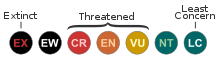
IUCN Red List of Threatened Plants Status : Not available
Growth: S = slow M = medium F = fast. Soil: L = light (sandy) M = medium H = heavy (clay). pH: A = acid N = neutral B = basic (alkaline). Shade: F = full shade S = semi-shade N = no shade. Moisture: D = dry M = Moist We = wet Wa = water.
Now available:
Food Forest Plants for Mediterranean Conditions
350+ Perennial Plants For Mediterranean and Drier Food Forests and Permaculture Gardens.
[Paperback and eBook]
This is the third in Plants For A Future's series of plant guides for food forests tailored to
specific climate zones. Following volumes on temperate and tropical ecosystems, this book focuses
on species suited to Mediterranean conditions—regions with hot, dry summers and cool, wet winters,
often facing the added challenge of climate change.
Read More
Expert comment
Author
Torr. & A.Gray
Botanical References
Links / References
For a list of references used on this page please go here
Readers comment
| Add a comment |
|
If you have important information about this plant that may help other users please add a comment or link below. Only comments or links that are felt to be directly relevant to a plant will be included. If you think a comment/link or information contained on this page is inaccurate or misleading we would welcome your feedback at [email protected]. If you have questions about a plant please use the Forum on this website as we do not have the resources to answer questions ourselves.
* Please note: the comments by website users are not necessarily those held by PFAF and may give misleading or inaccurate information.
|
Subject : Oenothera lavandulifolia
|
|
|
|