Translate this page:
Summary
Northern watermilfoil (Myriophyllum sibiricum) is a native aquatic (USDA 2–9) with tender rhizomes and roots that were once eaten by Native Americans, though its safety as food remains uncertain.
Physical Characteristics

 Myriophyllum sibiricum is a PERENNIAL growing to 1 m (3ft 3in) by 0.2 m (0ft 8in) at a fast rate.
See above for USDA hardiness. It is hardy to UK zone 3 and is not frost tender. The flowers are pollinated by Wind.
Suitable for: light (sandy), medium (loamy) and heavy (clay) soils. Suitable pH: mildly acid, neutral and basic (mildly alkaline) soils. It cannot grow in the shade. It prefers moist or wet soil and can grow in water.
UK Hardiness Map
US Hardiness Map
Synonyms
Heterotypic Synonyms: M. exalbescens Fernald. M. exalbescens var. magdalenense. M. magdalenense Fernald. M. spicatum var. capillaceum Lange. M. spicatum var. exalbescens (Fernald) Jeps. M. spicatum subsp. exalbescens (Fernald) Hultén. M. spicatum var. muricatum Maxim.
Plant Habitats
Edible Uses
Root - raw or cooked[257 ]. Sweet and crunchy, the roots were a much relished food for several native North American Indian tribes[257 ]. Northern watermilfoil (Myriophyllum sibiricum) is the native North American species closely related to Eurasian watermilfoil (M. spicatum). While it is not formally reported as edible, historical confusion in naming means it was probably this species, not Eurasian watermilfoil, that the Tanana Indians of Alaska used as food. They are said to have eaten the rhizomes raw, roasted, or fried in grease, sometimes relying on them as a life-saving food during times of scarcity [2-3]. The rhizomes, stem bases, and roots are weak, tender, and mild, with a texture similar to alfalfa sprouts. When cooked, they yield a light, pleasant broth free of bitterness or acrid tones. The true roots contain the most substance and “meat” compared to the hollow rhizomes. Washing them in the water removes the black skins, improving both flavor and texture. Although they seem like an excellent wild food in taste and usability, safety is uncertain because no official record of their edibility exists. Cooking is required to kill possible waterborne parasites [2-3].
References More on Edible Uses
Medicinal Uses
Plants For A Future can not take any responsibility for any adverse effects from the use of plants. Always seek advice from a professional before using a plant medicinally.
The plant is demulcent and febrifuge[178 ].
References More on Medicinal Uses
The Bookshop: Edible Plant Books
Our Latest books on Perennial Plants For Food Forests and Permaculture Gardens in paperback or digital formats.

Edible Tropical Plants
Food Forest Plants for Hotter Conditions: 250+ Plants For Tropical Food Forests & Permaculture Gardens.
More

Edible Temperate Plants
Plants for Your Food Forest: 500 Plants for Temperate Food Forests & Permaculture Gardens.
More

More Books
PFAF have eight books available in paperback and digital formats. Browse the shop for more information.
Shop Now
Other Uses
A good water oxygenator. Myriophyllum spicatum is sold for domestic ponds, but is not common in northern Europe. In parts of Asia the species is used to help clean polluted water (e.g. Viet Nam).
Special Uses
References More on Other Uses
Cultivation details
Requires a sandy medium, rich in decaying organic matter, in full sun[200 ]. Plants overwinter as resting buds at the bottom of the pond[1 ]. Another report says that the plants do not form winter buds, but persist at the bottom of the pond[56 ]. This species is considered to have the potential to be invasive when introduced into some areas such as Texas[274 ]. A good water oxygenator[200 ]. Myriophyllum spicatum occurs in lakes, rivers, streams, canals and ditches. It prefers base-rich water systems with high dissolved inorganic carbon, nitrate, nitrite and pH, and in hydrosoil with high phosphate and organic matter contents. USDA Hardiness & Weed Potential: Northern watermilfoil is native to lakes, rivers, and ponds across much of the northern hemisphere, including the Southwestern United States, and grows in USDA Zones 2–9. Unlike Eurasian watermilfoil, it is not invasive, but rather a natural component of aquatic ecosystems.
References Carbon Farming Information and Carbon Sequestration Information
Temperature Converter
Type a value in the Celsius field to convert the value to Fahrenheit:
Fahrenheit:
The PFAF Bookshop
Plants For A Future have a number of books available in paperback and digital form. Book titles include Edible Plants, Edible Perennials, Edible Trees,Edible Shrubs, Woodland Gardening, and Temperate Food Forest Plants. Our new book is Food Forest Plants For Hotter Conditions (Tropical and Sub-Tropical).
Shop Now
Plant Propagation
Seed - we have no information for this species but the seed is quite probably of limited germination, especially if it becomes dry, and so is best sown as soon as it is ripe in a cold frame if this is possible. Otherwise store the seed in a cool place in a jar of water and sow in the spring. Keep the pots in trays of water. When they are large enough to handle, prick the seedlings out into individual pots and plant them out in the spring. Cuttings can be inserted directly into the soil of the pond at any time in the growing season[56 ]. Division.
Other Names
If available other names are mentioned here
Watermilfoil. Northern watermilfoil (Myriophyllum sibiricum)
Native Range
Native to: Alaska, Alberta, Altay, Amur, Arizona, British Columbia, Buryatiya, California, China South-Central, China Southeast, Chita, Colorado, Connecticut, Delaware, East European Russia, Finland, Greenland, Iceland, Idaho, Illinois, Indiana, Inner Mongolia, Iowa, Irkutsk, Kamchatka, Kansas, Khabarovsk, Kirgizstan, Krasnoyarsk, Kuril Is., Labrador, Magadan, Maine, Manchuria, Manitoba, Maryland, Massachusetts, Michigan, Minnesota, Missouri, Mongolia, Montana, Nebraska, Nevada, New Brunswick, New Hampshire, New Jersey, New Mexico, New York, Newfoundland, North Dakota, Northwest European R, Northwest Territorie, Norway, Nova Scotia, Nunavut, Ohio, Ontario, Oregon, Pennsylvania, Primorye, Prince Edward I., Qinghai, Québec, Rhode I., Sakhalin, Saskatchewan, South Dakota, Sweden, Texas, Tibet, Tuva, Utah, Vermont, Washington, West Siberia, Wisconsin, Wyoming, Xinjiang, Yakutskiya, Yukon.
Weed Potential
Right plant wrong place. We are currently updating this section.
Please note that a plant may be invasive in one area but may not
in your area so it's worth checking.
Unlike Eurasian watermilfoil, it is not invasive, but rather a natural component of aquatic ecosystems.
Conservation Status
IUCN Red List of Threatened Plants Status : Least Concern.
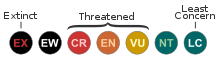
IUCN Red List
Growth: S = slow M = medium F = fast. Soil: L = light (sandy) M = medium H = heavy (clay). pH: A = acid N = neutral B = basic (alkaline). Shade: F = full shade S = semi-shade N = no shade. Moisture: D = dry M = Moist We = wet Wa = water.
Now available:
Food Forest Plants for Mediterranean Conditions
350+ Perennial Plants For Mediterranean and Drier Food Forests and Permaculture Gardens.
[Paperback and eBook]
This is the third in Plants For A Future's series of plant guides for food forests tailored to
specific climate zones. Following volumes on temperate and tropical ecosystems, this book focuses
on species suited to Mediterranean conditions—regions with hot, dry summers and cool, wet winters,
often facing the added challenge of climate change.
Read More
Expert comment
Author
Kom.
Botanical References
Links / References
For a list of references used on this page please go here
Readers comment
| Add a comment |
|
If you have important information about this plant that may help other users please add a comment or link below. Only comments or links that are felt to be directly relevant to a plant will be included. If you think a comment/link or information contained on this page is inaccurate or misleading we would welcome your feedback at [email protected]. If you have questions about a plant please use the Forum on this website as we do not have the resources to answer questions ourselves.
* Please note: the comments by website users are not necessarily those held by PFAF and may give misleading or inaccurate information.
|
Subject : Myriophyllum sibiricum
|
|
|
|