Translate this page:
Summary
Kew's Plants of the World Online recognizes Erythranthe guttata as the accepted scientific name, with Mimulus guttatus retained as a synonym. Seepspring monkeyflower is an attractive, moisture-loving wildflower native to western North America. It grows along streams, springs, seeps, wet meadows, and other places where water remains available during the growing season. The plant produces bright green, somewhat fleshy leaves and cheerful yellow flowers decorated with reddish spots. Its flowers have a distinctive two-lipped appearance, with a raised lower lip that partially closes the flower's opening. Seepspring monkeyflower is particularly well adapted to wet environments. It can grow in saturated soil, beside flowing streams, and in shallow water. Where conditions are favorable, it forms substantial colonies that provide foliage and flowers throughout much of the growing season. The leaves and flowers are reported to be edible, either fresh or cooked. The leaves have a mild, lettuce-like flavour with a slight bitterness, while the flowers are milder and somewhat sweeter. The leaves are soft, fleshy, and free of stringy fibres, making them suitable for salads or cooked vegetable dishes. When simmered, they become very soft and produce a brownish-green broth that can be incorporated into soups. Unlike many wild leafy vegetables, seepspring monkeyflower appears to retain its palatability throughout the growing season. Its main advantages as a wild food are its pleasant flavour, generous foliage, and relatively long harvesting period. However, plants growing in streams and wetlands may be exposed to waterborne contamination, and its tendency to spread outside its native range makes responsible cultivation important.
Physical Characteristics

 Mimulus guttatus is a PERENNIAL growing to 0.6 m (2ft) by 0.6 m (2ft in) at a fast rate.
See above for USDA hardiness. It is hardy to UK zone 6. It is in flower from March to September.
Suitable for: light (sandy), medium (loamy) and heavy (clay) soils and can grow in heavy clay soil. Suitable pH: mildly acid, neutral and basic (mildly alkaline) soils. It can grow in semi-shade (light woodland) or no shade. It prefers moist or wet soil and can grow in water.
UK Hardiness Map
US Hardiness Map
Synonyms
Erythranthe guttata
Plant Habitats
Pond; Bog Garden;
Edible Uses
Edible Parts: Leaves
Edible Uses:
Seepspring monkeyflower is a useful edible leafy plant with attractive flowers and considerable ecological interest. Its leaves are mild, tender, and suitable for salads or cooked vegetable dishes. The flowers have a similarly pleasant flavor, with slightly sweeter notes. The plant's generous foliage and extended growing season make it a potentially valuable wild vegetable where it occurs in abundance. It is also well suited to moist gardens and pond margins, although its ability to spread means that cultivation should be controlled outside its native range. The principal concerns are the possibility of waterborne contamination, limited formal food-safety research, and its invasive potential in introduced habitats. The leaves and flowers are reported as edible in the PFAF field notes [2-3]. You can eat the leaves fresh in salads or cook them as a green vegetable. They have a mild, lettuce-like flavor with a slightly bitter accent and a distinctive taste associated with monkeyflowers. Their texture is soft, moist, and easily chewable, without noticeable stringy fibers. The flowers are also described as edible. They have a similar flavor to the leaves but are milder, somewhat sweeter, and less distinctly lettuce-like. The PFAF field notes report no unpleasant acrid, soapy, resinous, or harsh flavors in either the leaves or flowers. The foliage can be gathered over an extended period, generally from March to August in the southwestern United States. The stems, roots, and seeds are not established as edible in the PFAF field notes [2-3]. Although field observations are favorable, this review did not identify detailed toxicological and nutritional studies confirming the safety of regular consumption. Edibility Rating: 4 out of 5 – Very good edible leafy vegetable [2-3]. Seepspring monkeyflower has several desirable characteristics as a wild food. Its leaves are mild, tender, relatively abundant, and suitable for eating raw or cooked. The flowers also have a pleasant flavor and can potentially provide an attractive edible garnish. The plant grows in colonies, making harvesting easier than with many scattered wild vegetables. Its foliage remains available over a long growing season and appears to retain its quality as the plant matures. The main limitations are the risk of waterborne contamination, its dependence on wet habitats, and the limited independent research on its nutritional composition and long-term dietary safety. The rating is based primarily on the favorable edible-use observations in the PFAF field notes [2-3]. Taste and Preparation: Seepspring monkeyflower has a mild flavor that makes it particularly appealing as a wild leafy vegetable. Field notes describe the leaves as tasting somewhat like lettuce, with slight bitterness and an additional characteristic flavor [2-3]. The flowers have a similar taste but are milder, sweeter, and less lettuce-like. Neither part was reported to have unpleasant chemical or strongly bitter flavors. Raw Leaves: You can add fresh leaves to salads or eat them as a simple wild green. Their soft, fleshy texture makes them easy to chew. Unlike some wild vegetables, they do not contain noticeable tough fibers. The leaves pair well with other salad vegetables, especially those with stronger flavors. Cooked Leaves: You can steam, boil, or simmer the leaves. Cooking softens them considerably. The resulting texture to canned spinach, describing the cooked leaves as somewhat mushy [2-3]. For people who prefer firmer vegetables, brief cooking may be preferable. Soups: Simmering the leaves produces a brownish-green cooking liquid. This broth is suitable for soups. The softened leaves can also be incorporated into soups, stews, and other cooked vegetable dishes. Flowers: The flowers are described as mild and slightly sweet. They may be used fresh as an edible garnish, although evidence for their dietary safety comes mainly from field observations rather than formal food-safety studies. Harvesting: Gather the leaves in spring and summer. The foliage remains of good quality throughout the harvesting period. Select healthy leaves from established colonies without removing entire plants. Because the species grows in wet environments, pay particular attention to the cleanliness of the growing site. Seasonality: Seepspring monkeyflower generally flowers from March to September in parts of its native western North American range. The PFAF field notes describe March to August as the main harvesting period in the Southwest. Flowering and leaf production vary considerably with elevation, temperature, and moisture availability. At lower elevations, plants may begin growing in early spring. In cooler mountain environments, flowering may occur later and continue through summer. Where streams and springs provide continuous moisture, plants may remain green and productive for much of the growing season. In Australia and New Zealand, where the seasons are reversed, flowering is commonly recorded from spring through early autumn, approximately September to March or November to March, depending on location. Traditional Uses: The PFAF field notes document the use of seepspring monkeyflower leaves and flowers as edible wild greens. The leaves are described as suitable for salads and cooked vegetable dishes, while the flowers have a mild, slightly sweet flavor. However, the PFAF field notes do not identify a particular Indigenous community or traditional recipe associated specifically with Erythranthe guttata. Consequently, describe its edible use as supported by field observations rather than as a verified traditional staple food. The species has also been widely cultivated as an ornamental wildflower because of its attractive yellow flowers and ability to grow in wet environments. Safety: The leaves and flowers of seepspring monkeyflower are described as edible. However, we did not identify detailed nutritional and toxicological studies establishing safe quantities for regular consumption. Waterborne Contamination: The most important practical concern is the plant's preference for streams, seeps, marshes, and drainage channels. Even clear water can contain harmful microorganisms. Do not collect plants growing near livestock, agricultural land, sewage outlets, industrial sites, or polluted waterways for food. Washing removes surface dirt but cannot guarantee the removal of pathogens or chemical contaminants. Cooking may reduce microbial risks, but it does not reliably remove chemical pollutants. Correct Identification: Several monkeyflower species resemble seepspring monkeyflower. Leaf shape, flower throat, calyx, and mature fruits can help distinguish them. Do not assume the edible uses of one species apply to related plants. Allergies and Dietary Caution: As with any unfamiliar wild food, individual sensitivity is possible. The PFAF field notes provide favorable taste and texture observations but do not establish the safety of large or frequent servings [2-3]. Sustainable Harvesting Where plants occur naturally, harvest leaves without unnecessarily damaging roots or disturbing streambanks. In areas where the species is invasive, handle plant material carefully to avoid spreading seeds or viable stem fragments. Leaves - raw or cooked[94, 105, 155, 172]. A slightly bitter flavour, they are added to salads[161, 183]. The leaves are used as a lettuce substitute[257].
References More on Edible Uses
Medicinal Uses
Plants For A Future can not take any responsibility for any adverse effects from the use of plants. Always seek advice from a professional before using a plant medicinally.
Astringent Bach Poultice Vulnerary
The plant is astringent, poultice and vulnerary[94, 172, 257]. A decoction of the leaves and stems has been used as a herbal steam bath for chest and back soreness[257]. A poultice of the crushed leaves has been applied to wounds, rope burns etc[257]. The plant is used in Bach flower remedies - the keywords for prescribing it are 'Fear or anxiety of a known origin'[209].
References More on Medicinal Uses
Other Uses
Seepspring monkeyflower is a useful ornamental plant for pond margins, bog gardens, streamside plantings, and consistently moist areas. Its bright yellow flowers provide color over an extended period, while the soft green foliage creates attractive ground-level vegetation. The plant is particularly suited to locations where ordinary garden plants struggle because of persistent moisture. Seepspring monkeyflower provides floral resources for pollinating insects. Its bright yellow flowers, reddish markings, and distinctive floral structure suggest insect pollination. The Burke Herbarium identifies bees as the species' pollinators. The flowers have a two-lobed stigma that can respond to physical contact, helping facilitate pollen transfer. The plant also contributes to wetland and streamside vegetation. Its leaves and stems provide shelter for small invertebrates, while colonies may help maintain vegetation cover on wet soil. However, outside its native range, extensive populations can compete with native wetland plants.
Special Uses
References More on Other Uses
Cultivation details
Seepspring monkeyflower grows best in full sun to partial shade and consistently moist or wet soils. It is particularly well adapted to streambanks, springs, seeps, pond margins, and shallow watercourses. The plant can tolerate saturated soils and may grow where water flows slowly across the ground. It is adaptable to sandy, loamy, and clay soils, provided sufficient moisture remains available. In cooler climates, plants can grow successfully in full sunlight. In hot climates, partial shade may help prevent excessive drying and heat stress. Seepspring monkeyflower is poorly suited to dry, exposed sites unless you provide irrigation. The Royal Horticultural Society recognizes its suitability for boggy conditions and full sun or partial shade. Habitat: Seepspring monkeyflower is native to western North America, from Alaska and western Canada south into northwestern Mexico. Its native distribution includes much of the western United States, extending eastward into parts of the Great Plains and Rocky Mountain region. Kew's Plants of the World Online recognizes a broad native range from Alaska to northwestern Mexico, including Chihuahua. The species grows in streams, springs, wet meadows, marshes, seepage areas, pond margins, and other wet habitats. It occurs from near sea level to middle mountain elevations, with local populations extending into higher elevations where suitable moisture is available. Seepspring monkeyflower has also been introduced to several countries outside North America, including parts of Europe, Australia, and New Zealand. In Australia, it has become naturalized in New South Wales, Victoria, and Tasmania, particularly around streams, drains, and other wet environments. USDA Hardiness Zones: USDA Zones 5–9 (approximate). Seepspring monkeyflower is relatively cold-tolerant and occurs across a broad range of elevations in western North America. It can survive freezing winters, particularly where its perennial root system is protected by moist soil. However, the species is variable, and some populations behave as annuals rather than persistent perennials. The proposed hardiness range is an estimate, not a verified species-wide classification. For cultivation, reliable moisture is generally more important than winter cold tolerance. Growth Rate: Fast under favorable conditions. Seepspring monkeyflower can develop rapidly in moist soils, producing numerous leaves, stems, and flowers during the growing season. Perennial plants can spread through rhizomes and by producing roots at stem nodes. This allows established populations to expand into surrounding wet ground. The species also produces numerous seeds, enabling new plants to establish where conditions are suitable. Moisture availability strongly influences its growth rate. Plants growing in continuously wet soil can be vigorous, while those experiencing drought may become stunted or die. Mature Size: Height: typically 15–65 cm (6–26 inches), occasionally reaching 80 cm (31 inches). Spread: Variable. Plants may develop creeping stems and rhizomes, allowing them to form colonies extending well beyond the width of an individual plant. A reliable maximum individual spread has not been established. Leaf length: Up to approximately 12.5 cm in the botanical description, although leaves are frequently smaller. Mature size varies considerably with growing conditions, elevation, and whether plants are annual or perennial. Cultivation: Seepspring monkeyflower is a useful ornamental plant for pond margins, bog gardens, streamside plantings, and consistently moist areas. Its bright yellow flowers provide color over an extended period, while the soft green foliage creates attractive ground-level vegetation. The species grows best in full sun or partial shade with continuously moist soil. It tolerates a range of soil textures, including clay, loam, and sand. In a garden, it can be grown beside a pond or in a container designed to retain moisture. Regular watering is essential during dry weather. The plant is particularly suited to locations where ordinary garden plants struggle because of persistent moisture. However, its ability to spread through seeds, rhizomes, and rooted stems means that cultivation should be carefully controlled outside its native range. In New Zealand, the species is naturalized and has been included in regional pest management measures. For edible cultivation, clean irrigation water is essential. Do not grow plants for food in drainage channels or ponds that receive contaminated runoff. Identification: Seepspring monkeyflower is a herbaceous plant with soft, often somewhat succulent stems and opposite leaves. It may behave as an annual or perennial, depending on the population and growing conditions. Stems: The stems are generally upright or ascending but may also spread along wet ground. They are often hollow and may develop roots at lower nodes. Some populations produce creeping rhizomes. The stems can be smooth or covered with fine hairs. Leaves: The leaves are simple and arranged oppositely. They are broadly oval to egg-shaped, sometimes approaching a rounded or kidney-shaped outline. The margins are irregularly toothed. Lower leaves usually have stalks, while upper leaves may be nearly stalkless and partly clasp the stem. The leaves are bright green, soft, and sometimes slightly fleshy. Flowers: The flowers are bright yellow with reddish or maroon spots on the lower lip and inside the throat. They are bilaterally symmetrical and divided into two lips. The corolla is tubular and widens toward the opening. The lower lip has two raised, often hairy ridges forming a prominent palate. This palate can partially close the flower opening. The calyx is tubular and has five unequal teeth, with the upper tooth noticeably larger than the others. The flower has four stamens and a single pistil with a two-lobed stigma. The flowers may occur individually in the leaf axils or in groups near the upper portions of the stems. Fruits and Seeds: The fruits are capsules containing numerous small seeds. The fruiting calyx often becomes inflated and partially closes around the developing capsule. The capsule eventually splits to release its seeds. Seed production can be abundant under favorable conditions. Roots: Perennial populations may develop rhizomes and roots at lower stem nodes. These structures allow the plants to persist and spread through wet habitats. The roots are not established as edible in the PFAF field notes. Similar Species: Roundleaf Monkeyflower (Erythranthe glabrata). Roundleaf monkeyflower, formerly Mimulus glabratus, is particularly similar to seepspring monkeyflower. Both species grow in wet habitats and produce yellow flowers with reddish markings. However, several characteristics help distinguish them. Roundleaf monkeyflower has nearly round leaves, while seepspring monkeyflower generally has egg-shaped leaves, sometimes with small basal lobes. The flower opening of roundleaf monkeyflower is not strongly closed by the palate, whereas seepspring monkeyflower has a more prominent palate that often partially closes the opening. Another useful distinction is the fruiting calyx, which does not fold inward in roundleaf monkeyflower but tends to close inward in seepspring monkeyflower. Both species commonly grow approximately 10–60 cm tall and favor streams, springs, and other wet habitats. The PFAF field notes describe the leaves of both species as edible, while the flowers of seepspring monkeyflower have a more clearly documented favorable taste assessment. Musk Monkeyflower (Erythranthe moschata) Musk monkeyflower is another moisture-loving perennial with yellow flowers. It differs from seepspring monkeyflower in its generally smaller flowers, sticky-hairy foliage, and characteristic musky scent. The New Zealand Plant Conservation Network identifies it as a similar species but notes that musk monkeyflower lacks the reddish blotches characteristic of seepspring monkeyflower. Its edible uses should not be assumed to be identical. Bigelow's Monkeyflower (Diplacus bigelovii): Bigelow's monkeyflower is a small annual wildflower of desert habitats. It produces conspicuous pinkish-purple flowers and generally grows in dry washes following seasonal rainfall. Its flowers are mild and delicate, but its edibility could not be verified. Consumption is therefore not recommended. Important Taxonomic Note: Seepspring monkeyflower was originally described as Mimulus guttatus DC. In 2012, the species was transferred to Erythranthe as part of a broader revision of the monkeyflower family. The accepted name is now Erythranthe guttata (DC.) G.L.Nesom. Kew's Plants of the World Online and the USDA Germplasm Resources Information Network recognize this name. The plant was historically classified in Scrophulariaceae but is now placed in Phrymaceae. Prefers rather moist places such as damp borders, margins of streams and boggy spots[1, 111]. Grows well in heavy clay soils. Thrives in full sun so long as the soil does not dry out[200], otherwise it is best grown in partial shade[187]. Grows well in shallow water, but it can be invasive[200]. Hardy to at least -20°c[187]. There is some confusion over the naming of this plant, the entry on edibility may refer to M. luteus, which is closely related to this species.
References Carbon Farming Information and Carbon Sequestration Information
Temperature Converter
Type a value in the Celsius field to convert the value to Fahrenheit:
Fahrenheit:
Plant Propagation
Seed - sow spring in a greenhouse and only lightly cover the seed[200]. When they are large enough to handle, prick the seedlings out into individual pots and plant them out in the summer. If you have sufficient seed it can also be sown in situ in late spring after the last expected frosts[200]. Division in spring[200]. Very easy, large divisions can be planted out direct into their permanent positions. We have found that it is better to pot up the smaller divisions and grow them on in light shade in a cold frame until they are well established before planting them out in late spring or early summer. Cuttings of softwood, 5cm long in spring or summer[200].
Other Names
If available other names are mentioned here
Seepspring monkeyflower, seep monkeyflower, yellow monkeyflower, common monkeyflower, spotted monkeyflower. Erythranthe guttata
Native Range
NORTHERN AMERICA: Canada (Yukon), United States (Alaska, Saskatchewan, Alberta, British Columbia, Colorado, Idaho, Montana, Oregon, Washington, Wyoming, New Mexico, Arizona, California, Nevada, Utah), Mexico (Sonora)
Weed Potential
Right plant wrong place. We are currently updating this section.
Please note that a plant may be invasive in one area but may not
in your area so it's worth checking.
Moderate to high outside its native range; generally low within its native range. Seepspring monkeyflower is not usually considered a problematic weed in its native western North American habitats. However, it has become naturalized in several countries, including Australia and New Zealand. It can reproduce through seeds, rhizomes, and rooted stem fragments. These characteristics allow the species to spread along streams, drainage channels, and other wet habitats. The New Zealand Plant Conservation Network reports that moving water and transported soil can disperse seeds and rhizome fragments. It also identifies regional pest management concerns. Cultivation should be avoided where the plant is subject to local restrictions or could escape into natural waterways.
Conservation Status
IUCN Red List of Threatened Plants Status : Not listed (2026).
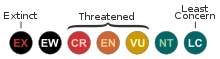
IUCN Red List
Growth: S = slow M = medium F = fast. Soil: L = light (sandy) M = medium H = heavy (clay). pH: A = acid N = neutral B = basic (alkaline). Shade: F = full shade S = semi-shade N = no shade. Moisture: D = dry M = Moist We = wet Wa = water.
Support Plants For A Future
Plants For A Future relies on regular donations to keep our free database and search facilities going, to pay for ongoing research, improvements and enhancements, and to develop and publish new books.
Read more
Choose Currency
Donate in £ GBP
Donate in $ USD
Donate in € EUR
Securely pay via PayPal or Credit/Debit Card without an account.
Expert comment
Author
Fisch. ex DC.
Botanical References
17200
Links / References
For a list of references used on this page please go here
Readers comment
| Add a comment |
|
If you have important information about this plant that may help other users please add a comment or link below. Only comments or links that are felt to be directly relevant to a plant will be included. If you think a comment/link or information contained on this page is inaccurate or misleading we would welcome your feedback at [email protected]. If you have questions about a plant please use the Forum on this website as we do not have the resources to answer questions ourselves.
* Please note: the comments by website users are not necessarily those held by PFAF and may give misleading or inaccurate information.
|
Subject : Mimulus guttatus
|
|
|
|