Translate this page:
Summary
Mesembryanthemum nodiflorum is a prostrate to ascending, succulent annual plant, branched from the base, growing 15 - 20cm tall. Often growing in a group, it can form a mat of vegetation[270 ]. The plant is sometimes grown as an ornamental in gardens and is reported to be harvested from the wild for local use as a food. Mesembryanthemum nodiflorum has escaped from cultivation in various areas (including southwestern N. America, Australia and the Mediterranean), and become established in suitable habitats in the wild. It is able to out-compete native species by its habit of concentrating salt in its leaves and then secreting this onto the ground, making surface conditions too saline for native plants to germinate[270 ]. Common Iceplant (Mesembryanthemum crystallinum) is a salt-laden succulent whose edible leaves, stems, and fruits offer a tangy, ocean-like flavor and thirst-quenching qualities—best when boiled to reduce saltiness. It grows well in USDA Zones 8–11 but is invasive in many regions, capable of displacing native flora. Slenderleaf iceplant is a salt-tolerant succulent whose seeds are edible but of limited food use, as other parts are not confirmed safe. Best adapted to USDA Zones 8–11. It is considered weedy and invasive in parts of its introduced range.
Physical Characteristics

 Mesembryanthemum nodiflorum is a ANNUAL growing to 0.2 m (0ft 8in) by 0.2 m (0ft 8in) at a fast rate.
See above for USDA hardiness. It is hardy to UK zone 8 and is not frost tender. The flowers are pollinated by Insects.
It is noted for attracting wildlife.
Suitable for: light (sandy) and medium (loamy) soils, prefers well-drained soil and can grow in nutritionally poor soil. Suitable pH: mildly acid, neutral and basic (mildly alkaline) soils and can grow in saline soils.
It cannot grow in the shade. It prefers dry or moist soil and can tolerate drought.
UK Hardiness Map
US Hardiness Map
Synonyms
Cryophytum cleistum L.Bolus. Cryophytum gibbosum N.E.Br. Cryophytum nodiflorum (L.) L.Bolus. Cryophytum rogersii L.Bolus. Gasoul nodiflorum (L.) Rothm. Mesembryanthemum caducum Aiton. Mesembryanthemum copticum L. Mesembryanthemum inornatum L.Bolus. Mesembryanthemum paucandrum L.Bolus. Psilocaulon caducum (Aiton) N.E.Br. Stigmatocarpum caducum (Aiton) L.Bolus.
Plant Habitats
Edible Uses
The whole plant is consumed as a cereal[1276 ]. A rather strange report - the plant is very succulent. Perhaps it is referring more to either the fruit or the small seed[K ]. Slenderleaf iceplant (Mesembryanthemum nodiflorum) is a small succulent of the carpetweed family (Aizoaceae), native to southern Africa but now found in parts of the Pacific Coast and the Salton Sea basin of California, as well as other coastal or desert habitats worldwide. The seeds are the only part reported as edible, though they are tiny and difficult to harvest in quantity. Other plant parts are not traditionally used as food. The foliage is covered with minute “ice crystals” similar to those of common iceplant. While the leaves taste like ordinary vegetables with a hint of strawberries and a strong salty edge, their actual edibility has not been verified beyond the seeds. Because of their small size, the seeds have limited food value, but they are technically usable. The plant typically blooms from March to May, producing its seeds in spring. [2-3].
References More on Edible Uses
Medicinal Uses
Plants For A Future can not take any responsibility for any adverse effects from the use of plants. Always seek advice from a professional before using a plant medicinally.
None known
References More on Medicinal Uses
The Bookshop: Edible Plant Books
Our Latest books on Perennial Plants For Food Forests and Permaculture Gardens in paperback or digital formats.
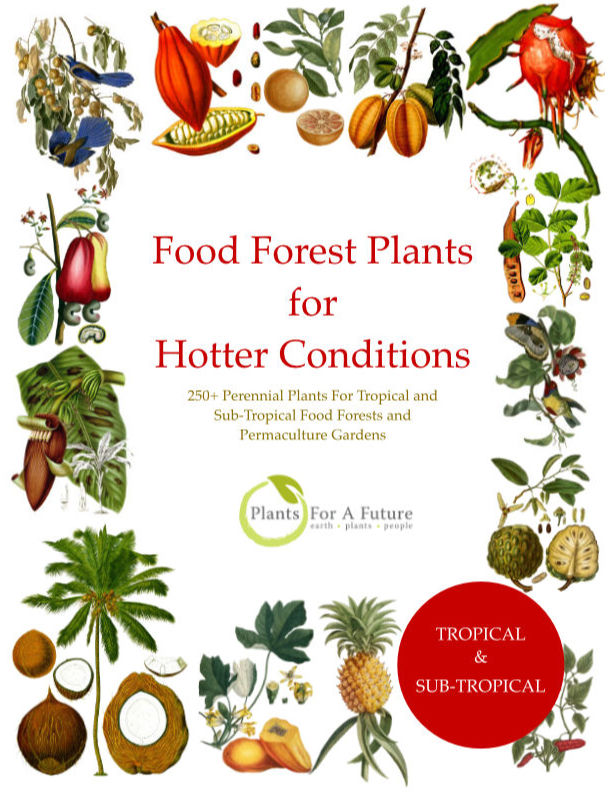
Edible Tropical Plants
Food Forest Plants for Hotter Conditions: 250+ Plants For Tropical Food Forests & Permaculture Gardens.
More
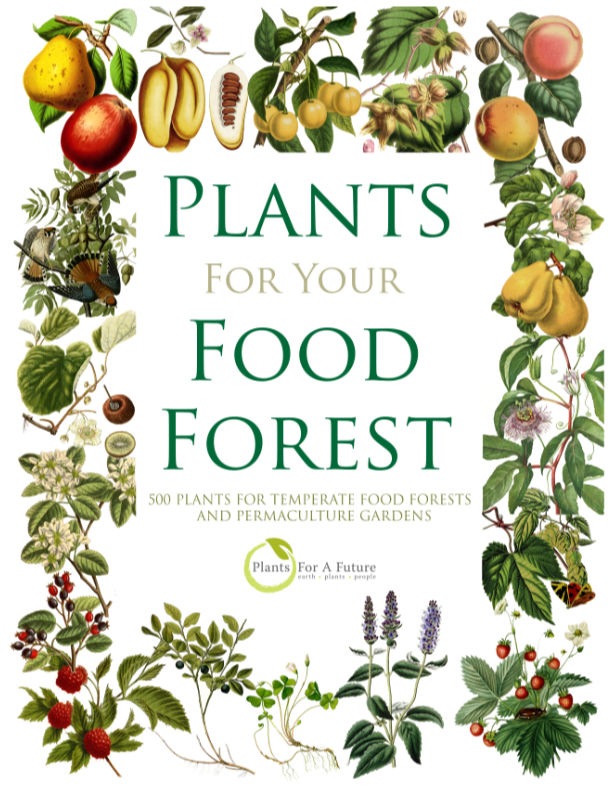
Edible Temperate Plants
Plants for Your Food Forest: 500 Plants for Temperate Food Forests & Permaculture Gardens.
More
More Books
PFAF have eight books available in paperback and digital formats. Browse the shop for more information.
Shop Now
Other Uses
Agroforestry Uses: Due to its ability to accumulate salt, this species has been used for the desalination of soil and it has been suggested that it could be used in bioremediation projects[1093 ].
Special Uses
References More on Other Uses
Cultivation details
An annual or subshrub and grows primarily in the subtropical biome. Requires a sunny position. Easily grown in ordinary well-drained garden soil[1 , 52 ]. Succeeds in any well-drained low-fertility soil. This species uses the 'Crassulacean Acid Metabolism' (CAM) pathway to photosynthesis, a mechanism which aids in conserving moisture. The plant keeps its stomata closed during the day, opening them during the night when it takes in carbon dioxide and stores it in compounds such as malic acid. It then utilizes this carbon dioxide when photosynthesizing during the day. This type of mechanism is used by a range of mainly succulent plants, including cacti and Euphorbia species. Slenderleaf iceplant thrives in mild, dry climates with winter lows down to around 10 °F, placing it broadly within USDA Hardiness Zones 8–11. It has become naturalized and is regarded as invasive in some parts of California and other regions outside its native range, where it can spread aggressively in disturbed, salty, or coastal soils [2-3].
References Carbon Farming Information and Carbon Sequestration Information
Temperature Converter
Type a value in the Celsius field to convert the value to Fahrenheit:
Fahrenheit:
The PFAF Bookshop
Plants For A Future have a number of books available in paperback and digital form. Book titles include Edible Plants, Edible Perennials, Edible Trees,Edible Shrubs, Woodland Gardening, and Temperate Food Forest Plants. Our new book is Food Forest Plants For Hotter Conditions (Tropical and Sub-Tropical).
Shop Now
Plant Propagation
Seed - sow spring in a greenhouse, only just covering the seed. When they are large enough to handle, prick the seedlings out into individual pots and plant them out after the last expected frosts. Seedlings are prone to damp off so should not be over watered and should be kept in a very sunny well-ventilated position[200 ].
Other Names
If available other names are mentioned here
Slenderleaf iceplant, Iceplant
Native Range
Native to: Algeria, Baleares, Canary Is., Cape Provinces, Corse, Cyprus, East Aegean Is., Egypt, France, Greece, Gulf States, Iran, Iraq, Italy, Kriti, Kuwait, Lebanon-Syria, Libya, Madeira, Mauritania, Morocco, Namibia, Oman, Palestine, Sardegna, Saudi Arabia, Selvagens, Sicilia, Sinai, Spain, Tunisia, Turkey, Western Sahara, Yugoslavia Introduced into: Argentina South, Azores, California, Chile Central, Chile North, Mexican Pacific Is., Mexico Northwest, New Jersey, New South Wales, Portugal, South Australia, Victoria, Western Australia
Weed Potential
Right plant wrong place. We are currently updating this section.
Please note that a plant may be invasive in one area but may not in your area so it's worth checking.
Slenderleaf iceplant thrives in mild, dry climates with winter lows down to around 10 °F, placing it broadly within USDA Hardiness Zones 8–11. It has become naturalized and is regarded as invasive in some parts of California and other regions outside its native range, where it can spread aggressively in disturbed, salty, or coastal soils.
Conservation Status
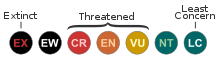
IUCN Red List of Threatened Plants Status : Not available
Growth: S = slow M = medium F = fast. Soil: L = light (sandy) M = medium H = heavy (clay). pH: A = acid N = neutral B = basic (alkaline). Shade: F = full shade S = semi-shade N = no shade. Moisture: D = dry M = Moist We = wet Wa = water.
Now available:
Food Forest Plants for Mediterranean Conditions
350+ Perennial Plants For Mediterranean and Drier Food Forests and Permaculture Gardens.
[Paperback and eBook]
This is the third in Plants For A Future's series of plant guides for food forests tailored to
specific climate zones. Following volumes on temperate and tropical ecosystems, this book focuses
on species suited to Mediterranean conditions—regions with hot, dry summers and cool, wet winters,
often facing the added challenge of climate change.
Read More
Expert comment
Author
L.
Botanical References
Links / References
For a list of references used on this page please go here
A special thanks to Ken Fern for some of the information used on this page.
Readers comment
| Add a comment |
|
If you have important information about this plant that may help other users please add a comment or link below. Only comments or links that are felt to be directly relevant to a plant will be included. If you think a comment/link or information contained on this page is inaccurate or misleading we would welcome your feedback at [email protected]. If you have questions about a plant please use the Forum on this website as we do not have the resources to answer questions ourselves.
* Please note: the comments by website users are not necessarily those held by PFAF and may give misleading or inaccurate information.
|
Subject : Mesembryanthemum nodiflorum
|
|
|
|