Translate this page:
Summary
Smoothstem blazingstar is a striking perennial wildflower native to western North America. It belongs to the genus Mentzelia, a group of plants commonly called blazingstars or stickleafs for their showy flowers and rough foliage that clings readily to clothing. Unlike many of the smaller annual blazingstars, smoothstem blazingstar is a comparatively large, upright plant with pale stems, narrow leaves, and conspicuous golden-yellow flowers. It grows in dry, open habitats throughout the Great Basin and surrounding regions, particularly on rocky slopes, along roadsides, and beside seasonal desert washes. The plant produces numerous seed capsules containing small, flat, winged seeds. These seeds are edible and can be collected and processed into food, though separating them from the dry capsules takes some effort. Smoothstem blazingstar is particularly attractive when flowering and is a valuable native wildflower for dryland gardens and wildlife habitat.
Physical Characteristics

 Mentzelia laevicaulis is a PERENNIAL growing to 0.9 m (3ft) by 0.4 m (1ft 4in) at a medium rate.
See above for USDA hardiness. It is hardy to UK zone 5. It is in flower from May to October. The flowers are pollinated by Bees, Insects.
It is noted for attracting wildlife.
Suitable for: light (sandy) and medium (loamy) soils, prefers well-drained soil and can grow in nutritionally poor soil. Suitable pH: mildly acid, neutral and basic (mildly alkaline) soils. It cannot grow in the shade. It prefers dry or moist soil and can tolerate drought.
UK Hardiness Map
US Hardiness Map
Synonyms
Bartonia laevicaulis Douglas ex Hook. Nuttallia laevicaulis (Douglas ex Hook.) Greene. Touterea laevicaulis (Douglas ex Hook.) Rydb.
Plant Habitats
Edible Uses
Smoothstem blazingstar is an attractive native wildflower with edible seeds and a documented history of traditional use among Indigenous peoples of western North America. People can gather its seeds from mature capsules and process them into food, though their small size and papery wings make cleaning and preparation somewhat laborious. The species is particularly valuable as a dryland ornamental plant, with large golden-yellow flowers that attract pollinating insects. Its ability to grow on rocky, gravelly, and disturbed soils also makes it useful for native plant gardens and ecological restoration. The main limitations as a food resource are the processing effort required and the limited information about its flavor and nutritional composition. With an edibility rating of 3 out of 5, smoothstem blazingstar is a moderately useful traditional seed food and an excellent native wildflower for dry, open landscapes [2-3]. The seeds are the edible part of smoothstem blazingstar. They are flat, lens-shaped, and winged, resembling the seeds of bullet blazingstar (Mentzelia pumila) and dune blazingstar (Mentzelia multiflora). The seeds of these three species are similar in their edible qualities and harvesting requirements. People can collect the seeds from mature, dry capsules and process them for food. Light toasting or grinding into meal are possible preparations based on the documented uses of related edible blazingstars. However, detailed information about the flavor and traditional culinary preparation of Mentzelia laevicaulis is limited [2-3]. Edibility Rating: 3 out of 5 – Moderately useful edible seed plant [2-3]. Smoothstem blazingstar produces edible seeds that can be harvested from numerous capsules. Its relatively large size and abundant seed production may make it a useful seasonal resource where plants are common. However, the seeds are small, flat, and winged, and separating them from capsule fragments can be time-consuming. The rating is provisional because detailed species-specific information about flavor, nutritional value, and food preparation is limited. Taste and Preparation: Smoothstem blazingstar seeds are similar in structure to those of bullet and dune blazingstars. The seeds are flat, lens-shaped, and surrounded by thin wings. These wings give them a somewhat papery character. The supplied notes indicate that gathering and processing methods are broadly similar for these species. Gathering the Seeds: Seeds should be collected when the capsules are fully mature and dry. You can gather the capsules and break them apart to release their contents. Because the seeds are small and papery, separating them from capsule fragments may require careful rubbing, screening, or winnowing. Fully dry capsules are generally easier to process than those that still contain moisture. Toasting: Light toasting is a possible preparation method based on experience with related wing-seeded blazingstars. Toasting bullet blazingstar seeds develops a pleasant, pancake-like aroma, although their flavor is less distinctive. This observation should not automatically be applied to smoothstem blazingstar, whose flavor was not separately assessed in our field studies. Grinding: The seeds may also be ground into meal and incorporated into cooked foods, following general methods documented for edible blazingstars. The thin seed wings may contribute additional fibrous material to the meal. The suitability of different preparations depends on the maturity and cleanliness of the harvested seeds. Seasonality: Smoothstem blazingstar flowers from May to October, depending on elevation and local climate. Mature seeds can generally be expected from July to November. Some seeds may remain in the dry capsules into winter, extending the potential harvesting period. At lower elevations, flowering and seed maturation may occur earlier, while plants growing in cooler upland habitats may develop later. The best time to gather seeds is when the capsules have fully dried, and the seeds are mature. Unlike many annual desert wildflowers, smoothstem blazingstar is perennial and can survive for multiple growing seasons under suitable conditions [2-3]. Traditional Uses: Smoothstem blazingstar belongs to a genus with a substantial history of traditional seed use among Indigenous peoples of western North America. People gathered seeds from several Mentzelia species and processed them into flour, porridge, seed butter, and other foods. The field assessment supports its edible use by describing its seeds as similar to those of bullet and dune blazingstars. The plant should therefore be described as a reported edible seed resource rather than a well-documented traditional staple [2-3]. Safety: Smoothstem blazingstar seeds have a documented history of traditional food use. USDA Forest Service records indicate that the Paiute cooked the seeds in water to make gravy. However, correct identification remains important because some Mentzelia species are known to accumulate selenium. Ten-petal blazingstar (Mentzelia decapetala), for example, has been identified as a selenium-accumulating species. This does not establish that smoothstem blazingstar accumulates dangerous quantities of selenium, but it shows why edible uses should not automatically transfer between species. We do not have detailed nutritional or toxicological analyses of smoothstem blazingstar seeds. The rough, hooked hairs covering the leaves and parts of the stems can cling to clothing and skin, potentially causing mechanical irritation. Avoid gathering seeds from contaminated soils, mining areas, chemically treated land, or polluted roadsides [2-3].
References More on Edible Uses
Medicinal Uses
Plants For A Future can not take any responsibility for any adverse effects from the use of plants. Always seek advice from a professional before using a plant medicinally.
No documented evidence or formal scientific support for the clinical effectiveness of Mentzelia involucrata in medical treatment.
References More on Medicinal Uses
Other Uses
Smoothstem blazingstar suits native wildflower gardens, dryland landscaping, and ecological restoration projects. It is particularly useful on rocky slopes, disturbed ground, and sites with well-drained soils. The species is especially valuable as a dryland ornamental plant, with large golden-yellow flowers that attract pollinators. Its ability to grow on rocky, gravelly, and disturbed soils also makes it useful for native plant gardens and ecological restoration. Its large yellow flowers make it an attractive ornamental species, especially in naturalistic gardens. Smoothstem blazingstar is attractive to native pollinators. Bees, butterflies, and moths visit its large, golden-yellow flowers. The USDA Forest Service identifies it as an attractive flowering plant for these insects, although it is not generally a highly preferred forage species for livestock or wildlife. Its flowers provide an important seasonal resource in dry environments where flowering plants may be relatively sparse.
Special Uses
References More on Other Uses
Cultivation details
Smoothstem blazingstar grows best in full sun and well-drained sandy, gravelly, or rocky soils. It is particularly well adapted to dry, exposed environments where soil fertility is relatively low. The species commonly grows on rocky slopes, along roadsides, and beside washes descending from mountains. It tolerates seasonal drought once established and is suited to environments with limited summer moisture. Its deep-rooted, perennial growth habit allows it to persist in habitats with unpredictable annual rainfall. Heavy, persistently wet soils are unsuitable. Habitat: Smoothstem blazingstar is native to western North America, particularly the Great Basin and surrounding regions. It occurs in dry, open habitats, including sagebrush communities, rocky slopes, desert washes, roadsides, and open woodland margins. The plant is associated with well-drained, often barren soils where competition from taller vegetation is limited. Its ability to establish on disturbed ground makes it a conspicuous wildflower along roadsides and other open areas. It grows across a considerable range of elevations, from relatively warm valleys to cooler upland habitats. USDA Hardiness Zones: USDA Zones 4–9 (approximate). Smoothstem blazingstar is a biennial or short-lived perennial that survives winter through its established root system and basal rosette. It grows naturally across a wide range of elevations in western North America, including areas with cold winters and warm, dry summers. The suggested zones are an ecological estimate, not a verified species-specific hardiness rating. Growth Rate: Moderate. Smoothstem blazingstar can be slow to establish, especially early in its growth. The USDA plant guide notes that seedlings established at an experimental site in Washington developed slowly until warmer temperatures arrived in June. The species forms a deep taproot, which helps it survive dry conditions but makes transplanting difficult. Once established, plants can produce substantial flowering stems during the growing season. Mature Size: Height: approximately 30–90 cm (1–3 feet). The USDA Natural Resources Conservation Service describes smoothstem blazingstar as having a single, branching stem reaching 1–3 feet tall. Spread: Variable. Plants are generally upright and branching, but a reliable mature width is not specified in the botanical references consulted. For cultivation, the USDA recommends spacing transplanted seedlings approximately 60–90 cm (2–3 feet) apart. This is a planting recommendation rather than a measured mature spread. Cultivation: Smoothstem blazingstar suits native wildflower gardens, dryland landscaping, and ecological restoration projects. It is particularly useful on rocky slopes, disturbed ground, and sites with well-drained soils. The plant prefers full sun and can grow in areas receiving approximately 180–380 mm (7–15 inches) of annual precipitation, according to the USDA plant guide. Its large yellow flowers make it an attractive ornamental species, especially in naturalistic gardens. The deep taproot can make established plants difficult to move, so direct sowing is generally preferable to transplanting. Identification: Smoothstem blazingstar is a relatively large biennial or short-lived perennial herb with an upright, branching growth habit. The stems are often pale or whitish and may appear smoother than those of other blazingstars, although the upper stems can still have stiff, barbed hairs. The leaves are simple and alternate, with narrow, lance-shaped blades and deeply toothed or lobed margins. The foliage is rough because of specialized hairs, some shaped like tiny grappling hooks. Flowers: The flowers are large, golden-yellow, and star-shaped. They generally have five long, narrow petals and numerous stamens that form a conspicuous central cluster. Flora of North America records petals approximately 23.5–70 mm long, depending on the variety. The flowers are among the plant's most conspicuous features and make it relatively easy to recognize when flowering. Fruits and Seeds: The fruits are upright, cup-shaped to cylindrical capsules. Flora of North America describes capsules approximately 10.6–43 mm long and 6.3–11.1 mm wide. The capsules contain multiple flattened, winged seeds. The seeds are generally greyish-brown and have thin margins, giving them a somewhat papery appearance. These seed characteristics are important for distinguishing smoothstem blazingstar from species with prism-shaped or strongly ridged seeds. Similar Species: Bullet blazingstar (Mentzelia pumila) produces flat, lens-shaped, winged seeds similar to those of smoothstem blazingstar. The species also has large yellow flowers, and identifying it may require careful examination of flower, leaf, and fruit characteristics. Dune blazingstar (Mentzelia multiflora) is another wing-seeded species. It resembles bullet blazingstar and shares several seed characteristics with smoothstem blazingstar. Whitestem blazingstar (Mentzelia albicaulis) differs in its smaller flowers and grain-shaped seeds with irregular ridges and pointed surface bumps. Bushy blazingstar (Mentzelia dispersa) is generally a smaller annual with relatively smooth, prism-shaped seeds rather than flat, winged seeds. Smoothstem blazingstar is particularly distinctive because of its comparatively large size, showy golden-yellow flowers, and perennial growth habit.
References Carbon Farming Information and Carbon Sequestration Information
Temperature Converter
Type a value in the Celsius field to convert the value to Fahrenheit:
Fahrenheit:
The PFAF Bookshop
Plants For A Future have a number of books available in paperback and digital form. Book titles include Edible Plants, Edible Perennials, Edible Trees,Edible Shrubs, Woodland Gardening, and Temperate Food Forest Plants. Our new book is Food Forest Plants For Hotter Conditions (Tropical and Sub-Tropical).
Shop Now
Plant Propagation
Smoothstem blazingstar can be propagated from seed or transplanted as seedlings. The USDA recommends sowing seeds in late autumn or early winter, generally November or December in its native Northern Hemisphere range. Seeds may be sown approximately 6–13 mm (¼–½ inch) deep into a prepared, weed-free seedbed. Seedlings are difficult to transplant because of their developing taproots. The rough, hooked hairs can also cause neighboring seedlings to cling together, increasing the risk of damage when separating them. Where transplanting is necessary, young plants should be handled carefully and established before the taproot becomes extensive.
Other Names
If available other names are mentioned here
Smoothstem blazingstar, smoothstem stickleaf, smooth blazingstar, giant blazingstar
Native Range
US. USA. Arizona, British Columbia, California, Colorado, Idaho, Montana, Nevada, Oregon, Utah, Washington, Wyoming.
Weed Potential
Right plant wrong place. We are currently updating this section.
Please note that a plant may be invasive in one area but may not
in your area so it's worth checking.
Low to moderate. Smoothstem blazingstar is native to western North America and is not generally regarded as an invasive environmental weed within its natural range. However, it can establish on disturbed soils, including roadsides, road cuts, and other open sites. Its ability to colonize disturbed ground may allow it to spread locally where suitable habitat is available. Outside its native range, its invasive potential is not well documented.
Conservation Status
IUCN Red List of Threatened Plants Status : Not listed.
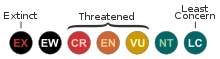
IUCN Red List
Growth: S = slow M = medium F = fast. Soil: L = light (sandy) M = medium H = heavy (clay). pH: A = acid N = neutral B = basic (alkaline). Shade: F = full shade S = semi-shade N = no shade. Moisture: D = dry M = Moist We = wet Wa = water.
Now available:
Food Forest Plants for Mediterranean Conditions
350+ Perennial Plants For Mediterranean and Drier Food Forests and Permaculture Gardens.
[Paperback and eBook]
This is the third in Plants For A Future's series of plant guides for food forests tailored to
specific climate zones. Following volumes on temperate and tropical ecosystems, this book focuses
on species suited to Mediterranean conditions—regions with hot, dry summers and cool, wet winters,
often facing the added challenge of climate change.
Read More
Expert comment
Author
(Douglas ex Hook.) Torr. & A.Gray
Botanical References
Links / References
For a list of references used on this page please go here
Readers comment
| Add a comment |
|
If you have important information about this plant that may help other users please add a comment or link below. Only comments or links that are felt to be directly relevant to a plant will be included. If you think a comment/link or information contained on this page is inaccurate or misleading we would welcome your feedback at [email protected]. If you have questions about a plant please use the Forum on this website as we do not have the resources to answer questions ourselves.
* Please note: the comments by website users are not necessarily those held by PFAF and may give misleading or inaccurate information.
|
Subject : Mentzelia laevicaulis
|
|
|
|