Translate this page:
Summary
Bushy blazingstar is a small, upright annual wildflower native to western North America. It belongs to the Mentzelia genus, a group of plants commonly called blazingstars or stickleafs because of their yellow flowers and rough foliage that readily clings to clothing. The plant grows across much of the western United States and into southern Canada, occupying dry grasslands, sagebrush communities, open woodlands, rocky slopes, and disturbed ground. It is particularly well adapted to sandy, gravelly, and relatively barren soils. Bushy blazingstar typically grows 10–40 cm tall, occasionally reaching 50 cm. It produces small yellow flowers followed by narrow capsules containing numerous tiny, angular seeds. The seeds were traditionally gathered by Indigenous communities in southern California. Like other edible blazingstars, they can be processed into seed meal, although their small size makes gathering and cleaning relatively time-consuming. Bushy blazingstar is also a valuable native wildflower, contributing to plant diversity and providing food resources for wildlife in dry western landscapes.
Physical Characteristics

 Mentzelia dispersa is a ANNUAL growing to 0.4 m (1ft 4in) by 0.4 m (1ft 4in) at a fast rate.
See above for USDA hardiness. It is hardy to UK zone 5. It is in flower from May to August. The flowers are pollinated by Bees, Insects.
It is noted for attracting wildlife.
Suitable for: light (sandy) and medium (loamy) soils, prefers well-drained soil and can grow in nutritionally poor soil. Suitable pH: mildly acid, neutral and basic (mildly alkaline) soils. It cannot grow in the shade. It prefers dry or moist soil and can tolerate drought.
UK Hardiness Map
US Hardiness Map
Synonyms
Acrolasia dispersa (S.Watson) Rydb.
Plant Habitats
Edible Uses
Bushy blazingstar is a useful native wildflower with a more substantial history of traditional food use than might be expected from its small size. Several Indigenous peoples of the Great Basin and western North America gathered its seeds, including the Washoe, Southern Paiute, Western Shoshone, and Kawaiisu. Traditional preparation methods included roasting, grinding, and cooking the seeds into flour-based foods. The USDA's description of a peanut-butter-like flavor makes this species particularly interesting as a potential wild seed food. Its main limitations are the small seed size, the effort required to gather and process them, and the difficulty of distinguishing similar Mentzelia species. The plant also has ecological value as a native wildflower, pollinator resource, and early colonizer of disturbed habitats. With an edibility rating of 3 out of 5, bushy blazingstar is a moderately useful traditional seed food, particularly where productive populations make harvesting worthwhile [2-3]. The seeds are edible and have a long history of traditional use by Native American communities in southern California. People can gather them from mature capsules and process them into meal for cooking. People have used edible blazingstar seeds to make porridge, flour, and seed butter, although detailed preparation methods specifically documented for bushy blazingstar are limited. Each capsule contains multiple seeds, and a single plant can produce numerous capsules. The seeds are relatively small, measuring approximately 0.7–1.7 mm long, making them more difficult to separate from plant material than the larger seeds of some other blazingstars [2-3]. Edibility Rating: 3 out of 5 – Moderately useful edible seed plant. Bushy blazingstar produces edible seeds that were traditionally harvested as food. Its widespread distribution and numerous seed capsules make it a potentially useful seasonal resource. However, the seeds are small; gathering and cleaning can be laborious, and detailed information about their flavor and nutritional composition is limited [2-3]. Taste and Preparation: Gather bush y blazingstar seeds when the capsules have matured and dried. The capsules may be collected and gently broken apart to release their contents. The seeds can then be separated from the dry capsule fragments and other debris. The cleaned seeds may be ground into meal and cooked as porridge, following methods documented for edible members of the Mentzelia genus. We do not have a direct taste assessment of Mentzelia dispersa. Its flavor should therefore not be assumed to match that of other blazingstars. The small seed size is an important practical limitation. Although numerous seeds may be available, obtaining a substantial quantity of clean seed requires patience. Seed Characteristics: The seeds are approximately 0.7–1.7 mm long. They are prism-shaped, with grooves along their angles. Their surfaces are relatively flat, smooth, and often shiny. These characteristics are useful for distinguishing bushy blazingstar from related species with winged, ridged, or distinctly bumpy seeds. Seasonality: Bushy blazingstar generally flowers from May to August, although some locations record flowering from April into September. Seed maturation follows flowering, so mature seeds may be available from late spring through early autumn, depending on elevation and local climate. At lower elevations, plants may develop relatively early following seasonal rainfall. At higher elevations, flowering and seed production may occur later. The best time to gather seeds is when the capsules are fully mature and dry. Seed production can vary considerably between years, particularly where rainfall is unpredictable. Traditional Uses: Bushy blazingstar seeds were traditionally harvested by Native American communities in southern California. The seeds were part of a wider range of small-seeded wild plants Indigenous peoples gathered throughout western North America. Several Mentzelia species were important traditional foods. People ground their seeds into meal and prepared them as porridge, flour, seed butter, and other foods. A USDA plant guide for Mentzelia dispersa also records a traditional Washoe preparation in which seed flour was combined with wheat flour and water to produce a thick soup or gravy, sometimes served with meat. The preparation, known as dahal, played a social role during storytelling gatherings. These traditional uses demonstrate the importance of small wild seeds in the diets and cultural practices of Indigenous communities living in dry western landscapes. Safety: Bushy blazingstar seeds have a documented history of traditional food use. However, correct identification matters because some Mentzelia species are known to accumulate selenium. Ten-petal blazingstar (Mentzelia decapetala), for example, has been identified as a selenium-accumulating species. This does not establish that Mentzelia dispersa accumulates dangerous concentrations of selenium. Nevertheless, edible uses should not automatically be transferred between different blazingstar species. We do not have detailed toxicological or nutritional analyses of bushy blazingstar seeds. Avoid collecting seeds from contaminated soils, mining areas, chemically treated agricultural land, or polluted roadsides. The rough hairs on the leaves and stems can cling to skin and clothing and may cause mechanical irritation. Only correctly identified, mature, clean seeds should be considered for food use.
References More on Edible Uses
Medicinal Uses
Plants For A Future can not take any responsibility for any adverse effects from the use of plants. Always seek advice from a professional before using a plant medicinally.
No documented or scientifically validated medical uses specifically for Mentzelia dispersa. A few other species in the Mentzelia genus have documented ethnobotanical uses and historical folk remedies; Mentzelia affinis was historically used as a food source rather than a medicine.
References More on Medicinal Uses
Other Uses
Bushy blazingstar is suitable for native wildflower gardens, dryland plantings, and restoration projects within its natural range. Bushy blazingstar provides food resources for wildlife in dry western landscapes. Insects, including native pollinators, visit its flowers. The USDA Forest Service also identifies bushy blazingstar as a plant used by greater sage-grouse, with flowers and leaves eaten when accessible. Its seeds may feed seed-eating birds. USDA sources note that seeds of some Mentzelia species are eaten by Gambel's quail, although that observation is not necessarily specific to bushy blazingstar. As an early-successional wildflower, it helps vegetation recover after disturbance and wildfire.
Special Uses
References More on Other Uses
Cultivation details
Bushy blazingstar grows best in full sun and well-drained sandy, gravelly, or rocky soils. It tolerates relatively poor soils and is well adapted to open, dry environments. It occurs on slopes, in grasslands, scrubland, dry forests, and disturbed areas. The plant depends on seasonal moisture for germination and growth but does not require consistently moist soil throughout the year. A USDA cultivation guide recommends sowing seeds in November, before the rainy season, in a sunny location with well-drained gravelly or sandy soil. Supplemental watering may be useful when seasonal rainfall is delayed. Habitat: Bushy blazingstar is native to western North America, extending from southern British Columbia through the western United States. It occurs in Arizona, California, Colorado, Idaho, Montana, Nevada, Oregon, Utah, Washington, Wyoming, and parts of the northern Great Plains. It occupies grasslands, shrublands, sagebrush communities, dry woodlands, roadsides, and rocky or sandy slopes. Flora of North America records the species at elevations of approximately 400–3,100 meters. Bushy blazingstar is also an early colonizer of disturbed and recently burned habitats. Large populations may develop after fire in sagebrush communities, although they often decline as other vegetation becomes established. USDA Hardiness Zones: USDA Zones 4–9 (approximate). Bushy blazingstar is an annual, so its distribution depends more on seed survival, seasonal rainfall, and growing-season conditions than on the winter hardiness of mature plants. Its occurrence across a wide range of elevations shows it can grow in both relatively warm and cool conditions. This is an estimated horticultural range, not a verified species-specific hardiness classification. Growth Rate: Fast during favorable growing conditions. Bushy blazingstar completes its life cycle within a single growing season. Plants can establish rapidly after seasonal rainfall or disturbance, including wildfire. Growth and seed production may be substantially reduced during drought. The species is particularly successful in open habitats where competition from other vegetation is limited. Mature Size: Height: 10–40 cm (4–16 inches), occasionally reaching 50 cm (20 inches). Flora of North America describes the plants as upright, wand-like, or candelabra-shaped. Spread: Variable. Plants may develop several ascending or upright branches, but a reliable mature width is not specified in the botanical references consulted. The species generally has a narrow, upright-to-loosely branching growth habit rather than forming a broad, spreading mat. Cultivation: Bushy blazingstar suits native wildflower gardens, dryland plantings, and restoration projects within its natural range. It prefers full sun, well-drained soil, and relatively low competition from surrounding vegetation. The USDA recommends sowing seeds in gravelly or sandy soil before the rainy season. Temporary protection from seed-eating birds may improve establishment. Because the plant is an annual, it must be allowed to produce mature seeds to maintain a population through natural reseeding. Its ability to colonize recently disturbed habitats may make it useful in appropriate ecological restoration projects. Identification: Bushy blazingstar is an annual herb with upright, branching stems, typically 10–40 cm tall. The stems are often pale, whitish, or shiny and may be covered with short, barbed hairs. The leaves are simple and alternate. Basal leaves may be linear or shallowly lobed, while stem leaves vary from narrow and lance-shaped to broader forms. Their margins may be entire, toothed, or lobed. The leaves are generally rough to the touch because of specialized hairs that can adhere to clothing. The flowers are small and yellow, sometimes with a darker orange-yellow area near their bases. According to Flora of North America, the petals are usually 2–6 mm long and occasionally reach 8 mm. Each flower generally contains 20–40 stamens. The fruits are narrow, cylindrical capsules, approximately 7–30 mm long, that may become slightly curved as they mature. Each capsule generally contains 10–20 seeds. Seed Identification: The seeds are approximately 0.7–1.7 mm long. They are prism-shaped or triangular in cross-section, with grooves along their angles. Their surfaces are relatively smooth, sometimes shiny, and may be tan or dark-mottled. The seed characteristics are particularly important because several related blazingstars have similar flowers and leaves. Similar Species: Yellowcomet blazingstar (Mentzelia affinis) is particularly similar and can be difficult to distinguish. Both species produce small, angular seeds with relatively smooth surfaces. Careful examination of flowers, fruits, and seed characteristics is necessary. Flora of North America identifies M. affinis as one of the species most easily confused with M. dispersa. Whitestem blazingstar (Mentzelia albicaulis) produces grain-shaped seeds with irregular angles and pointed surface bumps, contrasting with the relatively smooth seeds of bushy blazingstar. United blazingstar (Mentzelia congesta) has grain-shaped seeds with more distinct ridges and rounded surface bumps. Veatch's blazingstar (Mentzelia veatchiana) produces irregularly angled seeds with bumpy surfaces. Correct identification can be challenging because flowers and mature seeds are not always present at the same time. Examining a plant at both flowering and seed maturity may be necessary.
References Carbon Farming Information and Carbon Sequestration Information
Temperature Converter
Type a value in the Celsius field to convert the value to Fahrenheit:
Fahrenheit:
The PFAF Bookshop
Plants For A Future have a number of books available in paperback and digital form. Book titles include Edible Plants, Edible Perennials, Edible Trees,Edible Shrubs, Woodland Gardening, and Temperate Food Forest Plants. Our new book is Food Forest Plants For Hotter Conditions (Tropical and Sub-Tropical).
Shop Now
Plant Propagation
Bushy blazingstar reproduces by seed. Seeds can be collected from mature capsules after the plants begin drying at the end of their growing season. The USDA recommends direct sowing before the rainy season. Seeds should be placed in well-drained soil with good exposure to sunlight. Natural reseeding may occur where mature plants are allowed to complete their life cycle. Detailed germination temperatures and dormancy requirements are not well established in the references consulted.
Other Names
If available other names are mentioned here
Bushy blazingstar, scattered blazingstar, Nevada blazingstar, Nada stickleaf, bushy stickleaf
Native Range
US. USA. Arizona, British Columbia, California, Colorado, Idaho, Mexico Northwest, Montana, Nevada, North Dakota, Oregon, South Dakota, Utah, Washington, Wyoming.
Weed Potential
Right plant wrong place. We are currently updating this section.
Please note that a plant may be invasive in one area but may not
in your area so it's worth checking.
Low overall, although it may behave as a local agricultural weed. Bushy blazingstar is native to western North America and is not generally considered an invasive environmental species within its natural range. However, it can establish readily in disturbed soils, including agricultural areas. The University of California's Integrated Pest Management program lists it as a broadleaf annual weed that may spread through the movement of plant material on clothing and equipment. This distinction is important: a native species may be troublesome in cultivated land without being an invasive species in natural habitats.
Conservation Status
IUCN Red List of Threatened Plants Status : Not listed.
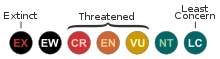
IUCN Red List
Growth: S = slow M = medium F = fast. Soil: L = light (sandy) M = medium H = heavy (clay). pH: A = acid N = neutral B = basic (alkaline). Shade: F = full shade S = semi-shade N = no shade. Moisture: D = dry M = Moist We = wet Wa = water.
Now available:
Food Forest Plants for Mediterranean Conditions
350+ Perennial Plants For Mediterranean and Drier Food Forests and Permaculture Gardens.
[Paperback and eBook]
This is the third in Plants For A Future's series of plant guides for food forests tailored to
specific climate zones. Following volumes on temperate and tropical ecosystems, this book focuses
on species suited to Mediterranean conditions—regions with hot, dry summers and cool, wet winters,
often facing the added challenge of climate change.
Read More
Expert comment
Author
S.Watson
Botanical References
Links / References
For a list of references used on this page please go here
Readers comment
| Add a comment |
|
If you have important information about this plant that may help other users please add a comment or link below. Only comments or links that are felt to be directly relevant to a plant will be included. If you think a comment/link or information contained on this page is inaccurate or misleading we would welcome your feedback at [email protected]. If you have questions about a plant please use the Forum on this website as we do not have the resources to answer questions ourselves.
* Please note: the comments by website users are not necessarily those held by PFAF and may give misleading or inaccurate information.
|
Subject : Mentzelia dispersa
|
|
|
|