Translate this page:
Summary
Whitestem blazingstar is a small annual wildflower native to western North America. It belongs to the Mentzelia genus, a group of plants commonly called blazingstars or stickleafs because of their attractive flowers and rough, adhesive foliage. The plant grows in dry, open habitats, including deserts, sagebrush communities, chaparral, and pinyon-juniper woodlands. It is particularly well adapted to sandy, gravelly, and rocky soils where many other plants struggle to grow. Whitestem blazingstar produces yellow flowers followed by capsules containing numerous small, edible seeds. These seeds were an important traditional food for several Native American communities, including the Cahuilla, Kawaiisu, Havasupai, Hopi, and Paiute peoples. Among edible blazingstars, whitestem blazingstar is particularly noteworthy. People considered its seeds preferable to those of several related species and traditionally processed them into flour, porridge, gravy, seed butter, and bread. In parts of the Great Basin, they were an important staple food. The plant also contributes to desert biodiversity by providing flowers for native pollinators and seeds for wildlife.
Physical Characteristics

 Mentzelia albicaulis is a ANNUAL growing to 0.3 m (1ft) by 0.3 m (1ft in) at a fast rate.
See above for USDA hardiness. It is hardy to UK zone 5. The species is hermaphrodite (has both male and female organs).
It is noted for attracting wildlife.
Suitable for: light (sandy) and medium (loamy) soils, prefers well-drained soil and can grow in nutritionally poor soil. Suitable pH: mildly acid, neutral and basic (mildly alkaline) soils. It cannot grow in the shade. It prefers dry or moist soil and can tolerate drought.
UK Hardiness Map
US Hardiness Map
Synonyms
Acrolasia albicaulis (Douglas ex Hook.) Rydb. Bartonia albicaulis Douglas ex Hook. Mentzelia albicaulis var. genuina Urb. & Gilg.
Plant Habitats
Cultivated Beds;
Edible Uses
Edible Parts: Seed
Edible Uses:
Whitestem blazingstar is one of the most important edible, seed-producing species in the genus Mentzelia. Its seeds have a well-documented history of traditional use among several Indigenous communities of western North America. They were processed into flour, porridge, gravy, seed butter, and bread, and were particularly important in parts of the Great Basin. The species is widely distributed across western North America and grows in a variety of dry habitats, from deserts to sagebrush and juniper communities. Its main limitations as a food resource are the small seed size, the effort required to gather and process it, and the difficulty of distinguishing similar blazingstar species. Nevertheless, its traditional importance and versatility make it a particularly valuable wild seed plant. With an edibility rating of 4 out of 5, whitestem blazingstar is a highly useful traditional seed food and one of the more significant edible species in the Mentzelia genus [2-3]. The seeds are edible and have a well-documented history of traditional food use among Indigenous peoples of western North America. Whitestem blazingstar is one of the more valuable edible species in the Mentzelia genus because people widely gathered and used its seeds in several preparations. People can grind the seeds into flour, cook them into porridge, make seed butter, or incorporate them into bread and other foods. Unlike many wild plants with poorly documented edible uses, whitestem blazingstar has a substantial history as a traditional seed food [2-3]. Edibility Rating: 4 out of 5 – Highly useful edible seed plant. Whitestem blazingstar has a strong history of traditional food use, and people preferred its seeds over those of several related blazingstars. People can process them into a variety of nutritious foods, including flour, porridge, seed butter, and bread. Its main limitations are the small size of the seeds, the work required to gather and process them, and the difficulty of correctly identifying some Mentzelia species [2-3]. Taste and Preparation: Whitestem blazingstar seeds were traditionally valued for their usefulness in several types of food preparation. People can gather the seeds from mature, dry capsules and clean them to remove capsule fragments and other plant material. They can then be ground into meal or flour. Traditional preparations included porridge, gravy, seed butter, and bread. Grinding the seeds produces a meal that can be mixed with water and cooked into a thick porridge or used as an ingredient in other foods. The seeds were considered particularly desirable compared with those of some other blazingstar species. However, the supplied field notes do not include a direct taste assessment of Mentzelia albicaulis. Its exact flavor should therefore not be assumed to match the pancake-like aromas or flavors described for other members of the genus [2-3]. Seed Characteristics The seeds are grain-shaped, with irregular angles, depressions, and ridges. Their surfaces are covered with small, pointed bumps. These characteristics are particularly important for identification because many blazingstar species have similar flowers and foliage. The seeds are small, but each plant can produce numerous capsules containing multiple seeds. Gathering is most practical when plants have produced a substantial number of mature, dry capsules. Seasonality: Whitestem blazingstar flowers from March to September, depending on elevation, rainfall, and local growing conditions. Seed production follows flowering, so mature seeds may become available from late spring through autumn. In lower desert environments, plants may flower relatively early following favorable winter or spring rainfall. At higher elevations, flowering and seed maturation may occur later in the growing season. The best time to gather seeds is when the capsules are fully mature and dry. Seed production can vary considerably between years, particularly in arid regions where plant growth depends heavily on seasonal rainfall [2-3]. Traditional Uses: Whitestem blazingstar was an important traditional food plant for several Native American communities. The Cahuilla, Kawaiisu, Havasupai, Hopi, Paiute, and other Indigenous peoples harvested its seeds. People valued the seeds because they could be processed into several useful foods, including flour, porridge, gravy, seed butter, and bread. In the Great Basin, whitestem blazingstar seeds were a staple food item. Small-seeded wild plants were important components of traditional food systems throughout the American West. Although individual seeds were tiny, gathering large quantities from productive stands could provide a useful food supply. Whitestem blazingstar was especially valuable because it could grow in dry, open environments where other food plants were less abundant. Its traditional use demonstrates the importance of seed-producing annual plants in Indigenous desert food systems [2-3]. Safety: Whitestem blazingstar seeds have a substantial history of traditional food use. However, correct species identification is important, particularly because some members of the Mentzelia genus are known to accumulate selenium. Ten-petal blazingstar (Mentzelia decapetala), for example, has been identified as a selenium-accumulating species. This does not establish that whitestem blazingstar accumulates dangerous quantities of selenium, but it shows why edible uses should not automatically transfer between different Mentzelia species. We do not have a detailed toxicological analysis or nutritional composition for Mentzelia albicaulis seeds. Avoid gathering plants from contaminated soils, mining areas, chemically treated land, or roadsides exposed to pollutants. The rough hairs covering the leaves and stems can cling to clothing and skin and may cause mechanical irritation. Only correctly identified, mature, clean seeds should be considered for food use [2-3]. Seed - raw or cooked. The oily seed is parched and ground into a meal then mixed with water to make a mush[2, 46, 61, 105, 161, 212, 257]. The seed meal can be kneaded into a seed butter and used as a spread on bread[257]. The minute seeds are much used for food by several native North American Indian tribes[207].
References More on Edible Uses
Medicinal Uses
Plants For A Future can not take any responsibility for any adverse effects from the use of plants. Always seek advice from a professional before using a plant medicinally.
Odontalgic Poultice Salve
A poultice of the crushed, soaked seeds has been applied to burns and also to relieve the pain of toothache[257].
References More on Medicinal Uses
Other Uses
Whitestem blazingstar may be suitable for native wildflower gardens, dryland plantings, and ecological restoration projects within its natural range. Whitestem blazingstar supports biodiversity in dry western landscapes. Its flowers provide pollen and potentially nectar for native bees and other pollinating insects. The numerous seeds may also provide food for small seed-eating animals, although specific wildlife relationships are not documented in the supplied source. As a native annual wildflower, it contributes to the seasonal vegetation of deserts, sagebrush communities, and open woodlands. Its ability to grow in relatively barren soils makes it part of the specialized plant communities adapted to dry western environments.
Special Uses
References More on Other Uses
Cultivation details
Whitestem blazingstar grows best in full sun and well-drained soils. It is particularly well adapted to sandy, gravelly, and rocky ground, including relatively barren soils with low fertility. The species grows successfully in dry environments where seasonal rainfall provides sufficient moisture for germination and early growth. It commonly occurs in open desert, chaparral, sagebrush, and juniper communities. Like many desert annuals, its growth depends on rainfall timing and amount. The plant generally performs best in open areas where competition from taller vegetation is limited. Persistently wet or poorly drained soils are unsuitable. Habitat: Whitestem blazingstar occurs throughout much of the western United States, across a broad range of elevations. It grows in open desert landscapes, chaparral, sagebrush communities, and pinyon-juniper woodlands. The plant is particularly associated with dry, exposed habitats with sandy, gravelly, or rocky soils. It may occur on desert plains, slopes, open woodland margins, and disturbed ground. Its wide ecological range helps explain why several Indigenous communities across western North America had access to it. USDA Hardiness Zones: USDA Zones 4–10 (approximate). Whitestem blazingstar is an annual plant, so its distribution depends more on seasonal rainfall, germination conditions, and growing-season temperatures than on winter hardiness alone. It occurs across a wide range of elevations, from relatively warm desert environments to cooler upland habitats. The suggested hardiness range is an ecological estimate rather than a verified horticultural rating for the species. Growth Rate: Fast during favorable growing conditions. Whitestem blazingstar is an annual plant that germinates, grows, flowers, and produces seeds within a single growing season. Growth can be rapid following adequate rainfall, particularly in open habitats with limited competition. In dry years, plants may remain small or fail to establish in substantial numbers. The species survives unfavorable periods primarily through its seeds. Mature Size: Whitestem blazingstar is a relatively small annual herb, generally reaching approximately 10–50 cm (4–20 inches) tall. Its growth habit may be upright or branching, depending on local conditions. Plant size varies considerably with rainfall, soil fertility, and competition. This is an approximate size range and should be verified against a regional botanical description before being treated as a definitive measurement. Cultivation: Whitestem blazingstar may suit native wildflower gardens, dryland plantings, and ecological restoration projects within its natural range. It prefers full sun, excellent drainage, and relatively low soil fertility. The plant is adapted to seasonal rainfall rather than continuous irrigation. In cultivation, sowing seeds during the season corresponding to natural germination may improve establishment. Because whitestem blazingstar is an annual, plants must be allowed to flower and produce mature seeds if they are to maintain a self-sustaining population. Its traditional value as a seed food also makes it an interesting species for ethnobotanical gardens and educational plant collections. However, detailed cultivation information specific to Mentzelia albicaulis is limited. Identification: Whitestem blazingstar is a small annual herb belonging to the Loasaceae family. Like other members of the Mentzelia genus, it has simple, alternate leaves with rough surfaces covered in specialized hairs. These hairs can cling to clothing and skin, giving the plants their alternative common name, stickleaf. The stems are often pale or whitish, reflecting the plant's common name. The leaves may be narrow, toothed, or lobed, depending on their position and stage of development. The flowers are yellow and have the characteristic structure of the Mentzelia genus, with five petals and numerous stamens. The flowers develop into capsules containing multiple seeds. Seed Identification: The seeds are particularly important for distinguishing whitestem blazingstar from similar species. They are grain-shaped, with irregular angles, depressions, or ridges. Their surfaces are covered with small, pointed bumps. These features distinguish them from species with smooth, prism-shaped seeds or flat, winged seeds. Because many blazingstars look similar when flowering, accurate identification often requires examining mature seeds. Similar Species: Whitestem blazingstar resembles several other Mentzelia species. Yellowcomet blazingstar (Mentzelia affinis) produces seeds approximately 1–2 mm wide. These are prism-shaped, with grooves along their angles and relatively smooth surfaces. Whitestem blazingstar seeds differ in that they have irregular ridges and pointed surface bumps. Bushy blazingstar (Mentzelia dispersa) produces small, prism-shaped seeds with relatively smooth, often shiny surfaces. These contrast with the more irregular and distinctly bumpy seeds of whitestem blazingstar. United blazingstar (Mentzelia congesta) has grain-shaped seeds with well-defined angles or ridges. Their surfaces have rounded bumps rather than the pointed bumps characteristic of whitestem blazingstar. Veatch's blazingstar (Mentzelia veatchiana) also produces irregularly angled, bumpy seeds and may require careful examination of additional botanical features to distinguish it. Identifying blazingstars can be challenging because flowers and mature seeds are not always present at the same time. For accurate identification, it may be necessary to observe a plant while flowering and return later to examine its mature seed capsules.
References Carbon Farming Information and Carbon Sequestration Information
Temperature Converter
Type a value in the Celsius field to convert the value to Fahrenheit:
Fahrenheit:
The PFAF Bookshop
Plants For A Future have a number of books available in paperback and digital form. Book titles include Edible Plants, Edible Perennials, Edible Trees,Edible Shrubs, Woodland Gardening, and Temperate Food Forest Plants. Our new book is Food Forest Plants For Hotter Conditions (Tropical and Sub-Tropical).
Shop Now
Plant Propagation
Seed - sow spring in situ[200]. Germination should take place within a couple of weeks. The seeds develop inside capsules that mature following flowering. Propagation is likely to be most successful when conditions resemble the species' natural environment, particularly well-drained soils and seasonal moisture. Seeds may be sown directly into sandy or gravelly soil.
Other Names
If available other names are mentioned here
Whitestem blazingstar, white-stemmed blazingstar, whitestem stickleaf, small-flowered blazingstar
Native Range
NORTHERN AMERICA: Canada (British Columbia (south)), United States (South Dakota (west), Colorado, Idaho, Montana, Oregon, Washington, Wyoming, New Mexico, Texas (west), Arizona, California, Nevada, Utah), Mexico (Baja California (Norte))
Weed Potential
Right plant wrong place. We are currently updating this section.
Please note that a plant may be invasive in one area but may not
in your area so it's worth checking.
Low. Whitestem blazingstar is a native North American wildflower and is not generally regarded as an invasive weed. It is adapted to dry, open habitats and depends on suitable seasonal rainfall for successful establishment. Although plants may produce numerous seeds under favorable conditions, this is a normal reproductive characteristic of annual desert wildflowers. Outside its native range, its potential to establish and spread is not well documented.
Conservation Status
IUCN Red List of Threatened Plants Status : Not listed (2026)
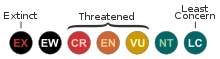
IUCN Red List
Growth: S = slow M = medium F = fast. Soil: L = light (sandy) M = medium H = heavy (clay). pH: A = acid N = neutral B = basic (alkaline). Shade: F = full shade S = semi-shade N = no shade. Moisture: D = dry M = Moist We = wet Wa = water.
Now available:
Food Forest Plants for Mediterranean Conditions
350+ Perennial Plants For Mediterranean and Drier Food Forests and Permaculture Gardens.
[Paperback and eBook]
This is the third in Plants For A Future's series of plant guides for food forests tailored to
specific climate zones. Following volumes on temperate and tropical ecosystems, this book focuses
on species suited to Mediterranean conditions—regions with hot, dry summers and cool, wet winters,
often facing the added challenge of climate change.
Read More
Expert comment
Author
Douglas.
Botanical References
6071
Links / References
For a list of references used on this page please go here
Readers comment
| Add a comment |
|
If you have important information about this plant that may help other users please add a comment or link below. Only comments or links that are felt to be directly relevant to a plant will be included. If you think a comment/link or information contained on this page is inaccurate or misleading we would welcome your feedback at [email protected]. If you have questions about a plant please use the Forum on this website as we do not have the resources to answer questions ourselves.
* Please note: the comments by website users are not necessarily those held by PFAF and may give misleading or inaccurate information.
|
Subject : Mentzelia albicaulis
|
|
|
|