 |
|
www.flickr.com/photos/petrichor |
 |
|
Translate this page:
Summary
Physical Characteristics

 Melaleuca hypericifolia is an evergreen Shrub growing to 3 m (9ft) by 3 m (9ft).
See above for USDA hardiness. It is hardy to UK zone 9 and is frost tender. It is in leaf all year, in flower from June to August. The species is hermaphrodite (has both male and female organs) and is pollinated by Insects.
Suitable for: light (sandy), medium (loamy) and heavy (clay) soils and prefers well-drained soil. Suitable pH: mildly acid and neutral soils. It can grow in semi-shade (light woodland) or no shade. It prefers moist soil. The plant can tolerate maritime exposure.
UK Hardiness Map
US Hardiness Map
Synonyms
Plant Habitats
Woodland Garden Sunny Edge; Hedge;
Edible Uses
References More on Edible Uses
Medicinal Uses
Plants For A Future can not take any responsibility for any adverse effects from the use of plants. Always seek advice from a professional before using a plant medicinally.
Anthelmintic Antiseptic Antispasmodic Diaphoretic Expectorant Stimulant
An essential oil obtained from the fresh leaves and twigs is anthelmintic, antiseptic, antispasmodic, diaphoretic and highly stimulant[4]. It is used internally as a stimulating expectorant in laryngitis and bronchitis, as an antiseptic in cystitis and as an anthelmintic for round worms[4]. It is used externally to treat various skin infections[4]. It relieves headaches[152].
References More on Medicinal Uses
Other Uses
Hedge Hedge
Plants can be used for hedging in climates suitable for their growth[157].
Special Uses
Hedge Hedge
References More on Other Uses
Cultivation details
Requires a fertile, well-drained moisture retentive lime-free soil in full sun[182]. Prefers a soil that does not contain much nitrogen[188]. Succeeds in heavy shade and moist soils in Australian gardens but does not withstand heavy frosts[157]. Tolerates salt spray[157]. A very ornamental plant[1], but it can be difficult to establish[167] and is unlikely to be hardy in many areas of the country. Plants can tolerate temperatures down to about -5°c[260]. Seed takes about 12 months to develop on the plant, the woody seed capsules persist for 3 or more years[200]. Any pruning is best done after the plants have flowered with the intention of maintaining a compact habit[200]. Hybridizes freely with other members of this genus[200]. Plants in this genus are notably resistant to honey fungus[200].
References Carbon Farming Information and Carbon Sequestration Information
Temperature Converter
Type a value in the Celsius field to convert the value to Fahrenheit:
Fahrenheit:
Plant Propagation
Seed - surface sow in spring or autumn onto a pot of permanently moist soil in a warm greenhouse. Emmerse in 5cm of water and do not water from overhead. Grow on until the seedlings are 0.5cm tall then remove from the water and pot up a week later. Seedlings are liable to damp off when grown this way, sowing the seed thinly, good ventilation and hygiene are essential for success[200]. Grow the plants on for at least their first winter in a greenhouse and then plant them out in late spring or early summer, after the last expected frosts. Consider giving the plants some protection from the cold for their first few winters outdoors. Cuttings of half-ripe lateral shoots with a heel, July/August in a frame[200].
Other Names
If available other names are mentioned here
Native Range
AUSTRALASIA: Australia (New South Wales (southeast))
Weed Potential
Right plant wrong place. We are currently updating this section.
Please note that a plant may be invasive in one area but may not
in your area so it's worth checking.
Conservation Status
IUCN Red List of Threatened Plants Status :
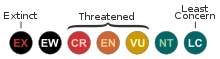
IUCN Red List
Growth: S = slow M = medium F = fast. Soil: L = light (sandy) M = medium H = heavy (clay). pH: A = acid N = neutral B = basic (alkaline). Shade: F = full shade S = semi-shade N = no shade. Moisture: D = dry M = Moist We = wet Wa = water.
Support Plants For A Future
Plants For A Future relies on regular donations to keep our free database and search facilities going, to pay for ongoing research, improvements and enhancements, and to develop and publish new books.
Read more
Choose Currency
Donate in £ GBP
Donate in $ USD
Donate in € EUR
Securely pay via PayPal or Credit/Debit Card without an account.
Expert comment
Author
(Salisb.)Sm.
Botanical References
200
Links / References
For a list of references used on this page please go here
Readers comment
© 2010, Plants For A Future. Plants For A Future is a charitable company limited by guarantee, registered in England and Wales. Charity No. 1057719, Company No. 3204567.