 |
|
http://commons.wikimedia.org/wiki/User:Stan_Shebs |
 |
| http://commons.wikimedia.org/wiki/User:Stan_Shebs |
Translate this page:
Summary
Grand rushpink is a small perennial wildflower of sandy habitats in the Southwest, recognised by its striking pink to purple daisy-like flowers and slender stems containing milky latex. Although modest in size, it provides an edible leafy vegetable and has historically been used as a source of natural chewing gum. While it cannot provide significant calories, it is a useful seasonal potherb for foragers in desert and canyon landscapes.
Physical Characteristics

 Lygodesmia grandiflora is a PERENNIAL growing to 0.3 m (1ft) at a medium rate.
See above for USDA hardiness. It is hardy to UK zone 5. It is in flower from May to July. The species is hermaphrodite (has both male and female organs) and is pollinated by Insects.
It is noted for attracting wildlife.
Suitable for: light (sandy) and medium (loamy) soils, prefers well-drained soil and can grow in nutritionally poor soil. Suitable pH: mildly acid, neutral and basic (mildly alkaline) soils. It cannot grow in the shade. It prefers dry or moist soil and can tolerate drought.
UK Hardiness Map
US Hardiness Map
Synonyms
Lygodesmia grandiflora var. arizonica (Tomb) S.L.Welsh. Lygodesmia grandiflora var. dianthopsis (D.C.Eaton) S.L.Welsh. Lygodesmia grandiflora var. doloresensis (Tomb) S.L.Welsh.
Plant Habitats
Cultivated Beds;
Edible Uses
Edible Parts: Leaves
Edible Uses:
Grand rushpink is a useful but modest wild food. Its tender leaves make an excellent potherb with a pleasant, lettuce-like flavor, while its dried latex makes an interesting natural chewing gum. Although far too small to serve as a major food source, it is a worthwhile edible plant for foragers exploring the sandy landscapes of the American Southwest [2-3]. The leaves are edible and are best used as potherbs. Although the flowers, flower buds, and milky latex were sampled, they are not reported to be edible. The dried latex can be chewed as a natural gum [2-3]. Edibility Rating: 3 out of 5 – A pleasant edible green, but too small to provide substantial nourishment. Taste and Preparation: Grand rushpink leaves are tender and palatable, with a mild, lettuce-like flavor. Traditional reports indicate they were always cooked, and they perform especially well as a potherb. You can add the leaves directly to soups without changing the cooking water. Simmering produces a rich green broth that retains much of the plant's food value, making it an excellent base for simple soups and stews. The flowers and flower buds possess an appealing sweetness, although they are covered internally with fine hairs that reduce their culinary appeal. These parts are not reported to be edible. The plant's milky latex dries into a sticky substance that can be formed into chewing gum. The gum has a mild, lettuce-like flavor rather than the sweet taste associated with commercial chewing gums. While edible as gum, it should not be considered a significant food source [2-3]. Seasonality: Grand rushpink typically flowers from May to July. Gather the leaves during the active growing season, before the plants dry out [2-3]. Traditional Uses: Native American use focused primarily on the cooked leaves as a potherb. The dried latex could also be chewed as a natural gum, although this served more as a chewing material than a source of nutrition. Safety: The leaves are considered safe when cooked as a potherb. The flowers and latex are not reported to be edible, although the dried latex has traditionally been chewed as gum. As with all wild plants, positive identification is essential before consumption [2-3]. Leaves - cooked[46, 61, 105]. Used as greens and as a flavouring[161, 212, 216, 257].
References More on Edible Uses
Medicinal Uses
Plants For A Future can not take any responsibility for any adverse effects from the use of plants. Always seek advice from a professional before using a plant medicinally.
Galactogogue Salve
The leaves are chewed to increase the milk flow of lactating mothers[216, 257]. The plant sap has been used as a healing salve on the sores caused by sunburn[257].
References More on Medicinal Uses
Other Uses
It is best suited to rock gardens, native plant collections, and xeriscapes where its attractive flowers and drought tolerance can be appreciated. The colourful flowers attract a variety of native bees, butterflies, and other pollinating insects. The plant also contributes to the diversity of native desert wildflower communities.
Special Uses
References More on Other Uses
Cultivation details
Grand rushpink grows best in full sun on well-drained sandy soils. It is well adapted to dry climates and survives in nutrient-poor desert sands. Habitat: This species occurs in sand dunes and other sandy habitats at low to mid elevations, particularly in northeastern Arizona, northwestern New Mexico, Utah, Wyoming, and surrounding regions. USDA Hardiness Zones: USDA Zones 4–8. Growth Rate: Moderate. Plants spread slowly by rhizomes while maintaining relatively small individual clumps. Mature Size: Plants typically grow 5–35 cm (2–14 inches) tall. Cultivation: Grand rushpink requires excellent drainage and full sun. It suits rock gardens, native plant collections, and xeriscapes where its attractive flowers and drought tolerance can be appreciated. Identification: Grand rushpink is a small perennial that arises from a taproot and spreads by rhizomes. It contains milky latex and bears narrow linear leaves that become scale-like on the upper stems. The showy flower heads consist entirely of pink, purple, or occasionally white ray florets, with no central disc flowers. The cylindrical flower heads possess slender phyllaries with small appendages, while the fruits are ribbed, hairless cypselae topped with numerous long, persistent bristles. Similar Species: Grand rushpink closely resembles desert gum (Lygodesmia juncea), but differs by having larger flower heads, 5–12 ray florets, phyllaries with appendages, and longer pappus bristles. Desert gum generally has smaller heads with only 5–7 ray florets and phyllaries lacking appendages.
References Carbon Farming Information and Carbon Sequestration Information
Temperature Converter
Type a value in the Celsius field to convert the value to Fahrenheit:
Fahrenheit:
The PFAF Bookshop
Plants For A Future have a number of books available in paperback and digital form. Book titles include Edible Plants, Edible Perennials, Edible Trees,Edible Shrubs, Woodland Gardening, and Temperate Food Forest Plants. Our new book is Food Forest Plants For Hotter Conditions (Tropical and Sub-Tropical).
Shop Now
Plant Propagation
Propagation is by seed or by division of rhizomes where established colonies occur. Seed - sow spring in a cold frame and only just cover the seed. When they are large enough to handle, prick the seedlings out into individual pots and grow them on in the greenhouse for at least their first winter. Plant them out into their permanent positions in late spring or early summer, after the last expected frosts. You can try division in the spring.
Other Names
If available other names are mentioned here
Skeleton Plant, Largeflower skeletonplant
Native Range
NORTHERN AMERICA: United States (Colorado, Idaho, Wyoming, New Mexico, Arizona, Nevada, Utah)
Weed Potential
Right plant wrong place. We are currently updating this section.
Please note that a plant may be invasive in one area but may not
in your area so it's worth checking.
Low. Although considered a weed in some situations, grand rushpink is a native species and is not regarded as invasive.
Conservation Status
IUCN Red List of Threatened Plants Status : Not listed.
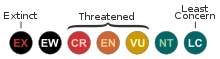
IUCN Red List
Growth: S = slow M = medium F = fast. Soil: L = light (sandy) M = medium H = heavy (clay). pH: A = acid N = neutral B = basic (alkaline). Shade: F = full shade S = semi-shade N = no shade. Moisture: D = dry M = Moist We = wet Wa = water.
Now available:
Food Forest Plants for Mediterranean Conditions
350+ Perennial Plants For Mediterranean and Drier Food Forests and Permaculture Gardens.
[Paperback and eBook]
This is the third in Plants For A Future's series of plant guides for food forests tailored to
specific climate zones. Following volumes on temperate and tropical ecosystems, this book focuses
on species suited to Mediterranean conditions—regions with hot, dry summers and cool, wet winters,
often facing the added challenge of climate change.
Read More
Expert comment
Author
(Nutt.) Torr. & A. Gray
Botanical References
6071
Links / References
For a list of references used on this page please go here
Readers comment
| Add a comment |
|
If you have important information about this plant that may help other users please add a comment or link below. Only comments or links that are felt to be directly relevant to a plant will be included. If you think a comment/link or information contained on this page is inaccurate or misleading we would welcome your feedback at [email protected]. If you have questions about a plant please use the Forum on this website as we do not have the resources to answer questions ourselves.
* Please note: the comments by website users are not necessarily those held by PFAF and may give misleading or inaccurate information.
|
Subject : Lygodesmia grandiflora
|
|
|
|