 |
|
http://www.flickr.com/photos/jlucier/ |
 |
| http://www.flickr.com/photos/jlucier/ |
Translate this page:
Summary
Northern bugleweed is a perennial wetland plant native to North America, growing in marshes, wet meadows, pond margins, and other damp habitats. Although it occurs primarily in northern regions and does not naturally extend into the Southwest, it was one of the principal bugleweed species traditionally used as food by Native Americans. Unlike American bugleweed, northern bugleweed develops enlarged, tuberous rhizomes that provide a much more substantial and palatable food source.
Physical Characteristics

 Lycopus uniflorus is a PERENNIAL growing to 0.3 m (1ft) at a medium rate.
See above for USDA hardiness. It is hardy to UK zone 3. The species is hermaphrodite (has both male and female organs) and is pollinated by Bees, flies.
It is noted for attracting wildlife.
Suitable for: light (sandy), medium (loamy) and heavy (clay) soils. Suitable pH: mildly acid, neutral and basic (mildly alkaline) soils. It can grow in semi-shade (light woodland) or no shade. It prefers moist or wet soil.
UK Hardiness Map
US Hardiness Map
Synonyms
Homotypic Synonyms: Euhemus uniflorus (Michx.) Raf. Heterotypic Synonyms: Lycopus communis E.P.Bicknell. Lycopus coreanus H.Lév. Lycopus membranaceus E.P.Bicknell. Lycopus parviflorus (Benth.) Maxim. Lycopus pumilus Vahl. Lycopus uniflorus f. flagellaris Fernald. Lycopus uniflorus var. macrophyllus Farw. Lycopus uniflorus var. membranacea Farw. Lycopus uniflorus var. ovatus Fernald & H.St.John. Lycopus uniflorus var. parviflorus (Benth.) Kitag. Lycopus virginicus var. parviflorus Benth.
Plant Habitats
Bog Garden;
Edible Uses
Edible Parts: Root
Edible Uses:
Northern bugleweed is one of the most useful members of the Lycopus genus for foraging. Although uncommon or absent in the Southwest, its pleasant-tasting tuberous rhizomes made it an important traditional food in northern regions of North America. Compared with American bugleweed, it offers a significant improvement in both texture and food value, making it one of the better edible wetland plants within the genus [2-3]. The tuberous rhizomes are edible. In our research, Northern bugleweed was one of the two species most valued as food because of its swollen underground storage organs. The leaves and stems are not reported to be edible. Edibility Rating: 3 out of 5 – A useful native wetland food with pleasant-tasting tuberous rhizomes, although limited in distribution within the Southwest. Taste and Preparation: Northern bugleweed produces tuberous rhizomes that are reported to taste pleasant, making them considerably superior to the woody rhizomes of American bugleweed. Native Americans widely used these underground storage organs, particularly in northern North America. You can thoroughly clean the rhizomes and boil them before eating to use their stored starches. As with other underground storage organs, harvesting is generally easiest while the above-ground portions of the plant are present for accurate identification [2-3]. Seasonality: Northern bugleweed flowers during the growing season, while the rhizomes can be gathered whenever the plants can be positively identified. Like most rhizomatous perennials, it typically stores the most food reserves before new spring growth or after the growing season ends [2-3]. Traditional Uses: Northern bugleweed was one of the primary bugleweed species Native Americans used. Together with rough bugleweed, it was preferred because its enlarged tuberous rhizomes provided a much more useful food source than the slender, woody rhizomes of American bugleweed [2-3]. Safety: Northern bugleweed is generally considered safe when correctly identified. Rhizomes collected from wetlands should always be washed thoroughly before cooking to remove mud and potential contaminants [2-3]. Root - raw or cooked[55, 61, 62, 105, 161]. The roots were a staple food for some native North American Indian tribes[257]. The crisp white tubers can be eaten raw in salads or cooked in soups etc[183]. When boiled for a short time they are said to make an agreeable vegetable, somewhat like Chinese artichokes (Stachys affinis)[183].
References More on Edible Uses
Medicinal Uses
Plants For A Future can not take any responsibility for any adverse effects from the use of plants. Always seek advice from a professional before using a plant medicinally.
Antitussive Sedative
The whole plant is antitussive and sedative[61].
References More on Medicinal Uses
Other Uses
Suitable for pond margins, rain gardens, wetland restoration projects, and naturalistic plantings. The flowers attract bees and other pollinating insects, while dense colonies provide cover for small wetland animals and help stabilize moist soils along streams and wetlands.
Special Uses
Food Forest
References More on Other Uses
Cultivation details
Northern bugleweed prefers permanently moist to wet soils in full sun or partial shade. It thrives around marshes, ponds, streams, wet meadows, and other freshwater wetlands. Habitat: This species grows in marshes, wet meadows, pond margins, bogs, and slow-moving streams across much of northern North America. USDA Hardiness Zones: USDA Zones 2–8. Growth Rate: Moderate. Plants spread gradually by creeping rhizomes and can form colonies in suitable wetland habitats. Mature Size: Plants typically grow 20–80 cm (8–32 inches) tall. Cultivation: Northern bugleweed grows best in consistently wet soils and suits pond margins, rain gardens, wetland restoration projects, and naturalistic plantings. People rarely cultivate it as a food plant, despite its edible rhizomes. Identification: Northern bugleweed is an upright perennial arising from tuberous rhizomes. Like other bugleweeds, it bears opposite leaves and small white flowers arranged in dense axillary clusters. The flowers appear nearly regular rather than distinctly two-lipped and possess two exserted fertile stamens. It closely resembles other members of the genus but is distinguished primarily by its northern distribution and enlarged underground rhizomes. Similar Species: Northern bugleweed closely resembles American bugleweed (Lycopus americanus) and rough bugleweed (Lycopus asper). Unlike American bugleweed, it develops enlarged tuberous rhizomes that provide much greater food value. Rough bugleweed also produces tuberous rhizomes and was similarly valued as a traditional food. Other wetland members of the mint family may appear similar but differ in flower and fruit characteristics. Succeeds in damp meadows or in wet places by ponds or streams[200]. For polyculture design as well as the above-ground architecture (form - tree, shrub etc. and size shown above) information on the habit and root pattern is also useful and given here if available. The plant growth habit is a clumper with limited spread [1-2]. The root pattern is stoloniferous rooting from creeping stems above the ground [1-2]. The root pattern is tuberous with swollen potato-like roots [1-2].
References Carbon Farming Information and Carbon Sequestration Information
Temperature Converter
Type a value in the Celsius field to convert the value to Fahrenheit:
Fahrenheit:
Plant Propagation
Seed - sow spring or autumn in a cold frame[238]. Prick out the seedlings into individual pots when they are large enough to handle and grow them on in the greenhouse for their first year. Plant them out into their permanent positions in early summer. Division in spring or autumn[238]. Larger clumps can be replanted direct into their permanent positions, though it is best to pot up smaller clumps and grow them on in a cold frame until they are rooting well. Plant them out in the spring.
Other Names
If available other names are mentioned here
Bugleweed.
Native Range
TEMPERATE ASIA: Japan, Kamchatka, Khabarovsk, Korea, Kuril Islands, Manchuria, Primorye, Sakhalin,Amur. NORTHERN AMERICA: Alaska, Alberta, Arkansas, British Columbia, California, Colorado, Connecticut, Idaho, Illinois, Iowa, Kansas, Kentucky, Labrador, Maine, Manitoba, Maryland, Michigan, Minnesota, Missouri, Montana, Nebraska, New Hampshire, New York, Newfoundland, North Carolina, North Dakota, Northwest Territories, Ontario, Quebec, Rhode Island, Saskatchewan, Tennessee, Vermont, Virginia, Wyoming, Yukon,
Weed Potential
Right plant wrong place. We are currently updating this section.
Please note that a plant may be invasive in one area but may not
in your area so it's worth checking.
Low. Northern bugleweed is a native wetland species with no known invasive tendencies.
Conservation Status
IUCN Red List of Threatened Plants Status : Lycopus uniflorus has most recently been assessed for The IUCN Red List of Threatened Species in 2015. Lycopus uniflorus is listed as Least Concern.
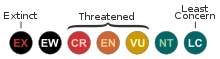
IUCN Red List
Growth: S = slow M = medium F = fast. Soil: L = light (sandy) M = medium H = heavy (clay). pH: A = acid N = neutral B = basic (alkaline). Shade: F = full shade S = semi-shade N = no shade. Moisture: D = dry M = Moist We = wet Wa = water.
Support Plants For A Future
Plants For A Future relies on regular donations to keep our free database and search facilities going, to pay for ongoing research, improvements and enhancements, and to develop and publish new books.
Read more
Choose Currency
Donate in £ GBP
Donate in $ USD
Donate in € EUR
Securely pay via PayPal or Credit/Debit Card without an account.
Expert comment
Author
L.
Botanical References
43235
Links / References
For a list of references used on this page please go here
Readers comment
| Add a comment |
|
If you have important information about this plant that may help other users please add a comment or link below. Only comments or links that are felt to be directly relevant to a plant will be included. If you think a comment/link or information contained on this page is inaccurate or misleading we would welcome your feedback at [email protected]. If you have questions about a plant please use the Forum on this website as we do not have the resources to answer questions ourselves.
* Please note: the comments by website users are not necessarily those held by PFAF and may give misleading or inaccurate information.
|
Subject : Lycopus uniflorus
|
|
|
|