Translate this page:
Summary
American bugleweed is a perennial wetland plant native to much of North America, occurring in moist meadows, marshes, stream margins, and other damp habitats. Unlike many members of the mint family, it is valued not for its aromatic leaves but for its underground rhizomes. While the rhizomes are edible, they are considerably less desirable than those of related species because they are woody rather than tuberous. Although they contain useful carbohydrates, their coarse texture limits their value as a wild food.
Physical Characteristics

 Lycopus americanus is a PERENNIAL growing to 0.5 m (1ft 8in) by 0.3 m (1ft) at a medium rate.
See above for USDA hardiness. It is hardy to UK zone 4. It is in flower from July to September. The species is hermaphrodite (has both male and female organs) and is pollinated by Bees, flies.
It is noted for attracting wildlife.
Suitable for: light (sandy), medium (loamy) and heavy (clay) soils. Suitable pH: mildly acid, neutral and basic (mildly alkaline) soils. It can grow in semi-shade (light woodland) or no shade. It prefers moist or wet soil.
UK Hardiness Map
US Hardiness Map
Synonyms
Lycopus lucidus subsp. americanus (Muhl. ex W.P.C.Barton) Hultén. Lycopus lucidus var. americanus (Muhl. ex W.P.C.Barton) A.Gray. Phytosalpinx americana (Muhl. ex W.P.C.Barton) Lunell.
Plant Habitats
Bog Garden;
Edible Uses
Edible Parts: Root
Edible Uses:
American bugleweed shows that not every edible plant is particularly desirable as food. Although its rhizomes contain useful starches and can produce an excellent soup broth, their woody texture greatly limits their culinary value. Compared with its tuber-producing relatives, American bugleweed is a wild food of only minor importance, but it remains an interesting edible species of North America's wetlands [2-3]. The rhizomes are edible, but they are not among the better wild foods. Unlike rough and northern bugleweed, American bugleweed produces long, branch-like rhizomes rather than enlarged tubers. The leaves and stems are not reported to be edible [2-3]. Edibility Rating: 2 out of 5 – Edible but of limited value because the rhizomes are woody [2-3]. Taste and Preparation: American bugleweed rhizomes are more branch-like than potato-like, with off-white interiors surrounded by thin dark-brown skins. They have a distinctly starchy character combined with earthy, soil-like flavors and a marshy undertone. While harsh flavors are minimal, the woody texture makes the rhizomes difficult to chew, even after cooking. The best way to prepare them is to use the rhizomes for broth rather than eating them whole. Thorough cleaning removes much of the earthy flavor, and peeling helps further, although the skins are not easy to remove. After cleaning, pound the rhizomes and simmer them, then strain out the fibrous material. The resulting broth is pleasantly starchy and makes an excellent base for soups, with only a slight earthy flavor remaining [2-3]. Seasonality: American bugleweed flowers from July to September. Rhizomes can technically be gathered whenever the plant can be positively identified, although underground storage organs are generally most nutritious before new spring growth or after the growing season has ended. Traditional Uses: Compared with rough and northern bugleweed, American bugleweed appears to have been of relatively little importance as a traditional food. Native American use was concentrated primarily on the tuber-producing species, which provide a much more substantial and palatable food source. Safety: American bugleweed is generally considered safe when the rhizomes are properly identified. However, because it grows in wet habitats, thoroughly wash the rhizomes before preparation to remove mud and potential contaminants [2-3]. Root - raw or cooked[207]. This contradicts with the report in [200] that the plant does not form tubers on its rhizomes.
References More on Edible Uses
Medicinal Uses
Plants For A Future can not take any responsibility for any adverse effects from the use of plants. Always seek advice from a professional before using a plant medicinally.
Astringent Narcotic Sedative
The whole plant is used as an astringent, hypoglycaemic, mild narcotic and mild sedative[4, 102, 222, 238]. It also slows and strengthens heart contractions[238]. The plant has been shown to be of value in the treatment of hyperthyroidism[222, 238], it is also used in the treatment of coughs, bleeding from the lungs and consumption, excessive menstruation etc[4, 238]. It should not be prescribed for pregnant women or patients with hypothyroidism[238]. The plant is harvested as flowering begins and can be use fresh or dried, in an infusion or as a tincture[4, 238].
References More on Medicinal Uses
Other Uses
Dye
The juice gives a permanent colour to linen and wool and does not wash out[207]. The colour is not mentioned[K]. The flowers provide nectar for a variety of bees and other pollinating insects. Dense colonies also provide cover for small wetland animals and help stabilize moist soils along waterways. It is well suited to rain gardens, pond margins, and wetland restoration projects.
Special Uses
References More on Other Uses
Cultivation details
American bugleweed prefers consistently moist to wet soils and grows best in full sun to partial shade. It thrives in saturated ground where many other edible plants cannot survive. Habitat: This species grows in moist meadows, marshes, stream margins, wetlands, and other damp habitats throughout much of the northern United States, with scattered populations extending into the Southwest. USDA Hardiness Zones: USDA Zones 3–9. Growth Rate: Moderate. Plants spread gradually by creeping rhizomes, allowing colonies to expand over time in suitable wet habitats. Mature Size: Plants typically grow 20–80 cm (8–32 inches) tall. Cultivation: American bugleweed grows best in permanently moist or wet soils, where it can spread naturally by rhizomes. It is well suited to rain gardens, pond margins, and wetland restoration projects but is of limited interest as a food crop because of its woody underground stems. Identification: American bugleweed is an upright perennial arising from creeping rhizomes. It has opposite, narrowly to broadly lance-shaped leaves with sharply and deeply incised margins. It produces small white flowers in dense axillary clusters from July to September. The flowers appear almost regular rather than strongly two-lipped, with two exserted fertile stamens. The rounded nutlets have distinctive corky margins. Similar Species: American bugleweed closely resembles rough bugleweed (Lycopus asper) and northern bugleweed (Lycopus uniflorus). Rough bugleweed differs by producing tuberous rhizomes and having serrated rather than deeply incised leaves, while northern bugleweed also develops edible tuberous rhizomes that Native Americans used more widely. Other wetland mints may appear similar but generally differ in flower structure and leaf shape. Succeeds in damp meadows or in wet places by ponds or streams[200].
References Carbon Farming Information and Carbon Sequestration Information
Temperature Converter
Type a value in the Celsius field to convert the value to Fahrenheit:
Fahrenheit:
The PFAF Bookshop
Plants For A Future have a number of books available in paperback and digital form. Book titles include Edible Plants, Edible Perennials, Edible Trees,Edible Shrubs, Woodland Gardening, and Temperate Food Forest Plants. Our new book is Food Forest Plants For Hotter Conditions (Tropical and Sub-Tropical).
Shop Now
Plant Propagation
Seed - sow spring or autumn in a cold frame[238]. Prick out the seedlings into individual pots when they are large enough to handle and grow them on in the greenhouse for their first year. Plant them out into their permanent positions in early summer. Division in spring or autumn[238]. Larger clumps can be replanted direct into their permanent positions, though it is best to pot up smaller clumps and grow them on in a cold frame until they are rooting well. Plant them out in the spring.
Other Names
If available other names are mentioned here
Water Horehound, American water horehound
Native Range
NORTHERN AMERICA: Canada (Québec, Nova Scotia, Ontario, Prince Edward Island, Newfoundland and Labrador, Saskatchewan, Alberta, Manitoba, British Columbia), United States (Connecticut, Indiana, Maine, Massachusetts, Michigan, New Hampshire, New Jersey, New York, Ohio, Pennsylvania, Rhode Island, Vermont, West Virginia, Iowa, Kansas, Minnesota, Missouri, Nebraska, North Dakota, South Dakota, Illinois, Oklahoma, Wisconsin, Idaho, Montana, Oregon, Washington, Wyoming, Alabama, Delaware, Florida, Georgia, Kentucky, Louisiana, Maryland, Mississippi, North Carolina, South Carolina, Tennessee, Virginia, New Mexico, Texas, Arizona, California, Utah)
Weed Potential
Right plant wrong place. We are currently updating this section.
Please note that a plant may be invasive in one area but may not
in your area so it's worth checking.
Low. American bugleweed spreads slowly by rhizomes but is native and rarely becomes invasive.
Conservation Status
IUCN Red List of Threatened Plants Status : ycopus americanus has most recently been assessed for The IUCN Red List of Threatened Species in 2015. Lycopus americanus is listed as Least Concern.
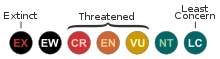
IUCN Red List
Growth: S = slow M = medium F = fast. Soil: L = light (sandy) M = medium H = heavy (clay). pH: A = acid N = neutral B = basic (alkaline). Shade: F = full shade S = semi-shade N = no shade. Moisture: D = dry M = Moist We = wet Wa = water.
Now available:
Food Forest Plants for Mediterranean Conditions
350+ Perennial Plants For Mediterranean and Drier Food Forests and Permaculture Gardens.
[Paperback and eBook]
This is the third in Plants For A Future's series of plant guides for food forests tailored to
specific climate zones. Following volumes on temperate and tropical ecosystems, this book focuses
on species suited to Mediterranean conditions—regions with hot, dry summers and cool, wet winters,
often facing the added challenge of climate change.
Read More
Expert comment
Author
Muhl.
Botanical References
200235
Links / References
For a list of references used on this page please go here
Readers comment
| Add a comment |
|
If you have important information about this plant that may help other users please add a comment or link below. Only comments or links that are felt to be directly relevant to a plant will be included. If you think a comment/link or information contained on this page is inaccurate or misleading we would welcome your feedback at [email protected]. If you have questions about a plant please use the Forum on this website as we do not have the resources to answer questions ourselves.
* Please note: the comments by website users are not necessarily those held by PFAF and may give misleading or inaccurate information.
|
Subject : Lycopus americanus
|
|
|
|