 |
|
http://commons.wikimedia.org/wiki/User:Rasbak |
 |
| http://commons.wikimedia.org/wiki/User:Rasbak |
Translate this page:
Summary
Main Bloom Time: Early fall, Late fall, Mid fall. Form: Prostrate.
Physical Characteristics

 Lolium perenne is an evergreen Perennial growing to 1 m (3ft 3in) at a fast rate.
See above for USDA hardiness. It is hardy to UK zone 5 and is not frost tender. It is in leaf all year. The species is hermaphrodite (has both male and female organs) and is pollinated by Wind.
Suitable for: light (sandy), medium (loamy) and heavy (clay) soils and prefers well-drained soil. Suitable pH: mildly acid, neutral and basic (mildly alkaline) soils and can grow in very acid, very alkaline and saline soils.
It cannot grow in the shade. It prefers moist soil and can tolerate drought. It can tolerate atmospheric pollution.
UK Hardiness Map
US Hardiness Map
Synonyms
Plant Habitats
Meadow;
Edible Uses
Edible Parts: Seed
Edible Uses:
Seed - cooked. Used as a cereal[177]. The seed has a nutritional value similar to oats (Avena sativa) and contain gluten[269]. An emergency food, it is only used when all else fails[177]. The seed is rather small and fiddly to use[K]. Yields of 1 tonne per hectare have been achieved, though around 500kg is a more common yield[269].
References More on Edible Uses
Medicinal Uses
Plants For A Future can not take any responsibility for any adverse effects from the use of plants. Always seek advice from a professional before using a plant medicinally.
Astringent Cancer Malaria
The plant has occasionally been used in the treatment of cancer, diarrhoea, haemorrhages and malaria[269].
References More on Medicinal Uses
Other Uses
Biomass
The plant has the potential to be used as a source of biomass. Yields of up to 25 tonnes per hectare have been reported from Europe. In the absence of definitive yield information an average yield of 17.5 tonnes of dry matter per hectare per year and an energy content of 17.5 GJ per metric tonne are assumed[269].
Special Uses
Food Forest
References More on Other Uses
Cultivation details
Landscape Uses:Erosion control, Ground cover. Adapted to mild, humid temperate climates, this species grows best on rather heavy, rich, moist soils, but also does well on well-manured lighter soils with sufficient moisture[269]. It dislikes shade and requires a well-drained soil[200]. It prefers a pH in the range 6 - 7, though it can tolerate a range from 4.5 - 8.2[269]. Plants are moderately drought resistant, they tolerate atmspheric pollution and salt in the soil, and can also succeed when planted on minespoil[269]. They prefer an annual precipitation in the range of 21 - 176cm[269]. Many cultivars have been developed by selection of individual plants, clones and families for specific purposes, such as for lawns, pastures and hay[269]. A fast growing plant, it combines particularly well with white clover (Trifolium repens)[269]. Special Features:
Not North American native, Naturalizing.
References Carbon Farming Information and Carbon Sequestration Information
Temperature Converter
Type a value in the Celsius field to convert the value to Fahrenheit:
Fahrenheit:
Plant Propagation
Seed - sow in situ in the spring. It is also possible to sow the seed in situ in the autumn in most parts of Britain. This will give larger plants and heavier yields.
Other Names
If available other names are mentioned here
Native Range
TEMPERATE ASIA: Saudi Arabia, Afghanistan, Cyprus, Egypt (Sinai), Iran, Iraq, Israel, Jordan, Lebanon, Syria, Turkey, Russian Federation-Ciscaucasia (Ciscaucasia), Armenia, Azerbaijan, Georgia, Russian Federation (Dagestan) TROPICAL ASIA: India (northwest), Pakistan EUROPE: Denmark, United Kingdom, Ireland, Norway, Sweden, Austria, Belgium, Switzerland, Czech Republic, Germany, Hungary, Netherlands, Poland, Slovakia, Russian Federation-European part (European part (southwest)), Belarus, Moldova, Russian Federation (Kalmykija, Respublika, Astrakhan, Saratov, Volgogradskaja oblast), Ukraine (incl. Krym), Albania, Bulgaria, Greece (incl. Crete), Croatia, Italy (incl. Sardinia, Sicily), Romania, Serbia, Slovenia, Spain, France (incl. Corsica), Portugal AFRICA: Spain (Canarias), Portugal (Madeira Islands), Algeria, Egypt, Libya, Morocco, Tunisia
Weed Potential
Right plant wrong place. We are currently updating this section.
Please note that a plant may be invasive in one area but may not
in your area so it's worth checking.
Conservation Status
IUCN Red List of Threatened Plants Status :
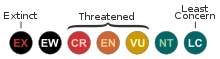
IUCN Red List
Growth: S = slow M = medium F = fast. Soil: L = light (sandy) M = medium H = heavy (clay). pH: A = acid N = neutral B = basic (alkaline). Shade: F = full shade S = semi-shade N = no shade. Moisture: D = dry M = Moist We = wet Wa = water.
Support Plants For A Future
Plants For A Future relies on regular donations to keep our free database and search facilities going, to pay for ongoing research, improvements and enhancements, and to develop and publish new books.
Read more
Choose Currency
Donate in £ GBP
Donate in $ USD
Donate in € EUR
Securely pay via PayPal or Credit/Debit Card without an account.
Expert comment
Author
L.
Botanical References
74200
Links / References
For a list of references used on this page please go here
Readers comment
© 2010, Plants For A Future. Plants For A Future is a charitable company limited by guarantee, registered in England and Wales. Charity No. 1057719, Company No. 3204567.