 |
|
http://www.flickr.com/photos/carolannie/ |
 |
| http://www.flickr.com/photos/carolannie/ |
Translate this page:
Summary
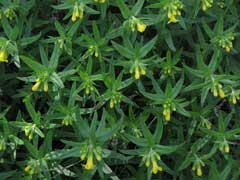
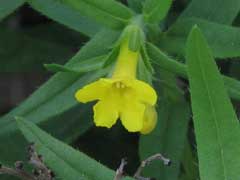
Purple stoneseed is a perennial wildflower of sagebrush, juniper woodlands, and mountain forests in the interior Southwest. Despite its common name, the flowers are yellow rather than purple. The name refers to the reddish-purple dye found in the roots and lower stems. The plant produces hard, glossy, nut-like fruits that were reportedly eaten by the Goshute people of Utah and Nevada, but like other members of the borage family, it contains potentially harmful pyrrolizidine alkaloids and is not recommended as a food plant.
Physical Characteristics

 Lithospermum multiflorum is a PERENNIAL growing to 0.7 m (2ft 4in) by 0.4 m (1ft 4in) at a medium rate.
See above for USDA hardiness. It is hardy to UK zone 4. It is in flower from May to August. The species is hermaphrodite (has both male and female organs) and is pollinated by Bees, insects.
It is noted for attracting wildlife.
Suitable for: light (sandy) and medium (loamy) soils and prefers well-drained soil. Suitable pH: neutral and basic (mildly alkaline) soils and can grow in very alkaline soils.
It cannot grow in the shade. It prefers dry or moist soil.
UK Hardiness Map
US Hardiness Map
Synonyms
Lithospermum cognatum Greene ex Spengler. Lithospermum pilosum A.Gray.
Plant Habitats
Cultivated Beds;
Edible Uses
Edible Parts: Seed
Edible Uses:
Purple stoneseed produces attractive yellow flowers and intriguing nut-like fruits that Indigenous peoples occasionally ate. The flavor of the nutlets appears surprisingly good, but their limited availability, laborious processing, and the presence of pyrrolizidine alkaloids make this a plant best appreciated for its ecological and botanical interest rather than its value as a wild food [2-3]. Historical records indicate that the Goshute people ate the seeds (nutlets), but little evidence suggests they were ever an important food source. Species of Lithospermum contain pyrrolizidine alkaloids, compounds capable of causing cumulative liver damage. Because of these safety concerns, avoid the seeds and all other parts of the plant [2-3]. Edibility Rating: 1 out of 5 – Historically eaten on occasion, but significant toxicity concerns outweigh any potential food value. Taste and Preparation: Purple stoneseed fruits are hard nutlets rather than true seeds. They have glossy white shells with a greyish-brown tint and usually contain tan seeds enclosed by papery green coverings. Based on limited sampling, the nutlets have a pleasantly nut-like flavor and a delicately crunchy texture. Most of the volume consists of edible seed rather than shell, making them more substantial than their name suggests. Unfortunately, gathering enough for a meaningful meal is slow, and separating the cracked shell fragments from the kernels is tedious. Although the flavor is promising, toxic compounds mean the seeds should not be considered a safe wild food [2-3]. Seasonality (Phenology): Purple stoneseed flowers from May through August. The nutlets mature during late summer and detach easily as the plants dry, making timely harvesting important [2-3]. Traditional Uses: The Goshute people of Utah and Nevada reportedly ate the seeds. Most Indigenous uses of Lithospermum species, however, involved medicinal applications rather than food. The reddish-purple dye produced by the roots and lower stems has also been noted historically [2-3]. Safety: Do not consume this plant. Like other members of the Lithospermum genus, purple stoneseed contains pyrrolizidine alkaloids, compounds that may cause cumulative liver damage. Although historical records document occasional consumption of the nutlets, the plant cannot be regarded as a safe food source by modern standards.The seeds have been used for food[257].
References More on Edible Uses
Medicinal Uses
Plants For A Future can not take any responsibility for any adverse effects from the use of plants. Always seek advice from a professional before using a plant medicinally.
Miscellany
The root has been used as a 'life medicine' by some native North American Indian tribes[257].
References More on Medicinal Uses
The Bookshop: Edible Plant Books
Our Latest books on Perennial Plants For Food Forests and Permaculture Gardens in paperback or digital formats.

Edible Tropical Plants
Food Forest Plants for Hotter Conditions: 250+ Plants For Tropical Food Forests & Permaculture Gardens.
More

Edible Temperate Plants
Plants for Your Food Forest: 500 Plants for Temperate Food Forests & Permaculture Gardens.
More

More Books
PFAF have eight books available in paperback and digital formats. Browse the shop for more information.
Shop Now
Other Uses
Dye Miscellany
Purple stoneseed is occasionally grown in native wildflower collections because of its bright yellow flowers and drought tolerance. A purple dye is obtained from the root[155]. Wildlife Value: The flowers provide nectar for pollinating insects, while the plant contributes to the diversity of native sagebrush and woodland ecosystems.
Special Uses
References More on Other Uses
Cultivation details
Purple stoneseed prefers full sun and well-drained soils. It thrives in dry mountain environments with relatively low competition from taller vegetation. Habitat: Occurs in sagebrush communities, juniper woodlands, pine forests, and mountain habitats of Arizona, New Mexico, southern Colorado, and Utah. USDA Hardiness Zones: USDA Zones 4–8. Growth Rate: Moderate. Plants emerge each spring from perennial taproots and gradually develop into flowering clumps. Mature Size: Typically 15–70 cm (6–28 in) tall. Cultivation: Purple stoneseed is occasionally grown in native wildflower collections because of its bright yellow flowers and drought tolerance. It requires excellent drainage and performs best in sunny locations. Pollinators: The tubular yellow flowers attract native bees and other nectar-feeding insects that can reach into the narrow floral tubes. Identification: Purple stoneseed is an upright, hairy perennial that arises from a taproot and exudes a distinctive reddish-purple dye. The stems are often purple near the base, while the alternate leaves are narrow and lance-shaped. The yellow trumpet-shaped flowers are borne in terminal coiled clusters and produce one to four smooth, stone-like nutlets with glossy pale shells. Similar Species: Purple stoneseed closely resembles puccoon (Lithospermum incisum) and mountain gromwell (Lithospermum ruderale). It can usually be distinguished by its taller stature, terminal flower clusters, and the reddish-purple coloration of its roots and lower stems. All members of the genus should be approached with caution because they contain similar toxic compounds. Requires a warm sunny position in a moderately fertile well-drained calcareous soil[1, 200]. Grows well in dry soils[200].
References Carbon Farming Information and Carbon Sequestration Information
Temperature Converter
Type a value in the Celsius field to convert the value to Fahrenheit:
Fahrenheit:
The PFAF Bookshop
Plants For A Future have a number of books available in paperback and digital form. Book titles include Edible Plants, Edible Perennials, Edible Trees,Edible Shrubs, Woodland Gardening, and Temperate Food Forest Plants. Our new book is Food Forest Plants For Hotter Conditions (Tropical and Sub-Tropical).
Shop Now
Plant Propagation
Seed - sow spring in a cold frame. When they are large enough to handle, prick the seedlings out into individual pots and grow them on in the greenhouse for their first winter. Plant them out into their permanent positions in late spring or early summer, after the last expected frosts. Cuttings. Division. Established plants develop deep taproots that make transplanting difficult.
Other Names
If available other names are mentioned here
Manyflowered Gromwell, Manyflowered stoneseed, many-flowered stoneseed, showy stoneseed
Native Range
US. USA. NORTHERN AMERICA: United States Arizona, Colorado, Mexico Northeast, Mexico Northwest, New Mexico, Oklahoma, Texas, Utah, Wyoming
Weed Potential
Right plant wrong place. We are currently updating this section.
Please note that a plant may be invasive in one area but may not in your area so it's worth checking.
Very low. Purple stoneseed is a slow-spreading native perennial and is not considered invasive.
Conservation Status
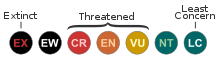
IUCN Red List of Threatened Plants Status : Not listed.
Growth: S = slow M = medium F = fast. Soil: L = light (sandy) M = medium H = heavy (clay). pH: A = acid N = neutral B = basic (alkaline). Shade: F = full shade S = semi-shade N = no shade. Moisture: D = dry M = Moist We = wet Wa = water.
Now available:
Food Forest Plants for Mediterranean Conditions
350+ Perennial Plants For Mediterranean and Drier Food Forests and Permaculture Gardens.
[Paperback and eBook]
This is the third in Plants For A Future's series of plant guides for food forests tailored to
specific climate zones. Following volumes on temperate and tropical ecosystems, this book focuses
on species suited to Mediterranean conditions—regions with hot, dry summers and cool, wet winters,
often facing the added challenge of climate change.
Read More
Expert comment
Author
Torr. ex A.Gray
Botanical References
200
Links / References
For a list of references used on this page please go here
Readers comment
| Add a comment |
|
If you have important information about this plant that may help other users please add a comment or link below. Only comments or links that are felt to be directly relevant to a plant will be included. If you think a comment/link or information contained on this page is inaccurate or misleading we would welcome your feedback at [email protected]. If you have questions about a plant please use the Forum on this website as we do not have the resources to answer questions ourselves.
* Please note: the comments by website users are not necessarily those held by PFAF and may give misleading or inaccurate information.
|
Subject : Lithospermum multiflorum
|
|
|
|