 |
|
http://commons.wikimedia.org/wiki/User:Stan_Shebs |
 |
| http://commons.wikimedia.org/wiki/User:Stan_Shebs |
Translate this page:
Summary
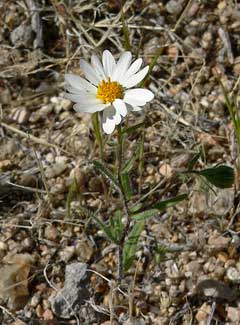
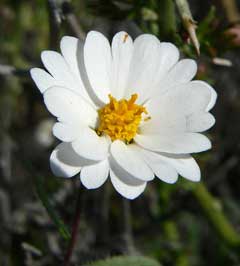
White tidytips is a colourful annual wildflower of the Mojave, Sonoran, and southern Great Basin deserts. In spring it produces striking white-rayed flower heads with bright yellow centres, making it one of the more distinctive desert wildflowers. Historically, Native Americans of southern California gathered the seeds to prepare porridge. While the seeds are edible, they are extremely small, slow to harvest, and require considerable processing to remove the awn-like chaff. As a result, white tidytips is better appreciated as an attractive native wildflower than as a practical food plant.
Physical Characteristics

 Layia glandulosa is a ANNUAL growing to 0.4 m (1ft 4in) by 0.3 m (1ft) at a fast rate.
See above for USDA hardiness. It is hardy to UK zone 8 and is frost tender. It is in flower from July to August. The species is hermaphrodite (has both male and female organs) and is pollinated by Insects.
It is noted for attracting wildlife.
Suitable for: light (sandy) and medium (loamy) soils, prefers well-drained soil and can grow in nutritionally poor soil. Suitable pH: mildly acid, neutral and basic (mildly alkaline) soils. It cannot grow in the shade. It prefers dry or moist soil.
UK Hardiness Map
US Hardiness Map
Synonyms
L. douglasii. Blepharipappus glandulosus.
Plant Habitats
Cultivated Beds;
Edible Uses
Edible Parts: Seed
Edible Uses:
White tidytips is an attractive desert annual with a documented history of traditional seed use. While the seeds can be ground into porridge, their small size and the time required to harvest and clean them make the plant a relatively minor wild food. Today, its greatest value lies in supporting pollinators and adding brilliant displays of white and gold to the deserts of the American Southwest each spring. The seeds are edible and were traditionally ground and cooked into porridge. Only the cleaned seeds are edible, as the surrounding cypselae bear stiff, awn-like structures that make the unprocessed fruits unsuitable for consumption. Although the plant may produce abundant flowers, each flower head yields only a small number of tiny seeds. Gathering a useful quantity requires large populations and considerable time [2-3]. Edibility Rating: 2 out of 5 – Edible seeds with documented traditional use, but the small seed size and laborious harvesting and processing greatly limit its value as a food source [2-3]. Taste and Preparation: Specific flavor descriptions are rarely documented, but the seeds were traditionally cleaned, ground, and cooked into porridge. The principal challenge is processing rather than preparation. The cypselae have plumose, awn-like scales that must be removed before the seeds are eaten. Once cleaned, the seeds can be ground into meal and cooked much like other small desert seed crops [2-3]. Seasonality (Phenology): White tidytips blooms from February through July, depending on rainfall and elevation. Seeds mature primarily from April to September. Mature plants dry quickly and blend into the surrounding desert vegetation, making seed collection difficult unless flowering colonies are located earlier in the season. Nutritional Value: Like many members of the sunflower family, the seeds likely provide carbohydrates, oils, and modest amounts of protein. However, because of their small size, the overall food yield from individual plants is low. Traditional Uses: Native Americans of southern California gathered the seeds and prepared them as porridge. This represents the principal documented food use of the species. Despite its abundance in favorable years, the plant appears to have been a supplementary rather than major food resource [2-3]. Safety: No significant toxicity has been reported. Only properly cleaned seeds should be consumed, as the awn-like pappus attached to the cypselae is unsuitable for eating and should be removed during processing [2-3]. Seed[105, 161, 177]. The seeds can be ground into a powder and used with other ground seeds in a mush or porridge[257].
References More on Edible Uses
Medicinal Uses
Plants For A Future can not take any responsibility for any adverse effects from the use of plants. Always seek advice from a professional before using a plant medicinally.
None known
References More on Medicinal Uses
The Bookshop: Edible Plant Books
Our Latest books on Perennial Plants For Food Forests and Permaculture Gardens in paperback or digital formats.
Edible Tropical Plants
Food Forest Plants for Hotter Conditions: 250+ Plants For Tropical Food Forests & Permaculture Gardens.
More
Edible Temperate Plants
Plants for Your Food Forest: 500 Plants for Temperate Food Forests & Permaculture Gardens.
More
More Books
PFAF have eight books available in paperback and digital formats. Browse the shop for more information.
Shop Now
Other Uses
Well suited to native wildflower gardens and restoration projects. Pollinators: The bright flower heads attract a wide variety of native bees, flies, butterflies, and other pollinating insects throughout spring.
Wildlife Value: The flowers provide nectar and pollen for numerous insects, while small birds and other wildlife eat the mature seeds. The plant also contributes to the spectacular spring wildflower displays that support desert pollinator communities.
Special Uses
References More on Other Uses
Cultivation details
White tidytips thrive in full sun on well-drained sandy or gravelly soils. It performs best following winters with good rainfall and often appears in large numbers during favorable seasons before disappearing again during drought years. Habitat: Found across California, the Mojave Desert, Sonoran Desert, the southern Great Basin, and western New Mexico. It commonly grows on desert flats, open slopes, sandy plains, roadsides, and other disturbed areas at low to middle elevations. USDA Hardiness Zones: Annual plant. It completes its life cycle in one growing season and reseeds naturally. It is typically grown in USDA Zones 7–10, although its distribution depends more on seasonal rainfall than winter temperatures. Growth Rate: Fast. Seeds germinate after seasonal rains, producing flowering plants within a few months before setting seed and dying. Mature Size: Typically 8–40 cm (3–16 in.) tall with a spread of 10–30 cm (4–12 in.), depending on growing conditions. Cultivation: White tidytips is easy to grow from seed in sunny, well-drained locations and is well suited to native wildflower gardens and restoration projects. It requires little maintenance once established and readily self-seeds under favorable conditions. Identification: White tidytips is recognized by its sticky, rough-haired stems and leaves, solitary flower heads with white three-lobed ray florets surrounding bright yellow disc florets, and distinctive black cypselae bearing feathery white awn-like scales. The rough, glandular hairs covering the plant are another useful identifying feature. Similar Species: Several other Layia species occur in California, but most are restricted to that state. White tidytips is the only member of the genus commonly encountered outside California. It may resemble other small spring annuals at a distance, but its white-rayed flower heads and sticky foliage readily distinguish it when in bloom. Succeeds in ordinary garden soils[1] and also in poor soils[188]. It prefers a dry sunny bank[200] and requires a very well-drained soil if it is to thrive[188]. A frost tender annual, it does not thrive in areas with hot humid summers[200].
References Carbon Farming Information and Carbon Sequestration Information
Temperature Converter
Type a value in the Celsius field to convert the value to Fahrenheit:
Fahrenheit:
The PFAF Bookshop
Plants For A Future have a number of books available in paperback and digital form. Book titles include Edible Plants, Edible Perennials, Edible Trees,Edible Shrubs, Woodland Gardening, and Temperate Food Forest Plants. Our new book is Food Forest Plants For Hotter Conditions (Tropical and Sub-Tropical).
Shop Now
Plant Propagation
Seed - sow March/April in a greenhouse. Prick out the seedlings into individual pots as soon as they are large enough to handle and plant them out in early summer. Alternatively, if you have sufficient seed it is possible to sow in situ during April/May.
Other Names
If available other names are mentioned here
Whitedaisy Tidytips, White tidytips, layia
Native Range
NORTHERN AMERICA: United States (Idaho, Oregon, Washington), New Mexico, Arizona, California, Utah), Mexico (Baja California (Norte))
Weed Potential
Right plant wrong place. We are currently updating this section.
Please note that a plant may be invasive in one area but may not in your area so it's worth checking.
Low. Although it readily self-seeds in suitable habitats, white tidytips is a native annual that is not considered invasive.
Conservation Status
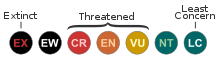
IUCN Red List of Threatened Plants Status : Not listed.
Growth: S = slow M = medium F = fast. Soil: L = light (sandy) M = medium H = heavy (clay). pH: A = acid N = neutral B = basic (alkaline). Shade: F = full shade S = semi-shade N = no shade. Moisture: D = dry M = Moist We = wet Wa = water.
Now available:
Food Forest Plants for Mediterranean Conditions
350+ Perennial Plants For Mediterranean and Drier Food Forests and Permaculture Gardens.
[Paperback and eBook]
This is the third in Plants For A Future's series of plant guides for food forests tailored to
specific climate zones. Following volumes on temperate and tropical ecosystems, this book focuses
on species suited to Mediterranean conditions—regions with hot, dry summers and cool, wet winters,
often facing the added challenge of climate change.
Read More
Expert comment
Author
(Hook.)Hook.&Arn.
Botanical References
60200
Links / References
For a list of references used on this page please go here
Readers comment
| Add a comment |
|
If you have important information about this plant that may help other users please add a comment or link below. Only comments or links that are felt to be directly relevant to a plant will be included. If you think a comment/link or information contained on this page is inaccurate or misleading we would welcome your feedback at [email protected]. If you have questions about a plant please use the Forum on this website as we do not have the resources to answer questions ourselves.
* Please note: the comments by website users are not necessarily those held by PFAF and may give misleading or inaccurate information.
|
Subject : Layia glandulosa
|
|
|
|