 |
|
http://commons.wikimedia.org/wiki/User:TeunSpaans |
 |
| http://commons.wikimedia.org/wiki/User:TeunSpaans |
Translate this page:
Summary
Everlasting sweetpea is a vigorous perennial vine native to Europe that has become naturalised across many temperate regions of North America. Unlike the annual garden sweetpea (Lathyrus odoratus), it is grown primarily as a hardy ornamental and often escapes cultivation. Within the genus it is unusual because, in addition to its young seedpods, the young shoots and mature seeds have also been reported as edible after thorough cooking. Despite these traditional food uses, everlasting sweetpea shares the toxic compounds found throughout the Lathyrus genus and should never be considered a staple food. It is best regarded as an emergency or occasional wild vegetable rather than a regular source of nutrition. Bloom Color: Pink, Red, White.
Main Bloom Time: Early summer, Late summer, Mid summer. Form: Spreading or horizontal.
Physical Characteristics

 Lathyrus latifolius is a PERENNIAL CLIMBER growing to 3 m (9ft) by 1.5 m (5ft) at a fast rate.
See above for USDA hardiness. It is hardy to UK zone 5 and is not frost tender. It is in flower from July to September, and the seeds ripen from August to October. The species is hermaphrodite (has both male and female organs) and is pollinated by Bees.
It can fix Nitrogen.
Suitable for: light (sandy), medium (loamy) and heavy (clay) soils. Suitable pH: mildly acid, neutral and basic (mildly alkaline) soils. It can grow in semi-shade (light woodland) or no shade. It prefers dry or moist soil and can tolerate drought.
UK Hardiness Map
US Hardiness Map
Synonyms
Homotypic Synonyms: Lathyrus sylvestris var. latifolius (L.) Fiori. Lathyrus sylvestris subsp. latifolius (L.) Arcang. Pisum latifolium (L.) E.H.L.Krause.
Plant Habitats
Woodland Garden Sunny Edge; Dappled Shade; Shady Edge; Ground Cover; Meadow;
Edible Uses
Edible Parts: Leaves Seed Seedpod
Edible Uses:
Young seedpods are edible after thorough cooking. They resemble cultivated pea pods in flavor and texture but have a noticeable bitter undertone. Harvest pods while still green, tender, and fleshy, as mature pods quickly become dry and fibrous. Young shoots are also edible after thorough cooking. They have a pleasant flavor similar to the seedpods, with little bitterness and no harsh aftertaste. Although slightly fibrous, they are generally tender when gathered young and can be prepared as a cooked green vegetable. The mature seeds are also reported to be edible after prolonged cooking. However, like all edible parts of the plant, they contain toxic amino acids (lathyrogens) that cooking cannot completely remove. Young leaves resemble the flavor of the shoots but are more distinctly bitter. Although they were sampled during field observations, they are not reported to be edible and should not be regarded as a food source [2-3]. Edibility Rating: 2 out of 5 – Pleasant-tasting young shoots and pods, but the presence of lathyrogens means the plant should only be eaten occasionally and always after thorough cooking [2-3]. Taste and Preparation: Young seedpods have a familiar pea-like flavor with a mild bitterness that distinguishes them from cultivated peas. They are best boiled or steamed while still immature. Young shoots are among the best edible parts. After cooking, they are mild, tender, and pleasantly flavored, although the fibers become more noticeable as shoots age. The seeds must be thoroughly boiled before consumption. Cooking significantly reduces lathyrogen content but does not eliminate it entirely, making regular consumption inadvisable [2-3]. Seasonality (Phenology): Young shoots emerge from late winter through early autumn, depending on climate. Flowering generally occurs from late spring through summer, while tender seedpods develop shortly after flowering and remain available until they mature and dry. Within the genus, flowering generally extends from April to September. Nutritional Value: Like other peas, the pods and seeds contain carbohydrates, plant protein, fiber, vitamins, and minerals. However, their nutritional value is offset by naturally occurring lathyrogens, which limit safe consumption. Traditional Uses: Unlike many native North American peavines, everlasting sweetpea has relatively little documented ethnobotanical use in North America because it is an introduced European species. In Europe, people have occasionally eaten young shoots as a spring vegetable and used the seeds during periods of food shortage after extensive cooking [2-3]. Warning: Like all members of the Lathyrus genus, everlasting sweetpea contains toxic amino acids known as lathyrogens. Frequent or excessive consumption can lead to serious neurological or skeletal disorders, including neurolathyrism and osteolathyrism. Thorough boiling reduces these toxins but does not eliminate them. Eat the plant only occasionally, and never rely on it as a staple food. Seed - cooked[105, 177]. Some caution is advised, see the notes above on toxicity. Young seedpod - cooked[105, 177]. Young plant - cooked[105, 177]. Hank Shaw, author of Hunt, Gather, Cook: Finding the Forgotten Feast, notes that there is no documented evidence of humans being poisoned by wild peas. He concludes that eating small amounts of wild peas is generally safe, unless someone has an unpredictable allergy to them.
References More on Edible Uses
Medicinal Uses
Plants For A Future can not take any responsibility for any adverse effects from the use of plants. Always seek advice from a professional before using a plant medicinally.
None known
References More on Medicinal Uses
The Bookshop: Edible Plant Books
Our Latest books on Perennial Plants For Food Forests and Permaculture Gardens in paperback or digital formats.
Edible Tropical Plants
Food Forest Plants for Hotter Conditions: 250+ Plants For Tropical Food Forests & Permaculture Gardens.
More
Edible Temperate Plants
Plants for Your Food Forest: 500 Plants for Temperate Food Forests & Permaculture Gardens.
More
More Books
PFAF have eight books available in paperback and digital formats. Browse the shop for more information.
Shop Now
Other Uses
Landscape Uses: Arbor, Container. Plants can be grown without supports when they sprawl on the ground and can be used as a ground cover plant in a sunny position[188, 202]. They should be spaced about 1.5 meters apart in all directions [208]. They are very vigorous, so they are best not used with small plants[K]. They also die down completely in the winter, giving weeds a chance to become established[K]. Widely cultivated as an ornamental for its abundant, colorful flowers and long flowering season. Wildlife Value: Flowers provide nectar for pollinating insects, while the dense vines offer shelter for small wildlife. Seeds are occasionally eaten by birds and small mammals. Pollinators: The showy butterfly-shaped flowers attract bees, particularly bumblebees, along with other nectar-feeding insects.
Special Uses
Food Forest Ground cover Nitrogen Fixer
References More on Other Uses
Cultivation details
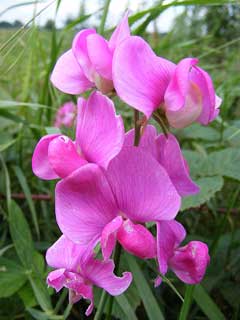
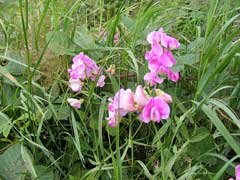
Everlasting sweetpea grows best in full sun or light shade on well-drained soils. Once established it is drought tolerant, although it flowers and grows more vigorously with regular moisture. It readily climbs fences, shrubs, and other vegetation using its tendrils. Habitat: Naturalized along roadsides, abandoned gardens, hedgerows, woodland margins, disturbed ground, and old homesteads throughout temperate regions. It frequently escapes cultivation but is generally uncommon in the hotter deserts of the Southwest. USDA Hardiness Zones: Zones 5–9. Growth Rate: Fast. Vigorous perennial vines can produce several meters of growth during a single season. Mature Size: Typically 1.5–3 m (5–10 ft) long, occasionally longer when climbing, with a spread of 0.6–1.5 m (2–5 ft). Cultivation: Widely cultivated as an ornamental for its abundant, colorful flowers and long flowering season. It prefers fertile, well-drained soil and benefits from support such as fences or trellises. Pollinators: The showy butterfly-shaped flowers attract bees, particularly bumblebees, along with other nectar-feeding insects. Identification: Everlasting sweetpea is recognized by its climbing habit, paired broad leaflets ending in branched tendrils, winged stems, and large clusters of pink to reddish-purple pea flowers. The broad leaflets distinguish it from many native peavines, which usually have narrower foliage. Similar Species: Garden sweetpea (Lathyrus odoratus) is closely related but usually more fragrant and is primarily cultivated as an ornamental. Native peavines (Lathyrus spp.) share the characteristic terminal tendrils but generally have narrower leaves and smaller flowers. Vetches (Vicia spp.) also resemble peavines but typically have more numerous leaflets and rounded, hairy styles. An easily grown plant, succeeding in any moderately good garden soil[200], whether acid or alkaline[202]. Prefers a position in full sun but tolerates part day shade[200]. Succeeds in dry soils and is drought tolerant when established[190]. Grows well on dry slopes[208]. Plants can be grown in quite coarse grass, which can be cut annually in the autumn[233]. Plants are hardy to at least -10°c[202]. A very ornamental plant[1], there are many named varieties[187]. It is fast-growing and, when in a suitable position, can become invasive[202]. Plants climb by means of tendrils[188]. Resents root disturbance and can take a year or two to settle down after being moved[219]. This species has a symbiotic relationship with certain soil bacteria, these bacteria form nodules on the roots and fix atmospheric nitrogen. Some of this nitrogen is utilized by the growing plant but some can also be used by other plants growing nearby[200]. Special Features:All or parts of this plant are poisonous, Suitable for cut flowers. The plant is heat tolerant in zones 9 through 5. (Plant Hardiness Zones show how well plants withstand cold winter temperatures.
Plant Heat Zones show when plants would start suffering from the heat. The Plant Heat Zone map is based on the number of "heat days" experienced in a given area where the temperature climbs to over 86 degrees F (30°C).
At this temperature, many plants begin to suffer physiological damage. Heat Zones range from 1 (no heat days) to 12 (210 or more heat days). For example Heat Zone. 11-1 indicates that the plant is heat tolerant in zones 11 through 1.) For polyculture design as well as the above-ground architecture (form - tree, shrub etc. and size shown above) information on the habit and root pattern is also useful and given here if available. Herbaceous. A suckering vine sending up suckers some distance main plant [1-2]. The root pattern is rhizomatous with underground stems sending roots and shoots along their length [1-2].
References Carbon Farming Information and Carbon Sequestration Information
Temperature Converter
Type a value in the Celsius field to convert the value to Fahrenheit:
Fahrenheit:
The PFAF Bookshop
Plants For A Future have a number of books available in paperback and digital form. Book titles include Edible Plants, Edible Perennials, Edible Trees,Edible Shrubs, Woodland Gardening, and Temperate Food Forest Plants. Our new book is Food Forest Plants For Hotter Conditions (Tropical and Sub-Tropical).
Shop Now
Plant Propagation
Pre-soak the seed for 24 hours in warm water and then sow in early spring in a cold frame[200]. When they are large enough to handle, prick the seedlings out into individual pots and plant them out in the summer. If you have sufficient seed, then it can also be sown in situ in mid spring[200]. Division in spring. It may not transplant well so care should be taken[200].
Other Names
If available other names are mentioned here
Perennial Sweet Pea, Perennial pea, Everlasting sweetpea, perennial sweetpea.
Native Range
EUROPE: Czechoslovakia (Czech Republic and Slovakia), Austria, Switzerland, Hungary, Poland, Moldova, Ukraine (incl. Krym), Former Yugoslavia, Albania, Bulgaria, Greece, Italy (incl. Sardinia, Sicily), Romania, Spain (incl. Baleares), France (incl. Corsica), Portugal, AFRICA: Algeria (north), Morocco, Tunisia.
Weed Potential
Right plant wrong place. We are currently updating this section.
Please note that a plant may be invasive in one area but may not in your area so it's worth checking.
Moderate. Everlasting sweetpea spreads by seed and creeping underground rhizomes and may persist around old gardens or invade nearby vegetation, although it is rarely considered aggressively invasive.
Conservation Status
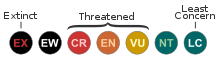
IUCN Red List of Threatened Plants Status : Lathyrus latifolius is listed as Least Concern.
Growth: S = slow M = medium F = fast. Soil: L = light (sandy) M = medium H = heavy (clay). pH: A = acid N = neutral B = basic (alkaline). Shade: F = full shade S = semi-shade N = no shade. Moisture: D = dry M = Moist We = wet Wa = water.
Now available:
Food Forest Plants for Mediterranean Conditions
350+ Perennial Plants For Mediterranean and Drier Food Forests and Permaculture Gardens.
[Paperback and eBook]
This is the third in Plants For A Future's series of plant guides for food forests tailored to
specific climate zones. Following volumes on temperate and tropical ecosystems, this book focuses
on species suited to Mediterranean conditions—regions with hot, dry summers and cool, wet winters,
often facing the added challenge of climate change.
Read More
Expert comment
Author
L.
Botanical References
50200
Links / References
For a list of references used on this page please go here
Readers comment