Translate this page:
Summary
Arizona walnut is one of the most valuable native food trees of the American Southwest. It grows principally along streams, canyon bottoms, ravines, and other sites where its deep root system can reach dependable moisture. Unlike many desert trees, it is strongly associated with riparian habitats and frequently forms part of mixed woodland with oaks, sycamores, cottonwoods and other moisture-loving trees. Its nuts are edible, highly nutritious, and calorie-rich, but obtaining the kernels requires considerably more effort than shelling commercial English walnuts. The thick outer husk must first be removed, followed by cracking a very hard shell whose internal ridges extend deeply between the kernel lobes. This difficulty is compensated by the nutritional value of the nutmeat. Like other walnuts, the kernel is rich in fat, protein, and minerals and was an important seasonal food for Native peoples across the walnut's range. Arizona walnuts generally ripen during late summer and early autumn. The husks change from green toward yellow-green or brown as the nuts mature, and fallen fruits can accumulate beneath productive trees. The tree also has considerable ecological value. It provides shade along streams, stabilizes riparian soil, feeds wildlife and supports many insects associated with native walnut trees.
Physical Characteristics

 Juglans major is a deciduous Tree growing to 15 m (49ft 3in) at a fast rate.
See above for USDA hardiness. It is hardy to UK zone 9. It is in flower from May to June, and the seeds ripen from October to December. The species is monoecious (individual flowers are either male or female, but both sexes can be found on the same plant) and is pollinated by Wind. The plant is self-fertile.
Suitable for: light (sandy), medium (loamy) and heavy (clay) soils and prefers well-drained soil. Suitable pH: mildly acid, neutral and basic (mildly alkaline) soils. It cannot grow in the shade. It prefers moist soil.
UK Hardiness Map
US Hardiness Map
Synonyms
J. microcarpa major. J. rupestris major. J. torreyi.
Plant Habitats
Woodland Garden Canopy;
Edible Uses
Edible Parts: Oil Seed
Edible Uses: Oil
Arizona or New Mexico Black Walnut is one of the finest native wild foods of the American Southwest. Its nuts require patience to process, but the reward is a rich, oily, and highly nutritious kernel capable of providing far more calories than most wild fruits, greens, or roots. The mature nutmeat inside the shell is edible and is the principal food obtained from Arizona walnut [2-3]. The fleshy outer husk is not eaten. It is strongly aromatic, bitter, and capable of staining skin and equipment dark brown. Gloves are advisable when processing large quantities. Once the husk has been removed, the remaining shell is extremely hard. Cracking reveals a deeply lobed kernel separated by strong internal shell partitions. The nutmeat has the rich, oily character typical of black walnuts and can be eaten raw, toasted, ground, incorporated into breads and cakes, or pressed and rendered for oil. Arizona walnut is an excellent wild food despite the processing work involved [2-3]. Edibility Rating: 5/5: Arizona walnut receives an edibility rating of 5 out of 5. The nutmeat is calorie-dense, nutritious, storable, and versatile. Its only significant disadvantage is the labor required to remove the husk and shell. For a forager willing to process nuts in quantity, the caloric return can be excellent. Few native southwestern plants combine such concentrated nutrition with the ability to store for months [2-3]. Taste, Processing & Culinary Use [2-3]. Fresh Arizona walnut kernels have a rich, oily, earthy flavor similar to eastern black walnut, though individual trees vary in sweetness and bitterness. The strongest flavors are often concentrated in the thin skin surrounding the kernel. Toasting develops a deeper roasted flavor and reduces some raw bitterness. The kernels can be eaten directly, chopped into breads and cakes, mixed into porridges or grain dishes, or ground into nut meal. They can also be pounded into a paste. Adding a small amount of water during grinding produces a walnut cream suitable for soups, sauces or enriched porridges. One traditional processing approach focuses on extracting the oil rather than obtaining perfectly separated kernels. Whole husked nuts can be thoroughly crushed, shells and all, then simmered in water for several hours. On cooling, released oil rises toward the surface and can be skimmed away [2-3]. Shell fragments are heavy and sink. Kernel fragments are somewhat more buoyant, allowing at least partial separation. This method requires a substantial quantity of nuts to produce a meaningful amount of oil, but it can be more efficient than individually picking small kernel pieces from deeply grooved shells. Seasonality (Phenology): Male and female flowers develop on the same tree, making Arizona walnut monoecious. Flowering occurs in spring, with male flowers in hanging catkins and much smaller female flowers near the tips of new shoots. Nuts enlarge through summer and generally reach maturity around August to September, although timing varies with elevation and rainfall. Fallen nuts may remain beneath the trees for some time, but early collection reduces losses to squirrels, rodents and insects. Freshly harvested nuts contain considerable moisture and should not be sealed immediately into airtight containers. After husking, the nuts should be cured in a dry, ventilated place before long-term storage [2-3]. Safety & Cautions: Healthy mature walnut kernels are safe edible foods with a long history of human consumption. The principal food-safety concern is mould. Walnuts are high in fat and retain considerable moisture at harvest, creating conditions favorable to fungal growth if stored improperly. Some molds can produce mycotoxins, including aflatoxins. Nuts showing visible mould, musty odors, unusual discoloration or rancid flavors should be discarded rather than salvaged through roasting or washing. Some fungal toxins remain stable despite ordinary cooking. Walnuts are also a recognized food allergen. People with tree-nut allergies should avoid them. The husks contain staining compounds and can irritate sensitive skin. Gloves are useful during processing. Walnut trees produce juglone and related compounds in roots, leaves and husks. These compounds can suppress some nearby vegetation, but they do not make healthy walnut kernels unsafe to eat [2-3]. Harvest & Processing: Collect nuts when the husks begin changing from green toward yellow-green and when mature fruits start falling naturally. Avoid immature nuts that are still tightly attached to the tree. Wear gloves during collection and husking because the outer layers rapidly stain skin. Husks can be removed by hand when soft, rolled underfoot, crushed carefully between boards, or historically worked loose in water. The traditional method noted in our source involved pounding or washing the fruits in a stream. Once husked, rinse away remaining material and spread the nuts in a single layer in a dry, shaded, well-ventilated place. Do not store freshly husked walnuts in sealed plastic bags. Curing for several weeks reduces moisture and improves keeping quality. Crack shells with a hammer, heavy nutcracker, vise or stone. Work carefully because shell fragments can be sharp. Pick out the kernel pieces with a nut pick or small tool. For long-term storage, shelled kernels are best frozen. Unshelled cured nuts keep much longer than exposed kernels when stored cool and dry. Traditional Indigenous Uses: Walnuts were important foods throughout much of North America wherever native Juglans species occurred. Their high fat content made them particularly valuable because fats are relatively scarce among many wild plant foods. Arizona walnut was gathered by Indigenous peoples of the Southwest, including communities living in mountain and riparian environments where the trees were locally abundant. Nuts could be eaten directly after cracking, ground into meal, incorporated into other foods or processed to obtain oil. The considerable labor required to shell them was offset by their exceptional energy density and storage ability. Field observations from the Pinaleno Mountains and Pinos Altos Range illustrate that the species remains a practical wild food in parts of its historic range today [2-3]. Nutritional Value: Detailed nutrient analyses specifically for Juglans major are limited, but other black walnuts provide a useful indication of the nutritional profile expected from this species. The USDA values supplied for dried eastern black walnut show approximately 618 kilocalories per 100 grams, with about 24 g protein and 59 g fat, plus magnesium, phosphorus, potassium, iron, zinc, copper, manganese and essential fatty acids. Arizona walnut should not automatically be assumed to match those figures exactly, but its kernels are similarly oil-rich and energy-dense. This makes the species fundamentally different from most southwestern wild greens and fruits. A relatively small quantity of walnut kernels can provide substantial food energy. Seed - raw or cooked[257]. The seed is rather small, but it is sometimes eaten[82, 161, 183]. Of little value[177]. The seed is large and sweet[227] with a thick shell[200, 227]. There are about 45 seeds to the pound[227]. The seeds are 25 - 40mm in diameter[229]. An edible oil is obtained from the seed, it tends to go rancid quickly.
References More on Edible Uses
Medicinal Uses
Plants For A Future can not take any responsibility for any adverse effects from the use of plants. Always seek advice from a professional before using a plant medicinally.
Juglans major shares phytochemical traits with other walnut species, featuring traditional and mild herbal uses, though it lacks extensive modern clinical backing. Traditional and Herbal Uses: Gastrointestinal Support: In traditional herbal practices of the American Southwest, small, sub-laxative doses of Juglans major preparations have been used as a mild tonic to soothe the gastrointestinal tract, address gastritis, and ease irritative diarrhea or intestinal inflammation. Astringent Properties: Like other walnuts, the bark and green husks contain tannins, which act as natural astringents
References More on Medicinal Uses
The Bookshop: Edible Plant Books
Our Latest books on Perennial Plants For Food Forests and Permaculture Gardens in paperback or digital formats.
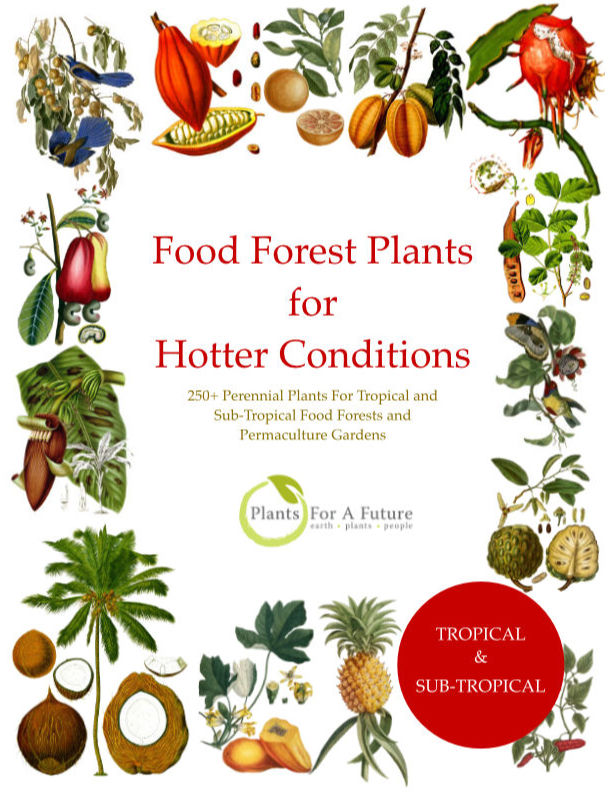
Edible Tropical Plants
Food Forest Plants for Hotter Conditions: 250+ Plants For Tropical Food Forests & Permaculture Gardens.
More
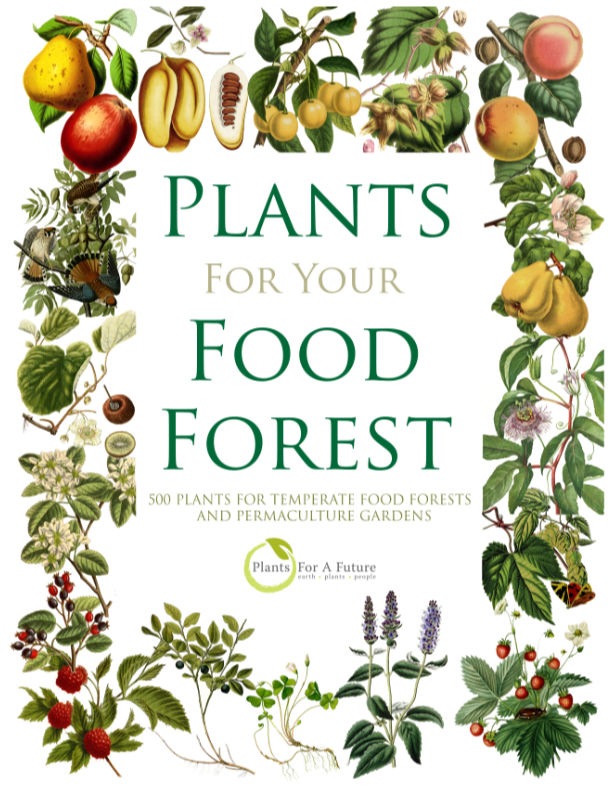
Edible Temperate Plants
Plants for Your Food Forest: 500 Plants for Temperate Food Forests & Permaculture Gardens.
More
More Books
PFAF have eight books available in paperback and digital formats. Browse the shop for more information.
Shop Now
Other Uses
Dye Herbicide Oil Rootstock
This species is sometimes used as a rootstock[183]. A golden brown dye can be obtained from the seed husks[257]. A light brown dye is obtained from the young twigs[257]. Plants produce chemicals which can inhibit the growth of other plants. These chemicals are dissolved out of the leaves when it rains and are washed down to the ground below, reducing the growth of plants under the tree[18, 20, 159]. The roots of many members of this genus produce substances that are toxic to many plant species, especially apples (Malus species), members of the Ericaceae, Potentilla spp and the white pines (certain Pinus spp.)[200]. Wood - this very attractive wood rivals that of J. nigra, the black walnut, in quality[229]. However, the limited range and smaller size of the tree have restricted its use[229].This species is used for timber, but this is not a major use due to the limited distribution. When harvested, it is used for furniture, gunstocks, veneer, and fence posts (Pavek 1993). The tree can also be browsed by cattle, and the walnut is eaten by humans. The tree is also valuable ecologically, providing wildlife food, riparian shade, and long-lived structure along southwestern streams and canyons. Wildlife & Ecology: The nuts are valuable foods for squirrels, rodents and other wildlife. The foliage supports insects associated with native walnut trees, which in turn provide food for birds. Large trees create shade along streams, helping maintain cooler riparian microclimates. Roots stabilize stream banks and alluvial soils. Old trunks and branches can provide cavities and structural habitat for birds and small mammals.
Special Uses
References More on Other Uses
Cultivation details
Arizona walnut grows best where its roots can access reliable moisture. In nature, it is strongly associated with streams, rivers, canyon bottoms, and ravines. The Lady Bird Johnson Wildflower Center describes it as a tree of moist soils in canyons and along streams, while the Forest Service records it across riparian and mixed woodland habitats. Full sun encourages the best crown development and nut production, but young trees tolerate partial shade. Deep loams and alluvial soils are ideal, although trees also establish in rocky canyon soils when groundwater is accessible. Established trees have some drought tolerance because of their extensive roots, but they are not true dry-desert trees and perform poorly where the soil remains chronically dry. Habitat & Distribution: Arizona walnut is native to central Arizona and New Mexico east toward Texas and southern Oklahoma, extending south into northern Mexico. Kew treats its native range as Arizona to southern Oklahoma and northern Mexico [2-5]. Typical habitats include riparian woodland, stream banks, ravines, canyon bottoms and rocky canyon sides from lower elevations into mountain country. The Forest Service records the species across a broad elevational range and notes that large individuals can exceed 20 meters. It may occur as isolated trees or form locally dominant stands. Cultivation: Arizona walnut can be grown as a shade, wildlife, or nut tree in suitable southwestern landscapes. Provide deep soil and enough space for a broad mature crown. Young trees should receive regular deep irrigation during establishment. Once well rooted, watering frequency can be reduced, but productive nut crops generally require more moisture than survival alone. Mulching beneath the canopy helps conserve moisture, but deep cultivation near the trunk should be avoided. Pruning is generally limited to removing damaged, crossing or poorly positioned branches while trees are young. Because walnuts release juglone and other allelopathic compounds, some sensitive garden plants may grow poorly beneath or close to the canopy. Pollinators. Arizona walnut is wind-pollinated rather than insect-pollinated. Male catkins release large quantities of airborne pollen, while female flowers intercept pollen on exposed stigmas. The flowers therefore provide little nectar value to bees or butterflies. The tree nevertheless has substantial wildlife value through its foliage, nuts, bark and canopy structure. Arizona walnut, Juglans major (Torr.) A. Heller, belongs to the walnut family (Juglandaceae) and the genus Juglans. Common names include Arizona walnut, Arizona black walnut, New Mexico walnut, New Mexico black walnut, mountain walnut, and river walnut. Juglans major is currently accepted as a distinct species. It is a deciduous tree generally suited to approximately USDA Hardiness Zones 7–9, although colder-provenance trees may tolerate somewhat lower winter temperatures. In favorable riparian situations, trees commonly reach 10–15 meters tall, with exceptional specimens exceeding 20 meters. Cultivated trees may spread approximately 6–15 meters wide. The University of Arizona describes it as a fast-growing tree reaching around 15 meters, with a mature width of roughly 6–15 meters. Requires a deep well-drained loam and a sunny position sheltered from strong winds[1, 11]. Prefers a slightly alkaline soil[200]. Plants are fast-growing when young[227]. This species is closely related to and sometimes considered to be no more than a sub-species of J. microcarpa[11, 229]. It hybridizes with that species where their ranges overlap[229]. If it is a distinct species then perhaps its correct name should be J. torreyi[11]. Trees produce good crops of seeds every 2 - 3 years in the wild[227]. Natural regeneration is very low because most seeds are consumed by wildlife[229]. Plants are fairly long-lived (to about 400 years) and produce a deep taproot, they are intolerant of root disturbance[1, 11, 229]. Seedlings should be planted out into their permanent positions as soon as possible and given some protection for their first winter or two since they are somewhat tender when young[1, 11]. Flower initiation depends upon suitable conditions in the previous summer[200]. The flowers and young growths can be destroyed by even short periods down to -2°c, but fortunately plants are usually late coming into leaf[200]. Any pruning should only be carried out in late summer to early autumn or when the plant is fully dormant otherwise wounds will bleed profusely and this will severely weaken the tree[200]. Trees have a dense canopy which tends to reduce plant growth below them. We have no specific information for this species, but the roots of several members of this genus produce substances that are toxic to many plant species, especially apples (Malus species), members of the Ericaceae, Potentilla spp and the white pines (certain Pinus spp.)[200]. The leaves of many species also secrete substances that have an inhibitory affect on plants growing underneath them. All in all this is not a very good companion plant[K].
References Carbon Farming Information and Carbon Sequestration Information
Temperature Converter
Type a value in the Celsius field to convert the value to Fahrenheit:
Fahrenheit:
The PFAF Bookshop
Plants For A Future have a number of books available in paperback and digital form. Book titles include Edible Plants, Edible Perennials, Edible Trees,Edible Shrubs, Woodland Gardening, and Temperate Food Forest Plants. Our new book is Food Forest Plants For Hotter Conditions (Tropical and Sub-Tropical).
Shop Now
Plant Propagation
The seed is best sown as soon as it is ripe in individual deep pots in a cold frame[80]. You need to protect it from mice, birds, squirrels etc. The seed usually germinates in late winter or the spring. Plant out the seedlings into their permanent positions in early summer and give some protection from the cold for their first winter or two. The seed can also be stored in cool moist conditions (such s the salad compartment of a fridge) over the winter and sown in early spring but it may then require a period of cold stratification before it will germinate[78, 80, 113]. Germination rates are usually less than 50%[227].
Other Names
If available other names are mentioned here
Arizona walnut, Arizona black walnut, New Mexico walnut, New Mexico black walnut, Canyon walnut, mountain walnut and river walnut.
Native Range
NORTHERN AMERICA: United States (Oklahoma (southwest), New Mexico (southwest), Texas, Arizona (south)), Mexico (Chihuahua, Durango, Sinaloa, Sonora, Guerrero, Jalisco, México, Michoacán de Ocampo, Nayarit)
Weed Potential
Right plant wrong place. We are currently updating this section.
Please note that a plant may be invasive in one area but may not
in your area so it's worth checking.
Arizona walnut has very low weed potential. It is a large, relatively slow-maturing native tree requiring suitable moisture for successful establishment. Seedlings may appear beneath mature trees or along waterways where animals carry nuts, but the species does not normally invade dry uplands or aggressively dominate cultivated ground. Within its native range, natural regeneration should be regarded as desirable rather than weedy.
Conservation Status
IUCN Red List of Threatened Plants Status : Juglans major is listed as Least Concern.

IUCN Red List
| Related Plants
|
| Latin Name | Common Name | Habit | Height | Hardiness | Growth | Soil | Shade | Moisture | Edible | Medicinal | Other |
| Juglans ailanthifolia | Japanese Walnut | Tree | 20.0 |
4-8
| | LMH | N | M | 3 | 1 | 5 |
| Juglans ailanthifolia cordiformis | Heartseed Walnut | Tree | 20.0 |
4-8
| M | LMH | N | M | 4 | 1 | 4 |
| Juglans californica | California Walnut, Southern California walnut | Tree | 6.0 |
7-10
| M | LMH | N | M | 2 | 1 | 3 |
| Juglans cathayensis | Chinese Walnut | Tree | 20.0 |
4-8
| | LMH | N | M | 3 | 0 | 1 |
| Juglans cinerea | Butternut - White Walnut, Butternut | Tree | 25.0 |
3-7
| M | LMH | N | M | 3 | 3 | 3 |
| Juglans hindsii | Hind's Black Walnut, Northern California walnut, Paradox hybrid walnut | Tree | 15.0 |
8-9
| M | LMH | N | M | 3 | 0 | 3 |
| Juglans intermedia | Hind's Black Walnut, Northern California walnut, Paradox hybrid walnuH | Tree | 30.0 |
4-8
| | LMH | N | M | 3 | 0 | 1 |
| Juglans mandschurica | Manchurian Walnut | Tree | 20.0 |
4-8
| | LMH | N | M | 3 | 1 | 4 |
| Juglans microcarpa | Texas Walnut, Little walnut, Stewart's little walnut | Tree | 9.0 |
4-9
| F | LMH | SN | M | 4 | 0 | 4 |
| Juglans neotropica | Andean Walnut | Tree | 25.0 |
10-12
| S | LMH | N | M | 3 | 2 | 4 |
| Juglans nigra | Black Walnut | Tree | 30.0 |
4-9
| F | LMH | N | M | 3 | 3 | 4 |
| Juglans olanchana | Olancho walnut, Central American walnut | Tree | 45.0 |
10-12
| M | LMH | SN | MWe | 2 | 0 | 3 |
| Juglans regia | Walnut, English walnut, Persian Walnut, | Tree | 20.0 |
7-9
| M | LMH | N | M | 4 | 3 | 4 |
| Juglans regia fallax | Walnut | Tree | 30.0 |
4-8
| | LMH | N | M | 3 | 0 | 1 |
| Juglans regia kamaonia | Walnut | Tree | 30.0 |
4-8
| | LMH | N | M | 3 | 3 | 3 |
| Juglans sinensis | | Tree | 20.0 |
-
| | LMH | N | M | 3 | 1 | 1 |
| Juglans x bisbyi | Buartnut | Tree | 20.0 |
4-8
| | LMH | N | M | 3 | 0 | 2 |
|
Growth: S = slow M = medium F = fast. Soil: L = light (sandy) M = medium H = heavy (clay). pH: A = acid N = neutral B = basic (alkaline). Shade: F = full shade S = semi-shade N = no shade. Moisture: D = dry M = Moist We = wet Wa = water.
Now available:
Food Forest Plants for Mediterranean Conditions
350+ Perennial Plants For Mediterranean and Drier Food Forests and Permaculture Gardens.
[Paperback and eBook]
This is the third in Plants For A Future's series of plant guides for food forests tailored to
specific climate zones. Following volumes on temperate and tropical ecosystems, this book focuses
on species suited to Mediterranean conditions—regions with hot, dry summers and cool, wet winters,
often facing the added challenge of climate change.
Read More
Expert comment
Author
(Torr.)Heller.
Botanical References
1182200
Links / References
For a list of references used on this page please go here
Readers comment
| Add a comment |
|
If you have important information about this plant that may help other users please add a comment or link below. Only comments or links that are felt to be directly relevant to a plant will be included. If you think a comment/link or information contained on this page is inaccurate or misleading we would welcome your feedback at [email protected]. If you have questions about a plant please use the Forum on this website as we do not have the resources to answer questions ourselves.
* Please note: the comments by website users are not necessarily those held by PFAF and may give misleading or inaccurate information.
|
|