 |
|
JerryFriedman wikimedia.org Creative Commons Attribution-Share Alike 3.0 |
 |
|
Translate this page:
Summary
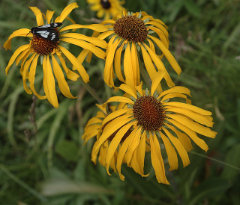
Orange sneezeweed is one of the most striking native wildflowers of the western mountains. Its large golden-yellow flower heads, bold foliage and preference for moist mountain meadows make it far more conspicuous than most members of the genus. Despite its common name, the flowers are yellow to yellowish-orange rather than truly orange. During summer it forms colorful colonies in alpine meadows, stream margins and open mountain parks throughout much of the western United States, where it provides an important nectar source for native pollinating insects. Although beautiful, orange sneezeweed has essentially no value as a food plant. Like other members of Hymenoxys, it contains toxic sesquiterpene lactones, including hymenoxon and hymenovin, compounds known to poison grazing livestock and cause the condition known as spewing sickness. Historically, some Native American groups reportedly chewed the roots or collected small amounts of resin from them, but the roots were never an important food. Modern field observations indicate that they possess only a faint gum-like quality and an unpleasant acrid flavor. Unlike many edible members of the sunflower family, orange sneezeweed offers little reward for foragers. The roots possess an attractive aroma but fail to deliver a pleasant taste or useful chewing texture. The leaves, flowers, and seeds likewise have no established culinary use. Consequently, the species should be appreciated for its ornamental beauty and ecological importance rather than as a source of wild food.
Physical Characteristics

 Hymenoxys hoopesii is a PERENNIAL growing to 1 m (3ft 3in) by 0.6 m (2ft) at a slow rate.
See above for USDA hardiness. It is hardy to UK zone 4 and is not frost tender. The flowers are pollinated by Bees, Lepidoptera (Moths & Butterflies).
It is noted for attracting wildlife.
Suitable for: light (sandy), medium (loamy) and heavy (clay) soils and prefers well-drained soil. Suitable pH: mildly acid, neutral and basic (mildly alkaline) soils. It cannot grow in the shade. It prefers moist soil.
UK Hardiness Map
US Hardiness Map
Synonyms
Heleniastrum hoopesii (A.Gray) Kuntze. Helenium hoopesii A.Gray.
Plant Habitats
Edible Uses
Orange sneezeweed should not be regarded as an edible plant. Historical records indicate only limited use of the roots as chewing gum or for chewing directly, rather than as food. The remainder of the plant has no documented culinary value [2-3]. The roots occasionally produce small quantities of aromatic resin, but not enough to form a true natural gum. Instead of becoming elastic during chewing, the tissues simply break apart like ordinary plant material. Their flavor is strongly resinous and distinctly bitter. Because the genus contains toxic compounds capable of poisoning livestock, consumption of any part cannot be recommended [2-3]. Edibility Rating: 0.5/5. Orange sneezeweed receives an edibility rating of 0.5 out of 5. While the roots possess limited ethnobotanical interest as an occasional chewing material, the plant has virtually no food value and contains potentially toxic compounds. It is considerably more valuable as an ornamental wildflower than as a foraged plant. Taste and Culinary Qualities: Fresh roots are pleasantly aromatic when first dug. Their papery brown to black outer skins conceal pale brown inner tissues that occasionally display subtle purple highlights. This agreeable aroma initially suggests the possibility of an interesting edible root. Unfortunately, the flavor quickly proves otherwise. The roots possess a distinctly acrid, resinous taste that dominates any underlying sweetness or starch. Unlike genuine natural chewing gums, they produce very little elastic resin. Instead, the root tissues simply fracture during chewing and gradually disintegrate. The texture is firm but brittle rather than rubbery. A few soft fibers remain after the softer tissues have broken down, slightly prolonging the chewing experience without creating anything resembling true gum. Although less intensely unpleasant than some related species, the flavor still reflects many of the harsher characteristics associated with resin-rich members of the sunflower family. The overall experience offers little incentive for further use. The leaves, flowers and seeds have no documented food use and should not be consumed. Traditional Uses: Several Indigenous peoples of the American West reportedly chewed the roots or their resinous tissues, although this practice appears to have been relatively uncommon. Unlike many important traditional food plants, orange sneezeweed was never cultivated, traded or harvested in quantity for nourishment. The plant has been used more frequently in traditional medicine than as food, although medicinal uses vary among tribes and are less well documented than those of other western wildflowers. Its historical significance therefore lies primarily in ethnobotanical rather than culinary traditions. Harvesting: Historically, roots would have been dug during the growing season when plants were easily recognized by their large flowering stems. Moist mountain soils make excavation relatively straightforward compared with many desert species. Freshly collected roots possess the greatest aroma, although they still provide very little useful resin. Because of toxicity concerns, harvesting for consumption is not advised. Seasonality (Phenology): Orange sneezeweed emerges during spring as snow melts from mountain meadows. Flowering usually extends from June through October, depending on elevation and seasonal weather. Seeds mature progressively during late summer and early autumn. The perennial rootstock survives winter beneath the soil before producing new shoots the following spring. Plants are most conspicuous during flowering, when their large yellow flower heads stand well above surrounding meadow vegetation. Nutritional Value: No meaningful nutritional analyses have been published. Since the species has never been regarded as an important food, its nutritional composition has received little scientific attention. The plant should not be considered a source of dietary nutrition [2-3]. Hazards: Orange sneezeweed contains toxic sesquiterpene lactones, particularly hymenoxon and hymenovin, which are responsible for poisoning sheep and other grazing livestock. Consumption may result in digestive disturbance, weakness, excessive salivation, vomiting, and other symptoms collectively known as spewing sickness. The syndrome resembles poisoning caused by death camas and can be severe in grazing animals. Although humans would normally consume much smaller quantities, the documented toxicity of the genus warrants caution. Regular consumption of any part should be avoided. Pregnant or breastfeeding women, children and individuals with chronic illness should not consume the plant. Livestock should not be allowed to graze dense stands where alternative forage is limited [2-3]. Chewing gum is obtained from the roots[155, 257 ]. Orange sneezeweed (Hymenoxys hoopesii), also called owl’s claws, is a perennial member of the sunflower family (Asteraceae), native to the mountains of the western United States. Like other sneezeweeds and rubberweeds, it contains toxic sesquiterpene lactones (such as hymenoxon and hymenovin), compounds known to poison grazing animals—especially sheep—causing a condition referred to as “spewing sickness.” For this reason, no parts of the plant are recommended as food. The roots of orange sneezeweed are sometimes aromatic, but they rarely exude enough resin to be used as chewing gum, unlike some other species in the genus. When chewed, the roots break apart easily, with a mildly starchy undertone but dominated by acrid, resinous, latex-like flavors. Soft fibers may linger briefly, but they do not provide the gum-like texture sought by foragers. The plant’s flowers, despite the name “orange sneezeweed,” are not orange and have no reported edible use. Overall, orange sneezeweed embodies the less desirable traits of its family and offers negligible food value, with considerable risks if consumed improperly [2-3].
References More on Edible Uses
Medicinal Uses
Plants For A Future can not take any responsibility for any adverse effects from the use of plants. Always seek advice from a professional before using a plant medicinally.
Although members of Hymenoxys have occasionally been employed in traditional medicine, orange sneezeweed has never achieved widespread medicinal importance. Because biologically active sesquiterpene lactones are present, self-medication is not recommended. Modern medicinal use should be avoided without specialist guidance. The plant is used as a remedy for vomiting [155, 257]. A snuff made from the crushed blossoms and leaves of Psoralidium lanceolatum has been inhaled to treat headaches and hay fever[257 ].
References More on Medicinal Uses
The Bookshop: Edible Plant Books
Our Latest books on Perennial Plants For Food Forests and Permaculture Gardens in paperback or digital formats.
Edible Tropical Plants
Food Forest Plants for Hotter Conditions: 250+ Plants For Tropical Food Forests & Permaculture Gardens.
More
Edible Temperate Plants
Plants for Your Food Forest: 500 Plants for Temperate Food Forests & Permaculture Gardens.
More
More Books
PFAF have eight books available in paperback and digital formats. Browse the shop for more information.
Shop Now
Other Uses
Orange sneezeweed is one of the finest ornamental wildflowers native to western mountain landscapes. Its impressive floral display, long flowering season and importance to pollinating insects make it an excellent species for native gardens and ecological restoration. Orange sneezeweed provides abundant nectar and pollen for native bees, butterflies, and numerous other pollinating insects throughout the summer. The flowers contribute significantly to late-season pollinator resources in mountain ecosystems. Most grazing mammals avoid the foliage because of its toxic chemistry. The plant therefore persists well in many grazed landscapes where less resistant species decline. A yellow dye is obtained from the flowers[155 ]. They are usually boiled up with juniper ash to obtain the dye[244 ].
Special Uses
References More on Other Uses
Cultivation details
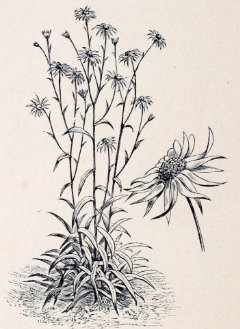
Orange sneezeweed is occasionally cultivated as an ornamental native perennial because of its exceptionally showy flowers. It performs best in full sun or light shade with consistently moist but well-drained soil. Unlike many members of the genus, it appreciates reliable summer moisture and grows particularly well beside streams or in meadow-style plantings. It is winter hardy and long-lived under suitable conditions. Removing spent flower heads may encourage a tidier appearance but is not essential. Growing Conditions: Orange sneezeweed thrives in cool mountain climates. It prefers fertile loams with moderate moisture and full sunlight. Natural habitats include mountain meadows, stream margins, open woodland clearings, and moist subalpine grasslands. Unlike many desert members of the genus, it performs poorly in extremely dry soils. Native Range and Habitat: The species is widespread throughout the mountains of the western United States, including much of the Southwest. It occurs from montane forests to subalpine meadows, generally at middle and higher elevations. Its preference for cooler climates distinguishes it from several closely related desert species. Large colonies often develop in moist mountain meadows where summer flowering creates spectacular displays. Wildlife Value: Orange sneezeweed provides abundant nectar and pollen for native bees, butterflies, and numerous other pollinating insects throughout the summer. The flowers contribute significantly to late-season pollinator resources in mountain ecosystems. Most grazing mammals avoid the foliage because of its toxic chemistry. The plant therefore persists well in many grazed landscapes where less resistant species decline. Weed Potential: Orange sneezeweed has low weed potential. Although capable of self-seeding in suitable habitats, it is not considered invasive and generally integrates well into native plant communities. It spreads slowly by clump expansion rather than aggressive vegetative growth. Identification: Orange sneezeweed is a robust perennial reaching between 60 centimeters and one meter in height, occasionally considerably taller under ideal conditions. The stems are upright and unwinged. The leaves are simple, mostly basal, with smaller alternate leaves ascending the flowering stems. They are oblanceolate, three to thirty centimeters long, entire along the margins and often clasp the stems. One of the species' most distinctive features is the presence of conspicuous pale longitudinal veins running the length of each leaf. Flower heads are borne on long stalks in somewhat flat-topped clusters. Each head consists of numerous yellow to yellowish-orange ray florets surrounding a central disc of yellow fertile florets. The involucral bracts are green, hairy, and arranged in two or three overlapping series. The fruits are narrow four- or five-sided cypselae topped with five to nine translucent lance-shaped scales forming the pappus. Its tall stature, broad-veined leaves, and preference for moist mountain meadows readily distinguish orange sneezeweed from the finer-leaved desert rubberweeds. Overall Assessment: Orange sneezeweed is one of the finest ornamental wildflowers native to western mountain landscapes. Its impressive floral display, long flowering season and importance to pollinating insects make it an excellent species for native gardens and ecological restoration. From a foraging perspective, however, it offers virtually no value. Historical reports of chewing the roots reflect limited ethnobotanical use rather than genuine food value. Modern field observations confirm that the roots possess an attractive aroma but an acrid flavor, minimal gum-like qualities and no meaningful culinary potential. Combined with the documented toxicity of the genus, these characteristics firmly place orange sneezeweed among the native plants best admired rather than eaten. It grows well in ordinary garden soil[1, 111] and succeeds in most conditions other than boggy soils[233 ]. It prefers fertile moisture-retentive soil[200 ] in a sunny position[108, 111 ] and dislikes dry soil[200 ]. This species is hardy to about -25°c[187 ]. Plants seem to be immune to rabbit predation [233 ]. It is a good bee and butterfly plant.
References Carbon Farming Information and Carbon Sequestration Information
Temperature Converter
Type a value in the Celsius field to convert the value to Fahrenheit:
Fahrenheit:
The PFAF Bookshop
Plants For A Future have a number of books available in paperback and digital form. Book titles include Edible Plants, Edible Perennials, Edible Trees,Edible Shrubs, Woodland Gardening, and Temperate Food Forest Plants. Our new book is Food Forest Plants For Hotter Conditions (Tropical and Sub-Tropical).
Shop Now
Plant Propagation
Propagation is generally by seed or by division of established clumps. Fresh seed germinates readily after exposure to winter chilling. Division is best undertaken during early spring or autumn while plants are dormant. Young plants establish rapidly when provided with adequate soil moisture.
Other Names
If available other names are mentioned here
Orange sneezeweed or Owl’s claws (Hymenoxys hoopesii = Helenium hoopesii)
Native Range
Native to the US: Arizona, California, Colorado, Idaho, Nevada, New Mexico, Oregon, Utah, Wyoming.
Weed Potential
Right plant wrong place. We are currently updating this section.
Please note that a plant may be invasive in one area but may not in your area so it's worth checking.
Orange sneezeweed has low weed potential. Although it can self-seed in suitable habitats, it is not considered invasive and generally integrates well into native plant communities. It spreads slowly by clump expansion rather than aggressive vegetative growth.
Conservation Status
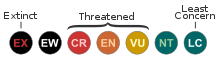
IUCN Red List of Threatened Plants Status : Least Concern
Growth: S = slow M = medium F = fast. Soil: L = light (sandy) M = medium H = heavy (clay). pH: A = acid N = neutral B = basic (alkaline). Shade: F = full shade S = semi-shade N = no shade. Moisture: D = dry M = Moist We = wet Wa = water.
Now available:
Food Forest Plants for Mediterranean Conditions
350+ Perennial Plants For Mediterranean and Drier Food Forests and Permaculture Gardens.
[Paperback and eBook]
This is the third in Plants For A Future's series of plant guides for food forests tailored to
specific climate zones. Following volumes on temperate and tropical ecosystems, this book focuses
on species suited to Mediterranean conditions—regions with hot, dry summers and cool, wet winters,
often facing the added challenge of climate change.
Read More
Expert comment
Author
(A.Gray.)Bierner.
Botanical References
Links / References
For a list of references used on this page please go here
A special thanks to Ken Fern for some of the information used on this page.
Readers comment
| Add a comment |
|
If you have important information about this plant that may help other users please add a comment or link below. Only comments or links that are felt to be directly relevant to a plant will be included. If you think a comment/link or information contained on this page is inaccurate or misleading we would welcome your feedback at [email protected]. If you have questions about a plant please use the Forum on this website as we do not have the resources to answer questions ourselves.
* Please note: the comments by website users are not necessarily those held by PFAF and may give misleading or inaccurate information.
|
Subject : Hymenoxys hoopesii
|
|
|
|