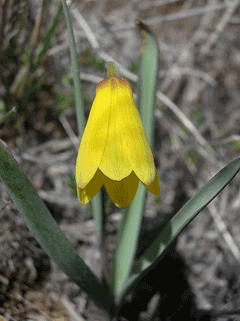
 |
|
USDA-NRCS PLANTS Database |
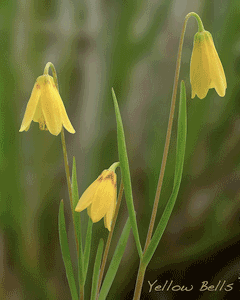 |
| http://flickr.com/photos/34153765%40N04 |
Translate this page:
Summary
Yellow fritillary is a small but historically important edible bulb plant of western North America. It appears soon after winter, often flowering while mountain landscapes are still cold. Its small bulbs were traditionally valued as a seasonal food. Although delicious when cooked, its limited size and conservation considerations mean it is better suited for appreciation and cultivation than widespread wild harvesting. Yellow fritillary (Fritillaria pudica) belongs to the lily family (Liliaceae). Common names include yellow fritillary, yellow bells, golden bells, and mission bells. It is a small spring-flowering perennial usually hardy in USDA Zones 3–8. Plants generally grow about 10–30 cm tall.
Physical Characteristics

 Fritillaria pudica is a BULB growing to 0.2 m (0ft 8in) by 0.1 m (0ft 4in) at a slow rate.
See above for USDA hardiness. It is hardy to UK zone 3. It is in flower from April to May. The species is hermaphrodite (has both male and female organs) and is pollinated by Insects.
Suitable for: light (sandy) and medium (loamy) soils and prefers well-drained soil. Suitable pH: mildly acid, neutral and basic (mildly alkaline) soils. It can grow in semi-shade (light woodland) or no shade. It prefers dry or moist soil.
UK Hardiness Map
US Hardiness Map
Synonyms
Lilium pudicum.
Plant Habitats
Woodland Garden Sunny Edge; Dappled Shade;
Edible Uses
Edible Parts: Root Seedpod
Edible Uses:
The bulbs and small bulblets are edible after cooking. Young fruit pods have also been reported as edible. Cooking is the preferred method of preparation [2-3]. Edible Uses & Rating: Cooked bulbs can be eaten as a vegetable. The small bulbs were traditionally roasted, baked, or cooked in earth ovens[2-3]. Edibility Rating: 3.5/5. Excellent flavor but limited by small size and harvesting difficulty [2-3]. Taste, Processing & Kitchen Notes: Raw bulbs may have a bitter taste, but cooking produces a sweet, mild, starchy flavor similar to that of potatoes or other edible bulbs. Roasting enhances sweetness and gives the best results [2-3]. Young fruit capsules can also be cooked as a vegetable when tender. Seasonality (Phenology): Yellow fritillary is one of the early signs of spring. It usually flowers from March to June, depending on elevation and climate. Bulbs can be harvested while the plant is identifiable. Safety & Cautions (Food Use): Correct identification is critical because poisonous bulb plants may grow nearby. Avoid collecting from small colonies. Many native bulb species recover slowly from heavy harvesting [2-3]. Harvest & Processing Workflow: Identify flowering plants before harvesting. Carefully remove bulbs from abundant colonies only, clean thoroughly, and cook before eating. Sustainable harvesting should leave enough plants for regeneration. Cultivar/Selection Notes. Yellow fritillary is grown ornamentally in native plant gardens. Selection is based on flower quality rather than food production. Look-Alikes & Confusion Risks: The greatest danger is confusion with death camas. Always confirm identification using flowers and leaves rather than bulbs alone [2-3]. Traditional/Indigenous Use Summary: Yellow fritillary bulbs were an important seasonal food for several Indigenous peoples of western North America. They were gathered in spring and often cooked before eating [2-3]. Bulb - raw or cooked[46, 61, 161]. It can also be dried for later use[46]. Commonly eaten as a food by the native North Americans, the small bulbs were eaten raw and the larger ones cooked[270]. Rich in starch, it is best used in the autumn[172]. The raw bulb tastes like potatoes, when cooked it tastes like rice[212]. It can be eaten as a vegetable or can be added to soups etc[257]. The green seedpods can be eaten raw or cooked but are bitter[172]. A delicious flavour[212].
References More on Edible Uses
Medicinal Uses
Plants For A Future can not take any responsibility for any adverse effects from the use of plants. Always seek advice from a professional before using a plant medicinally.
None known
References More on Medicinal Uses
The Bookshop: Edible Plant Books
Our Latest books on Perennial Plants For Food Forests and Permaculture Gardens in paperback or digital formats.
Edible Tropical Plants
Food Forest Plants for Hotter Conditions: 250+ Plants For Tropical Food Forests & Permaculture Gardens.
More
Edible Temperate Plants
Plants for Your Food Forest: 500 Plants for Temperate Food Forests & Permaculture Gardens.
More
More Books
PFAF have eight books available in paperback and digital formats. Browse the shop for more information.
Shop Now
Other Uses
Ecology & Wildlife.
Yellow fritillary provides early spring resources for pollinators and contributes to the diversity of western meadow and woodland ecosystems. It represents an important link between traditional food knowledge and native plant conservation.
Special Uses
References More on Other Uses
Cultivation details
Yellow fritillary is one of the better edible wild bulbs, combining good flavor with historical importance. However, because individual bulbs are small and wild populations can be vulnerable, cultivation is the best way to enjoy this plant sustainably. Growing Conditions: Prefers open meadows, rocky slopes, and well-drained soils. It grows best where winters are cool and moist and summers are relatively dry. Habitat & Range: Native to western North America, especially mountain regions from the western United States northward into Canada. Size & Landscape Performance: Small but attractive, with bright yellow nodding flowers that appear early in the growing season. It works well in naturalized bulb gardens. Cultivation (Horticulture): Requires good drainage and a seasonal cycle similar to its native habitat. Avoid excessive summer watering. Pests & Problems: Generally trouble-free. Bulbs may be eaten by rodents and other wildlife. Identification & Habit: A small bulb-forming perennial with narrow leaves and usually solitary nodding yellow flowers. Flowers have six similar tepals and a delicate bell-like appearance. Pollinators: Early-season bees and other insects visit the flowers when few other plants are blooming. Best grown on a gritty well-drained sunny bank[42]. Plants must be kept dry in the summer[90, 134]. A very variable[270] and ornamental plant[1], but it is not easy to grow outdoors, though it has lived a long time in a bulb frame[90]. Flowers are produced in 4 - 6 years from seed[164]. The bulb produces bulbils freely[90]. Yellow fritillary (Fritillaria pudica) belongs to the lily family (Liliaceae). Common names include yellow fritillary, yellow bells, golden bells, and mission bells. It is a small spring-flowering perennial usually hardy in USDA Zones 3–8. Plants generally grow about 10–30 cm tall.
References Carbon Farming Information and Carbon Sequestration Information
Temperature Converter
Type a value in the Celsius field to convert the value to Fahrenheit:
Fahrenheit:
The PFAF Bookshop
Plants For A Future have a number of books available in paperback and digital form. Book titles include Edible Plants, Edible Perennials, Edible Trees,Edible Shrubs, Woodland Gardening, and Temperate Food Forest Plants. Our new book is Food Forest Plants For Hotter Conditions (Tropical and Sub-Tropical).
Shop Now
Plant Propagation
Propagation is by seed or division of small bulblets. Seed propagation is slow but useful for conservation. Seed - best sown as soon as ripe in a cold frame, it should germinate in the spring[1]. Protect from frost[134]. Stored seed should be sown as soon as possible and can take a year or more to germinate[134]. Sow the seed quite thinly to avoid the need to prick out the seedlings. Once they have germinated, give them an occasional liquid feed to ensure that they do not suffer mineral deficiency. Once they die down at the end of their second growing season, divide up the small bulbs, planting 2 - 3 to an 8cm deep pot. Grow them on for at least another year in light shade in the greenhouse before planting them out whilst dormant. Division of offsets in August[1]. The larger bulbs can be planted out direct into their permanent positions, but it is best to pot up the smaller bulbs and grow them on in a cold frame for a year before planting them out in the autumn. Bulb scales[163].
Other Names
If available other names are mentioned here
Yellow fritillary, yellow bells, golden bells, and mission bells.
Native Range
NORTHERN AMERICA: Canada (Alberta (southwest), British Columbia (south)), United States (Colorado (northwest), Idaho, Montana, Oregon, Washington, Wyoming (west), California (north), Nevada (north), Utah (northwest))
Weed Potential
Right plant wrong place. We are currently updating this section.
Please note that a plant may be invasive in one area but may not in your area so it's worth checking.
None. Yellow fritillary is a slow-growing native species.
Conservation Status
IUCN Red List of Threatened Plants Status : Not listed.
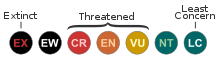
Growth: S = slow M = medium F = fast. Soil: L = light (sandy) M = medium H = heavy (clay). pH: A = acid N = neutral B = basic (alkaline). Shade: F = full shade S = semi-shade N = no shade. Moisture: D = dry M = Moist We = wet Wa = water.
Now available:
Food Forest Plants for Mediterranean Conditions
350+ Perennial Plants For Mediterranean and Drier Food Forests and Permaculture Gardens.
[Paperback and eBook]
This is the third in Plants For A Future's series of plant guides for food forests tailored to
specific climate zones. Following volumes on temperate and tropical ecosystems, this book focuses
on species suited to Mediterranean conditions—regions with hot, dry summers and cool, wet winters,
often facing the added challenge of climate change.
Read More
Expert comment
Author
(Pursh.)Spreng.
Botanical References
60200270
Links / References
For a list of references used on this page please go here
Readers comment
© 2010, Plants For A Future. Plants For A Future is a charitable company limited by guarantee, registered in England and Wales. Charity No. 1057719, Company No. 3204567.