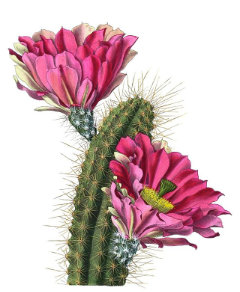
 |
|
Toni Gürke. Public domain |
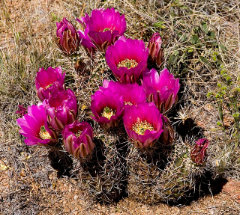 |
| Patrick Alexander. Creative Commons Zero, Public Domain Dedication |
Translate this page:
Summary
Fendler’s hedgehog cactus is notable in your project because it is the one listed with edible stems in addition to the genus-wide edible fruit. Historically, it was baked whole after spine removal, but in practical food terms, cactus fruits generally outperform stems, and this species still faces the ant-excavation problem on fruits.
Physical Characteristics

 Echinocereus fendleri is an evergreen Shrub growing to 0.3 m (1ft) by 0.6 m (2ft in) at a medium rate.
See above for USDA hardiness. It is hardy to UK zone 7. The flowers are pollinated by Bees, Insects.
It is noted for attracting wildlife.
Suitable for: light (sandy) and medium (loamy) soils, prefers well-drained soil and can grow in nutritionally poor soil. Suitable pH: neutral and basic (mildly alkaline) soils. It cannot grow in the shade. It prefers dry soil and can tolerate drought.
UK Hardiness Map
US Hardiness Map
Synonyms
Cereus fendleri Engelm.
Plant Habitats
Edible Uses
Fruits are edible; stems are also reported edible and were historically baked after de-spining, but this is more of a fallback use than a preferred food [2-3]. Edible Uses & Rating. Fruits are the main edible reward; stems are a secondary, labor-intensive edible part. Rating: fruit potentially good but unreliable; stems edible but generally lower culinary value than fruit [2-3]. Taste, Processing & Kitchen Notes. Fruit flavor is widely reported as good in hedgehog cacti, with the caveat that many fruits are empty when you open them. For stems, the entire culinary issue is spine removal and avoiding incorporating spines into the cooked tissue; baking whole after de-spining is the historically documented approach in your notes and remains the most realistic pathway if one were to use stems. Seasonality (Phenology). Blooms in late spring; fruits early to mid-summer; stem harvest (if ever used) is generally a last resort and not season-bound in the same way, though food quality is still best when tissues are not stressed or desiccated [2-3]. Safety & Cautions (Food Use). Mechanical spine hazard is high, especially if attempting stem use. Conservation protections may apply locally. Harvest & Processing Workflow. For fruit, harvest ripe, brush off spines, open and inspect for ant excavation, then eat. For stems, only consider if you can fully de-spine without contaminating the food; bake/roast whole as the traditional-style method described for your project, then peel away any remaining spine-bearing outer tissues [2-3]. Cultivar/Selection Notes. Often selected ornamentally for flower color; food selection is essentially about finding populations that fruit intact. Look-Alikes & Confusion Risks. Confusion within Echinocereus is common; treat stem-edibility claims cautiously unless you are confident in identification and handling, because the physical hazard is significant. Traditional/Indigenous Use Summary. We note that E. fendleri was historically baked whole after spine removal, a distinctive use within the hedgehog group [2-3].
References More on Edible Uses
Medicinal Uses
Plants For A Future can not take any responsibility for any adverse effects from the use of plants. Always seek advice from a professional before using a plant medicinally.
Echinocereus fendleri (Fendler's hedgehog cactus) is primarily recognized for its ornamental value and edible fruit rather than widely documented modern pharmaceutical uses. However, it does have a history of traditional use and shares properties with related cactus species. Key details regarding the uses of Echinocereus fendleri: Edible Fruit: The fruit of Echinocereus fendleri is edible and was consumed by indigenous peoples. Traditional Uses: Historically, this species has been important to Native American cultures for both food and, in some contexts, traditional medicinal remedies. Related Medicinal Uses: While specific medicinal, clinical trials for E. fendleri are not extensively highlighted in the provided text, related cactus species (Echinocereus genus and others) are known to contain bioactive compounds with potential antioxidant and anti-inflammatory properties. Therapeutic Value: The act of cultivating and caring for this cactus is described as a therapeutic, "zen-like" hobby. While some related Echinocereus species (like E. stramineus or E. enneacanthus) are specifically noted for having fruits that taste similar to strawberries, Echinocereus fendleri is often noted for its resilience and beauty in arid-land gardening.
References More on Medicinal Uses
The Bookshop: Edible Plant Books
Our Latest books on Perennial Plants For Food Forests and Permaculture Gardens in paperback or digital formats.
Edible Tropical Plants
Food Forest Plants for Hotter Conditions: 250+ Plants For Tropical Food Forests & Permaculture Gardens.
More
Edible Temperate Plants
Plants for Your Food Forest: 500 Plants for Temperate Food Forests & Permaculture Gardens.
More
More Books
PFAF have eight books available in paperback and digital formats. Browse the shop for more information.
Shop Now
Other Uses
Often selected ornamentally for flower color; food selection is essentially about finding populations that fruit intact. Cited around Zone 6 for cold-hardy landscaping in the interior Southwest. Compact clumps, strong spring display, good structural accent in xeriscapes. Pollinator support and micro-shelter; fruits interact strongly with ants.
Special Uses
References More on Other Uses
Cultivation details
A hedgehog cactus with an unusual stem-use history, but still best regarded as a fruit cactus whose main limitation is harvest reliability and spine handling. Growing Conditions. Full sun, dry air, excellent drainage; tolerates cold better than many desert cacti when kept dry. Habitat & Range. Southwest rocky habitats, especially in desert-to-woodland transition zones depending on local forms. Size & Landscape Performance. Compact clumps, strong spring display, good structural accent in xeriscapes. Cultivation (Horticulture). Use gritty soil and avoid winter wet; ideal on slopes or in raised beds. Pests & Problems. Ants on fruit; rot in wet soils; occasional rodent damage. Identification & Habit. Clumping, ribbed hedgehog cactus; lateral flowers; spiny fruits. Pollinators. Predominantly native bees; other insects may visit; hummingbird visitation is more typical of the red, claret-type flowers in the genus than of pink forms, but local overlap can occur. Fendler’s Hedgehog Cactus (Echinocereus fendleri). Family: Cactus family (Cactaceae). Genus: Echinocereus. Common names: Fendler’s hedgehog cactus, pinkflower hedgehog cactus. USDA Hardiness Zones and size: Often cited around Zone 6 for cold-hardy landscaping in the interior Southwest; typically about 15–30 cm tall and 30–60 cm wide by clumping (approximate).
References Carbon Farming Information and Carbon Sequestration Information
Temperature Converter
Type a value in the Celsius field to convert the value to Fahrenheit:
Fahrenheit:
The PFAF Bookshop
Plants For A Future have a number of books available in paperback and digital form. Book titles include Edible Plants, Edible Perennials, Edible Trees,Edible Shrubs, Woodland Gardening, and Temperate Food Forest Plants. Our new book is Food Forest Plants For Hotter Conditions (Tropical and Sub-Tropical).
Shop Now
Plant Propagation
Seed and offsets.
Other Names
If available other names are mentioned here
Fendler’s hedgehog cactus, pinkflower hedgehog cactus.
Native Range
US. USA. Arizona, Colorado, Mexico Northeast, Mexico Northwest, New Mexico, Texas, Utah
Weed Potential
Right plant wrong place. We are currently updating this section.
Please note that a plant may be invasive in one area but may not in your area so it's worth checking.
Very low.
Conservation Status
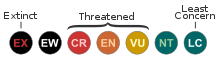
IUCN Red List of Threatened Plants Status : Least Concern.
Growth: S = slow M = medium F = fast. Soil: L = light (sandy) M = medium H = heavy (clay). pH: A = acid N = neutral B = basic (alkaline). Shade: F = full shade S = semi-shade N = no shade. Moisture: D = dry M = Moist We = wet Wa = water.
Now available:
Food Forest Plants for Mediterranean Conditions
350+ Perennial Plants For Mediterranean and Drier Food Forests and Permaculture Gardens.
[Paperback and eBook]
This is the third in Plants For A Future's series of plant guides for food forests tailored to
specific climate zones. Following volumes on temperate and tropical ecosystems, this book focuses
on species suited to Mediterranean conditions—regions with hot, dry summers and cool, wet winters,
often facing the added challenge of climate change.
Read More
Expert comment
Author
(Engelm.) Sencke ex Haage
Botanical References
Links / References
For a list of references used on this page please go here
Readers comment
| Add a comment |
|
If you have important information about this plant that may help other users please add a comment or link below. Only comments or links that are felt to be directly relevant to a plant will be included. If you think a comment/link or information contained on this page is inaccurate or misleading we would welcome your feedback at [email protected]. If you have questions about a plant please use the Forum on this website as we do not have the resources to answer questions ourselves.
* Please note: the comments by website users are not necessarily those held by PFAF and may give misleading or inaccurate information.
|
Subject : Echinocereus fendleri
|
|
|
|