Translate this page:
Summary
American dragonhead is one of the more useful seed plants in the mint family for western foragers. It is not a showy crop-like producer, but it compensates with easy harvest, low insect damage, low mucilage, and a seed that behaves like a genuinely food-like grain rather than a mere emergency nibble. The plant itself is distinctive once mature, with dense, spiny-bracted flowering and fruiting clusters that protect the seeds and help them remain available well after ripening. In practical use, this is primarily a seed plant, with the leaves functioning more as an aromatic seasoning than as a substantial green vegetable.
Physical Characteristics

 Dracocephalum parviflorum is a ANNUAL/BIENNIAL growing to 0.7 m (2ft 4in) by 0.4 m (1ft 4in).
See above for USDA hardiness. It is hardy to UK zone 4. It is in flower from July to August. The species is hermaphrodite (has both male and female organs) and is pollinated by Insects.
Suitable for: light (sandy), medium (loamy) and heavy (clay) soils. Suitable pH: mildly acid, neutral and basic (mildly alkaline) soils and can grow in very alkaline soils.
It can grow in semi-shade (light woodland) or no shade. It prefers moist soil.
UK Hardiness Map
US Hardiness Map
Synonyms
Moldavica parviflora. (Nutt.)Britton.
Plant Habitats
Cultivated Beds;
Edible Uses
Edible Parts: Seed
Edible Uses: Condiment
The edible parts are the seeds and, secondarily, the leaves as seasoning. The seeds are the clear food focus. They can be eaten raw in small amounts, toasted, boiled, or ground into meal. The leaves are more useful for flavoring than for bulk food [2-3]. Edible Uses & Rating: American dragonhead ranks as an excellent minor wild grain. Its seeds are easy to gather, easy to clean, and notably dependable in quality. Compared with many tiny-seeded wild plants, it has several major advantages: the seeds remain well in the calyces, chaff separates easily, insect damage is minimal, and the seeds have a mild, broadly acceptable flavor. For foragers in mountain meadow country, that makes it a particularly worthwhile plant to know [2-3]. Taste, Processing & Kitchen Notes: The seeds are black on the outside and white on the inside. Raw, they are hard but chewable. Toasting improves them by shifting the texture to a delicately crunchy, slightly bran-like grain and by deepening the flavor without introducing harsh bitterness. Boiled whole, they take long enough to soften to suggest real food value rather than mere spice value, and once cooked, they taste mild, starchy, and grain-like, somewhat comparable to chia but with much less mucilage and without tar-like, latex-like, or strongly resinous notes. Grinding before boiling improves texture and reduces the effect of the seed coats. In modern use, the seeds would fit well in porridge, coarse meal blends, trail mixes, or granola-style bars. The leaves, by contrast, are best treated as a light seasoning herb rather than a vegetable [2-3]. Seasonality (Phenology): American dragonhead generally blooms from June to August in mountain meadows and related western habitats, and the seeds are usually ready from August to October. The seed heads mature over a relatively short window rather than all at once, but the ripe seeds remain harvestable for weeks and sometimes much longer because the upright calyces hold them well unless strong wind dislodges them. Safety & Cautions (Food Use): The plant is not mainly risky because of chemistry, but because of handling. The conspicuous bracts around the seed heads have sharp teeth, and bare-handed harvesting can scratch or irritate the skin. Gloves are recommended, especially when gathering larger quantities. As with all meadow plants, avoid collecting from contaminated roadside sites, heavily grazed areas with sanitation concerns, or places treated with herbicides [2-3]. Harvest & Processing Workflow: Wait until the seed heads have turned brown and are fully dry, because that stage yields the highest seed. Clip or strip the dry heads into a container, then rub or crumble them to release the seeds. The chaff blows away easily, which is one of the plant’s best practical traits. Once cleaned, the seeds can be stored dry, toasted for direct use, ground into meal, or simmered into porridge. If cooking whole, allow a longer simmer; if grinding first, cooking becomes much more efficient [2-3]. Cultivar/Selection Notes: There are no food cultivars in common use. In practice, the best “selection” would be choosing large, healthy meadow populations with heavy seed set and fully mature heads. Because it is still mainly a wild food rather than a domesticated seed crop, local adaptation matters more than named forms [2-3]. Look-Alikes & Confusion Risks: American dragonhead is fairly distinctive once flowering or fruiting because of its dense, spike-like clusters subtended by conspicuous, sharp-toothed bracts. The mint-family structure helps as well: opposite leaves, square-ish stems in many plants, and bilabiate bluish-purple flowers. Within the Southwest, Great Basin, and southern Rockies, it is the Dracocephalum species most likely to be encountered, which reduces confusion somewhat. Even so, the safest identification comes when the flowers or mature seed heads are present [2-3]. Traditional/Indigenous Use Summary: American dragonhead fits well into the long Western tradition of gathering small wild seeds as porridge or meal plants. Its ease of harvest and grain-like cooking quality suggest exactly the sort of practical value that would have made it worth repeated use in mountain and meadow food systems [2-3]. Seed[105, 161, 177, 257]. No more details. The leaves have been used as a flavouring[257].
References More on Edible Uses
Medicinal Uses
Plants For A Future can not take any responsibility for any adverse effects from the use of plants. Always seek advice from a professional before using a plant medicinally.
Febrifuge Ophthalmic
The plant has been used to treat diarrhoea in children[257]. The leaves are febrifuge and ophthalmic[257]. A cold compound infusion has been used in the treatment of fevers and headaches[257]. Externally, it has been used as an eyewash[257].
References More on Medicinal Uses
The Bookshop: Edible Plant Books
Our Latest books on Perennial Plants For Food Forests and Permaculture Gardens in paperback or digital formats.
Edible Tropical Plants
Food Forest Plants for Hotter Conditions: 250+ Plants For Tropical Food Forests & Permaculture Gardens.
More
Edible Temperate Plants
Plants for Your Food Forest: 500 Plants for Temperate Food Forests & Permaculture Gardens.
More
More Books
PFAF have eight books available in paperback and digital formats. Browse the shop for more information.
Shop Now
Other Uses
In the landscape, American dragonhead is more useful as a naturalistic meadow plant than as a formal ornamental. Its value lies in texture, seasonal flower color, and seed production rather than large, bold display. In a native planting, it would contribute well to a mixed montane or meadow community. This species contributes nectar and pollen to meadow insect communities and provides small seeds that may enter local food webs. Its presence in mountain meadows also adds structural and seasonal diversity to those habitats, helping fill the ecological role of a seed-producing summer annual or short-lived perennial in open western uplands.
Special Uses
References More on Other Uses
Cultivation details
American dragonhead is one of the better small-seeded wild foods of western mountain landscapes. It combines efficient harvest, easy cleaning, and a mild, food-like seed with very few of the processing frustrations that burden many other wild grains. It is not a staple crop in the agricultural sense, but as a forager’s grain, it is unusually competent and rewarding. Growing Conditions: This species does best in open sunny settings with seasonal moisture, especially mountain meadows and similar upland habitats. It tolerates cool growing seasons well and appears to prefer soils that are not waterlogged but remain moist through much of the active season. Habitat & Range: American dragonhead occurs throughout much of the western United States, particularly in mountain meadows and related upland habitats. The USDA PLANTS Database recognizes it as a native western North American species. ? It is the Dracocephalum most likely to be encountered in the Southwest, Great Basin, and southern Rocky Mountains. Size & Landscape Performance: In the landscape, American dragonhead is more useful as a naturalistic meadow plant than as a formal ornamental. Its value lies in texture, seasonal flower color, and seed production rather than large, bold display. In a native planting, it would contribute well to a mixed montane or meadow community. Cultivation (Horticulture): It should be straightforward to cultivate from seed in cool-summer or mountain-style gardens, especially where spring and early summer moisture are dependable. It is likely to do best in full sun with moderate fertility and minimal competition from taller, more aggressive meadow plants. Pests & Problems: One of this plant’s great strengths is that bugs, diseases, and aborted seeds are generally minimal. The main practical issue is physical handling of the spiny bracts. In richer or more shaded conditions, plants may become lankier and less efficient for seed harvest. Identification & Habit: American dragonhead is an upright annual or short-lived perennial with opposite, coarsely toothed leaves and dense spike-like clusters of bluish-purple, two-lipped flowers. The seed heads are especially distinctive because each calyx contains up to four seeds and is subtended by conspicuous, sharp-toothed bracts. Those bracts are the feature most likely to make the plant memorable in hand. Pollinators: As a mint-family flower with bilabiate purple blooms, American dragonhead is likely visited by bees and other generalist nectar- and pollen-seeking insects, especially those comfortable working tubular or lipped flowers. Bumblebees and other medium-sized native bees are likely among the more important visitors. American dragonhead, now best referred to as Dracocephalum parviflorum (with Moldavica parviflora as a synonym), belongs to the mint family (Lamiaceae) and the genus Dracocephalum. Common names include American dragonhead and dragonbalm. The USDA PLANTS Database recognizes Dracocephalum parviflorum as the accepted name for American dragonhead. It is an annual or short-lived perennial of western North America and is generally suited to roughly USDA Zones 3–8, depending on elevation, moisture, and winter severity. Mature plants usually grow about 20–70 cm tall and spread around 20–40 cm wide, though richer meadow soils can produce larger, more branched plants. Succeeds in a sunny position in a fertile well-drained soil[200]. The plant is very fragrant[200]. It is useful for filling gaps in the summer border[200].
References Carbon Farming Information and Carbon Sequestration Information
Temperature Converter
Type a value in the Celsius field to convert the value to Fahrenheit:
Fahrenheit:
The PFAF Bookshop
Plants For A Future have a number of books available in paperback and digital form. Book titles include Edible Plants, Edible Perennials, Edible Trees,Edible Shrubs, Woodland Gardening, and Temperate Food Forest Plants. Our new book is Food Forest Plants For Hotter Conditions (Tropical and Sub-Tropical).
Shop Now
Plant Propagation
Propagation is by seed. Given its life history, direct sowing into suitable open ground would likely be the easiest method. Seed should establish best where competition is low and spring or early summer moisture is available.
Other Names
If available other names are mentioned here
American dragonhead, now best referred to as Dracocephalum parviflorum (with Moldavica parviflora as a synonym).
Native Range
NORTHERN AMERICA: Canada (Northwest Territories (southwest), Yukon, Québec, Ontario, Saskatchewan, Alberta, Manitoba, British Columbia), United States (Alaska, Michigan, New York, Iowa, Minnesota, Nebraska, North Dakota, South Dakota, Illinois, Wisconsin, Idaho, Montana, Oregon (northeast), Washington, Wyoming, New Mexico, Arizona, Nevada (north), Utah)
Weed Potential
Right plant wrong place. We are currently updating this section.
Please note that a plant may be invasive in one area but may not in your area so it's worth checking.
American dragonhead has low to moderate weed potential. It is not typically treated as a major invasive, but because it depends on seed production and can thrive in open meadow conditions, it may reseed readily where habitat suits it.
Conservation Status
IUCN Red List of Threatened Plants Status : Not listed.
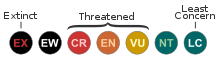
Growth: S = slow M = medium F = fast. Soil: L = light (sandy) M = medium H = heavy (clay). pH: A = acid N = neutral B = basic (alkaline). Shade: F = full shade S = semi-shade N = no shade. Moisture: D = dry M = Moist We = wet Wa = water.
Now available:
Food Forest Plants for Mediterranean Conditions
350+ Perennial Plants For Mediterranean and Drier Food Forests and Permaculture Gardens.
[Paperback and eBook]
This is the third in Plants For A Future's series of plant guides for food forests tailored to
specific climate zones. Following volumes on temperate and tropical ecosystems, this book focuses
on species suited to Mediterranean conditions—regions with hot, dry summers and cool, wet winters,
often facing the added challenge of climate change.
Read More
Expert comment
Author
Nutt.
Botanical References
43200235
Links / References
For a list of references used on this page please go here
Readers comment
| Add a comment |
|
If you have important information about this plant that may help other users please add a comment or link below. Only comments or links that are felt to be directly relevant to a plant will be included. If you think a comment/link or information contained on this page is inaccurate or misleading we would welcome your feedback at [email protected]. If you have questions about a plant please use the Forum on this website as we do not have the resources to answer questions ourselves.
* Please note: the comments by website users are not necessarily those held by PFAF and may give misleading or inaccurate information.
|
Subject : Dracocephalum parviflorum
|
|
|
|