Translate this page:
Summary
Distichlis spicata is perennial grass with elongated rhizomes forming dense colonies of growth. The erect culms can be 10 - 60cm tall. The rhizomes and roots can form dense mats of growth; the plant sometimes forms pure, extremely dense stands and is then seldom more than 30cm tall[1050 ]. The plant is harvested from the wild for local use as a food and source of materials. It is harvested from the wild on a commercial scale for use as a medicine, and is often grown in land restoration and stabilization projects. Desert saltgrass provided a reliable source of natural salt to Native Americans, who harvested the crystallized deposits from its stems. While not a grain food like its relative Palmer’s saltgrass, it played a useful role in traditional diets, especially in arid regions where salt was scarce.
Physical Characteristics

 Distichlis spicata is a PERENNIAL growing to 0.3 m (1ft) by 0.2 m (0ft 8in).
See above for USDA hardiness. It is hardy to UK zone 5 and is not frost tender. The flowers are pollinated by Wind. The plant is not self-fertile.
Suitable for: light (sandy), medium (loamy) and heavy (clay) soils and can grow in nutritionally poor soil. Suitable pH: mildly acid, neutral and basic (mildly alkaline) soils and can grow in very alkaline and saline soils.
It cannot grow in the shade. It prefers dry or moist soil and can tolerate drought.
UK Hardiness Map
US Hardiness Map
Synonyms
Agropyron peruvianum (Lam.) Roem. & Schult. Brachypodium peruvianum (Lam.) Roem. & Schult. ex Kunth. Briza spicata (L.) Lam. Brizopyrum americanum Link. Brizopyrum boreale J.Presl. Brizopyrum ovatum Nees ex Steud. Brizopyrum prostratum (Kunth) Benth. ex E.Fourn. Brizopyrum spicatum (L.) Hook. & Arn. Brizopyrum thalassicum (Kunth) Nees. D. araucana Phil. D. dentata Rydb. D. deserticola Phil. D. hirsuta Phil. D. hirta Phil. D. marginata Phil. D. maritima Raf. D. mendocina Phil. D. nodosa Raf. D. prostrata (Kunth) É.Desv. D. stricta (Torr.) Rydb. D. tenuifolia Phil. D. thalassica E.Desv. D. viridis Phil. Eragrostis thalassica (Kunth) Steud. Festuca distichophylla Michx. Festuca spicata Nutt. Festuca triticea Kunth. Festuca triticoides Lam. Megastachya prostrata (Kunth) Roem. & Schult. Megastachya thalassica (Kunth) Roem. & Schult. Poa borealis (J.Presl) Kunth. Poa dactyloides Kunth. Poa michauxii Kunth. Poa prostrata Kunth. Poa repens Willd. ex Steud. Poa subulata Bosc ex Kunth. Poa thalassica Kunth. Triticum peruvianum Lam. Uniola distichophylla (Michx.) Roem. & Schult. Uniola flexuosa Buckley. Uniola multiflora Nutt. Uniola prostrata (Kunth) Trin. Uniola pungens Rupr. ex M.Martens & Galeotti. Uniola spicata L. Uniola stricta Torr. Uniola thalassica (Kunth) Trin.
Plant Habitats
Edible Uses
Leaves and stems - used extensively for food[257 ]. The dried grass cakes have been soaked in water then strained to make a beverage[257 ]. Native Americans in California used saltgrass as a seasoning. They collected the salt crystals by threshing the blades. The seasoning provided is gray-green and said to have tasted like a salty dill pickle[277 ]. The plant has been burnt and the ashes used as a salt-rich flavouring in food[257 ]. Desert saltgrass is a hardy perennial grass that thrives in salty soils and alkaline flats across the arid West. Unlike many other wild grasses, it was valued not for its grain but as a traditional source of salt. Native Americans collected the salt that crystallized on its stems as moisture evaporated. This was done by pulling up the grass, flailing or beating the stems over baskets, and then sifting away debris to leave behind usable salt. This unique use made desert saltgrass an important resource in areas where natural salt sources were limited [2-3]. A closely related species, Palmer’s saltgrass (Distichlis palmeri), once abundant along the Colorado River delta, was harvested for its grains. By contrast, desert saltgrass itself was not used as a grain source [2-3].
References More on Edible Uses
Medicinal Uses
Plants For A Future can not take any responsibility for any adverse effects from the use of plants. Always seek advice from a professional before using a plant medicinally.
Saltgrass is a respiratory allergenic plant that is offered by Miles Pharmaceutical and used by Florida physicians to treat respiratory allergies[277 ]. An infusion of the plant is used as a laxative and also in the treatment of conditions such as gonorrhoea, fast heart rate[257 ]. A decoction of salt obtained from the plant is cooked into a gum and allowed to melt in order to treat bad colds and loss of appetite[257 ].
References More on Medicinal Uses
The Bookshop: Edible Plant Books
Our Latest books on Perennial Plants For Food Forests and Permaculture Gardens in paperback or digital formats.
Edible Tropical Plants
Food Forest Plants for Hotter Conditions: 250+ Plants For Tropical Food Forests & Permaculture Gardens.
More
Edible Temperate Plants
Plants for Your Food Forest: 500 Plants for Temperate Food Forests & Permaculture Gardens.
More
More Books
PFAF have eight books available in paperback and digital formats. Browse the shop for more information.
Shop Now
Other Uses
Agroforestry Uses: Given its extensive system of rhizomes and roots which form a dense sod, saltgrass is considered an outstanding species for controlling wind and water erosion[1050 ]. The thick entangled roots of salt marsh plants acts as a guard between the ocean and the shore protecting the land from pollutants and other chemicals associated with runoff water. It is particularly useful in saline/alkaline wetlands[277 ]. The plant has successfully established on land with very high rates of copper, manganese and zinc. It lgrows healthily, but argely excludes these metals from its foliage, so cannot be used to remove contaminants from the land[1050 ].. Other Uses: Saltgrass culms have been used as a cleaning agent. The stiffness of the leaves makes them an excellent brushing material for cleaning various implements or removing cactus thorns from objects[257 , 1050 ].
Special Uses
References More on Other Uses
Cultivation details
Distichlis spicata grows in a wide range of environments. It is a perennial or rhizomatous geophyte and grows primarily in the temperate biome. It requires a minimum growing season of 80 frost-free days for growth. It can be found in the extremely arid Death Valley region of California, where annual precipitation is as low as 19mm and an air temperature of 57°c has been recorded. Conversely, it also occurs in Yellowstone National Park, where the mean annual precipitation can be as high as 2,030 mm. It is also found on the mixed-grass prairies of Alberta and Saskatchewan where temperatures can dip to -48°c in winter[1050 ]. The plant requires a sunny position[1050 ]. It is usually found in fine-textured soils, often low in oxygen[1050 ]. It prefers a moist environment, tolerating occasional flooding, but can also withstand considerable drought[1050 ]. Plants grow well in alkaline soils and are extremely tolerant of saline soils, succeeding where salinity levels can be more than 8%, though it then grows in a dwarfed form[1050 ]. Plants are usually found on soils with a pH ranging from 6.8 - 9.2, exceptionally tolerating 10.9[1050 ]. Saltgrass grows in highly stressful environments where it is frequently subjected to temperature, drought, and salt stress or in tidal salt marshes where its entire above-ground biomass is periodically inundated with sea water[1050 ]. The rhizomes have sharp points with numerous epidermal silica cells that aid in the penetration of heavy soils[1050 ]. USDA Hardiness Zone: 4–9 (highly tolerant of saline and alkaline soils, as well as drought and periodic flooding). Weed Potential: Desert saltgrass is a vigorous, spreading species with rhizomes that allow it to form dense mats. In some settings, especially irrigated or disturbed lands, it can become weedy and difficult to remove.
References Carbon Farming Information and Carbon Sequestration Information
Temperature Converter
Type a value in the Celsius field to convert the value to Fahrenheit:
Fahrenheit:
The PFAF Bookshop
Plants For A Future have a number of books available in paperback and digital form. Book titles include Edible Plants, Edible Perennials, Edible Trees,Edible Shrubs, Woodland Gardening, and Temperate Food Forest Plants. Our new book is Food Forest Plants For Hotter Conditions (Tropical and Sub-Tropical).
Shop Now
Plant Propagation
Seed - it benefits from stratification and scarification. Sow in a seedbed and only just cover the seed. Keep in a sunny position and make sure the seeds do not dry out. Seeds taken from a California salt marsh and placed in a moist environment germinated at a rate of 76% when scarified, 94% when stratified at 4°c, and 28% when left untreated. A daily temperature regime of 10°c for 16 hours and 40°c for 8 hours produced the best germination rates[1050 ]. Seeds 8 months old germinate more freely than fresh seed[1050 ]. Division of the plant is very easy at any time of the year.
Other Names
If available other names are mentioned here
Desert Saltgrass (Distichlis spicata (L.) Greene)
Native Range
Native to: Alabama, Alberta, Argentina Northeast, Argentina Northwest, Argentina South, Arizona, Bahamas, Belize, Bolivia, British Columbia, California, Cayman Is., Chile Central, Chile North, Chile South, Colombia, Colorado, Connecticut, Cuba, Delaware, Dominican Republic, Ecuador, Florida, Galápagos, Georgia, Guatemala, Haiti, Idaho, Illinois, Iowa, Kansas, Louisiana, Maine, Manitoba, Maryland, Massachusetts, Mexico Central, Mexico Gulf, Mexico Northeast, Mexico Northwest, Mexico Southeast, Mexico Southwest, Minnesota, Mississippi, Missouri, Montana, Nebraska, Nevada, New Brunswick, New Hampshire, New Jersey, New Mexico, New York, North Carolina, North Dakota, Northwest Territorie, Nova Scotia, Ohio, Oklahoma, Ontario, Oregon, Pennsylvania, Peru, Prince Edward I., Rhode I., Saskatchewan, South Carolina, South Dakota, Texas, Turks-Caicos Is., Uruguay, Utah, Virginia, Washington, Wisconsin, Wyoming Introduced into: Hawaii, Society Is.
Weed Potential
Right plant wrong place. We are currently updating this section.
Please note that a plant may be invasive in one area but may not in your area so it's worth checking.
Desert saltgrass is a vigorous, spreading species with rhizomes that allow it to form dense mats. In some settings, especially irrigated or disturbed lands, it can become weedy and difficult to remove.
Conservation Status
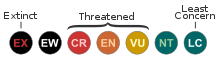
IUCN Red List of Threatened Plants Status : Least Concern.
Growth: S = slow M = medium F = fast. Soil: L = light (sandy) M = medium H = heavy (clay). pH: A = acid N = neutral B = basic (alkaline). Shade: F = full shade S = semi-shade N = no shade. Moisture: D = dry M = Moist We = wet Wa = water.
Now available:
Food Forest Plants for Mediterranean Conditions
350+ Perennial Plants For Mediterranean and Drier Food Forests and Permaculture Gardens.
[Paperback and eBook]
This is the third in Plants For A Future's series of plant guides for food forests tailored to
specific climate zones. Following volumes on temperate and tropical ecosystems, this book focuses
on species suited to Mediterranean conditions—regions with hot, dry summers and cool, wet winters,
often facing the added challenge of climate change.
Read More
Expert comment
Author
(L.) Greene
Botanical References
Links / References
For a list of references used on this page please go here
A special thanks to Ken Fern for some of the information used on this page.
Readers comment
| Add a comment |
|
If you have important information about this plant that may help other users please add a comment or link below. Only comments or links that are felt to be directly relevant to a plant will be included. If you think a comment/link or information contained on this page is inaccurate or misleading we would welcome your feedback at [email protected]. If you have questions about a plant please use the Forum on this website as we do not have the resources to answer questions ourselves.
* Please note: the comments by website users are not necessarily those held by PFAF and may give misleading or inaccurate information.
|
Subject : Distichlis spicata
|
|
|
|