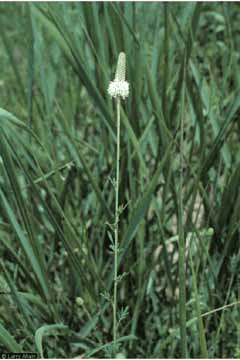
 |
|
Larry Allain @ USDA-NRCS PLANTS Database |
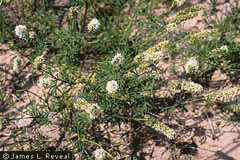 |
| James L. Reveal @ USDA-NRCS PLANTS Database |
Translate this page:
Summary
White prairie-clover is a graceful perennial prairie wildflower recognized by its dense cylindrical white flower spikes and finely divided foliage. The plant is widely distributed across the Great Plains and western grasslands, where it contributes to prairie biodiversity and soil health. Like many legumes it fixes nitrogen in the soil, enriching poor prairie soils and supporting surrounding vegetation. The roots have historically been regarded as edible and sometimes sweet, although the woody texture often limits their usefulness as a vegetable. Despite this limitation, the plant has long attracted interest as both a minor wild food and an important ecological species.
Physical Characteristics

 Dalea candida is a PERENNIAL growing to 0.7 m (2ft 4in) by 0.5 m (1ft 8in).
See above for USDA hardiness. It is hardy to UK zone 4. It is in flower from July to August. The species is hermaphrodite (has both male and female organs) and is pollinated by Bees, insects.
It can fix Nitrogen.
Suitable for: light (sandy) and medium (loamy) soils and prefers well-drained soil. Suitable pH: mildly acid, neutral and basic (mildly alkaline) soils. It cannot grow in the shade. It prefers dry or moist soil and can tolerate drought.
UK Hardiness Map
US Hardiness Map
Synonyms
Petalostemon candidum. (Willd.)Michx. D. candida var. candida
Plant Habitats
Cultivated Beds;
Edible Uses
Edible Parts: Root
Edible Uses: Tea
The edible portion of the plant is the root. Roots are generally described as sweet or aromatic, although the edible outer layer can be thin and surrounding woody cores often reduce their practical food value [2-3]. Edible Uses & Rating. White prairie-clover roots are occasionally described as a sweet wild root food. However, their usefulness varies greatly between plants because some roots are fibrous or acrid. The species therefore ranks as a moderate wild food at best, valuable mainly when good-tasting individuals are found [2-3]. Taste, Processing & Kitchen Notes. The roots can possess pleasant aromas and mild sweetness. Unfortunately, most roots contain woody cores that splinter into fibers when chewed. The outer layers are usually the most palatable. Boiling the roots often extracts sweetness into the cooking water, creating a lightly sweet herbal broth that was historically consumed as a beverage [2-3]. Seasonality (Phenology). This species flowers from late spring through midsummer, usually between May and July depending on latitude and rainfall. Seeds mature by late summer. Roots may be harvested at most times of the year but are often best after the growing season when carbohydrate reserves have accumulated. Safety & Cautions (Food Use). Flavor variability means that individual roots should always be tasted before collecting larger quantities. Some plants may produce unpleasant or soapy flavors. Harvesting should also be done responsibly because prairie ecosystems are fragile and slow to recover from disturbance [2-3]. Harvest & Processing Workflow. Roots are dug carefully to preserve as much of the taproot as possible. After cleaning, a small piece can be sampled to evaluate flavor. Roots may be chewed fresh or chopped and boiled to extract sweetness into a broth. Cultivar/Selection Notes. This species is widely cultivated in native prairie restoration and ornamental wildflower gardens. Cultivation has focused on ornamental and ecological traits rather than food quality. Look-Alikes & Confusion Risks. White prairie-clover is easily recognized by its tall spikes of white flowers and compound leaves. It may resemble other prairie-clover species, but the distinctive white flower spikes help distinguish it from purple prairie-clover. Traditional/Indigenous Use Summary. Some Native American groups used prairie-clover roots as a sweet wild food. The roots were sometimes described as tasting pleasantly sweet, though they were rarely considered staple foods [2-3]. Root - raw or chewed for its pleasant sweet flavour[105, 161, 177, 183]. Eaten as a delicacy by children[257]. A tea-like beverage is made from the dried leaves[105, 161, 177, 183].
References More on Edible Uses
Medicinal Uses
Plants For A Future can not take any responsibility for any adverse effects from the use of plants. Always seek advice from a professional before using a plant medicinally.
Analgesic
The roots have been chewed to bring relief from the pain of toothaches etc[257].
References More on Medicinal Uses
The Bookshop: Edible Plant Books
Our Latest books on Perennial Plants For Food Forests and Permaculture Gardens in paperback or digital formats.
Edible Tropical Plants
Food Forest Plants for Hotter Conditions: 250+ Plants For Tropical Food Forests & Permaculture Gardens.
More
Edible Temperate Plants
Plants for Your Food Forest: 500 Plants for Temperate Food Forests & Permaculture Gardens.
More
More Books
PFAF have eight books available in paperback and digital formats. Browse the shop for more information.
Shop Now
Other Uses
This species is widely cultivated in native prairie restoration and ornamental wildflower gardens. Cultivation has focused on ornamental and ecological traits rather than food quality. Plants form upright clumps with narrow leaves and tall flowering spikes. They perform well in prairie gardens and naturalized landscapes. As a nitrogen-fixing legume, the plant improves soil fertility and supports the health of prairie ecosystems. Pollinators frequently visit the flowers.
Special Uses
Nitrogen Fixer
References More on Other Uses
Cultivation details
White prairie-clover is more ecologically important than culinary. Its nitrogen-fixing ability and pollinator-friendly flowers make it a valuable prairie plant, while its edible roots provide only a modest supplemental food. Growing Conditions. This plant thrives in full sun and well-drained soils, particularly sandy or gravelly prairie soils. It tolerates drought well once established. Habitat & Range. White prairie-clover occurs throughout the Great Plains and western prairies from Canada south into Texas and west into parts of the Rocky Mountain foothills. Size & Landscape Performance. Plants form upright clumps with narrow leaves and tall flowering spikes. They perform well in prairie gardens and naturalized landscapes. Cultivation (Horticulture). Often grown in prairie restoration projects and wildflower gardens where it supports pollinators and soil health. Pests & Problems. Generally resistant to pests and diseases. Poor drainage can cause root problems. Identification & Habit. This species has compound leaves with several small leaflets and distinctive cylindrical white flower spikes composed of many tiny blossoms. Pollinators. Flowers attract bees, butterflies, and other nectar-feeding insects. White prairie-clover (Dalea candida var. candida) belongs to the bean family (Fabaceae) and the genus Dalea. Common names include white prairie-clover, white prairie clover, and white prairie-trefoil. This species is a hardy perennial wildflower of the North American prairies and open dry plains. It typically grows well in USDA Hardiness Zones 3–9. Mature plants generally reach 30–90 cm in height and spread approximately 30–50 cm wide, depending on soil fertility and moisture. Requires a well-drained soil in full sun[200]. A deep-rooted plant, it prefers a sandy loam with added leaf mould[1]. This species is well-suited to informal and naturalistic plantings, especially as part of a collection of native species[200]. We are not sure how hardy this plant is in Britain, but judging by its native range, it should succeed outdoors in many parts of the country. Plants are monocarpic, living for a number of years without flowering and then dying after flowering[200]. The stems, leaves and flowers are dotted with glands, making the plant look blistered[200]. This species has a symbiotic relationship with certain soil bacteria; these bacteria form nodules on the roots and fix atmospheric nitrogen. Some of this nitrogen is utilized by the growing plant, but some can also be used by other plants growing nearby[200].
References Carbon Farming Information and Carbon Sequestration Information
Temperature Converter
Type a value in the Celsius field to convert the value to Fahrenheit:
Fahrenheit:
The PFAF Bookshop
Plants For A Future have a number of books available in paperback and digital form. Book titles include Edible Plants, Edible Perennials, Edible Trees,Edible Shrubs, Woodland Gardening, and Temperate Food Forest Plants. Our new book is Food Forest Plants For Hotter Conditions (Tropical and Sub-Tropical).
Shop Now
Plant Propagation
Seed - pre-soak for 12 hours in warm water and sow in early spring in a greenhouse. When they are large enough to handle, prick the seedlings out into individual pots and plant them out into their permanent positions in the summer[200].
Other Names
If available other names are mentioned here
Dalea candida var. candida
Native Range
NORTHERN AMERICA: Canada (Ontario (west), Saskatchewan (south), Alberta (south), Manitoba (south)), United States (Indiana, Iowa, Kansas, Minnesota, Missouri, Nebraska, North Dakota, South Dakota, Illinois, Oklahoma, Wisconsin, Colorado, Montana, Wyoming, Alabama, Arkansas, Kentucky, Louisiana, Mississippi, Tennessee, New Mexico, Texas, Arizona, Utah), Mexico (Chihuahua, Durango, Sonora)
Weed Potential
Right plant wrong place. We are currently updating this section.
Please note that a plant may be invasive in one area but may not in your area so it's worth checking.
Low weed potential. Plants spread slowly and integrate well into native plant communities.
Conservation Status
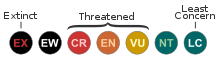
IUCN Red List of Threatened Plants Status : Not listed.
Growth: S = slow M = medium F = fast. Soil: L = light (sandy) M = medium H = heavy (clay). pH: A = acid N = neutral B = basic (alkaline). Shade: F = full shade S = semi-shade N = no shade. Moisture: D = dry M = Moist We = wet Wa = water.
Now available:
Food Forest Plants for Mediterranean Conditions
350+ Perennial Plants For Mediterranean and Drier Food Forests and Permaculture Gardens.
[Paperback and eBook]
This is the third in Plants For A Future's series of plant guides for food forests tailored to
specific climate zones. Following volumes on temperate and tropical ecosystems, this book focuses
on species suited to Mediterranean conditions—regions with hot, dry summers and cool, wet winters,
often facing the added challenge of climate change.
Read More
Expert comment
Author
(Michx.)Willd.
Botanical References
43200274
Links / References
For a list of references used on this page please go here
Readers comment
© 2010, Plants For A Future. Plants For A Future is a charitable company limited by guarantee, registered in England and Wales. Charity No. 1057719, Company No. 3204567.