 |
|
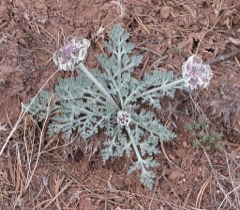
Curtis Clark wikimedia.org |
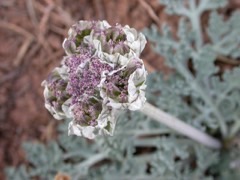 |
| Curtis Clark wikimedia.org |
Translate this page:
Summary
Widewing wavywing is a classic “good roots, bad leaves” species in your notes, thriving in poor soils and delivering highly palatable roots while producing foliage that can be so unappealing that it should be avoided as a vegetable. Cymopterus purpurascens (widewing springparsley) thrives in arid, high-elevation environments across the Western United States (AZ, CA, CO, ID, NV, NM, OR, UT). It is commonly found on rocky, gravelly, or sandy shrubby slopes, plains, and desert flats at elevations ranging from 4,000 to 7,500 feet (1200–2300 m). Key Habitat Features: Soil Type: Well-drained soils, including rocky, gravelly, or sandy, often on limestone. Climate: Dry, arid environments. Sun Exposure: Full sun. Topography: Slopes, flats, and valleys. Vegetation Zone: Shrublands, open spaces, and desert regions. It is a low-growing perennial that blooms in the spring.
Physical Characteristics

 Cymopterus purpurascens is a PERENNIAL growing to 0.3 m (1ft) by 0.3 m (1ft in) at a medium rate.
See above for USDA hardiness. It is hardy to UK zone 7.
It is noted for attracting wildlife.
Suitable for: light (sandy), medium (loamy) and heavy (clay) soils, prefers well-drained soil and can grow in nutritionally poor soil. Suitable pH: neutral soils and can grow in very alkaline soils.
It cannot grow in the shade. It prefers dry soil and can tolerate drought.
UK Hardiness Map
US Hardiness Map
Synonyms
C. montanus var. purpurascens A.Gray. C. utahensis M.E.Jones. C. utahensis var. eastwoodae M.E.Jones. C. utahensis var. monocephalus M.E.Jones. Phellopterus purpurascens (A. Gray) J.M. Coult. & Rose. Phellopterus purpurascens var. eastwoodiae (M.E. Jones) J.M. Coult. & Rose. Phellopterus utahensis (M.E. Jones) Wooton & Standl.
Plant Habitats
Edible Uses
Edible Parts: Root
Edible Uses:
Roots rate excellent; leaves rate “do not use” given the strong, unappealing, burning, oxalate-like effect you described for this flavor/irritation profile in this group [2-3]. Taste, Processing & Kitchen Notes. Roots are the prize: when peeled and boiled, they can be remarkably good—parsnip–potato–squash territory with manageable resinous notes. Texture can be airy and slightly stringy, and sweetness varies by site; cooking method matters, and boiling tends to produce the most consistently pleasant result for this species group when resinous/mineral edges are present [2-3]. Seasonality (Phenology). Early spring, often in harsh, marginal sites, with availability tied to the brief moisture window. Safety & Cautions (Food Use). Genus-level phototoxin caution applies, and your project experience strongly suggests the leaves are unsuitable even after cooking. Treat as roots-only unless future evidence indicates otherwise [2-3]. Harvest & Processing Workflow. Dig shallowly where soils permit, wash thoroughly, peel to improve flavor, slice and boil. Consider discarding first water if bitterness/minerality is strong or if you want the most conservative approach [2-3]. Cultivar/Selection Notes. No cultivars; “selection” is choosing colonies with thicker roots and better texture (less stringy). Look-Alikes & Confusion Risks. Apiaceae caution; confirm by fruit wings and overall Cymopterus fruit form. Avoid confusing it with other spring-parsleys if you can’t confirm fruit [2-3]. Traditional/Indigenous Use Summary. Genus-level traditional use and highlight wavywings as important in landscapes “nobody would farm,” which fits a long-standing role as early-season roots [2-3]. Root. The root has an excellent sweet, tender taste similar to parsnips [1-2].
References More on Edible Uses
Medicinal Uses
Plants For A Future can not take any responsibility for any adverse effects from the use of plants. Always seek advice from a professional before using a plant medicinally.
Cymopterus purpurascens (often referred to as Vesper purpurascens or broad-winged spring parsley) has historically been used in ethnobotanical practices for medicinal purposes. Based on ethnobotanical research, the plant is known for the following uses: Backaches: It has been used as a remedy for back pain. Stomach Issues: It is used to settle the stomach, specifically following vomiting. General Health: The plant is sometimes referred to as a "stomach medicine" in traditional contexts. Note: The plant grows in the Western US, including Arizona, California, Utah, and Nevada, and blooms from March to May.
References More on Medicinal Uses
The Bookshop: Edible Plant Books
Our Latest books on Perennial Plants For Food Forests and Permaculture Gardens in paperback or digital formats.

Edible Tropical Plants
Food Forest Plants for Hotter Conditions: 250+ Plants For Tropical Food Forests & Permaculture Gardens.
More

Edible Temperate Plants
Plants for Your Food Forest: 500 Plants for Temperate Food Forests & Permaculture Gardens.
More

More Books
PFAF have eight books available in paperback and digital formats. Browse the shop for more information.
Shop Now
Other Uses
Invertebrates shelter: beneficial for insects and other arthropods. Nectary: provides nectar or pollen for beneficial insects [1-2]. Early-season insect forage and a stable component of sparse spring floras; roots may be important to some soil foragers. Umbels attract small bees and flies; typical Apiaceae generalists.
Special Uses
Food Forest
References More on Other Uses
Cultivation details
A tough, poor-soil specialist that can deliver excellent roots when you ignore the leaves and cook the roots with simple, conservative techniques. Growing Conditions. Lean, often alkaline or mineral soils; open exposures; spring moisture followed by rapid drying. Habitat & Range. Poor-quality soils across the greater Intermountain Region. Size & Landscape Performance. Small but resilient; good “survivor” performance in harsh sites. Cultivation (Horticulture). Rare; could be attempted in dryland native plant gardens where soils are lean and drainage is sharp, but establishment from seed is the main challenge. Pests & Problems. Leaf unpalatability/irritation; root stringiness variability; sand and grit. Identification & Habit. Stemless/short-stem perennial, dissected basal foliage, umbels; winged fruits are diagnostic. Pollinators. Umbels attract small bees and flies; typical Apiaceae generalists. Widewing Wavywing (Cymopterus purpurascens). Family: Apiaceae. Genus: Cymopterus. Common names: Widewing wavywing, gamote, widewing spring-parsley. USDA Hardiness Zones: roughly Zones 6–9 per PFAF’s listing for this species. Approximate size: often about 10–30 cm tall and around 20–40 cm spread; PFAF’s related-plant table lists about 0.3 m height A perennial herb flowering March-May. For polyculture design as well as the above-ground architecture (form - tree, shrub etc. and size shown above) information on the habit and root pattern is also useful and given here if available. The plant growth habit is a clumper with limited spread [1-2]. The root pattern is a tap root similar to a carrot going directly down [1-2].
References Carbon Farming Information and Carbon Sequestration Information
Temperature Converter
Type a value in the Celsius field to convert the value to Fahrenheit:
Fahrenheit:
The PFAF Bookshop
Plants For A Future have a number of books available in paperback and digital form. Book titles include Edible Plants, Edible Perennials, Edible Trees,Edible Shrubs, Woodland Gardening, and Temperate Food Forest Plants. Our new book is Food Forest Plants For Hotter Conditions (Tropical and Sub-Tropical).
Shop Now
Plant Propagation
Seed with cold stratification; slow, episodic recruitment is common in the wild.
Other Names
If available other names are mentioned here
Widewing springparsley. Vesper purpurascens or broad-winged spring parsley.
Native Range
NORTHERN AMERICA: United States, Idaho, New Mexico (northeast), Arizona, California (south), Nevada, Utah,
Weed Potential
Right plant wrong place. We are currently updating this section.
Please note that a plant may be invasive in one area but may not in your area so it's worth checking.
None Known
Conservation Status
IUCN Red List of Threatened Plants Status : Not listed.
Growth: S = slow M = medium F = fast. Soil: L = light (sandy) M = medium H = heavy (clay). pH: A = acid N = neutral B = basic (alkaline). Shade: F = full shade S = semi-shade N = no shade. Moisture: D = dry M = Moist We = wet Wa = water.
Now available:
Food Forest Plants for Mediterranean Conditions
350+ Perennial Plants For Mediterranean and Drier Food Forests and Permaculture Gardens.
[Paperback and eBook]
This is the third in Plants For A Future's series of plant guides for food forests tailored to
specific climate zones. Following volumes on temperate and tropical ecosystems, this book focuses
on species suited to Mediterranean conditions—regions with hot, dry summers and cool, wet winters,
often facing the added challenge of climate change.
Read More
Expert comment
Author
(A.Gray) M.E.Jones
Botanical References
Links / References
For a list of references used on this page please go here
Readers comment
| Add a comment |
|
If you have important information about this plant that may help other users please add a comment or link below. Only comments or links that are felt to be directly relevant to a plant will be included. If you think a comment/link or information contained on this page is inaccurate or misleading we would welcome your feedback at [email protected]. If you have questions about a plant please use the Forum on this website as we do not have the resources to answer questions ourselves.
* Please note: the comments by website users are not necessarily those held by PFAF and may give misleading or inaccurate information.
|
Subject : Cymopterus purpurascens
|
|
|
|