 |
|
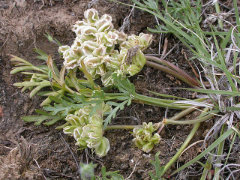
Matt Lavin from Bozeman, Montana, USA. Creative Commons Attribution-Share Alike 2.0 |
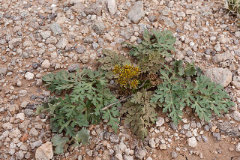 |
| Patrick Alexander. Creative Commons Zero, Public Domain Dedication |
Translate this page:
Summary
This is the standout “salad-capable” wavywing: a spring plant that can supply both a genuinely useful root and unusually mild, pleasant leaves compared with many Cymopterus.
Physical Characteristics

 Cymopterus glomeratus is a PERENNIAL growing to 0.2 m (0ft 8in) by 0.2 m (0ft 8in) at a medium rate.
See above for USDA hardiness. It is hardy to UK zone 5. The flowers are pollinated by Bees, Insects.
It is noted for attracting wildlife.
Suitable for: light (sandy), medium (loamy) and heavy (clay) soils and prefers well-drained soil. Suitable pH: mildly acid, neutral and basic (mildly alkaline) soils. It cannot grow in the shade. It prefers moist soil.
UK Hardiness Map
US Hardiness Map
Synonyms
C. acaulis Raf. Selinum acaule Pursh. Thapsia glomerata Nutt.
Plant Habitats
Edible Uses
Leaves and roots are both usable, with leaves notably more salad-friendly than most of the genus, and roots ranking among the best early-season wild foods in the landscapes you described. Edible Uses & Rating. Leaves rate good to excellent for a wild spring green when mild local forms are found; roots rate excellent within the genus, functioning as a real food rather than a token nibble. Taste, Processing & Kitchen Notes. Leaves can be mild, faintly sweet, and parsley-adjacent, with far fewer harsh resinous notes than typical. Entire plants can be chopped into stews for a clean, green lift. Roots boil quickly into tender, sweetish, earthy starch with a parsnip–potato direction; this is one of the rare Cymopterus where both tops and bottoms can be worth the effort, especially early before foliage declines. Seasonality (Phenology). Early spring emergence; leaves are best before flowering advances and before conditions dry. Roots remain usable through the growth window but are best when the plant is hydrated and actively growing. Safety & Cautions (Food Use). Even “mild” Cymopterus should be treated with respect: potential phototoxins, and individual sensitivity varies. Water-based processing remains the conservative baseline. Harvest & Processing Workflow. Harvest whole plants where appropriate and legally permitted, clean thoroughly, and sample a small amount of leaf tissue first. If leaves are mild, they can be used fresh; otherwise, they should be blanched. Roots should be washed, peeled if the skin is bitter or mineral-rich, and then boiled or steamed [2-3]. Cultivar/Selection Notes. No cultivars, but strong “local selection” value: some colonies are naturally milder; those are the ones that behave like true vegetables. Look-Alikes & Confusion Risks. Confirm genus by fruiting wings when possible. Avoid confusing with other Apiaceae, especially any plant with strong, unpleasant chemistry or uncertain identity [2-3]. Traditional/Indigenous Use Summary. This complex was historically used as food, and its mild leaf profile supports that pattern in practical terms [2-3].
References More on Edible Uses
Medicinal Uses
Plants For A Future can not take any responsibility for any adverse effects from the use of plants. Always seek advice from a professional before using a plant medicinally.
Cymopterus glomeratus (also known as Plains Spring Parsley or Cymopterus acaulis) has documented, traditional, and nutritional uses, primarily among Indigenous Peoples of North America. Traditional Medicinal Use: Indigenous peoples have long used the roots, leaves, and fruits of Cymopterus species for various medicinal purposes. Nutritional Use: The plant is considered edible, with the leaves often eaten as greens (cooked) or used as a flavoring/seasoning in soups. Cultural Significance: It is recognized as a culturally significant plant in many native communities. Caution: While some sources mention medicinal applications, it is important to note that many in the Cymopterus genus are considered highly variable and, in some cases, similar to species that can be toxic in early spring, such as Cymopterus watsonii (though the latter is distinct from C. glomeratus).
References More on Medicinal Uses
The Bookshop: Edible Plant Books
Our Latest books on Perennial Plants For Food Forests and Permaculture Gardens in paperback or digital formats.
Edible Tropical Plants
Food Forest Plants for Hotter Conditions: 250+ Plants For Tropical Food Forests & Permaculture Gardens.
More
Edible Temperate Plants
Plants for Your Food Forest: 500 Plants for Temperate Food Forests & Permaculture Gardens.
More
More Books
PFAF have eight books available in paperback and digital formats. Browse the shop for more information.
Shop Now
Other Uses
Potentially one of the more garden-amenable wavywings if seed can be established. A small, low, early; excellent “micro-plant” performance in harsh landscapes. A valuable early-season nectar/pollen resource and a resilient component of sparse spring herb layers.
Special Uses
References More on Other Uses
Cultivation details
If a forager could only learn one wavywing for dependable greens-plus-roots in the right habitats, plains spring-parsley is a strong candidate: unusually mild foliage paired with a genuinely satisfying root. Growing Conditions. Tolerant of lean soils and open exposures, exploiting brief spring moisture and cool temperatures. Habitat & Range. The native range of this species is W. Central & Central Canada to W. Central & Central U.S.A. and NE. Mexico, reflecting a tough, wide-ranging ecology. Size & Landscape Performance. Small, low, early; excellent “micro-plant” performance in harsh landscapes where bigger vegetables fail. Cultivation (Horticulture). Potentially one of the more garden-amenable wavywings if seed can be established: lean soil, drainage, and a spring-wet cycle. Pests & Problems. Sand adhesion and leaf decline after flowering are practical constraints; otherwise hardy. Identification & Habit. Stemless or short-stemmed perennial with basal dissected leaves and umbels; confirm by winged fruits. Pollinators. Umbels support generalist small bees, flies, and parasitic wasps; this is typical for small-flowered parsley relatives. Plains Spring-parsley (Cymopterus glomeratus). Family: Apiaceae. Genus: Cymopterus. Common names: Plains spring-parsley; Fendler’s, Greeley’s, Higgins’ spring-parsley. USDA Hardiness Zones: approximately Zones 4–8 (cold-hardy prairie/intermountain perennial). Approximate size: often around 5–20 cm tall, roughly 10–25 cm spread; PFAF’s related-plant table lists this group as a very small perennial around 0.1 m tall.
References Carbon Farming Information and Carbon Sequestration Information
Temperature Converter
Type a value in the Celsius field to convert the value to Fahrenheit:
Fahrenheit:
The PFAF Bookshop
Plants For A Future have a number of books available in paperback and digital form. Book titles include Edible Plants, Edible Perennials, Edible Trees,Edible Shrubs, Woodland Gardening, and Temperate Food Forest Plants. Our new book is Food Forest Plants For Hotter Conditions (Tropical and Sub-Tropical).
Shop Now
Plant Propagation
Seed, typically benefiting from cold stratification; sow in fall for spring emergence.
Other Names
If available other names are mentioned here
Plains spring-parsley; Fendler’s, Greeley’s, Higgins’ spring-parsley
Native Range
US. USA. Alberta, Arizona, Colorado, Idaho, Kansas, Manitoba, Mexico Northeast, Minnesota, Montana, Nebraska, New Mexico, North Dakota, Oklahoma, Oregon, Saskatchewan, South Dakota, Texas, Utah, Wyoming.
Weed Potential
Right plant wrong place. We are currently updating this section.
Please note that a plant may be invasive in one area but may not in your area so it's worth checking.
Very low.
Conservation Status
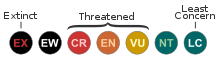
IUCN Red List of Threatened Plants Status : Not listed.
Growth: S = slow M = medium F = fast. Soil: L = light (sandy) M = medium H = heavy (clay). pH: A = acid N = neutral B = basic (alkaline). Shade: F = full shade S = semi-shade N = no shade. Moisture: D = dry M = Moist We = wet Wa = water.
Now available:
Food Forest Plants for Mediterranean Conditions
350+ Perennial Plants For Mediterranean and Drier Food Forests and Permaculture Gardens.
[Paperback and eBook]
This is the third in Plants For A Future's series of plant guides for food forests tailored to
specific climate zones. Following volumes on temperate and tropical ecosystems, this book focuses
on species suited to Mediterranean conditions—regions with hot, dry summers and cool, wet winters,
often facing the added challenge of climate change.
Read More
Expert comment
Author
(Nutt.) DC.
Botanical References
Links / References
For a list of references used on this page please go here
Readers comment
| Add a comment |
|
If you have important information about this plant that may help other users please add a comment or link below. Only comments or links that are felt to be directly relevant to a plant will be included. If you think a comment/link or information contained on this page is inaccurate or misleading we would welcome your feedback at [email protected]. If you have questions about a plant please use the Forum on this website as we do not have the resources to answer questions ourselves.
* Please note: the comments by website users are not necessarily those held by PFAF and may give misleading or inaccurate information.
|
Subject : Cymopterus glomeratus
|
|
|
|