 |
|
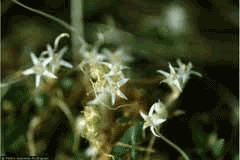
Pedro Acevedo-Rodriguez @ USDA-NRCS PLANTS Database |
 |
|
Translate this page:
Summary
Flatglobe dodder is a pale yellow, thread-stemmed parasite recognized by its umbel-like flower clusters and distinctive cylindrical stigmas. As with other dodders, its reported food use centers on the seed rather than the stems.
Physical Characteristics

 Cuscuta umbellata is a ANNUAL growing to 0.8 m (2ft 7in) by 0.8 m (2ft 7in).
See above for USDA hardiness. It is hardy to UK zone 6. The species is hermaphrodite (has both male and female organs) and is pollinated by Bees, insects.
Suitable for: light (sandy), medium (loamy) and heavy (clay) soils. Suitable pH: mildly acid, neutral and basic (mildly alkaline) soils. It can grow in semi-shade (light woodland) or no shade. It prefers moist soil.
UK Hardiness Map
US Hardiness Map
Synonyms
Cuscuta umbellata var. typica Yunck. Grammica umbellata (Kunth) Hadac & Chrtek
Plant Habitats
Cultivated Beds;
Edible Uses
Edible Parts: Seed
Edible Uses:
Seeds are the reported edible component; stems and other parts are generally treated as inedible or questionable, with digestive-upset cautions applying to the group [2-3]. Edible Uses & Rating. Seeds are “possible but low-confidence edible,” best treated as an emergency or ethnobotanical-food note rather than a routine wild ingredient [2-3]. Taste, Processing & Kitchen Notes. No taste notes were provided for this species, and host influence makes generalized taste claims risky. If seeds are used, they should be cleaned aggressively and checked for abnormal bitterness [2-3]. Seasonality (Phenology). Your description places bloom from July to September at mid elevations from Arizona to Texas, with seed maturing afterward into early autumn depending on elevation and moisture. Safety & Cautions (Food Use). The same three cautions apply strongly: host-mediated toxin transfer, potential digestive upset from stems, and contamination with host fragments and fungi/insects. Treat any bitterness as a warning signal and discard [2-3]. Harvest & Processing Workflow. Collect mature, papery capsules when they split along the equators; dry; thresh; winnow; then roast a very small sample to check for abnormal bitterness before any larger use. Cultivar/Selection Notes. None for food. Look-Alikes & Confusion Risks. Within-genus confusion is common; flower and stigma details matter, and most people need a hand lens to be confident. Host confusion remains the most dangerous error. Traditional/Indigenous Use Summary. Dodder seed use is reported in parts of the Southwest, but overall food use is minor and inconsistently documented compared with other seed plants [2-3]. Seed. Parched and ground into a meal[161, 177].
References More on Edible Uses
Medicinal Uses
Plants For A Future can not take any responsibility for any adverse effects from the use of plants. Always seek advice from a professional before using a plant medicinally.
Used in traditional medicine, though specific documentation is limited, modern clinical trials on this species are limited compared to those on other species in the genus. It is recognized within the Cuscuta genus, which is broadly used in traditional medicine for its potential antibacterial, antioxidant, and anti-inflammatory properties. Traditional Uses and Findings: Traditional Medicine: It is utilized as a medicinal plant, with some sources noting its use in traditional contexts. General Cuscuta Properties: While specific data on C. umbellata is sparse in literature, the genus (including many similar species) is traditionally used to treat ailments like jaundice, headaches, rheumatism, and liver disease. Phytochemical Potential: Similar to other Cuscuta species, it likely contains phytochemicals such as flavonoids and lignans that may possess antioxidant and anti-inflammatory activities. Safety Note: It is essential to consult a healthcare professional before using Cuscuta species, as they may cause side effects like digestive issues, notes
References More on Medicinal Uses
The Bookshop: Edible Plant Books
Our Latest books on Perennial Plants For Food Forests and Permaculture Gardens in paperback or digital formats.
Edible Tropical Plants
Food Forest Plants for Hotter Conditions: 250+ Plants For Tropical Food Forests & Permaculture Gardens.
More
Edible Temperate Plants
Plants for Your Food Forest: 500 Plants for Temperate Food Forests & Permaculture Gardens.
More
More Books
PFAF have eight books available in paperback and digital formats. Browse the shop for more information.
Shop Now
Other Uses
Dodder can act as a selective pressure on plant communities by weakening some hosts more than others; it also provides late-season floral resources (albeit small) for insects and structural habitat for tiny arthropods.
Special Uses
References More on Other Uses
Cultivation details
Flatglobe dodder is ecologically common in the right host-and-elevation bands and visually distinctive once you learn it, but it is not a high-trust edible. Its best treatment in a foraging guide is as a “seed reportedly edible with strong cautions,” not as a vegetable. Growing Conditions. Depends entirely on host availability, seasonal moisture, and warm temperatures that support rapid twining, flowering, and capsule maturation. Habitat & Range. Mid elevations from Arizona to Texas; A New World taxon with broad distribution beyond a single state footprint. Size & Landscape Performance. Forms light-yellow tangles that can be conspicuous in late summer and can suppress host vigor; not desirable in managed landscapes. Cultivation (Horticulture). Not recommended; parasitic habit makes it a pest rather than a crop. Pests & Problems. The plant’s parasitism is itself the main problem; it can also complicate shrub management by bridging across adjacent stems and hosts. Identification & Habit. Nongreen, rootless twiner with light yellow stems; flowers in umbel-like clusters; corollas with an inner ring of fringed scales; cylindrical stigmas; papery capsules splitting around the equator. Pollinators. Small generalist insects—especially small bees and flies—are the most plausible and commonly observed visitors for small, open dodder flowers; dense flowering can make infestations surprisingly active with tiny pollinator traffic in late summer. Morning glory family (Convolvulaceae); Cuscuta genus; common names include flatglobe dodder and umbrella dodder. Approximate USDA Hardiness Zones: 5–9 (often functioning as a warm-season annual parasite). Typical clump spread on a host is commonly 20–80 cm, sometimes more, with stems extending along host branches.
References Carbon Farming Information and Carbon Sequestration Information
Temperature Converter
Type a value in the Celsius field to convert the value to Fahrenheit:
Fahrenheit:
The PFAF Bookshop
Plants For A Future have a number of books available in paperback and digital form. Book titles include Edible Plants, Edible Perennials, Edible Trees,Edible Shrubs, Woodland Gardening, and Temperate Food Forest Plants. Our new book is Food Forest Plants For Hotter Conditions (Tropical and Sub-Tropical).
Shop Now
Plant Propagation
Seed - best sown as soon as it is ripe in the autumn, by lodging it among the stems of a host plant that is being grown in a pot in the greenhouse[238].
Other Names
If available other names are mentioned here
Dodder, flatglobe dodder
Native Range
NORTHERN AMERICA: United States (Colorado, New Mexico, Texas, Arizona), Mexico (Chihuahua, Coahuila de Zaragoza, Durango, Nuevo León, San Luis Potosí, Tamaulipas, Ciudad de México, Guanajuato, Guerrero, Hidalgo, Jalisco, México, Michoacán de Ocampo, Oaxaca, Puebla, Querétaro, Veracruz de Ignacio de la Llave) SOUTHERN AMERICA: Cuba, Haiti, Jamaica, Turks and Caicos Islands, United States (Virgin Islands, U.S.), Virgin Islands (British), Panama, Guyana, Suriname, Venezuela, Brazil AFRICA: Cabo Verde
Weed Potential
Right plant wrong place. We are currently updating this section.
Please note that a plant may be invasive in one area but may not in your area so it's worth checking.
Moderate to high in host-rich mid-elevation shrublands and riparian edges. Can be weedy or invasive. Cuscuta species are quarantine pests in many countries.
Conservation Status
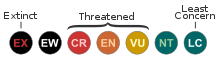
IUCN Red List of Threatened Plants Status : This taxon has not yet been assessed.
Growth: S = slow M = medium F = fast. Soil: L = light (sandy) M = medium H = heavy (clay). pH: A = acid N = neutral B = basic (alkaline). Shade: F = full shade S = semi-shade N = no shade. Moisture: D = dry M = Moist We = wet Wa = water.
Now available:
Food Forest Plants for Mediterranean Conditions
350+ Perennial Plants For Mediterranean and Drier Food Forests and Permaculture Gardens.
[Paperback and eBook]
This is the third in Plants For A Future's series of plant guides for food forests tailored to
specific climate zones. Following volumes on temperate and tropical ecosystems, this book focuses
on species suited to Mediterranean conditions—regions with hot, dry summers and cool, wet winters,
often facing the added challenge of climate change.
Read More
Expert comment
Author
Kunth.
Botanical References
Links / References
For a list of references used on this page please go here
Readers comment
| Add a comment |
|
If you have important information about this plant that may help other users please add a comment or link below. Only comments or links that are felt to be directly relevant to a plant will be included. If you think a comment/link or information contained on this page is inaccurate or misleading we would welcome your feedback at [email protected]. If you have questions about a plant please use the Forum on this website as we do not have the resources to answer questions ourselves.
* Please note: the comments by website users are not necessarily those held by PFAF and may give misleading or inaccurate information.
|
Subject : Cuscuta umbellata
|
|
|
|