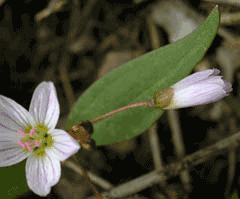
 |
|
http://commons.wikimedia.org/wiki/User:Wsiegmund |
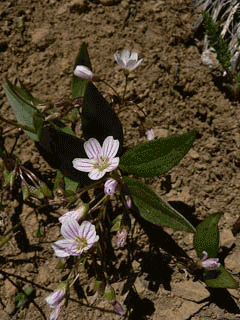 |
| http://flickr.com/photos/66541296%40N00/ |
Translate this page:
Summary
Western springbeauty is one of the best-tasting wild “root vegetables” in the western half of North America, producing small potato-like tubers and exceptionally mild salad leaves. It is early-season, often appearing soon after snowmelt, and is most valuable where colonies are large enough to justify careful digging. The main limitation is time and scale: each plant offers little leaf material, and the tubers can be surprisingly easy to miss because they often sit off to the side rather than directly beneath the leaves.
Physical Characteristics

 Claytonia lanceolata is a PERENNIAL growing to 0.2 m (0ft 8in).
See above for USDA hardiness. It is hardy to UK zone 4. It is in flower in March, and the seeds ripen in May. The species is hermaphrodite (has both male and female organs).
Suitable for: light (sandy) and medium (loamy) soils and prefers well-drained soil. Suitable pH: mildly acid soils. It cannot grow in the shade. It prefers moist soil.
UK Hardiness Map
US Hardiness Map
Synonyms
C. multiscapa.
Plant Habitats
Cultivated Beds;
Edible Uses
Edible Parts: Leaves Root
Edible Uses:
Edible leaves and an exceptional edible tuber. Leaves are best treated as a minor salad addition due to low yield. Tubers are the primary food, potato-like and broadly useful, but require careful digging and confident identification [2-3]. Edible Uses & Rating: The leaves are edible and very high quality as salad greens, but they are a minor yield item because plants often carry only a small amount of leaf tissue. The tubers are the primary food value and are outstanding: mild, starchy, and potato-like, with excellent cooking behavior. As a foraging food, the tubers rate very high for flavor and versatility, and moderate for practicality because harvest requires digging and careful handling [2-3]. Taste, Processing & Kitchen Notes: Leaves are mild, tender, and clean-tasting, without the sharpness, bitterness, or soapy notes that complicate many spring greens. Tubers taste remarkably close to potatoes with an earthy accent; peeling is unnecessary and usually wasteful given their small size. Boiling, roasting, baking, and drying all work well, and the tubers can be treated like “mini potatoes” in most recipes, with the key adjustment being cooking time and batch size [2-3]. Seasonality (Phenology): Western springbeauty is among the earliest bloomers in many mountain and high-desert regions, often appearing soon after snowmelt and flowering from spring into early summer depending on elevation and latitude. Leaves are best while the plant is fresh and green; tubers are accessible whenever the plant can be found, but digging is generally easiest when soils are moist. Flowers are often the practical signal that a patch is worth working because they make the plant much easier to locate. Harvest & Processing Workflow: Locate plants during bloom to confirm identity, then dig carefully with a wide, gentle excavation because tubers may sit to the side rather than directly under the stem. Lift soil in a broad plug, crumble it carefully, and follow any delicate connecting “lifelines” to the tuber. Rinse tubers thoroughly, cook whole by boiling or roasting, and consider drying if you want a storable product. If collecting leaves, pinch only the youngest leaves from a limited number of plants because leaf yield is inherently low and leaf removal can reduce the plant’s ability to replenish its tuber [2-3]. Cultivar/Selection Notes: No common cultivars are associated with wild western springbeauty. Variation in flower color occurs naturally across populations. Look-Alikes & Confusion Risks: The above-ground plant is fairly distinctive when in flower, but dormant-season digging is risky because unrelated plants can produce underground storage organs in the same soils. The most serious confusion risk is digging unknown “bulb-like” structures without confirming the plant above ground. Using flowers and leaves to confirm identity greatly reduces risk. Traditional / Indigenous Use Summary: Many Claytonia species were important foods for Indigenous peoples in western North America, particularly for their underground storage organs in seasonally harsh environments. Western springbeauty tubers are consistent with that pattern and represent a high-value wild carbohydrate when abundant and responsibly harvested. Root - raw or cooked[61, 105, 161, 257]. Rather palatable[60]. The raw root has a pleasant radish-like taste, when baked it has the taste and texture of baked potato[212]. The roots can be dried, ground into a powder and stored for later use[257]. The globose tubers are up to 20mm in diameter[270]. Leaves - raw or cooked[61, 85].
References More on Edible Uses
Medicinal Uses
Plants For A Future can not take any responsibility for any adverse effects from the use of plants. Always seek advice from a professional before using a plant medicinally.
None known
References More on Medicinal Uses
The Bookshop: Edible Plant Books
Our Latest books on Perennial Plants For Food Forests and Permaculture Gardens in paperback or digital formats.
Edible Tropical Plants
Food Forest Plants for Hotter Conditions: 250+ Plants For Tropical Food Forests & Permaculture Gardens.
More
Edible Temperate Plants
Plants for Your Food Forest: 500 Plants for Temperate Food Forests & Permaculture Gardens.
More
More Books
PFAF have eight books available in paperback and digital formats. Browse the shop for more information.
Shop Now
Other Uses
Springbeauties contribute early nectar and pollen resources when many landscapes are still waking up, supporting early-season insects. The tubers are also part of the underground food web and may be taken by small mammals in some places. In intact systems, its early phenology makes it one of the “spring pulse” plants that help stabilize seasonal food availability.
Special Uses
References More on Other Uses
Cultivation details
Western springbeauty is a classic early-season western edible: small above ground, outstanding below ground. Its leaves are a high-quality salad green but too scarce to be a staple. Its tubers are genuinely excellent and versatile, making it one of the better wild “potato analogues” of the West when harvested carefully and ethically. Growing Conditions: This species occupies a wide ecological range across the West, most often in well-drained soils that hold spring moisture but dry later. It tolerates cold well and takes advantage of the brief window when soils are moist and competition is low. It is commonly encountered in sagebrush, juniper, oak, pine, aspen, spruce, and mixed montane communities where spring conditions are favorable. Habitat & Range: Western springbeauty occurs across much of the western half of the United States in a variety of upland communities. It is especially characteristic of spring landscapes that transition quickly from moist to dry, including open slopes, woodland edges, and montane settings. Size & Landscape Performance: Above-ground size is typically very small, often only a few centimeters tall, but the plant can be locally abundant. In landscape terms it behaves like a spring ephemeral, appearing briefly and then retreating underground. It is not a robust groundcover and is easily outcompeted later in the season. Cultivation (Horticulture): Western springbeauty can be grown in rock gardens and native plant gardens where winter cold and spring moisture are available. Success depends on well-drained soil and allowing the plant to go dormant naturally as soils dry. It is best treated as a seasonal feature rather than a constant edible. Pests & Problems: The most common “problem” for foragers is simply breakage and loss: the stems are delicate, and tubers can be missed because they are often offset from the visible plant. In nature, rapid drying and grazing can shorten the harvest window. Pollination: Pollination is carried out by early-season insects that can exploit small, open, nectar-bearing flowers. The showy striped petals likely function as visual guides for pollinators in cool, bright spring conditions. Identification & Habit: Western springbeauty is a small, delicate perennial that typically presents as one or a few thin stems rising from a globe-shaped tuber. Plants often carry only two prominent leaves, and the flowers are showy for the plant’s size, with five petals that can be white, pink, yellow, or purplish, often with darker stripes. The inflorescence is usually a small raceme subtended by a bract. Because the above-ground parts are modest and can be hidden by grasses or leaf litter, the easiest time to locate colonies is during bloom, shortly after snowmelt or early spring rains. Prefers a damp peaty soil and a position in full sun[1, 164]. Requires a lime-free soil[164]. FAMILY: Montia family (Montiaceae) – Claytonia genus. COMMON NAMES: Western springbeauty. USDA Hardiness Zones: Roughly Zones 3–8 (cold-tolerant montane plant). Typical Size: 1–10 cm tall above ground; tuber typically 5–20 mm across.
References Carbon Farming Information and Carbon Sequestration Information
Temperature Converter
Type a value in the Celsius field to convert the value to Fahrenheit:
Fahrenheit:
The PFAF Bookshop
Plants For A Future have a number of books available in paperback and digital form. Book titles include Edible Plants, Edible Perennials, Edible Trees,Edible Shrubs, Woodland Gardening, and Temperate Food Forest Plants. Our new book is Food Forest Plants For Hotter Conditions (Tropical and Sub-Tropical).
Shop Now
Plant Propagation
Seed - surface sow on a peat based compost in spring in a cold frame. Germination usually takes place within 2 - 4 weeks at 10°c[164]. When large enough to handle, prick the seedlings out into individual pots and grow them on in the cold frame for at least their first winter. Plant them out in late spring or early summer after the last expected frosts. Division of offsets in spring or autumn.
Other Names
If available other names are mentioned here
Western Springbeauty (Claytonia lanceolata)
Native Range
NORTHERN AMERICA: Canada (Saskatchewan, Alberta (south), British Columbia (south)), United States (Colorado, Idaho, Montana, Oregon, Washington, Wyoming, New Mexico, Arizona, California, Nevada, Utah)
Weed Potential
Right plant wrong place. We are currently updating this section.
Please note that a plant may be invasive in one area but may not in your area so it's worth checking.
It is not a weed. It is slow, seasonal, and habitat-specific, and it does not behave aggressively in managed landscapes.
Conservation Status
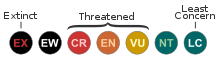
IUCN Red List of Threatened Plants Status : Not available
Growth: S = slow M = medium F = fast. Soil: L = light (sandy) M = medium H = heavy (clay). pH: A = acid N = neutral B = basic (alkaline). Shade: F = full shade S = semi-shade N = no shade. Moisture: D = dry M = Moist We = wet Wa = water.
Now available:
Food Forest Plants for Mediterranean Conditions
350+ Perennial Plants For Mediterranean and Drier Food Forests and Permaculture Gardens.
[Paperback and eBook]
This is the third in Plants For A Future's series of plant guides for food forests tailored to
specific climate zones. Following volumes on temperate and tropical ecosystems, this book focuses
on species suited to Mediterranean conditions—regions with hot, dry summers and cool, wet winters,
often facing the added challenge of climate change.
Read More
Expert comment
Author
Pursh.
Botanical References
60200270
Links / References
For a list of references used on this page please go here
Readers comment
| Add a comment |
|
If you have important information about this plant that may help other users please add a comment or link below. Only comments or links that are felt to be directly relevant to a plant will be included. If you think a comment/link or information contained on this page is inaccurate or misleading we would welcome your feedback at [email protected]. If you have questions about a plant please use the Forum on this website as we do not have the resources to answer questions ourselves.
* Please note: the comments by website users are not necessarily those held by PFAF and may give misleading or inaccurate information.
|
Subject : Claytonia lanceolata
|
|
|
|