 |
|
|
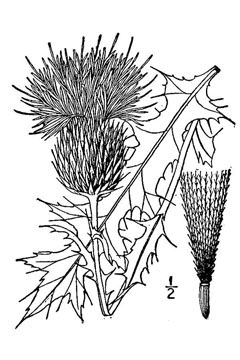 |
| USDA-NRCS PLANTS Database / Britton, N.L., and A. Brown. 1913. An illustrated flora of the northern United States, Canada and the British Possessions. Vol. 3: 550. |
Translate this page:
Summary
Wavy thistle is one of the most widespread and recognizable native thistles of western North America, occurring from plains to foothills and into lower mountain zones. It is a classic biennial thistle that produces a substantial taproot in its first year and a flowering stalk in its second. From a foraging perspective, it is a reliable and worthwhile species, offering edible roots and excellent peeled stems when harvested at the correct stage. Its abundance, wide distribution, and consistency make it one of the more practical thistles for wild food use.
Physical Characteristics

 Cirsium undulatum is an evergreen Perennial growing to 0.6 m (2ft) at a fast rate.
See above for USDA hardiness. It is hardy to UK zone 5. The species is hermaphrodite (has both male and female organs) and is pollinated by Bees, flies, Lepidoptera (Moths & Butterflies), beetles. The plant is self-fertile.
Suitable for: light (sandy), medium (loamy) and heavy (clay) soils. Suitable pH: mildly acid, neutral and basic (mildly alkaline) soils. It cannot grow in the shade. It prefers dry or moist soil.
UK Hardiness Map
US Hardiness Map
Synonyms
Plant Habitats
Cultivated Beds;
Edible Uses
Edible Parts: Oil Root Stem
Edible Uses: Oil
A high-value wild vegetable, best utilized for its taproots and young stems when harvested at the correct stage. Edible Uses & Rating The taproot and young stems are the primary edible parts. Roots are edible before flowering, and stems are excellent when harvested young and peeled. Leaves are technically edible but impractical because of their heavy spines and bitterness. Overall, wavy thistle ranks as a high-value edible thistle, especially for its roots and stems [2-3]. Taste, Processing & Kitchen Notes: Roots are starchy, mild, and only faintly bitter, with a flavor comparable to burdock and a potato-like undertone. Cooking improves both texture and flavor, and simmering produces a nourishing broth. Peeled stems are crisp, juicy, and mildly sweet, often compared favorably to celery. Fibrous strands are present but manageable. Cooking softens the stems while preserving sweetness, though chewing remains necessary because of residual fiber [2-3]. Seasonality (Phenology): Roots are best harvested from late autumn through early spring, before the flowering stalk emerges. Stems are harvested in spring when elongating but still tender. Flowering typically occurs from late spring through summer. Safety & Cautions (Food Use): Sharp spines require gloves during harvest. Harvest only from abundant populations and avoid protected lands. Ensure roots are collected before flowering for best quality. Harvest & Processing Workflow: For roots, identify first-year rosettes or second-year plants before flowering, dig deeply to remove the taproot, scrub clean, and cook thoroughly. For stems, cut young flowering shoots, peel away the spiny outer layers, and consume raw or cooked [2-3]. Cultivar/Selection Notes: No cultivars exist. Look-Alikes & Confusion Risks: Wavy thistle resembles several native Cirsium species. Confusion is generally safe, as most native thistles have similar edible properties. Avoid confusing with knapweeds or star-thistles (Centaurea), which lack edible roots. Traditional / Indigenous Use Summary: Roots and stems were used by multiple Indigenous groups across the Plains and Southwest as seasonal vegetables, particularly during spring and early summer. Root - raw or cooked[46, 61, 105, 161, 257]. One of the more palatable thistles, it is used as a vegetable or can be added to soups and stews[212, 257]. It can be dried and stored for winter use[257]. The root is likely to be rich in inulin, a starch that cannot be digested by humans. This starch thus passes straight through the digestive system and, in some people, ferments to produce flatulence[K]. Stems - peeled and eaten raw or cooked[161, 212, 257]. One of the more palatable thistles[212].
References More on Edible Uses
Medicinal Uses
Plants For A Future can not take any responsibility for any adverse effects from the use of plants. Always seek advice from a professional before using a plant medicinally.
Ophthalmic VD
A decoction of the root has been used in the treatment of gonorrhoea[257]. A cold infusion of the root has been used as a wash for eye diseases[257].
References More on Medicinal Uses
The Bookshop: Edible Plant Books
Our Latest books on Perennial Plants For Food Forests and Permaculture Gardens in paperback or digital formats.
Edible Tropical Plants
Food Forest Plants for Hotter Conditions: 250+ Plants For Tropical Food Forests & Permaculture Gardens.
More
Edible Temperate Plants
Plants for Your Food Forest: 500 Plants for Temperate Food Forests & Permaculture Gardens.
More
More Books
PFAF have eight books available in paperback and digital formats. Browse the shop for more information.
Shop Now
Other Uses
Oil
The seed of all species of thistles yields a good oil by expression[4]. No details of potential yields etc are given[K]. The flowers provide abundant nectar for bees, butterflies, and other pollinators. Seeds are eaten by birds, and the plant contributes to soil stabilization in open habitats.
Special Uses
References More on Other Uses
Cultivation details
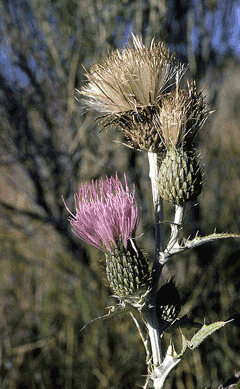
Wavy thistle is one of the most dependable and practical native thistles for foragers, offering high-quality roots and excellent peeled stems across a wide geographic range. Growing Conditions: Wavy thistle thrives in full sun and tolerates a wide range of soil types, including compacted, sandy, or clay soils. It is especially common in disturbed ground and open grasslands. Habitat & Range: Native to western and central North America, wavy thistle occurs throughout the Great Plains, Southwest, Rocky Mountains, and adjacent regions. It is common along roadsides, rangelands, open prairies, and foothill slopes. Size & Landscape Performance: Plants typically reach 60–100 cm tall, though smaller or larger individuals occur depending on soil fertility and moisture. It grows as scattered individuals rather than dense monocultures. Cultivation (Horticulture): Wavy thistle is not cultivated intentionally. Its spines and aggressive seed production limit garden value, though it could theoretically be managed as a wild root crop. Pests & Problems: Few serious pests affect wavy thistle. Grazing pressure is low due to spines, allowing plants to mature and seed freely. Pollination: Pollinated primarily by bees and butterflies attracted to the large, nectar-rich flower heads. Identification & Habit: Wavy thistle begins life as a low basal rosette of deeply lobed, spiny leaves with characteristically wavy margins, a feature that gives the plant its common name. In the second year, it produces a stout, upright flowering stem that is typically unbranched or sparsely branched. Leaves along the stem are alternately arranged, spiny, and often clasp the stem at the base. The flower heads are large, showy, and usually lavender to pinkish-purple, borne singly or in small clusters near the stem tips. The plant has a robust, muscular appearance compared to more delicate meadow thistles.
References Carbon Farming Information and Carbon Sequestration Information
Temperature Converter
Type a value in the Celsius field to convert the value to Fahrenheit:
Fahrenheit:
The PFAF Bookshop
Plants For A Future have a number of books available in paperback and digital form. Book titles include Edible Plants, Edible Perennials, Edible Trees,Edible Shrubs, Woodland Gardening, and Temperate Food Forest Plants. Our new book is Food Forest Plants For Hotter Conditions (Tropical and Sub-Tropical).
Shop Now
Plant Propagation
Seed - sow early spring or autumn in situ. Germination usually takes place within 2 - 8 weeks at 20°c[164].
Other Names
If available other names are mentioned here
Gray thistle,
Wavyleaf thistle, Wavy-Leaved Thistle, Tracy's thistle, Wavy Thistle (Cirsium undulatum)
Native Range
NORTHERN AMERICA: Canada (Alberta, British Columbia, Manitoba, Saskatchewan), United States (Indiana, Michigan, Illinois, Iowa, Kansas, Minnesota, Missouri, Nebraska, North Dakota, Oklahoma, South Dakota, Wisconsin, Colorado, Idaho, Montana, Washington, Wyoming, New Mexico, Texas, Arizona, California, Utah), Mexico (Chihuahua, Coahuila de Zaragoza, Durango, Sonora)
Weed Potential
Right plant wrong place. We are currently updating this section.
Please note that a plant may be invasive in one area but may not in your area so it's worth checking.
Moderate. This plant can be weedy or invasive. It is a weed in California and Northwestern Mexico. Know as a Noxious Weed in: Arkansas, California and Iowa, USA. While native, wavy thistle can become locally abundant in disturbed areas, though it does not spread aggressively by rhizomes like field thistle.
Conservation Status
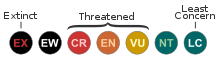
IUCN Red List of Threatened Plants Status : This taxon has not yet been assessed.
Growth: S = slow M = medium F = fast. Soil: L = light (sandy) M = medium H = heavy (clay). pH: A = acid N = neutral B = basic (alkaline). Shade: F = full shade S = semi-shade N = no shade. Moisture: D = dry M = Moist We = wet Wa = water.
Now available:
Food Forest Plants for Mediterranean Conditions
350+ Perennial Plants For Mediterranean and Drier Food Forests and Permaculture Gardens.
[Paperback and eBook]
This is the third in Plants For A Future's series of plant guides for food forests tailored to
specific climate zones. Following volumes on temperate and tropical ecosystems, this book focuses
on species suited to Mediterranean conditions—regions with hot, dry summers and cool, wet winters,
often facing the added challenge of climate change.
Read More
Expert comment
Author
(Nutt.)Spreng.
Botanical References
43235
Links / References
For a list of references used on this page please go here
Readers comment
| Add a comment |
|
If you have important information about this plant that may help other users please add a comment or link below. Only comments or links that are felt to be directly relevant to a plant will be included. If you think a comment/link or information contained on this page is inaccurate or misleading we would welcome your feedback at [email protected]. If you have questions about a plant please use the Forum on this website as we do not have the resources to answer questions ourselves.
* Please note: the comments by website users are not necessarily those held by PFAF and may give misleading or inaccurate information.
|
Subject : Cirsium undulatum
|
|
|
|