 |
|
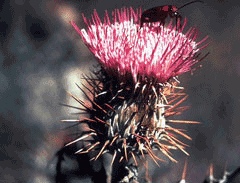
Clarence A. Rechenthin @ USDA-NRCS PLANTS Database |
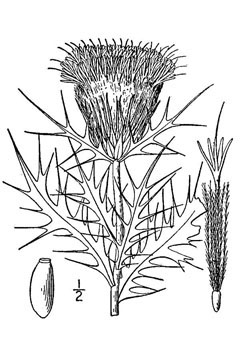 |
| USDA-NRCS PLANTS Database / Britton, N.L., and A. Brown. 1913. An illustrated flora of the northern United States, Canada and the British Possessions. Vol. 3: 551. |
Translate this page:
Summary
Yellowspine thistle is a native southwestern thistle distinguished by its pale yellow spines and robust growth in open, often arid landscapes. Like many Cirsium species, it follows a biennial life cycle and stores significant energy in a thick taproot during its first year. As a food plant, it closely resembles other edible thistles in both flavor and utility, offering a dependable root and usable young stems. Despite its intimidating appearance, it is a valuable wild vegetable for those familiar with thistle processing.
Physical Characteristics

 Cirsium ochrocentrum is a PERENNIAL growing to 1 m (3ft 3in) by 0.3 m (1ft).
See above for USDA hardiness. It is hardy to UK zone 5. The species is hermaphrodite (has both male and female organs) and is pollinated by Bees, flies, Lepidoptera (Moths & Butterflies), beetles. The plant is self-fertile.
Suitable for: light (sandy), medium (loamy) and heavy (clay) soils and prefers well-drained soil. Suitable pH: mildly acid, neutral and basic (mildly alkaline) soils. It cannot grow in the shade. It prefers dry or moist soil.
UK Hardiness Map
US Hardiness Map
Synonyms
Homotypic Synonyms: Carduus ochrocentrus (A.Gray) Greene. Carduus undulatus var. ochrocentrus (A.Gray) Rydb. Cnicus ochrocentrus (A.Gray) A.Gray. Cnicus undulatus var. ochrocentrus (A.Gray) A.Gray.
Plant Habitats
Cultivated Beds;
Edible Uses
Edible Parts: Oil Root Stem
Edible Uses: Oil
A good edible thistle, best valued for its taproot and young, peeled stems [2-3]. Edible Uses & Rating: The taproot is edible and represents the most valuable food part. Young, peeled stems are also edible and compare favorably to celery. Leaves are technically edible but impractical due to spines and bitterness. Flowers and receptacles may be used cautiously, though they are of secondary importance. Overall, yellowspine thistle ranks as a good-quality wild vegetable, particularly for its root. Taste, Processing & Kitchen Notes: The taproot is white to pale cream inside, mildly sweet, and starchy with a flavor reminiscent of burdock and potatoes. Outer portions are tender, while inner cores may become fibrous with age. Cooking improves texture but is not strictly necessary for young roots. Peeled stems are crisp, juicy, and lightly sweet, with a clean vegetal flavor. Strings are present but relatively soft. Leaves remain bitter and spiny even after cooking and are generally not worth the effort. Receptacles have an artichoke-like flavor but are small and low in caloric return [2-3]. Seasonality (Phenology): Roots are best harvested from late autumn through early spring before flowering. Stems are harvested in early spring while elongating and still tender. Flowering occurs in late spring to early summer, followed by seed maturation in summer. Safety & Cautions (Food Use): Spines are sharp and require careful handling; gloves are recommended. Harvest only from clean sites free of contamination. As with all thistles, correct identification is important. Harvest & Processing Workflow: Harvest first-year rosettes or pre-flowering plants for roots. Dig carefully to extract the taproot intact. Peel and slice for cooking or add to soups. Harvest young stems early in spring, peel immediately, and consume fresh or lightly cooked [2-3]. Cultivar/Selection Notes: No cultivars are known. Look-Alikes & Confusion Risks: Resembles other native Cirsium species with similar food value. Avoid confusion with Centaurea species, which lack edible roots and stems. Traditional / Indigenous Use Summary: While specific records for yellowspine thistle are limited, its use aligns with widespread Indigenous harvesting of thistle roots and stems throughout the Southwest. Root - cooked[61, 105, 177, 213, 257]. The root is likely to be rich in inulin, a starch that cannot be digested by humans. This starch thus passes straight through the digestive system and, in some people, ferments to produce flatulence[K]. Stem[61, 105, 177].
References More on Edible Uses
Medicinal Uses
Plants For A Future can not take any responsibility for any adverse effects from the use of plants. Always seek advice from a professional before using a plant medicinally.
Contraceptive Diaphoretic Diuretic Hypoglycaemic Skin VD
The entire plant is diaphoretic and diuretic[257]. It is infused overnight in cold water and the water is then drunk in the treatment of syphilis[207]. A liquid from the boiled blossoms has been used to treat burns and skin sores[213, 257]. A decoction of the root has been taken by both partners as a contraceptive[257]. It has also been taken five times a day in the treatment of diabetes[257].
References More on Medicinal Uses
The Bookshop: Edible Plant Books
Our Latest books on Perennial Plants For Food Forests and Permaculture Gardens in paperback or digital formats.
Edible Tropical Plants
Food Forest Plants for Hotter Conditions: 250+ Plants For Tropical Food Forests & Permaculture Gardens.
More
Edible Temperate Plants
Plants for Your Food Forest: 500 Plants for Temperate Food Forests & Permaculture Gardens.
More
More Books
PFAF have eight books available in paperback and digital formats. Browse the shop for more information.
Shop Now
Other Uses
Oil
The seed of all species of thistles yields a good oil by expression[4]. No details of potential yields etc are given[K]. The flowers attract bees, butterflies, and other pollinators. Seeds are consumed by birds, and the plant contributes to native pollinator networks in arid and semi-arid ecosystems.
Special Uses
References More on Other Uses
Cultivation details
Yellowspine thistle is a rugged, reliable wild food plant offering nutritious roots and high-quality stems. Its abundance in open landscapes and similarity to other edible thistles make it a valuable species for knowledgeable foragers. Growing Conditions: Yellowspine thistle thrives in open, sunny environments with well-drained soils. It tolerates sandy, rocky, and disturbed substrates and often appears in grasslands, foothills, and desert margins. Habitat & Range: This species is native to the southwestern United States, particularly Arizona, New Mexico, Utah, and Colorado. It is common in semi-arid regions, foothills, and open woodlands. Size & Landscape Performance: Plants typically reach 60–100 cm tall in flower but may be smaller in harsher conditions. It occurs as scattered individuals or loose colonies and does not form dense infestations. Cultivation (Horticulture): Yellowspine thistle has no horticultural use and is not cultivated. It poses little threat as a weed in managed landscapes. Pests & Problems: Few pests affect yellowspine thistle. Spines deter most grazing animals, and the plant is generally resilient. Pollination Pollinated by bees, butterflies, and other generalist insects. Identification & Habit: In its first year, yellowspine thistle forms a low rosette of deeply lobed, spiny leaves with conspicuous yellowish spines along the margins and midribs. During its second year, it sends up one or more erect flowering stems. The leaves along the stems are alternate, progressively smaller upward, and remain strongly spined. Flower heads are medium to large, composed entirely of disk flowers that range from pale lavender to pinkish-purple. The involucral bracts are stiff and tipped with sharp, yellowish spines that give the plant its common name. FAMILY: Sunflower family (Asteraceae) – Cirsium genus. COMMON NAMES: Yellowspine thistle. USDA Hardiness Zones: Approx. Zones 4–8. Typical Size: 30–120 cm tall; biennial or short-lived perennial.
References Carbon Farming Information and Carbon Sequestration Information
Temperature Converter
Type a value in the Celsius field to convert the value to Fahrenheit:
Fahrenheit:
The PFAF Bookshop
Plants For A Future have a number of books available in paperback and digital form. Book titles include Edible Plants, Edible Perennials, Edible Trees,Edible Shrubs, Woodland Gardening, and Temperate Food Forest Plants. Our new book is Food Forest Plants For Hotter Conditions (Tropical and Sub-Tropical).
Shop Now
Plant Propagation
Seed - sow early spring or autumn in situ. Germination usually takes place within 2 - 8 weeks at 20°c[164]. Division in spring or autumn.
Other Names
If available other names are mentioned here
Yellowspine thistle
Native Range
NORTHERN AMERICA: United States (Kansas, Nebraska, Oklahoma, South Dakota, Colorado, Wyoming, New Mexico, Texas, Arizona, Utah), Mexico (Chihuahua, Coahuila de Zaragoza, Durango, Sonora)
Weed Potential
Right plant wrong place. We are currently updating this section.
Please note that a plant may be invasive in one area but may not in your area so it's worth checking.
This plant can be weedy or invasive. It is a weed in California and Northwestern Mexico. Know as a noxious Weed in: Arkansas, California and Iowa, USA
Conservation Status
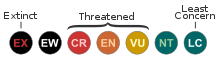
IUCN Red List of Threatened Plants Status : This taxon has not yet been assessed.
Growth: S = slow M = medium F = fast. Soil: L = light (sandy) M = medium H = heavy (clay). pH: A = acid N = neutral B = basic (alkaline). Shade: F = full shade S = semi-shade N = no shade. Moisture: D = dry M = Moist We = wet Wa = water.
Now available:
Food Forest Plants for Mediterranean Conditions
350+ Perennial Plants For Mediterranean and Drier Food Forests and Permaculture Gardens.
[Paperback and eBook]
This is the third in Plants For A Future's series of plant guides for food forests tailored to
specific climate zones. Following volumes on temperate and tropical ecosystems, this book focuses
on species suited to Mediterranean conditions—regions with hot, dry summers and cool, wet winters,
often facing the added challenge of climate change.
Read More
Expert comment
Author
A.Gray.
Botanical References
71235
Links / References
For a list of references used on this page please go here
Readers comment
| Add a comment |
|
If you have important information about this plant that may help other users please add a comment or link below. Only comments or links that are felt to be directly relevant to a plant will be included. If you think a comment/link or information contained on this page is inaccurate or misleading we would welcome your feedback at [email protected]. If you have questions about a plant please use the Forum on this website as we do not have the resources to answer questions ourselves.
* Please note: the comments by website users are not necessarily those held by PFAF and may give misleading or inaccurate information.
|
Subject : Cirsium ochrocentrum
|
|
|
|