Translate this page:
Summary
Slender woodreed is a perennial woodland grass of moist, cool environments, most often encountered along streams, seeps, and shaded mountain wetlands in the Rocky Mountains and adjacent regions. Its edible grains were historically gathered by Indigenous peoples, including the Goshiute Indians, but the plant’s scattered distribution and preference for wet habitats limit its importance as a modern foraging resource in the Southwest. While the grains are edible and nutritionally comparable to those of other wild grasses, slender woodreed is best viewed as a minor, situational food rather than a dependable staple. Its real significance lies in its contribution to ethnobotanical knowledge and its role as part of a broader grass-seed gathering tradition rather than as a high-yield species on its own.
Physical Characteristics

 Cinna latifolia is a PERENNIAL growing to 1.5 m (5ft).
See above for USDA hardiness. It is hardy to UK zone 4. The species is hermaphrodite (has both male and female organs) and is pollinated by Wind.
Suitable for: light (sandy), medium (loamy) and heavy (clay) soils. Suitable pH: mildly acid, neutral and basic (mildly alkaline) soils. It can grow in semi-shade (light woodland) or no shade. It prefers moist soil.
UK Hardiness Map
US Hardiness Map
Synonyms
Plant Habitats
Woodland Garden Dappled Shade; Shady Edge;
Edible Uses
Edible Parts: Seed
Edible Uses:
The grains are edible and safe, but yields are low and populations are sparse in the Southwest. Slender woodreed is a supplementary wild grain rather than a staple and is best gathered opportunistically when encountered in suitable habitats [2-3]. Edible Uses & Rating: Only the grains are used as food. Like all grasses, slender woodreed produces edible seeds, but the quantity produced by individual plants is modest. The grains are small and require the same general processing methods used for other wild grass seeds, including harvesting, drying, and separation from chaff. Due to its scarcity, scattered growth, and relatively low yield, slender woodreed ranks as a low-value wild food for most foragers. It is best considered an opportunistic addition when encountered rather than a plant worth targeting specifically [2-3]. Taste, Processing & Kitchen Notes: No detailed flavor descriptions specific to slender woodreed grains are recorded, but based on its close functional similarity to other wild grasses, the grains likely have a mild, neutral, grain-like flavor. They would be suitable for boiling into porridge, grinding into flour, or mixing with other grass seeds. As with most wild grasses, careful winnowing is required to remove chaff, and cooking improves digestibility. Because yields are low, the grains are best combined with seeds from other species rather than used alone [2-3]. Seasonality (Phenology): Slender woodreed flowers in mid to late summer, typically from July through August. Grain maturity follows in early autumn, with seeds available from September until frost or early snowfall ends the growing season. The harvest window is relatively short and can vary depending on elevation and local climate, making timing important for anyone hoping to collect usable seed. Safety & Cautions (Food Use): There are no known toxic concerns associated with slender woodreed. As with all wild grasses, seeds should be thoroughly cleaned and cooked to improve digestibility. Because the plant grows in wet environments, care should be taken to avoid harvesting from contaminated waterways or polluted sites. Harvest & Processing Workflow: Seeds are harvested in early autumn when the panicles dry and the grains loosen naturally. Seed heads can be clipped and dried further if needed, then gently crushed and winnowed to remove chaff. The cleaned grains can be boiled whole, toasted, or ground into flour. Given the small yields, combining seeds from multiple grass species is the most efficient approach. Cultivar/Selection Notes: There are no cultivars of slender woodreed. Wild populations show natural variation in response to moisture, light, and elevation, but no deliberate selection has occurred for food use. Look-Alikes & Confusion Risks: Slender woodreed resembles many other woodland and wetland grasses. For foragers, precise identification is not critical because all grasses produce edible seeds. However, distinguishing it from sedges and rushes is important, as those groups differ structurally. Slender woodreed can be recognized as a true grass by its jointed stems, flat leaves, and open panicle inflorescence. Traditional / Indigenous Use Summary: The grains of slender woodreed were gathered by the Goshiute Indians of Utah and Nevada as part of a broader tradition of harvesting wild grass seeds. While it was not a primary staple, it contributed to seasonal food diversity and reflected a deep understanding of available plant resources in wet mountain environments [2-3]. Seed[61, 105, 161]. No further details are given but the seed is very small and fiddly to utilize[K].
References More on Edible Uses
Medicinal Uses
Plants For A Future can not take any responsibility for any adverse effects from the use of plants. Always seek advice from a professional before using a plant medicinally.
None known
References More on Medicinal Uses
The Bookshop: Edible Plant Books
Our Latest books on Perennial Plants For Food Forests and Permaculture Gardens in paperback or digital formats.
Edible Tropical Plants
Food Forest Plants for Hotter Conditions: 250+ Plants For Tropical Food Forests & Permaculture Gardens.
More
Edible Temperate Plants
Plants for Your Food Forest: 500 Plants for Temperate Food Forests & Permaculture Gardens.
More
More Books
PFAF have eight books available in paperback and digital formats. Browse the shop for more information.
Shop Now
Other Uses
Ecology & Wildlife: As a native grass of moist mountain habitats, slender woodreed contributes to soil stabilization along streams and seeps. Its seeds provide food for birds and small mammals, while its foliage offers cover for insects and ground-dwelling wildlife. It plays a quiet but important ecological role in riparian and forest understory communities. Where conditions are suitable, it could be grown as a native ornamental grass for woodland gardens or restoration projects, but it has little value as a cultivated food plant due to low seed yield.
Special Uses
References More on Other Uses
Cultivation details
Slender woodreed is a minor but historically significant wild-food grass of moist mountain habitats. Its edible grains link it to a long tradition of grass-seed use among Indigenous peoples, but its scattered distribution and modest yields limit its value for modern foragers. It is best appreciated as part of the ecological and ethnobotanical fabric of mountain wetlands rather than as a practical food target. Growing Conditions: This species favors moist to wet soils and is most often found in shaded or partially shaded environments. It thrives along streambanks, in wet meadows, forested seeps, and other places where soil moisture remains relatively consistent through the summer. It does not tolerate prolonged drought and is absent from dry, exposed desert environments. Habitat & Range: Slender woodreed is a grass of cool, moist mountain habitats. In the Southwest, it occurs mainly in northern New Mexico, northern Arizona, and Utah, generally at higher elevations associated with the Rocky Mountains and adjacent ranges. Its broader range extends northward into cooler regions of North America. Because suitable habitat is patchy in the Southwest, populations tend to be localized and sparse. Size & Landscape Performance: Plants typically reach heights of 60 to 120 cm, depending on the availability of moisture and light. They form loose clumps rather than spreading aggressively, and they do not dominate landscapes. In natural settings, slender woodreed contributes to the structural diversity of moist forest understories and riparian zones rather than acting as a visually dominant species. Cultivation (Horticulture): Slender woodreed is rarely cultivated intentionally. Its preference for moist soils and partial shade makes it unsuitable for most conventional gardens, especially in arid regions. Where conditions are suitable, it could be grown as a native ornamental grass for woodland gardens or restoration projects, but it has little value as a cultivated food plant due to low seed yield. Pests & Problems: There are no notable pest or disease issues associated with slender woodreed. Its main vulnerability is habitat loss or drying of wetlands, which can eliminate local populations. Grazing pressure may also reduce seed production in some areas. Identification & Habit: Slender woodreed is an upright but softly arching perennial grass that forms loose clumps rather than dense sods. The stems are slender and flexible, giving the plant a graceful, drooping appearance, especially when in flower or seed. Leaves are relatively broad for a grass, flat, and soft-textured, contributing to its “woodreed” appearance rather than the stiff look of many open-country grasses. The inflorescence is an open, nodding panicle with fine branches, giving it a delicate, airy look. In shaded or moist forest settings, the plant often blends into surrounding vegetation and is more easily noticed when its seed heads emerge in late summer [2-3]. USDA Hardiness Zones: Approx. Zones 3–8. Typical Size: About 60–120 cm tall; graceful, loosely tufted perennial grass.
References Carbon Farming Information and Carbon Sequestration Information
Temperature Converter
Type a value in the Celsius field to convert the value to Fahrenheit:
Fahrenheit:
The PFAF Bookshop
Plants For A Future have a number of books available in paperback and digital form. Book titles include Edible Plants, Edible Perennials, Edible Trees,Edible Shrubs, Woodland Gardening, and Temperate Food Forest Plants. Our new book is Food Forest Plants For Hotter Conditions (Tropical and Sub-Tropical).
Shop Now
Plant Propagation
Seed - sow spring in a cold frame and only just cover the seed. When they are large enough to handle, prick the seedlings out into individual pots and grow them on in a cold frame for at least their first winter. Plant them out into their permanent positions in late spring or early summer, after the last expected frosts.
Other Names
If available other names are mentioned here
Slender woodreed, drooping woodreed, broadleaf woodreed.
Native Range
TEMPERATE ASIA: Russian Federation-Ciscaucasia (Ciscaucasia), Russian Federation (Altay (north), Buryatia, Chita, Irkutsk, Kemerovskaja oblast, Krasnoyarsk, Omsk, Tomsk, Tyumen, Yakutia-Sakha), Mongolia, Russian Federation (Habarovskij kraj, Primorye, Amur, Kamcatskij kraj, Sakhalin), China (Heilongjiang Sheng, Jilin Sheng), Korea, Japan NORTHERN AMERICA: United States (Connecticut, Indiana, Maine, Massachusetts, Michigan, New Hampshire, New Jersey, New York, Ohio, Pennsylvania, Rhode Island, Vermont, West Virginia, Illinois, Iowa, Kansas, Minnesota, Missouri, Nebraska, Oklahoma, Wisconsin, Alabama (north), Arkansas, Georgia (north), Kentucky, Louisiana, Maryland, Mississippi (north), North Carolina, South Carolina, Tennessee, Virginia, Texas (east)) EUROPE: Finland, Norway, Sweden, Russian Federation (European part), Belarus, Estonia, Russian Federation (Karelia, Murmansk)
Weed Potential
Right plant wrong place. We are currently updating this section.
Please note that a plant may be invasive in one area but may not in your area so it's worth checking.
Slender woodreed has no weed potential. It is a native grass that occurs only where conditions suit it and does not invade disturbed or agricultural landscapes. In fact, it is more likely to decline than spread when habitats are altered or dried.
Conservation Status
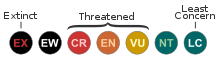
IUCN Red List of Threatened Plants Status : Not available.
Growth: S = slow M = medium F = fast. Soil: L = light (sandy) M = medium H = heavy (clay). pH: A = acid N = neutral B = basic (alkaline). Shade: F = full shade S = semi-shade N = no shade. Moisture: D = dry M = Moist We = wet Wa = water.
Now available:
Food Forest Plants for Mediterranean Conditions
350+ Perennial Plants For Mediterranean and Drier Food Forests and Permaculture Gardens.
[Paperback and eBook]
This is the third in Plants For A Future's series of plant guides for food forests tailored to
specific climate zones. Following volumes on temperate and tropical ecosystems, this book focuses
on species suited to Mediterranean conditions—regions with hot, dry summers and cool, wet winters,
often facing the added challenge of climate change.
Read More
Expert comment
Author
(Trevir.)Griseb.
Botanical References
5058236
Links / References
For a list of references used on this page please go here
Readers comment
| Add a comment |
|
If you have important information about this plant that may help other users please add a comment or link below. Only comments or links that are felt to be directly relevant to a plant will be included. If you think a comment/link or information contained on this page is inaccurate or misleading we would welcome your feedback at [email protected]. If you have questions about a plant please use the Forum on this website as we do not have the resources to answer questions ourselves.
* Please note: the comments by website users are not necessarily those held by PFAF and may give misleading or inaccurate information.
|
Subject : Cinna latifolia
|
|
|
|