Translate this page:
Summary
Purple crossflower is a winter annual mustard that has become extraordinarily common across much of the southwestern United States, especially on barren or disturbed soils. Despite being non-native and considered invasive, it offers a surprisingly useful early-season green when few other edible plants are available. Its leaves are mild for a mustard, suitable raw in small quantities and better when cooked, and are easy to harvest in volume during winter and early spring. Although rarely mentioned in ethnobotanical literature, its abundance, palatability, and seasonality make it a practical and underappreciated wild vegetable for modern foragers [2-3]. The plant has a strong scent which is generally considered unpleasant.
Physical Characteristics

 Chorispora tenella is a ANNUAL growing to 0.2 m (0ft 8in).
See above for USDA hardiness. It is hardy to UK zone 8. It is in flower in July, and the seeds ripen from July to August. The species is hermaphrodite (has both male and female organs) and is pollinated by Insects.
Suitable for: light (sandy), medium (loamy) and heavy (clay) soils and prefers well-drained soil. Suitable pH: mildly acid, neutral and basic (mildly alkaline) soils. It cannot grow in the shade. It prefers dry or moist soil.
UK Hardiness Map
US Hardiness Map
Synonyms
Homotypic Synonyms: Crucifera tenella (Pall.) E.H.L.Krause. Raphanus tenellus Pall.
Plant Habitats
Cultivated Beds;
Edible Uses
Edible Parts: Leaves
Edible Uses:
A mild, early-season mustard green suitable raw or cooked, best harvested in winter and early spring. Easy to gather in quantity and generally pleasant to eat, though best used as a seasonal vegetable rather than a staple [2-3]. Edible Uses & Rating: The edible portion consists primarily of the leaves. Purple crossflower ranks as a good early-season green rather than a staple food. Its mild flavor, abundance, and ease of harvest elevate it above many winter mustards, though it lacks the bulk and long-term yield of more robust species. As a wild edible, it is best rated as a dependable seasonal vegetable rather than a calorie source [2-3]. Taste, Processing & Kitchen Notes: Fresh leaves have a pleasant mustard character that combines the sweetness of Brussels sprouts with a restrained horseradish-like bite. Unlike many mustards, bitterness and sharpness are moderate rather than aggressive. The fine hairs on the leaves are barely perceptible and do not interfere with eating. Leaves can be eaten raw in salads, particularly when young, but cooking improves both flavor and digestibility. Brief boiling or steaming softens the leaves and reduces pungency, producing a mild, cabbage-like green well suited to soups, stir-fries, or mixed potherbs. Overcooking is unnecessary and may reduce the appealing mustard notes [2-3]. Seasonality (Phenology): Purple crossflower is a winter annual that germinates with autumn or winter moisture and grows actively through winter and early spring. In the Southwest, leaves are often available from late winter into spring, with flowering typically occurring from March through June. This timing makes it especially valuable when other leafy greens are scarce. Safety & Cautions (Food Use): As with most mustards, purple crossflower contains glucosinolates and should be eaten in moderation. Cooking reduces pungency and potential digestive irritation. Harvest only from clean sites, avoiding roadsides, contaminated soils, or areas treated with herbicides [2-3]. Harvest & Processing Workflow: Harvest leaves during winter and early spring, focusing on young, tender growth before flowering becomes dominant. Cut or pinch leaves and upper stems as needed. Wash thoroughly to remove soil and grit, especially since plants often grow in barren or dusty environments. Cook briefly for best flavor and texture, or chop finely for raw use in mixed salads. Cultivar/Selection Notes: No cultivars are known. All wild populations represent naturalized genetic stock derived from Eurasian ancestors. Look-Alikes & Confusion Risks: Purple crossflower may be confused with other winter mustards, especially species of Descurainia, Sisymbrium, or Brassica. The combination of sticky glandular hairs, purple four-petaled flowers, and long beaked seedpods that break into one-seeded segments helps distinguish it. As with all mustards, avoid confusing it with unrelated plants only when flowering or fruiting characters are absent. Traditional / Indigenous Use Summary: There is little to no documented Indigenous use of purple crossflower in North America, likely because it is a relatively recent introduction. Its absence from traditional food systems contrasts sharply with its modern abundance, suggesting it simply arrived too late to be incorporated into established foraging traditions [2-3]. Leaves - raw[105, 177]. They make a good early salad[2].
References More on Edible Uses
Medicinal Uses
Plants For A Future can not take any responsibility for any adverse effects from the use of plants. Always seek advice from a professional before using a plant medicinally.
None known
References More on Medicinal Uses
The Bookshop: Edible Plant Books
Our Latest books on Perennial Plants For Food Forests and Permaculture Gardens in paperback or digital formats.
Edible Tropical Plants
Food Forest Plants for Hotter Conditions: 250+ Plants For Tropical Food Forests & Permaculture Gardens.
More
Edible Temperate Plants
Plants for Your Food Forest: 500 Plants for Temperate Food Forests & Permaculture Gardens.
More
More Books
PFAF have eight books available in paperback and digital formats. Browse the shop for more information.
Shop Now
Other Uses
In disturbed landscapes, purple crossflower behaves as a classic opportunistic annual, rapidly colonizing bare soil. While not used ornamentally, it can temporarily stabilize soils and provide early green cover before dying back as temperatures rise. Ecology & Wildlife: The flowers attract early-season pollinators, including small bees and flies, at a time when floral resources are limited. Dense winter growth can provide temporary ground cover and microhabitats for insects. However, its invasive nature means ecological impacts vary by location.
Special Uses
References More on Other Uses
Cultivation details
Purple crossflower is a highly abundant, mild-flavored winter green that fills an important seasonal niche in the Southwest. While invasive and historically undocumented as a food, it provides an easily harvested vegetable at a time when few alternatives exist. Its value lies in availability and palatability rather than cultural significance or caloric density. Succeeds in ordinary garden soil[1] but it prefers a light, well-drained soil in full sun[200]. Purple crossflower is a highly abundant, mild-flavored winter green that fills an important seasonal niche in the Southwest. While invasive and historically undocumented as a food, it provides an easily harvested vegetable at a time when few alternatives exist. Its value lies in availability and palatability rather than cultural significance or caloric density. Growing Conditions: This species thrives in open, disturbed soils with good drainage. It tolerates poor, compacted, or alkaline soils and grows well in full sun. Purple crossflower is well adapted to arid and semi-arid climates, taking advantage of winter moisture before summer heat arrives. It commonly associates with creosote bush flats, juniper woodlands, roadsides, and open hillsides [2-3].. Habitat & Range: Native to Asia, purple crossflower is now widespread across North America and found nearly throughout the United States. In the Southwest, it is especially abundant in Arizona, Utah, New Mexico, Nevada, and adjacent regions. It occupies disturbed ground, open desert margins, rangelands, and semi-arid uplands, often forming extensive seasonal populations. Size & Landscape Performance: Plants typically reach 10–50 cm in height and have a relatively light, open structure. In disturbed landscapes, purple crossflower behaves as a classic opportunistic annual, rapidly colonizing bare soil. While not used ornamentally, it can temporarily stabilize soils and provide early green cover before dying back as temperatures rise. Cultivation (Horticulture): Purple crossflower is not intentionally cultivated for food, but it would be easy to grow from seed in cool-season gardens. It requires minimal care, no fertilization, and tolerates poor soils. Because of its invasive tendencies, intentional cultivation should be approached cautiously and only where spread can be controlled. Pests & Problems: Purple crossflower is generally free of serious pests and diseases. Its short life cycle allows it to complete growth before many insect populations peak. Drought or late frosts may limit growth but rarely eliminate populations entirely. Cultivar/Selection Notes: No cultivars are known. All wild populations represent naturalized genetic stock derived from Eurasian ancestors.Identification & Habit: Purple crossflower is an upright, softly hairy annual arising from a slender taproot. Plants typically form a loose basal rosette early in development, followed by elongating stems that branch modestly as flowering begins. Leaves are alternate and variable in shape, ranging from narrowly oval to weakly lobed, with margins that may be smooth, shallowly toothed, or sinuate. Surfaces are covered with simple and glandular hairs that give the plant a slightly sticky feel. The flowers are distinctive, with four pinkish-purple petals arranged in a cross shape typical of the mustard family. Flowers are borne in sparse racemes emerging from both the leaf axils and stem tips. As the plant matures, it produces long, narrow seedpods that curve upward and are covered in fine hairs. These pods eventually break into one-seeded segments, a helpful diagnostic feature when plants are past flowering.
References Carbon Farming Information and Carbon Sequestration Information
Temperature Converter
Type a value in the Celsius field to convert the value to Fahrenheit:
Fahrenheit:
The PFAF Bookshop
Plants For A Future have a number of books available in paperback and digital form. Book titles include Edible Plants, Edible Perennials, Edible Trees,Edible Shrubs, Woodland Gardening, and Temperate Food Forest Plants. Our new book is Food Forest Plants For Hotter Conditions (Tropical and Sub-Tropical).
Shop Now
Plant Propagation
Propagation occurs exclusively by seed. Seeds germinate readily in cool conditions following rainfall or irrigation. Plants produce large numbers of seeds, ensuring reliable reappearance in suitable habitats year after year.
Other Names
If available other names are mentioned here
Purple mustard, blue mustard, musk mustard, crossflower, beanpodded mustard,
chorispora,
crossflower,
tenella mustard, musk mustard, Loose seed herb.
Native Range
TEMPERATE ASIA: Afghanistan, Iran, Syria, Turkey, Russian Federation-Ciscaucasia (Ciscaucasia), Armenia, Azerbaijan, Russian Federation (Dagestan), Russian Federation-Western Siberia (Western Siberia (southwest)), Kazakhstan, Kyrgyzstan, Tajikistan, Turkmenistan, Uzbekistan, Mongolia, China (Anhui Sheng, Gansu Sheng, Hebei Sheng, Henan Sheng, Liaoning Sheng, Nei Mongol Zizhiqu, Qinghai Sheng, Shaanxi Sheng, Shandong Sheng, Shanxi Sheng, Xinjiang Uygur Zizhiqu), Korea TROPICAL ASIA: India (Himachal Pradesh, Jammu and Kashmir), Pakistan EUROPE: Russian Federation-European part (European part (south)), Moldova, Ukraine (incl. Krym), Bulgaria (northeast), Romania (east), Serbia (northeast)
Weed Potential
Right plant wrong place. We are currently updating this section.
Please note that a plant may be invasive in one area but may not in your area so it's worth checking.
Native to Eurasia but is well known in other parts of the world, particularly in temperate regions, as an introduced species and a noxious weed. Purple crossflower has significant weed potential and is considered invasive in parts of North America. It readily colonizes disturbed soils and can dominate early-season plant communities. While its presence may be beneficial to foragers, it can displace native winter annuals in sensitive ecosystems.
Conservation Status
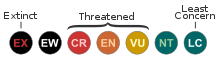
IUCN Red List of Threatened Plants Status : This taxon has not yet been assessed.
Growth: S = slow M = medium F = fast. Soil: L = light (sandy) M = medium H = heavy (clay). pH: A = acid N = neutral B = basic (alkaline). Shade: F = full shade S = semi-shade N = no shade. Moisture: D = dry M = Moist We = wet Wa = water.
Now available:
Food Forest Plants for Mediterranean Conditions
350+ Perennial Plants For Mediterranean and Drier Food Forests and Permaculture Gardens.
[Paperback and eBook]
This is the third in Plants For A Future's series of plant guides for food forests tailored to
specific climate zones. Following volumes on temperate and tropical ecosystems, this book focuses
on species suited to Mediterranean conditions—regions with hot, dry summers and cool, wet winters,
often facing the added challenge of climate change.
Read More
Expert comment
Author
(Pall.)DC.
Botanical References
74200266
Links / References
For a list of references used on this page please go here
Readers comment
| Add a comment |
|
If you have important information about this plant that may help other users please add a comment or link below. Only comments or links that are felt to be directly relevant to a plant will be included. If you think a comment/link or information contained on this page is inaccurate or misleading we would welcome your feedback at [email protected]. If you have questions about a plant please use the Forum on this website as we do not have the resources to answer questions ourselves.
* Please note: the comments by website users are not necessarily those held by PFAF and may give misleading or inaccurate information.
|
Subject : Chorispora tenella
|
|
|
|