Translate this page:
Summary
Spiny aster is a distinctive, shrub-like member of the sunflower family native to riparian corridors and sandy washes of the southwestern United States and northern Mexico. Unlike most asters, it relies heavily on green, photosynthetic stems rather than leaves, which are tiny, scale-like, and short-lived. Its edible potential is limited to brief windows following rainfall, when tender new shoots emerge, and to the use of older stems as a mild, mineral-rich tea. Although known and occasionally used by Native Americans, it has always been a marginal food due to its small edible portions, rapid toughening, and resinous bitterness. Spiny aster is best regarded as a survival or supplementary plant rather than a meaningful wild vegetable.
Physical Characteristics

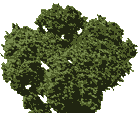 Chloracantha spinosa is an evergreen Shrub growing to 2 m (6ft) by 2 m (6ft) at a medium rate.
See above for USDA hardiness. It is hardy to UK zone 9. The flowers are pollinated by Bees, Insects.
It is noted for attracting wildlife.
Suitable for: light (sandy) and medium (loamy) soils, prefers well-drained soil and can grow in nutritionally poor soil. Suitable pH: mildly acid, neutral and basic (mildly alkaline) soils. It can grow in semi-shade (light woodland). It prefers moist soil and can tolerate drought.
UK Hardiness Map
US Hardiness Map
Synonyms
Homotypic Synonyms: Aster spinosus Benth. Leucosyris spinosa (Benth.) Greene. Heterotypic Synonyms: C. australis G.L.Nesom. C. spinosa var. strictospinosa S.D.Sundb.
Plant Habitats
Edible Uses
Edible but of very low value. Tender shoots and leaves can be eaten briefly after rainfall, and older stems make a mild tea. Bitter, resinous flavors, tiny yields, and rapid toughening limit its usefulness. Best treated as a survival or occasional-use plant rather than a regular wild food [2-3]. Edible Uses & Rating: Only the tender new shoots and the tiny, short-lived leaves are considered edible, and even these provide very little food by volume. Older stems are not eaten directly but can be chewed like gum or brewed into tea. Overall, spiny aster ranks very low as a wild food plant. It is edible in a technical sense, but impractical as a regular resource and unsuitable for meal-sized portions [2-3]. Taste, Processing & Kitchen Notes: Fresh leaves and tender shoots have an acrid, bitter, resinous flavor with faint hints of a vegetal character beneath the harsh overtones. The leaves are so small and ephemeral that they are rarely worth gathering. Tender shoot tips, usually only the first 2–4 cm of new growth, are the most practical edible portion. These shoots toughen rapidly as fibrous cores develop, after which they become inedible as vegetables but can still be chewed for flavor or brewed. Brief boiling significantly improves the flavor of both leaves and shoots by reducing bitterness and resinous notes, though it does not transform them into a particularly appealing vegetable. Older stems, when simmered, produce a mild, pleasant tea with a deep-green essence and subtle sweetness. This tea lacks the harshness of the raw plant and is arguably the most rewarding way to make use of spiny aster, especially outside the short window when shoots are tender [2-3]. Seasonality (Phenology): Spiny aster is strongly tied to rainfall rather than fixed seasons. Tender shoots and leaves appear shortly after seasonal rains, whether in spring, summer, or autumn, and disappear quickly as conditions dry. Flowering can occur from March through October, and sometimes outside this range, depending entirely on moisture availability. Foragers must act quickly after rains, as the edible stages are brief. Safety & Cautions (Food Use): Although edible, the spiny aster should be considered a marginal and occasional food. Its bitter, resinous compounds may cause digestive discomfort if consumed in large quantities. Only small amounts should be consumed, and thorough cooking is recommended. The spines present a physical hazard during harvesting, requiring careful handling [2-3]. Harvest & Processing Workflow: Harvest should focus on very young shoot tips immediately after rainfall, selecting only the tender uppermost portions before fibers develop. Leaves, if present, should be gathered quickly before they wither. All edible parts benefit from brief boiling. For tea, older stems can be cut, chopped, and simmered to extract flavor and nutrients, then strained. Cultivar/Selection Notes: No cultivars or selected forms are known. The genus Chloracantha contains only this single species in North America. Look-Alikes & Confusion Risks: Spiny aster is unlikely to be confused with most other plants due to its rigid, spiny, leafless appearance and white aster-like flowers borne directly on green stems. Some desert shrubs may superficially resemble it when not in flower, but the combination of spines, photosynthetic stems, and daisy-like flower heads is distinctive. Traditional / Indigenous Use Summary: Native Americans focused primarily on the tender new shoots, harvested shortly after rains, and on brewing stems into tea. Even historically, it was considered a minor food resource rather than a staple, likely used when other greens were scarce or unavailable.
References More on Edible Uses
Medicinal Uses
Plants For A Future can not take any responsibility for any adverse effects from the use of plants. Always seek advice from a professional before using a plant medicinally.
None Known
References More on Medicinal Uses
The Bookshop: Edible Plant Books
Our Latest books on Perennial Plants For Food Forests and Permaculture Gardens in paperback or digital formats.
Edible Tropical Plants
Food Forest Plants for Hotter Conditions: 250+ Plants For Tropical Food Forests & Permaculture Gardens.
More
Edible Temperate Plants
Plants for Your Food Forest: 500 Plants for Temperate Food Forests & Permaculture Gardens.
More
More Books
PFAF have eight books available in paperback and digital formats. Browse the shop for more information.
Shop Now
Other Uses
It may be grown for native landscaping, wildlife habitat, or erosion control in arid regions. Once established, it requires little care, but controlling its spread can be challenging. It is not recommended for small gardens or food-focused plantings. Ecology & Wildlife: The flowers provide nectar and pollen for a variety of insects, including bees and butterflies, especially during periods when few other plants are blooming. Dense thickets offer shelter for birds and small animals. Its deep root and rhizome systems help stabilize sandy soils along riverbanks.
Special Uses
References More on Other Uses
Cultivation details
Shrub-like perennial up to about 2 m tall, often forming dense colonies via rhizomes. Spiny aster is a resilient riparian shrub with brief edible phases and a longer-lasting value as a mild tea plant. Its spiny, photosynthetic stems and fleeting leaves reflect adaptation to arid, disturbance-prone environments rather than food production. For foragers, it is best understood as an emergency or supplementary plant, useful in small amounts but never abundant or palatable enough to seek out deliberately. Growing Conditions This species thrives in sandy, well-drained soils along rivers, washes, and floodplains. It prefers full sun and tolerates heat, drought, and periodic flooding. Spiny aster is well adapted to disturbance and fluctuating water availability, relying on rhizomes and stem photosynthesis to survive harsh conditions. It is poorly suited to cooler, wetter, or shaded environments. Habitat & Range: Spiny aster occurs from California eastward to Texas and south into Mexico, primarily at low elevations. It is most commonly found along sandy riverbanks, in riparian thickets, washes, and disturbed floodplain habitats. Although native, it is often regarded as a weed due to its aggressive rhizomatous growth and spiny nature. Size & Landscape Performance: Plants typically reach 1–2 m in height and can spread laterally to form dense, nearly impenetrable colonies. In landscapes, spiny aster is sometimes used for erosion control or habitat restoratio,n but is unsuitable for most gardens due to its spines and aggressive growth. Its visual character is stark and architectural rather than lush. Cultivation (Horticulture): Spiny aster is rarely cultivated intentionally for food. It may be grown for native landscaping, wildlife habitat, or erosion control in arid regions. Once established, it requires little care, but controlling its spread can be challenging. It is not recommended for small gardens or food-focused plantings. Pests & Problems: Spiny aster is generally free of serious pests and diseases. Its spines deter herbivory, and its tough, resinous tissues make it unpalatable to many animals. Environmental stress rarely kills established plants, though prolonged flooding or drastic alteration of waterways can reduce populations. Cultivar/Selection Notes: No cultivars or selected forms are known. The genus Chloracantha contains only this single species in North America. Pollination: Spiny aster is pollinated by insects, particularly bees and other generalist pollinators attracted to its white ray flowers and yellow disk flowers. Opportunistic blooming allows it to support pollinators during otherwise lean periods. Identification & Habit: Spiny aster grows as a rigid, upright, broom-like shrub composed of many green, spiny stems arising from a woody base and spreading rhizomes. Colonies can form extensive thickets along waterways. The stems are stiff, sharply spined, and photosynthetic, allowing the plant to function with minimal leaf surface. Leaves are alternate, sessile, very small, and scale-like, appearing briefly after rainfall and then quickly withering. For much of the year, the plant appears leafless and skeletal, consisting of green, spiny rods. Flowers are typical of the sunflower family, but relatively small and scattered along the stems rather than forming showy terminal clusters. Each flower head has white ray flowers and yellow disk flowers, producing the appearance of small white asters emerging directly from the green stems. The plant blooms opportunistically, often in spring or late summer, but flowering can occur at almost any time in response to rainfall [2-3].
References Carbon Farming Information and Carbon Sequestration Information
Temperature Converter
Type a value in the Celsius field to convert the value to Fahrenheit:
Fahrenheit:
The PFAF Bookshop
Plants For A Future have a number of books available in paperback and digital form. Book titles include Edible Plants, Edible Perennials, Edible Trees,Edible Shrubs, Woodland Gardening, and Temperate Food Forest Plants. Our new book is Food Forest Plants For Hotter Conditions (Tropical and Sub-Tropical).
Shop Now
Plant Propagation
Propagation occurs primarily through rhizomes, which allow colonies to expand rapidly. Seed propagation is possible but less commonly used. Vegetative spread makes the plant resilient but also contributes to its reputation as a weedy species in riparian systems.
Other Names
If available other names are mentioned here
Spiny Aster, Devilweed (Chloracantha spinosa), Aster spinosus Benth.
Native Range
US. USA. Arizona, California, Costa Rica, El Salvador, Guatemala, Honduras, Louisiana, Mexico Central, Mexico Gulf, Mexico Northeast, Mexico Northwest, Mexico Southeast, Mexico Southwest, Nevada, New Mexico, Nicaragua, Oklahoma, Panamá, Texas, Utah
Weed Potential
Right plant wrong place. We are currently updating this section.
Please note that a plant may be invasive in one area but may not in your area so it's worth checking.
Spiny aster has moderate to high weed potential in suitable habitats, particularly along waterways. Its rhizomatous growth and tolerance of disturbance allow it to dominate riparian zones, sometimes displacing other vegetation. While native, it can behave aggressively where conditions favor it.
Conservation Status
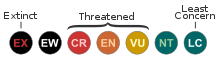
IUCN Red List of Threatened Plants Status : Not available
Growth: S = slow M = medium F = fast. Soil: L = light (sandy) M = medium H = heavy (clay). pH: A = acid N = neutral B = basic (alkaline). Shade: F = full shade S = semi-shade N = no shade. Moisture: D = dry M = Moist We = wet Wa = water.
Now available:
Food Forest Plants for Mediterranean Conditions
350+ Perennial Plants For Mediterranean and Drier Food Forests and Permaculture Gardens.
[Paperback and eBook]
This is the third in Plants For A Future's series of plant guides for food forests tailored to
specific climate zones. Following volumes on temperate and tropical ecosystems, this book focuses
on species suited to Mediterranean conditions—regions with hot, dry summers and cool, wet winters,
often facing the added challenge of climate change.
Read More
Expert comment
Author
(Benth.) G.L.Nesom
Botanical References
Links / References
For a list of references used on this page please go here
Readers comment
| Add a comment |
|
If you have important information about this plant that may help other users please add a comment or link below. Only comments or links that are felt to be directly relevant to a plant will be included. If you think a comment/link or information contained on this page is inaccurate or misleading we would welcome your feedback at [email protected]. If you have questions about a plant please use the Forum on this website as we do not have the resources to answer questions ourselves.
* Please note: the comments by website users are not necessarily those held by PFAF and may give misleading or inaccurate information.
|
Subject : Chloracantha spinosa
|
|
|
|